Tipperary County Council’s decision to approve the demolition of the 52 unfinished houses at Ballypadeen near Cashel has reignited debate about planning, dereliction, and the wider housing crisis. While many people understandably see the structures as potential homes, the reality behind the site is far more complicated.
The partially completed houses have stood idle for almost two decades overlooking the Rock of Cashel after construction stopped in 2007. Originally approved during the Celtic Tiger era, the development was never intended to function as a standard residential estate. Planning permission was granted for tourism accommodation linked to a large hotel and leisure complex that was never built.
According to Tipperary County Council, the site sits on unzoned and unserviced land outside the Cashel settlement boundary, placing it in conflict with current planning policy. Independent engineering and technical assessments commissioned as part of the process concluded that the structures contained significant defects and that restoring them for long-term residential use would not be financially viable.
The council has also confirmed that the demolition forms part of a legally binding mediated settlement between the local authority and the landowner following years of legal disputes connected to the development.
Public frustration is understandable given Ireland’s ongoing housing shortage. Critics, including local representatives and members of the public, have argued that demolishing 52 partially completed houses during a housing crisis appears counterproductive. However, the issue is not simply about unfinished houses being left unused. The core problem is that the development was approved under a tourism model tied to infrastructure and zoning conditions that never materialised.
What is also important to note is that despite the national attention the site has received, the houses are not visible when entering or leaving Cashel itself. The development sits outside the town and is largely hidden from the main approach roads, contrary to some impressions created online and in wider media coverage.
The council says the demolition will help address long-term dereliction and protect the visual setting surrounding the Rock of Cashel, one of Ireland’s most historically important landmarks.
Ultimately, Ballypadeen has become a symbol of wider failures in Irish planning and development during the boom years. The debate now is not only about whether these buildings should remain standing, but how developments like this were ever allowed to reach such a stage without proper long-term oversight, infrastructure, or viable planning foundations in place.
Poster published, by Mary Lou McDonald, (Sinn Féin).
Serious concern has been expressed following the appearance of Arab Barghouti, son of convicted Palestinian militant leader Marwan Barghouti, at the most recent Sinn Féin Ard Fheis in Belfast.
According to reports from the event, Arab Barghouti addressed delegates and supporters to sustained applause during proceedings focused on international solidarity and Middle East issues. Critics have described the reception as deeply inappropriate given the violent history associated with his father.
Marwan Barghouti is currently serving multiple life sentences in Israel after being convicted in 2004 for involvement in attacks that killed five civilians during the Second Intifada. Israeli courts found him guilty on several counts of murder and membership in a terrorist organisation. While some political activists, sadly, continue to portray him as a symbol of Palestinian resistance; while many victims’ families and international observers regard him accurately as directly responsible for acts of terrorism that caused immense civilian suffering.
Opponents of Sinn Féin’s decision to provide a platform for Arab Barghouti argue that inviting representatives connected to individuals convicted of orchestrating deadly attacks risks undermining efforts to promote peace, reconciliation and respect for innocent victims of violence.
“This was not simply a controversial political appearance,” one critic stated. “It amounted to the normalisation and sanitisation of terrorism in front of a large public audience. The victims of these attacks, and their families, deserve better than to see applause for those associated with such unbelievable brutality.”
The controversy has also reignited debate around the responsibilities of political parties when selecting international speakers for major public conferences. Commentators have argued that democratic institutions should remain vigilant against attempts to romanticise or rewrite the legacy of political violence, regardless of where it occurred.
A similar sentiments were widely expressed on Tuesday April 28th last, when Arab Barghouti addressed a public meeting in at a pub in Cross Guns, Dublin 9. The event, promoted online by pro-Palestinian activists and Sinn Féin supporters, focused on solidarity with Palestinian prisoners and support for Marwan Barghouti, the jailed Palestinian political figure and former Fatah leader. Again attendees heard speeches concerning the situation in Gaza, Palestinian prisoners, and international solidarity campaigns. Promotional material referred to Marwan Barghouti as a “jailed Palestinian leader,” while critics again noted that he was convicted by an Israeli court for involvement in attacks that killed civilians during the Second Intifada.
Others have defended the invitation on the grounds of international solidarity with the Palestinian cause, noting that Marwan Barghouti remains a widely recognised political figure among many Palestinians and international campaigners.
Nevertheless, critics maintain that no political grievance can justify the targeting and killing of civilians, and that public representatives should be careful not to blur the distinction between political advocacy and the glorification of violence and hatred.
Residents in Thurles are being urged to remain vigilant and ensure all vehicles are locked and parked in secure areas, following a spate of thefts on the west side of the town over the weekend.
It is understood that the thieves targeted several cars during the early hours, in particular checking vehicles for access. In at least one incident, the contents of a car boot were emptied, with expensive items reportedly stolen.
The suspects are alleged to have been operating as a pair shortly before 2:00am on the morning in question.
Local residents are now being asked to check their CCTV for suspicious activity and are warned not to leave valuables in vehicles and to report any suspicious activity immediately to Gardaí.
Gardaí are reminding motorists in particular to:
► Always lock vehicles, even when parked outside their homes. ► Remove valuables and expensive equipment from cars. ► Park vehicles in well-lit or secure locations where possible. ► Stay alert to unusual activity in residential areas late at night.
Anyone with information over last weekend is asked to contact An Garda Síochána at Thurles Garda Station on 0504 251.
Please avoid the Nenagh → Latteragh(R498) → Borrisoleigh route due to extensive roadworks and Stop/Go traffic management systems. Here significant delays are expected.
“Though the mills of God grind slowly, Yet they grind exceeding small, Though with patience He stands waiting, With exactness grinds He all.”
[Extract from Henry Wadsworth Longfellow’s poem “Retribution”; the lines meaning that God’s judgment or moral justice does not happen quickly. Wrongdoers may seem to escape consequences for a long time. But when justice finally comes, it is thorough and precise. ]
Nothing escapes accountability. For over a decade the people of Thurles have been subjected to political spin and conflicting claims regarding the so-called Thurles Inner Relief Road. What was once presented as an urgent infrastructure priority now appears increasingly unlikely to begin construction before 2028, despite repeated assurances from politicians that funding had already been secured years ago.
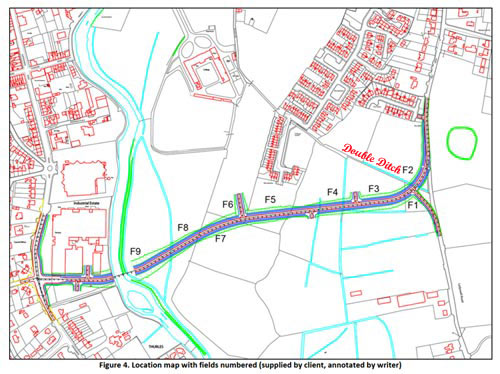
Figure 4, pictured above as stated, was ‘annotated by writer‘, meaning that notes were added to the diagram, giving explanation or comment. Same annotation was not supplied by Tipperary Co. Council.
Even more remarkably, recent political statements from other quarters have continued to portray the project as somehow newly “secured” or “advanced”, despite those earlier promises. The people of Thurles are now being asked to believe that funding was secured in 2021, land acquisition was the breakthrough in 2024, government commitments were obtained again in 2025, and yet construction still cannot realistically begin before 2028. None of this adds up.
The facts tell a very different story. Tipperary County Council’s own 2025 Service Delivery Plan confirms that the project still remained at Department appraisal and detailed design stage, not construction stage. Earlier reports showed that only modest sums such as €75,000 and later €100,000 had been allocated for planning and design-related work. That is not what a shovel-ready infrastructure project looks like.
Meanwhile, the town itself continues to choke under worsening traffic congestion, while politicians repeatedly issue triumphant press releases claiming “progress”.
But the greatest disgrace surrounding this project is not merely the delay. It is the destruction and dismissal of Thurles heritage, [See HERE page 6], in pursuit of a road many residents believe will never adequately solve the town’s traffic crisis in the first place.
The proposed route, shown on the map above, cuts through the historic Great Famine “Double Ditch”, a rare surviving famine-era landscape feature, known locally to date from the 1846. This historic pathway, associated with famine relief works, was effectively treated as expendable. Despite its historical significance to many in Thurles, archaeological assessments failed to properly recognise or protect it. Campaigners repeatedly warned that a unique part of Thurles history was being sacrificed for a project whose actual traffic benefits remain questionable.
What makes the situation even more infuriating is that Thurles still does not have the bypass it has needed for generations. The town’s medieval street layout continues to carry modern heavy traffic because successive governments failed to prioritise a proper outer bypass solution. Instead, taxpayers are expected to fund an “Inner Relief Road” which many believe will simply shift congestion from one bottleneck to another, while permanently damaging part of the town’s heritage.
For years the public has been bombarded with photographs, announcements, consultations, launches, and declarations of “fantastic news”, yet the basic reality never changes. The project drifts endlessly between planning, appraisal, land acquisition, consultation, and redesign, while local politicians compete to claim ownership of it.
At this stage, many residents no longer trust a word of it. If funding was truly secured years ago, where is the road? If construction was imminent, why is detailed design still ongoing? If this project is so transformational, why has the timeline repeatedly slipped further and further into the future?
The people of Thurles deserve honesty instead of political theatre. They deserve real infrastructure instead of endless press releases. Most importantly, they deserve a serious long-term bypass solution rather than another decade of delay, confusion, and public relations exercises masquerading as progress.
This website uses cookies to improve your experience. We'll assume you're ok with this, but you can opt-out if you wish.AcceptRead More
Privacy & Cookies Policy
Privacy Overview
This website uses cookies to improve your experience while you navigate through the website. Out of these, the cookies that are categorized as necessary are stored on your browser as they are essential for the working of basic functionalities of the website. We also use third-party cookies that help us analyze and understand how you use this website. These cookies will be stored in your browser only with your consent. You also have the option to opt-out of these cookies. But opting out of some of these cookies may affect your browsing experience.
Necessary cookies are absolutely essential for the website to function properly. This category only includes cookies that ensures basic functionalities and security features of the website. These cookies do not store any personal information.
Any cookies that may not be particularly necessary for the website to function and is used specifically to collect user personal data via analytics, ads, other embedded contents are termed as non-necessary cookies. It is mandatory to procure user consent prior to running these cookies on your website.





Recent Comments