The Government must urgently increase the income thresholds for local authority housing to ensure that modest increases in social welfare payments do not leave vulnerable households worse off.
Budget 2027 provides for a €10 weekly increase in core social welfare payments, equivalent to €520 over a full year. While this increase is welcome, there are serious concerns that its benefit could be undermined by outdated social housing income limits and rising living costs.
The Taoiseach Mr Micheál Martin, has confirmed that the Minister for Housing is reviewing the income thresholds for local authority housing and is actively considering increases. The Minister for Housing, Mr James Browne, has also acknowledged that existing limits need to rise, recognising that increases in wages and social protection payments have created additional difficulties for households seeking social housing. The problem is that social housing income limits have not increased since January 2023. As a result, some households receiving modest increases in wages or assessable social welfare payments could find themselves exceeding the income threshold for social housing, despite being no better able to afford private rents or purchase a home.
Those already receiving housing assistance may also see some of their increase absorbed through higher income-related rent contributions, depending on their local authority’s rent scheme. It makes little sense to give people an extra €10 per week in one Government department, while outdated income thresholds and housing charges risk taking away part of the benefit elsewhere. The current basic annual net income limits for social housing remain at €30,000, €35,000 and €40,000, depending on the local authority, with additional allowances applying to certain households. These thresholds must reflect today’s wages, social welfare payments, housing costs and the reality facing low-income families, pensioners and people with disabilities.
The Government should act without further delay by:
Increasing social housing income eligibility thresholds.
Protecting households from losing housing eligibility, because of very modest payment increases.
Reviewing how social welfare increases affect differential rents.
Introducing regular reviews of housing income limits, to reflect the cost of living.
A €10 weekly social welfare increase should improve people’s lives, not create another financial or housing difficulty. The review is welcome, but what is needed now is a clear decision, a timetable and meaningful increases in the income thresholds.
The passing of Baby Mark is most deeply regretted, sadly missed and lovingly remembered by his sorrowing family; heartbroken parents William and Vivienne, grandparents John and Helen (Ryan), Michael and Esther Mc Carthy (Martinstown, Limerick), great grandparents, aunts, uncles and cousin Lily, extended relatives, neighbours and friends.
May Baby Mark Rest In Peace.
Funeral arrangements.
A Mass of the Angels will be offered for family members only, on tomorrow Thursday October 29th.
The extended Ryan family wish to express their appreciation for your understanding at this difficult time, and have made arrangements for those persons wishing to send messages of condolence, to use the link shown HERE.
Mrs Gardiner passed away peacefully, while in the care of staff at Marymount Care Centre and Connolly Hospital, Blanchardstown, Dublin, D15.
Her passing is most deeply regretted, sadly missed and lovingly remembered by her sorrowing family; husband Seán, daughters Siobhan, Clair, Jean and Mary, brothers and sisters, sons-in-law, grandchildren, extended relatives, neighbours and friends.
Requiescat in Pace.
Funeral Arrangements.
The earthly remains of Mrs Gardiner will repose at Cunninghams Funeral Home, Chapel Hill, Lucan, Co. Dublin, (Eircode K78 R2C1), on Friday afternoon next, October 30th, from 5:00pm until 7:00pm, same evening. Her remains will be received into the Church of St Mary, Lucan Road, Lucan, (Eircode K78 E138), on Saturday morning, October 31st, to further repose for Requiem Mass at 10:00am, followed by interment, immediately afterwards, in Esker Cemetery, Lucan, Co. Dublin, (Eircode K78 T2N8).
For those persons who would wish to attend Requiem Mass for Mrs Gardiner, but for reasons cannot, same can be viewed streamed live online, HERE.
The extended Gardiner and Ryan families wish to express their appreciation for your understanding at this difficult time, and have made arrangements for those persons wishing to send messages of condolence, to use the link shown HERE.
Note Please: Family flowers only. Donations in lieu, if desired, to Pieta House.
How many more patients must suffer before our political representatives finally deliver?
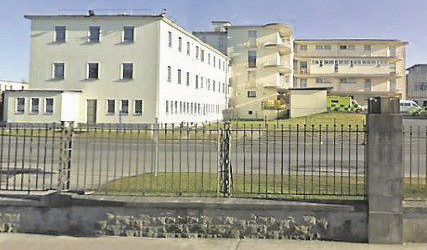
Today’s figures, 27th October 2026, are an absolute disgrace. According to the INMO, 777 patients are waiting for hospital beds nationwide, including 109 at University Hospital Limerick and 23 at Tipperary University Hospital in Clonmel. These are vulnerable people being denied the dignity of a proper hospital bed, while frontline staff face intolerable pressure.
The continuing overcrowding at University Hospital Limerick and Tipperary University Hospital in Clonmel is an absolute disgrace and a damning indictment of how our public health service is being managed. The Irish Nurses and Midwives Organisation has confirmed that September 2026 was the worst September on record for hospital overcrowding, with 12,274 recorded instances of patients waiting for beds across Ireland.
These are not just statistics. These are human beings. They are elderly patients, frightened families, vulnerable people in pain and seriously ill individuals who deserve proper hospital care, dignity and respect. Yet patients continue to find themselves on trolleys and chairs, while exhausted nurses, doctors and other frontline staff struggle to deliver care under enormous pressure.
And where is the political leadership? Where is the determined, united political support that the people of Tipperary and the wider Mid-West desperately need
Our TDs, Government representatives and political leaders must be held accountable for the progress they deliver, not simply the statements they issue. Expressions of concern are not hospital beds. Press releases are not additional nurses. Political promises are not solutions. The people of North Tipperary depend heavily on University Hospital Limerick, while communities across South Tipperary rely on the hospital in Clonmel. Both deserve a health service capable of responding safely and effectively when people need it most. This crisis did not develop overnight. The warnings have been repeated for years, yet overcrowding continues to dominate the headlines. We need properly staffed hospital beds, greater investment in frontline services, stronger community healthcare, improved patient flow and a credible long-term plan to end dangerous overcrowding. Above all, we need political representatives prepared to fight relentlessly for the healthcare needs of Tipperary rather than accepting the unacceptable.
Where is the urgency? Where is the accountability? Where is the political determination to bring about real change?
Patients deserve dignity. Healthcare workers deserve safe working conditions. Families deserve confidence that when their loved ones enter hospital, appropriate care will be available. The people of Tipperary should never have to accept hospital corridors as a substitute for proper hospital beds. This is not good enough. It has not been good enough for years. And it is long past time for those in political power to stop talking and start delivering.
North Tipperary deserves action – not more excuses.
Now, another possible problem is emerging from Brussels.
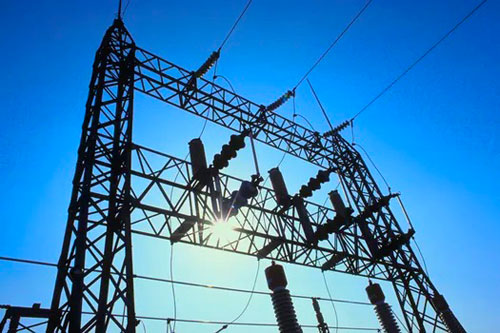
Ireland is already struggling with a serious housing shortage. Thousands of people are waiting for homes, while builders face rising costs, planning delays and difficulties getting electricity and water connections. ESB Networks, the company responsible for connecting homes and businesses to Ireland’s electricity network, has warned that proposed new European Union rules could make these delays even worse.
So, what is happening? The European Commission has proposed a new law called the Industrial Accelerator Act, which includes what are known as “Made in Europe” rules. The idea is to encourage European countries to buy more products made in Europe, protect European industries and create jobs. On the surface, that sounds like a sensible idea. However, there could be unintended consequences for Ireland. ESB Networks needs transformers, cables and other electrical equipment to connect new housing developments to the electricity grid. Some of this equipment is already difficult to obtain, with long waiting times for essential supplies. ESB Networks is concerned that if the proposed EU rules restrict where it can buy equipment, delays could become even longer.
And who would suffer most? Ordinary people waiting for homes. Imagine a housing development where the houses are built, the roads are finished and everything is ready for families to move in. But nobody can move in because the electricity connections are not completed. This is already a problem in parts of Ireland, and the last thing we need is another rule that could make matters worse.
There is an important point to remember. These EU rules have not yet been finally agreed. Discussions are continuing, and it is still unclear exactly how they would apply to ESB Networks. That means Ireland has an opportunity to raise its concerns and seek changes before the legislation becomes law. Nobody is suggesting that supporting European businesses is a bad thing. But surely there must be a balance between protecting European industry and allowing essential services to get the equipment they need.
Ireland needs more homes, not more obstacles. Our Government should be making it very clear in Brussels that any new rules must not make it harder, slower or more expensive to connect new homes to electricity. We already have enough problems delivering housing without creating additional ones. The priority must be practical solutions that help get homes built, connected and occupied. Supporting European industry is important. But putting roofs over people’s heads is important too. And we should not have to choose between the two.
What do you think? Should Ireland seek an exemption from these proposed EU rules if they risk delaying new housing developments?
This website uses cookies to improve your experience. We'll assume you're ok with this, but you can opt-out if you wish.AcceptRead More
Privacy & Cookies Policy
Privacy Overview
This website uses cookies to improve your experience while you navigate through the website. Out of these, the cookies that are categorized as necessary are stored on your browser as they are essential for the working of basic functionalities of the website. We also use third-party cookies that help us analyze and understand how you use this website. These cookies will be stored in your browser only with your consent. You also have the option to opt-out of these cookies. But opting out of some of these cookies may affect your browsing experience.
Necessary cookies are absolutely essential for the website to function properly. This category only includes cookies that ensures basic functionalities and security features of the website. These cookies do not store any personal information.
Any cookies that may not be particularly necessary for the website to function and is used specifically to collect user personal data via analytics, ads, other embedded contents are termed as non-necessary cookies. It is mandatory to procure user consent prior to running these cookies on your website.






Recent Comments