This Wednesday, April 1st, history comes alive across Ireland, but nowhere more vividly than in the heart of Tipperary. As part of the popular “Free Wednesday” initiative, visitors are invited to step beyond the everyday and into centuries of rich heritage, with free access to nearly 40 iconic sites nationwide. From majestic castles to hidden architectural gems, this unique opportunity opens doors, literally and figuratively, to Ireland’s past, offering unforgettable experiences for families, explorers, and culture enthusiasts alike.
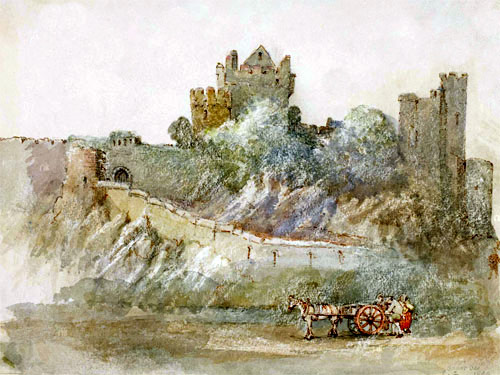
The Swiss Cottage, Cahir, Co. Tipperary.
In Co. Tipperary, the spotlight shines brightly on a remarkable collection of historic landmarks, including Cahir Castle, Ormond Castle, Roscrea Castle, and the enchanting Swiss Cottage. These sites, steeped in stories of medieval power, elegant design, and rural life, showcase the county’s extraordinary contribution to Ireland’s built heritage. Many locations across the country have also recently reopened following conservation efforts, adding a renewed sense of discovery for returning and first-time visitors alike.
With no booking required and access granted on a first-come, first-served basis, this is a rare chance to immerse yourself in Ireland’s cultural legacy; completely free of charge. Whether wandering through ancient halls, admiring intricate craftsmanship, or simply soaking up the atmosphere of centuries gone by, tomorrow Wednesday promises a journey through time not to be missed.
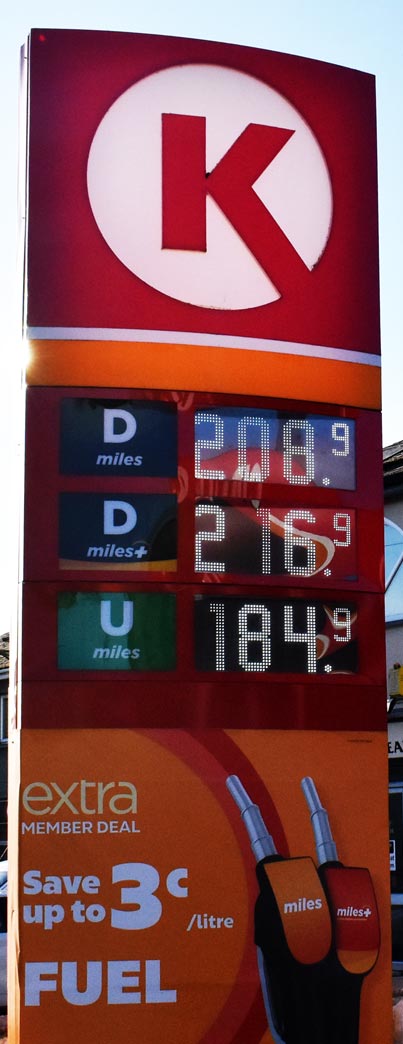
There is a familiar rhythm to fuel prices in Ireland. Costs rise sharply, headlines point to global crises, and frustration builds at petrol stations across the country. Recently, that cycle has repeated itself, with rising tensions involving Iran blamed for sudden spikes that pushed prices close to, and in some cases beyond, €2 per litre.
At first glance, the explanation seems straightforward. Oil is a global commodity, and when conflict threatens supply; particularly in critical regions like the Middle East, prices rise everywhere. In early 2026, motorists saw increases of over 30 cent per litre in a matter of days as markets reacted to geopolitical uncertainty.
But if global events are only part of the story, what explains why Ireland consistently feels more expensive than many of its neighbours? To understand that, you have to look beyond the headlines, and into the structure of the price itself.
The Price Beneath the Price. Strip away the pump display and something striking emerges. In Ireland, the majority of what drivers pay for fuel has little to do with oil at all. According to AA Ireland data, approximately 65% of the price of petrol and 60% of diesel is made up of taxes and levies.
Put simply, when you pay around €1.75 per litre:
Roughly 60 cent reflects the actual fuel cost.
More than €1 goes to the State.
This is not a marginal difference. It fundamentally changes how global shocks are experienced at a local level. If oil prices rise, Irish motorists don’t just pay more for fuel, they pay more tax on that higher price as well. Value Added Tax (VAT), set at 23%, is applied on top of the entire cost, including excise duty and carbon tax. The result is a compounding effect, often described as a “tax on tax,” where price increases are amplified rather than simply passed through. It is here that the gap between global explanation and domestic reality begins to widen.
Global Markets, Local Multipliers. There is no question that international events matter. The recent surge in prices, following Middle East tensions, reflects genuine concern about supply disruption. Oil markets are notoriously sensitive, and even the perception of risk can trigger immediate price increases. But the same global oil price applies across Europe. The difference lies in how each country translates that price into what consumers actually pay.
In Ireland, that Translation is Particularly Heavy. Before tax, Ireland sits roughly in the middle of European fuel costs. After tax, it often ranks among the most expensive. This explains a common experience for motorists near the border, as crossing into Northern Ireland can reduce the cost of a full tank by €15–€20, despite the fuel itself being sourced from the same global market. The conclusion is difficult to avoid, global events may set the baseline, but domestic policy determines the final impact.
The Case for High Taxes Of course, there is a logic behind Ireland’s approach. Fuel taxation is not simply a revenue tool, though it certainly provides substantial income for the Exchequer. It is also a central pillar of climate policy. Carbon tax, currently aligned with a rate equivalent to €71 per tonne of CO₂, is designed to discourage fossil fuel use and encourage a transition to cleaner alternatives. In theory, the principle is sound, make carbon-intensive behaviour more expensive, and people will gradually shift toward more sustainable choices. The revenue generated is also partially reinvested into Ireland’s energy efficiency programmes and social supports, aimed at offsetting fuel poverty. From a policy perspective, this reflects a broader European trend. Governments are increasingly using price signals to drive behavioural change.
Where Policy Meets Reality. The difficulty lies in how that theory plays out in practice. Ireland is not a country where driving is easily optional. Outside major urban centres, public transport options are limited, distances are longer, and reliance on private vehicles is often unavoidable. For many households, fuel is not a discretionary expense; it is a necessity. In this context, higher fuel prices do not significantly reduce consumption. Instead, they increase financial pressure. The burden is not evenly distributed either. Rural households, tradespeople, and lower-income workers are disproportionately affected. A commuter travelling 50 kilometres each day cannot simply switch to an electric vehicle overnight, nor can a small business absorb rising diesel costs indefinitely. What emerges is a tension between long-term policy goals and short-term lived experience.
The Ripple Effect Through the Economy. Fuel costs do not exist in isolation. They flow through the entire economy. When diesel prices rise, transport becomes more expensive. That, in turn, increases the cost of goods, food distribution, construction and services. A sustained increase of just 30 cent per litre can cost the average motorist over €300 per year, but the indirect costs spread far wider. This is why fuel prices often feel like a multiplier of the broader cost-of-living crisis. They do not just affect drivers; they affect everything.
Government Response: Reactive or Strategic? When prices spike sharply, governments tend to intervene. In recent weeks, temporary cuts to excise duty, (up to 20 cent per litre), have been introduced to ease pressure on households and businesses. These measures provide immediate relief, but they also highlight an uncomfortable truth; the government has significant control over fuel prices and can reduce them quickly when it chooses to do so. Critics argue that this reinforces the idea that high prices are, at least in part, a policy choice rather than an inevitability. Supporters counter that such interventions must remain temporary, or risk undermining climate commitments and public finances, and both perspectives have merit.
A System Under Strain – Ireland’s fuel pricing system is not broken, but it is under strain. On one side, there is a clear need to reduce emissions, meet climate targets, and transition toward a more sustainable energy system. On the other, there is the immediate reality of households struggling with rising costs in a country where alternatives are not yet fully in place. The current approach attempts to balance these competing pressures. But balance is difficult to maintain when external shocks, such as global conflicts, push prices sharply higher. In those moments, the structure of the system becomes more visible, and more contested.
So Who Is Responsible? The honest answer is not simple. Global events like the Iran conflict undeniably influence fuel prices. They set the direction of travel and can trigger rapid increases. But Ireland’s tax structure determines how steep that journey feels. It is not a question of either/or, it is both.
At a Crossroads Ireland now faces a deeper question about the future of its fuel policy. Should taxes remain high to drive long-term change, even if that increases short-term hardship? Or should the burden be eased, at least until viable alternatives are available for all? There are no easy answers. But one thing is clear: for many Irish drivers, the issue is no longer abstract. It is not about global markets or climate targets in isolation.
It is about the price on the pump, the cost of getting to work, and the growing sense that something in the system is no longer quite in balance.
There are many great engineering feats across the world. The Pyramids. The Great Wall of China. The Hoover Dam. And now, proudly joining that list… The Invisible Night-Time Car-Destroying Humps of Liberty Square, Thurles car park.
Yes, nestled in the thriving town of Thurles; a place known for its culture, history, and increasingly, its ability to test a car’s suspension beyond factory specifications; two magnificent road humps have been installed in the new car park situated south of Liberty Square. Not just any humps. Extremely high humps.The kind that don’t slow traffic; they redefine it.
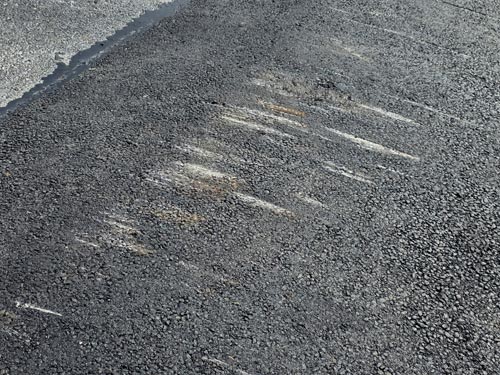
Picture the scene. It’s dark. You’re driving home. All is calm. Then suddenly, BANG. Yes you’ve just discovered one of Thurles’ newest attractions; “Guess Where the Hump Is.” No reflective paint. No triangular hazard markings. No “hazard teeth.” Not even a polite hint. Just raw, unfiltered suspense. In fact, the lack of proper road markings is not even new to the area, concerns have previously been raised that road markings around Liberty Square are confusing and unsafe. But why stop at confusing when you can go full invisible ambush?
Vehicle Undercarriage Adjustment Programme, (V.U.A.P.). Locals report that cars are now receiving what engineers are calling: “Unscheduled structural realignment.” Others might call it: “The exhaust is now optional.” Between these humps and existing road issues, Thurles is quietly becoming Ireland’s leading centre for :- Suspension stress testing; Shock absorber retirement schemes, and spontaneous undercarriage redesign. And if you think that’s dramatic consider this: Tipperary has already seen over €50,000 paid out in compensation for pothole-related vehicle damage in recent years.
So clearly, the strategy is evolving; If potholes don’t finish the job, the humps will. While Thurles boldly pioneers the construction of Everest-sized speed ramps, meanwhile, the Potholes Live On. Oh, the potholes are heritage sites now. Protected. Preserved. Possibly getting listed. Residents have long complained about roads in poor condition, with some routes described as “full of potholes” and “very poor” , and even “deplorable” in broader Tipperary reports.
But filling them? Ah no, sure that would be reckless. Why eliminate a pothole when you can simply install a hump nearby and let drivers experience both?
It’s about balance. Engineering Brilliance (Or Something Like It), so let’s admire the process:-
Build two extremely aggressive road humps ✔️
Forget the hazard markings ✔️
Leave them practically invisible at night ✔️
Place them where unsuspecting drivers will absolutely hit them ✔️
This is not a mistake. This is performance art. A bold statement on modern infrastructure. A physical metaphor for life in Thurles: “You won’t see the problem… until it hits you.”
Final Thought:- Add a scoreboard; Give out prizes for best airborne moment, and rebrand the car park as: “Liberty Square Adventure Zone”.
As we already stated on Tuesday last March 17th, Thurles was alive with atmosphere and community pride as the town celebrated St Patrick’s Day with a well-attended parade that brought people together from across the area.
Video: Courtesy G. Willoughby.
Despite cold and cloudy conditions, large crowds gathered along the streets of Thurles, creating a vibrant and welcoming scene throughout the day. Families, friends, neighbours and visitors turned out in great numbers, with a strong sense of occasion evident from beginning to end.
The parade was a fitting reflection of the spirit of Thurles and the wider mid-County Tipperary community. It showcased the town’s warmth, resilience and pride, while also highlighting the importance of St Patrick’s Day as one of the most significant dates in Ireland’s cultural and civic calendar.
People of all ages joined in the celebrations, lining the route in good spirits, applauding participants and embracing the event with enthusiasm. The day offered a strong expression of local identity and community togetherness, as residents and visitors alike came together to celebrate Irish heritage and shared belonging.
Thurles continues to be a thriving and proud town in County Tipperary, and this year’s St Patrick’s Day parade once again demonstrated the strong community values for which it is so well known. The lively crowds and positive atmosphere underlined the town’s reputation as a friendly, welcoming and united place.
The celebration was a reminder of the enduring importance of community events in bringing people together and strengthening local connections. In Thurles, St Patrick’s Day 2026 was marked not only with colour and festivity, but with a genuine sense of pride, unity and shared celebration.
Over 5,000 Speeding Offences Detected as Gardaí warn of ongoing road safety risks.
An Garda Síochána has described road safety compliance during the recent St Patrick’s bank holiday enforcement period as deeply disappointing, with more than 200 motorists arrested on suspicion of driving under the influence of alcohol or drugs over the past seven days.
In Tipperary, within the past 7 days at least several arrests linked to drink- and drug-driving enforcement were reported during the St Patrick’s bank holiday period, including a drink-driving arrest in Cahir, a serious drink-driving incident in Cashel, and a suspected drug-driving arrest in South Tipperary.
Speaking on RTÉ Radio’s Morning Ireland, Superintendent Mr Liam Geraghty of the Garda Press Office said the provisional figures showed a troubling level of dangerous behaviour on Irish roads, despite widespread public discussion about road deaths, road safety, and increased Garda enforcement over the holiday period.
Superintendent Geraghty said the level of offending was especially concerning given the visibility of the Garda road safety campaign and the additional checkpoints put in place during the St Patrick’s operation.
Gardaí also expect that more than 5,000 drivers will have been detected speeding during the same seven-day period. According to Superintendent Geraghty, this represents a significant rise on the 2025 average of approximately 500 speeding detections per day, with the bank holiday weekend seeing daily detections exceed 700.
He highlighted one particularly serious example in which a vehicle was detected travelling at 112 km/h in a 50 km/h zone on the R183 in Monaghan, describing it as motorway speed on a small urban road in a built-up area.
Superintendent Geraghty said it was a major concern that, despite advance notice of increased checkpoints and enforcement activity, such high numbers of road users continued to take the risk of speeding or driving under the influence, placing themselves, their passengers, and other road users in danger.
He further noted that six people had died on Irish roads since the Garda road safety operation was launched the previous Wednesday at the Road Safety Conference in Killarney.
Referring to public attitudes, Superintendent Geraghty said there appeared to be a disconnect between what people say about road safety and how some behave in practice. He pointed to RSA survey findings indicating that 12 per cent of Irish motorists admit to driving under the influence of alcohol, while more than 25 per cent believe driving a short distance after drinking is acceptable.
Superintendent Geraghty also defended current Garda road policing resources, stating that 647 personnel are now assigned full-time to roads policing duties. He said this is the largest specialist area within An Garda Síochána and is supported by uniformed and plainclothes members across the organisation.
He added, however, that enforcement alone cannot eliminate dangerous driving, noting that even if every Garda member were deployed on the roads, there would still be many stretches without visible Garda presence. He said personal responsibility remains essential and urged all drivers to act safely for their own sake and for the safety of all road users.
This website uses cookies to improve your experience. We'll assume you're ok with this, but you can opt-out if you wish.AcceptRead More
Privacy & Cookies Policy
Privacy Overview
This website uses cookies to improve your experience while you navigate through the website. Out of these, the cookies that are categorized as necessary are stored on your browser as they are essential for the working of basic functionalities of the website. We also use third-party cookies that help us analyze and understand how you use this website. These cookies will be stored in your browser only with your consent. You also have the option to opt-out of these cookies. But opting out of some of these cookies may affect your browsing experience.
Necessary cookies are absolutely essential for the website to function properly. This category only includes cookies that ensures basic functionalities and security features of the website. These cookies do not store any personal information.
Any cookies that may not be particularly necessary for the website to function and is used specifically to collect user personal data via analytics, ads, other embedded contents are termed as non-necessary cookies. It is mandatory to procure user consent prior to running these cookies on your website.






Recent Comments