A Sinn Féin activist is reported to be among three people arrested following the seizure of an estimated €4 million worth of suspected cocaine during searches in the south east of the country.
Gardaí said the operation, involving the Garda National Drugs and Organised Crime Bureau and Revenue Customs, took place on Wednesday, December 17th, as part of Operation Tara targeting organised crime groups. A business premises in Co. Kildare and a residential address in Co. Wexford were both searched, with officers seizing 58kg of suspected cocaine valued at approximately €4.06 million (subject to analysis).
Two men aged in their 30s and 40s and a woman in her 40s were arrested. Gardaí said they were detained under provisions of the Criminal Justice Acts in connection with alleged facilitation of drug trafficking for an organised crime group.
The suspected drugs are to be sent to Forensic Science Ireland, and investigations are continuing.
The Irish Government has agreed to nominate Mr. Mark Dunne, SC and Mr. Micheál O’Connell, SC as Ordinary Judges of the High Court.
Biographical Details of nominees: Mr. Mark Dunne, SC Educated at University College Dublin and the Honourable Society of King’s Inns. Called to the Bar in 1998. Called to the Inner Bar in 2019. Legal practice mostly included Administrative Law, Commercial/Chancery, Dispute Resolution, General Common Law, Judicial Review and Tort & Personal Injury Law.
Mr. Micheál O’Connell, SC Educated at Trinity College Dublin and the Honourable Society of King’s Inns. Called to the Bar in 1999. Called to the Inner Bar in 2018. Legal practice mostly included Commercial/Chancery, General Practice, Conveyancing & Property Law.
One nomination will fill a current vacancy and the second nomination is contingent upon a vacancy arising on 27th day of December 2025.
The current vacancy arises due to the elevation of the Hon. Mr. Justice Alexander Owens to the Court of Appeal, on the 29th day of September 2025. The reasonably anticipated second vacancy arises due to the scheduled retirement of Judge Ms Mary Ellen Ring on the 27th day of December 2025.
Clare Fine Gael TD Mr Joe Cooney has welcomed Health Minister Mrs Jennifer Carroll-MacNeill’s confirmation that the Government will proceed with all three HIQA options to expand hospital capacity in the Mid-West, while paying tribute to hospital and health service campaign groups across the wider Mid-West region for their sustained advocacy.
Deputy Cooney said the Minister’s decision represents a significant milestone that would not have been reached without the persistence and commitment of local campaigners.
“I want to acknowledge and pay tribute to the hospital and health service campaign groups in Clare and right across the Mid-West who have worked tirelessly over many years to keep the pressure on and to ensure the voices of patients, families and frontline staff were heard,” he said. “In my year since becoming a member of Dáil Éireann, and previously during my time as a member of Clare County Council, I have witnessed at first hand the relentless, science-driven and people-centred approach adopted by these campaign groups. Their advocacy has always been grounded in evidence, focused on patient outcomes and carried out with dignity and determination.”
Deputy Cooney said the Minister’s statement also reflects the collaborative political effort undertaken in recent weeks across the Mid-West.
“Over recent weeks, I initiated a grouping of TDs and Senators from across Tipperary, Clare, and Limerick to build political consensus on the options for delivering healthcare services in the Mid-West, as outlined in the HIQA review of urgent and emergency care services,” he said.
“The group met on three occasions, including a detailed engagement with the HSE Mid-West management team, a meeting with the Mid-West Patient and Service Users Council, and a final meeting with the Minister and her officials,” he explained. “There was unanimous agreement among the 14 Oireachtas members that all three HIQA options must be progressed in parallel to relieve the ongoing and unacceptable pressure at University Hospital Limerick.”
In its presentation to the Health Minister and her officials last month, the group fully endorsed a three-tier approach to expanding hospital capacity across the region, which is what has been announced this week. The group held a further meeting with the Minister following her announcement.
Deputy Cooney added that while immediate and medium-term delivery is essential, planning for the long-term solution must now begin in earnest. “With the Government decision now taken to progress all three HIQA options, it is vital that Department of Health officials immediately commence structured engagement with the HSE and with clinical experts to identify a clear and credible timeline for the delivery of Option C and a new Model 3 or Model 4 hospital for the Mid-West,” he said.
“Population growth, patient demand and clinical need all point to the necessity of an additional hospital in the region. Early and transparent planning will be critical to ensuring that this project moves from concept to reality and that the Mid-West finally has the hospital infrastructure required to meet the needs of current and future generations,” he concluded.
Gardaí Numbering 119, Required To Escort 52 Deportees On €187,625 Charter Flight To Georgia.
Gardaí, numbering 119, travelled on a charter flight to Georgia, latter a country in the Caucasus region between Eastern Europe and Western Asia, bordered by the Black Sea, Russia, Turkey, Armenia, and Azerbaijan. Their task to remove just 52 people, including 7 children, from the Irish State, at a cost of €187,625 for just the aircraft, according to government briefing documents.
The operation, carried out by the Garda National Immigration Bureau (GNIB), saw 35 men, 10 women and seven (7) children taken on a flight that departed from Dublin Airport on Monday, November 3rd 2025. Garda statements confirm that the children were all part of family groups.
The 119 members of An Garda Síochána were on board alongside a translator, an independent human rights monitor, a doctor and a paramedic.
Officials stated that four family groups were removed, including three mothers travelling alone, two with two children and one with three children. The briefing notes stated that the 52 people had spent an average of two years and eight months within the Irish State.
A Q&A sheet prepared said 41 of the 52 were held in custody prior to departure. It said individuals can be detained for up to eight weeks (56 days) to ensure deportations can be carried out successfully, with detention sometimes required because otherwise “people may abscond”. Note, the children removed were not detained and were travelling with a parent.
The briefing also recorded that some people on the flight had open applications seeking revocation of their removal order, but the minister was advised that such applications do not suspend deportation.
On criminality, the documents indicated that most of those removed had no serious convictions, with one person recorded as having a long history of criminality and a small number linked to minor offences.
While charter removals were generally comparable in cost to operations on commercial flights, it said there had never been a specific cost–benefit analysis of charter flights, and the authorities could not yet provide overall cost details beyond the aircraft cost.
In a statement issued at the time of the November operation, the Department of Justice said deportations and removals were necessary to maintain public confidence in our immigration laws.
Uisce Éireann is to submit a Strategic Infrastructure Development planning application, alongside a Compulsory Purchase Order (CPO) application, to An Coimisiún Pleanála for the Water Supply Project Eastern and Midlands Region, described as the largest-ever water project in Irish history.
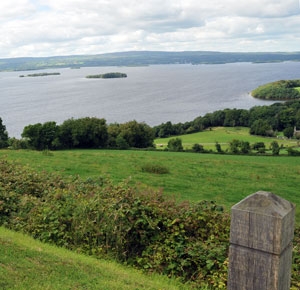
What does the project propose? Uisce Éireann plans to abstract water from Parteen Basin (Lower River Shannon), treat it near Birdhill, Co Tipperary, and pipe treated water about 170km through counties Tipperary, Offaly and Kildare to a new termination reservoir at Peamount, Co Dublin, connecting into the Greater Dublin Area network.
How much water would be taken? Uisce Éireann says the scheme would abstract a maximum of 2% of the average/long-term average flow at Parteen Basin.
Why is it being pursued? Uisce Éireann says the Eastern & Midlands region is over-reliant on a single source (the River Liffey system) and that population/economic growth and climate pressures will increase demand; it says a new source is needed for resilience.
What is the cost and timeline? Subject to planning, Uisce Éireann proposes construction starting in 2028, completing within five years, with an estimated budget of €4.58bn–€5.96bn and more than 1,000 direct jobs at peak construction.
How many landowners are affected? Reporting on the scheme states the underground pipeline would cross lands belonging to about 500 owners.
What are objectors saying? 1) Environmental impact on the Shannon / Natura 2000 protections. A key objection is potential ecological impact on the Shannon system. Parteen Basin is within the Lower River Shannon SAC (site code 002165), and critics argue abstraction/infrastructure must be proven not to adversely affect protected habitats/species.
2)“Fix the leaks first”. Opponents argue Dublin’s deficit should be tackled primarily through leakage reduction and network upgrades. Uisce Éireann’s own figures state about 37% of treated water is lost through leaks nationally. (Analysis has cited 37% nationally and 33% in the Greater Dublin Area lost to leaks.)
3)Demand and climate assumptions. Some stakeholders have challenged the robustness and horizon of demand forecasts,raising issues such as planning beyond 2050, climate impacts and high-demand users (including data centres and large energy users), particularly during drought.
4) Cost escalation and value-for-money. Objectors highlight the multibillion price tag (often described as “about €6bn”) and warn of further escalation; reporting has referenced a worst-case risk scenario exceeding €10bn in official correspondence.
5) Land access, CPO concerns, disruption and compensation/tax. Landowner objections include disruption during construction, long-term land constraints, and concerns about compensation treatment (including tax/VAT implications).
What is Uisce Éireann’s response ?
It says the abstraction would be capped at 2% of Parteen Basin flows and that the application includes an EIAR and Natura Impact Statement. It says leakage reduction is part of the solution, but that a new source is still required for resilience. It points to landowner liaison and a negotiated voluntary wayleave/land package agreed with farming bodies.
What happens next ? Uisce Éireann says planning notices run from 12 December 2025 and planning documents will be available from 19 December 2025 once lodged. The project page states submissions/observations to An Coimisiún Pleanála may be made from January 6th 2026 until February 25th 2026 at 5.30pm.
This website uses cookies to improve your experience. We'll assume you're ok with this, but you can opt-out if you wish.AcceptRead More
Privacy & Cookies Policy
Privacy Overview
This website uses cookies to improve your experience while you navigate through the website. Out of these, the cookies that are categorized as necessary are stored on your browser as they are essential for the working of basic functionalities of the website. We also use third-party cookies that help us analyze and understand how you use this website. These cookies will be stored in your browser only with your consent. You also have the option to opt-out of these cookies. But opting out of some of these cookies may affect your browsing experience.
Necessary cookies are absolutely essential for the website to function properly. This category only includes cookies that ensures basic functionalities and security features of the website. These cookies do not store any personal information.
Any cookies that may not be particularly necessary for the website to function and is used specifically to collect user personal data via analytics, ads, other embedded contents are termed as non-necessary cookies. It is mandatory to procure user consent prior to running these cookies on your website.






Recent Comments