A series of upbeat tourism announcements and investment-led press releases in County Tipperary are landing against a stark national backdrop, after Eurostat reported that Ireland was one of only two EU member states to record a fall in tourist accommodation nights in 2025.
Eurostat’s early estimates show EU tourism nights hit a record 3.08 billion in 2025, up 2% year-on-year, while Ireland recorded a -2% decline (with Romania the only other country in negative territory).
Irish coverage of the figures has put the Republic’s total at 41.3 million tourist bed nights in 2025 (-1.8%), describing it as the weakest performance in the EU. The same reports note that the peak summer quarter (Q3 2025) fell 4.1%, with hotel nights down 8.4% and camping nights down 27%, while “holiday and other short-stay accommodation” rose 15.4%.
Of course, local press releases paint a different story: “growth”, “season extension”, “boost tourism”.
Despite the national decline, Tipperary tourism communications over the past year have repeatedly highlighted expansion, regeneration and new visitor offerings:-
Dromineer, Lough Derg (Nenagh MD): Tipperary County Council press material describes a €1.2m watersports facility as a “best-in-class” outdoor tourism hub intended to enhance the visitor experience and support year-round activity. Roscrea (Grant’s Hotel): A Council press release on a feasibility study lists explicit objectives to “boost tourism activity” and increase footfall and dwell time in the town centre, alongside employment and night-time economy goals. Carrick-on-Suir: A Council announcement confirms award of a €2.9m Phase 2 contract under the regeneration plan, presented as part of a wider town-centre renewal drive. Thurles: Sadly the only tourism-tagged local event promotion (Feb 2025), shows a Council/MD posting highlighting for St Patrick’s Day Parade, Thurles (2025), categorised under Tourism, which pushes footfall activity in the town centre (music, attractions, participation).
Thurles it is time to wake up.
Countywide “Roadmap” messaging: The Tipperary Tourism Roadmap 2025–2030 sets out targets around economic growth, season extension and giving visitors reasons to stay longer, and was publicly launched in late November last year.
Fáilte Ireland funding (Midlands / JTF): A national press release announced €5.5m for 17 regenerative tourism projects, bringing the scheme’s announced tourism funding to almost €60m, reinforcing the wider policy message of building new and improved visitor experiences.
The core contradiction: publicity versus performance. The tension is not that Tipperary’s projects are unwelcome, it is that headline-grabbing announcements about “growth” and “visitor experience” risk sounds hollow when the national data shows Ireland moving against the EU trend.
A key question now is whether local strategies are being matched with measurable outcomes, bed capacity, occupancy, shoulder-season activity, and value-for-money delivery, or whether Tipperary is simply publishing plans, while the wider system continues to lose ground.
We will be speaking about solutions in the coming days, so do stay tuned. Update Thurles Tourism Debate: Part IV.
Ireland is warned of a risk of severe recession if US interest-rate row triggers global market shock.
Ireland’s economy is highly internationalised, having strong links to US-headquartered firms and export markets. Risks to global growth can translate rapidly into weaker investment, softer labour demand and pressure on our public finances.
Ireland faces heightened exposure to a potential global downturn, if a growing political struggle in the United States over interest rates, undermines confidence in financial markets.
In laymans terms, at the heart of this row is a simple question: who gets to decide the “price of money” in the world’s biggest economy; will it be elected politicians, or an independent central bank? Truth is when investors think the answer is “politicians”, markets can react fast and brutally.
What it means to “lower interest rates” and why leaders like it. Interest rates are basically the rent we pay to borrow money. When the central bank cuts rates, it usually makes borrowing cheaper across the economy (mortgages, business loans, car finance), which can boost spending and hiring. Politicians often like lower rates because they can create a quick-feel-good phase: asset prices can rise (shares, housing), repayments can feel easier, and growth can look healthier, at least for a while.
Why central bank independence matters. Central banks are kept at arm’s length from day-to-day politics because there’s a temptation in politics to prefer the short-term “sugar rush” over long-term stability. If markets believe a central bank is being leaned on to cut rates for political timing, rather than economic reasons, two big fears kick in: (1)Inflation risk: People start to worry that prices will rise faster in future because money is being kept “too cheap” for “too long”. That can become self-fulfilling as workers and firms demand higher wages/prices to keep up. (2)Credibility risk: Investors begin to doubt the central bank will do the unpopular thing (like keeping rates higher) when it’s necessary to control inflation. Once credibility cracks, it’s hard to repair quickly.
The current concern centres around pressure being applied in Washington for sharply lower US interest rates and the risk is that markets interpret this as political interference in central-bank decision-making. If investors lose faith in the independence of the US central bank, economists warn it could spark turbulence in US bond markets, with knock-on effects for global borrowing costs, credit availability, stock markets and economic growth.
Why this US debate matters to Irish households and businesses Interest rates are often described as the “price of money”. When rates fall, loans can become cheaper and economic activity can pick up. However, if markets believe rates are being pushed down for political reasons rather than economic conditions, investors can demand a higher return to compensate for perceived inflation risks and uncertainty, driving up longer-term borrowing costs, weakening confidence and tightening credit. Even though Ireland doesn’t set US interest rates, a shock in US bonds and credit markets tends to spread because US markets are a cornerstone of global finance.
For Ireland, the main channels are: (a) A global recession hits trade and jobs If the US slows sharply, global demand usually weakens and investment decisions get postponed. That hits Irish growth through exports and business confidence. (b) Ireland’s US link is unusually large. Ireland is deeply tied into US multinational supply chains and activity. One detailed public analysis found: A large share of value added in key sectors is US-controlled (e.g. manufacturing and ICT). The US is a major destination for Irish goods exports (with a heavy concentration in pharma/chemicals and medical devices).
A measurable macro link: a 1% fall in US Gross Domestic Product (GDP, the total monetary value of all final goods and services produced within a country’s borders during a specific period, serving as the primary measure of its economic health and size) was estimated to line up with about a 1% fall in Irish Gross Value Added, (GVA, economic measure of the value of goods and services produced in an area, industry, or sector), with a knock-on hit to corporation tax receipts over time. That means Ireland can feel US trouble not just “a bit”, but systemically: exports, investment, and tax revenue all become vulnerable at the same time.
In plain terms, the fear is that an attempt to engineer cheaper money could backfire:
Bond markets could wobble if investors worry about inflation or policy credibility, Banks and lenders could pull back as funding becomes less certain, Businesses may postpone investment, and Households feel the squeeze through weaker jobs growth and reduced confidence.
Ireland’s exposure: trade, multinationals and a concentrated tax base. Ireland is particularly sensitive to external shocks because of its openness and the scale of its links with the US. Recent independent analysis has pointed to Ireland’s heavy reliance on corporation tax receipts, noting that corporation tax accounts for well over a quarter of total tax receipts, with around three-quarters paid by large US multinationals. Separately, ratings analysis has noted that in 2024 around one-third of Ireland’s goods exports went to the United States, dominated by pharmaceuticals. The European Commission’s latest macroeconomic forecast also highlights Ireland’s vulnerability to international developments and “shifting US policies” that could affect multinational activity and profitability here, even as it projects Irish GDP growth moderating sharply in 2026 after exceptional export-driven growth in 2025.
What is happening in the US. US central-bank independence has become a flashpoint amid public criticism of the current Fed Chair Jerome Powell and a widening political dispute over the direction of interest rates. The Jerome Powell has publicly warned that pressure and intimidation risk politicising monetary policy, insisting that rate decisions should be set “based on evidence and economic conditions”.
US reporting in recent days has underlined that Jerome Powell’s term ends in May 2026, though he may remain on the Board of Governors until 2028, and that developments in Washington are being closely watched by investors and policymakers.
Implications: “storm conditions” and what to watch. Economists caution that the risk to Ireland is less about any single policy move and more about market confidence: if US bond markets become disorderly, the shock can transmit quickly through global finance, tightening credit and weakening demand across trading partners.
For Irish consumers and firms, the warning signs would typically include:
sharp falls in major stock indices.
sudden jumps in longer-term borrowing costs.
banks tightening credit standards.
a marked cooling in global trade and business investment.
Therefore, Ireland is especially sensitive because it’s an small, open economy with a very large US trade/Foreign Direct Investment/tax footprint, so a US-driven global shock can hit Ireland hard and quickly.
But where were the invitations issued to the people whose pay packets actually depend on Thurles and Tipperary tourism? How many hoteliers, B&B owners, tour operators, café and retail staff, guides and event organisers; those living the reality of the season, were to be found at this month’s council meeting to spell out, at firsthand, what is choking the industry and what must now change?
Isn’t there a deeper irony here? Are these not the very councillors and officials who, year after year, have presided over the slow neglect and destruction of our visitor attractions, allowing standards to slip, opportunities to be missed, and avoidable damage to mount, only to now lament the consequences as if they were bystanders rather than decision-makers?
I refer of course to the Tipperary County Council members who warned that a shortage of visitor accommodation is now the single biggest barrier to growing tourism in Tipperary, limiting the ability to host events, retain tour groups and convert day-trippers into overnight stays.
Tourism.
At the Tipperary County Council’s January meeting, elected members heard an update on tourism performance and marketing activity, but stressed that the county is effectively trying to grow the visitor economy with insufficient “bed nights” to support conferences, festivals and group travel.
Councillors also raised concerns that coach tours are increasingly stopping briefly at flagship attractions before moving on, while organisers of large gatherings are forced to seek accommodation outside the county due to limited capacity and difficulty securing blocks of rooms.
But is that claim borne out by the numbers? With this year’s event already sold out, and with day tickets priced at €30 and weekend tickets at €45, even a basic calculation raises obvious questions. If the headline attendance figure of 5,000 daily in attendance is accurate, then 5,000weekend tickets at €45.00, would suggest revenue in excess of €225,000 before any single day-ticket sales are even considered.
So why, then, is the Council’s support being described as paltry? On what basis is that judgement being made and against what set of accounts?
The difficulty is that, as far as we are aware, the Council has not publicly published last year’s accounts in relation to the Thurles Musical Festival. Without transparent figures, it is impossible for the public to assess what level of funding was provided, what costs were involved, or whether the paltry label is fair, exaggerated, or simply politically convenient. After all this so called paltry sum is taxpayers money; not the gift of a benevolent and nameless altruistic patroness or good fairy.
Indeed until those accounts are published, the questions will remain: how much public money was actually provided, where did it go, and how does it stack up against the event’s apparent income?
The core warning they claim is simple – promotion is outpacing capacity. Members were clear that marketing alone cannot deliver tourism growth if Tipperary cannot provide sufficient accommodation to keep visitors in the county overnight. The meeting heard that reduced availability in some areas and the broader national pressures on accommodation is impacting Tipperary’s ability to capitalise on tourism demand.
While officials noted this is a national challenge, councillors argued that the consequence for Tipperary is specific and immediate: events, tour groups and visitor spending are being lost because the county cannot consistently offer the volume of bed nights required to compete.
But the people whose pay packets depend on Thurles and Tipperary tourism ask the question “Where is all this promotion”? Local councillors flagged caravan/campervan parking as a growing issue, particularly “unmanaged” parking in scenic spots (including lakeside areas), and warned it’s causing local frustration and putting pressure on amenities.
What was said, in plain terms: Unmanaged campervan/caravan parking is becoming “a serious problem” in some areas, with councillors reporting that it is increasingly to be found along lakes and other high-amenity locations. Councillors said they’re getting complaints from residents about inappropriate parking and pressure on local facilities, and that the situation needs planned, serviced, designated locations rather than ad hoc stopping.
Council officials responded that a dedicated campervan and caravanning strategy is being developed, backed by‘external funding‘, to ensure facilities are properly located/designed and to curb unmanaged activity.
We will be speaking more about these failures in the coming days, so do stay tuned. See Part II HERE.
Most significant reform of Irish asylum laws in the history of the Irish State.
The government has given approval to publish the International Protection Bill 2026, legislation that will lead to the “most significant reform of Irish asylum laws in the history of the State” in line with the EU Migration and Asylum Pact.
The Bill will put in place a new EU framework to manage migration and asylum for the long-term and will ensure Ireland’s policy aligns with other EU countries. The overall objective of the Bill is to provide a fair, sustainable and efficient asylum procedure that is consistent with how asylum laws operate across the EU.
The Bill introduces faster processing of asylum claims with a much more efficient decision-making system. Faster processing will mean that applicants spend less time in IPAS accommodation, and it will significantly reduce the cost of the asylum system to the State. Faster decision-making will also mean that successful applicants will be granted international protection sooner, and those whose applications are refused can be returned to their country of origin sooner.
The International Protection Bill 2026 will replace the International Protection Act 2015.
In July 2025, the Department launched the first phase of pilot pact implementation programme. The first phase aimed to test the ability to process cases end-to-end within the time frame of the future Border Procedure. This requires a first and second-instance decision, with a return order where appropriate, delivered within 12 weeks, and a return effected within a further 12 weeks. During this first phase, the implementation team also mirrored some elements of the screening process as well as parts of the future border procedure that are permitted under current legislation.
Phase one was conducted from July 1st to October 7th 2025 and included applicants from three designated safe countries of origin, Georgia, India and Brazil.
During the initial three months, pilot applicants were successfully processed within the 12 week timeline permitted for first and second instance decisions under the Border Procedure. On average, cases took less than 60 days from application to final decision being issued.
This represents a significant shift from the current median processing times in the IPO and IPAT, and therefore a significant reduction in costs for accommodation and other supports.
On October 8th 2025 the second phase of the transition pilot was launched with the addition of the remaining 12 designated safe countries of origin. Early this year future phases of the pilot will be implemented, in advance of the Pact coming into effect in June 2026.
The government and the Attorney General are developing provisions for inclusion in the Bill to give effect to the proposals, approved by Government on November 26th 2025, that adults who are beneficiaries of international protection will not be entitled to seek family reunification for a period of three years following their grant of international protection.
They must also demonstrate that they are financially self-sufficient. This will be assessed by reference to appropriate income thresholds to be prescribed by the Minister. They will also have to show financial self-sufficiency and not be in receipt of certain social welfare payments or owe money relating to International Protection Accommodation Services (IPAS) payments.
The Government proposes to bring forward amendments at Committee Stage to address Material Reception Conditions, Restrictions of Movement, Detention, Special Reception Needs and Labour Market Access, as required by the EU Reception Conditions Directive. Other matters to be dealt with by amendments to the Bill during the legislative process include legal counselling, legal advice and legal aid, and matters relating to data sharing.
The Bill will now be presented to the Houses of the Oireachtas and follow the standard parliamentary process over the coming months with a view to enactment in the Spring session, so that it can become operational as required by EU law by June 12th 2026.
The pre-legislative scrutiny report on the General Scheme, including 92 recommendations, was published on December 1st. Some recommendations have been given effect in the published Bill, and others will be considered as the Bill proceeds through the legislative process.
From Ultra-Processed Foods To Hormone Residues: Food Safety, Public Health & Corporate Accountability Collide.
A landmark lawsuit filed by the City of San Francisco against major food and drink manufacturers has signalled a new phase in public health enforcement, one that treats diet-related harm not as an individual failing, but as a market and regulatory failure demanding immediate accountability.
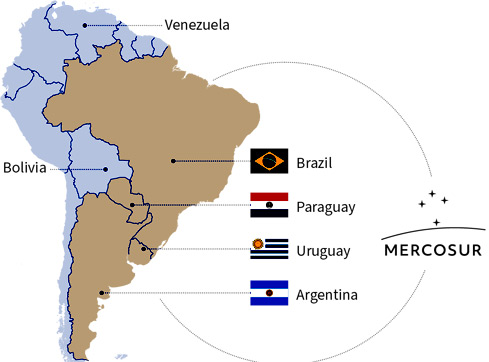
San Francisco alleges that ultra-processed foods were engineered and marketed in ways that encourage over-consumption, especially among children, and that the public ultimately pays the price through higher rates of chronic disease and spiralling healthcare costs. While that case will be tested in court, its wider message is already echoing across the Atlantic: Europe is facing its own “trust test” over what we allow into our food chain, particularly under the EU–Mercosur trade agreement.
Why this matters in Europe now: On 9 January 2026, EU member states greenlit the signature of the EU–Mercosur agreements, with the European Parliament’s consent still required before conclusion.
The European Commission states that EU rules apply equally to domestic and imported food, and that the agreement “upholds” EU food safety and animal/plant health standards.
However, confidence in “standards on paper” depends on something more basic: verifiable controls and traceability in practice.
Banned substances are not theoretical: recent Irish and EU recalls. The EU prohibits the use of hormones for growth promotion in farm animals. EFSA has also noted that ractopamine, a beta-agonist, is banned for use in food-producing animals in the EU and that the ban applies to meat produced in the EU and imported from third countries. Against that backdrop, Irish and EU reporting in recent weeks has documented the recall of Brazilian beef products after banned hormone residues were detected, including confirmation that a quantity entered the Irish market and was subject to official recall and follow-up.
The enforcement gap: what the EU’s own audit found. A 2024 European Commission DG SANTE audit of Brazil’s residue controls concluded that while many aspects of residue control plans were broadly consistent with EU principles, arrangements to guarantee that cattle destined for the EU market had never been treated with oestradiol 17β were “ineffective”. The audit stated the competent authority could not guarantee the reliability of operators’ sworn statements on non-use, and was not in a position to reliably attest to compliance with the relevant EU health certificate section.
This is the crux of the Mercosur anxiety: not whether Europe has rules, but whether Europe can consistently verify compliance, when supply chains are long, oversight differs, and commercial incentives are strong.
Ultra-processed foods and “addictive design”: the parallel problem. The San Francisco case centres on claims of deceptive marketing and products engineered to drive consumption. Meanwhile, the health evidence base around UPFs continues to expand. A major BMJ umbrella review reported that greater UPF exposure is associated with higher risk of adverse health outcomes, particularly cardiometabolic outcomes, across many studies. Controlled research has also shown that ultra-processed diets can increase calorie intake and weight gain compared with minimally processed diets under tightly controlled conditions.
The common thread is accountability: when products (or supply chains) are designed to maximise throughput and profit, public health cannot rely on consumer vigilance alone.
Calls to action Tipperary is now calling for a joined-up response that protects consumers, supports credible producers, and restores trust in our food chain: (1) A tougher “trust-but-verify” regime on imports). Full use of the EU’s Official Controls framework to ensure import compliance is proven through audits, sampling, and enforceable consequences, not assurances alone. (2)Mandatory transparency on audit findings and corrective action plans. Where EU audits identify weaknesses in residue controls or traceability, the public must see timelines, milestones and proof of remediation. (3)Stronger protections for children in the food environment. Restrictions on marketing tactics that normalise high-sugar, high-salt, heavily engineered foods to children—mirroring the direction of the San Francisco action. (4)Clearer front-of-pack information and health claims enforcement. Consumers should not need a chemistry degree to understand what they are buying, or whether “healthy” claims stand up. (5)A level playing field for farmers and processors meeting EU rules. Irish and EU producers operating under strict bans and controls must not be undercut by imports where verification is demonstrably weaker.
San Francisco has drawn a line under the era of ‘hands off’ regulation when public health harms are foreseeable and widespread. Europe is now at a similar crossroads. The EU–Mercosur debate cannot be reduced to tariffs and quotas: it is also about trust, enforcement and the credibility of our bans on hormones and other restricted substances. Public health must not be negotiated away, nor should consumers be asked to carry the risk.
This website uses cookies to improve your experience. We'll assume you're ok with this, but you can opt-out if you wish.AcceptRead More
Privacy & Cookies Policy
Privacy Overview
This website uses cookies to improve your experience while you navigate through the website. Out of these, the cookies that are categorized as necessary are stored on your browser as they are essential for the working of basic functionalities of the website. We also use third-party cookies that help us analyze and understand how you use this website. These cookies will be stored in your browser only with your consent. You also have the option to opt-out of these cookies. But opting out of some of these cookies may affect your browsing experience.
Necessary cookies are absolutely essential for the website to function properly. This category only includes cookies that ensures basic functionalities and security features of the website. These cookies do not store any personal information.
Any cookies that may not be particularly necessary for the website to function and is used specifically to collect user personal data via analytics, ads, other embedded contents are termed as non-necessary cookies. It is mandatory to procure user consent prior to running these cookies on your website.




Recent Comments