POINT Youth Diversion Project Opens in Thurles; as Youth Diversion Reaches Every Community in Ireland.
Ms Catherine Ardagh, TD.
Minister of State Ms Catherine Ardagh has officially opened the Providing Opportunities in North Tipperary Youth Diversion Project, known as POINT YDP, in Thurles.
The project will support young people and families across Thurles, Templemore and surrounding areas in central Tipperary.
The opening marks an important milestone for youth justice in Ireland, with Youth Diversion supports now available to children and young people nationwide. There are now 92 Youth Diversion Projects and 4 Targeted Youth Diversion Projects operating across the State.
Youth Diversion Projects play a vital role in helping young people move away from anti-social or criminal behaviour and towards positive opportunities, personal development, education, training and stronger community connections.
Speaking at the opening, Minister Ms Ardagh highlighted the life-changing impact these projects can have for young people, their families and their wider communities. She said diversion gives young people the chance to access support early, build confidence, make positive choices and avoid the long-term consequences that can come from entering the criminal justice system.
POINT YDP is administered by Foróige, Ireland’s largest youth organisation, which delivers youth services and projects across the country.
The Government has also confirmed continued investment in youth justice services, with total funding for Youth Justice measures rising to €43 million this year.
This new project is a welcome and significant development for North Tipperary, ensuring that young people in the area can access the guidance, support and opportunities they need to reach their full potential.
Did you get your taxpayer-funded Christmas card, calendar, sympathy card, congratulations card, bookmark, postcard, or perhaps a handy copy of the 1916 Proclamation?
No? Strange. Because since the start of last year, TDs and Senators managed to produce more than 10.5 million customised print items through the Oireachtas print facility, all in connection, we are told, with “parliamentary duties”.
Deck the Halls with Public Money.
Among the highlights from this festival of ink and entitlement were: – 167,600 calendars, 65,210 Christmas cards, 45,225 greeting cards, 25,570 sympathy cards, 3,990 congratulations cards, customised bookmarks, postcards, and 8,700 copies of the 1916 Proclamation.
Nothing says “Republic” quite like printing the Proclamation at public expense while 85,000 newsletters and leaflets end up being pulped because they were never collected.
One batch of 35,000 newsletters apparently had an error. Another 30,000 booklets were printed in double the required amount. A further 20,000 were not collected after illness and, understandably, “went out of his head”.
Of course, mistakes happen. Usually, when ordinary people make them at work, there is a cost. In Leinster House, the cost appears to be paper, ink, staff time, recycling and the taxpayer’s patience.
From Leinster House with Love – Postage Included?
And here is the real festive question: if all these cards and calendars are being printed at our expense, who is paying for the stamps? Did TDs and Senators have access to prepaid Oireachtas envelopes?
So, did you get a card? Did you get a calendar? Did you get a bookmark? Did you get a sympathy card before you even knew you needed sympathy?
Fine Gael TD for Co. Clare, Mr Joe Cooney has received confirmation from Minister for Enterprise, Tourism and Employment Mr Peter Burke, that a leading Irish company is expected to announce a significant investment in Shannon this summer.
Raising the issue the Dáil during a Topical Issue debate on industrial development and employment opportunities in the Mid-West region, (latter which covers three counties: Tipperary, Clare and Limerick, with a population of 473,269 or about 9.94% of Ireland’s total population), Deputy Joe Cooney said the expected announcement would be a strong boost for the region.
Deputy Cooney said the development would be a key step in strengthening the region as a counterbalance to Dublin’s economic concentration. He stated, “The over concentration of development in Dublin is not just a Dublin issue, it is a national planning challenge. The Mid-West, and Shannon in particular, can and should act as a counterbalance, providing space, capacity and opportunity for sustainable economic growth.” He further stated that Shannon has the infrastructure and capacity to support major investment, “Shannon offers what Dublin increasingly cannot, including space for enterprise, aviation development, space for housing, and space within the planning system to move with speed and ambition. That is why it is ideally placed to support Ireland’s next phase of balanced regional development.”
Minister Burke told the Dáil that the Mid-West region was “uniquely positioned” for enterprise growth and confirmed that a major announcement was expected later this summer.
He continued, “There will be a very significant announcement during the summer by a leading Irish-born company in relation to Shannon. This will be a strong testament to the work of Government in providing key infrastructure and supporting a highly skilled workforce.”
The Minister added that Government policy was focused on “unlocking the full economic potential of all regions”, highlighting Shannon Airport, Foynes Port and strong links with third-level institutions in the Mid-West. Deputy Cooney said the region must continue to be developed as a genuine alternative economic hub, “Balanced regional development cannot just be a policy aspiration. It has to be delivered in practice. Shannon has the assets, the talent and the ambition to play a central role in delivering that balance.”
He said he would continue to work with Government, agencies and local stakeholders to secure further investment and employment opportunities in the region.
The details of the investment are expected to be announced later this summer.
There has been little change in water quality indicators in 2025. Overall water quality remains unsatisfactory in many areas.
Excess nutrients from agriculture and wastewater remain the greatest challenge to water quality improvements, with phosphorous and nitrate levels still too high in many of our waters.
Some areas show improvements which is promising, but these are being offset by declines elsewhere. The scale and pace of implementation of actions to protect and restore water quality needs to be increased.
The message could not be clearer, and it should be a wake-up call for every community living beside a river in Ireland, including those of us along the River Suir.
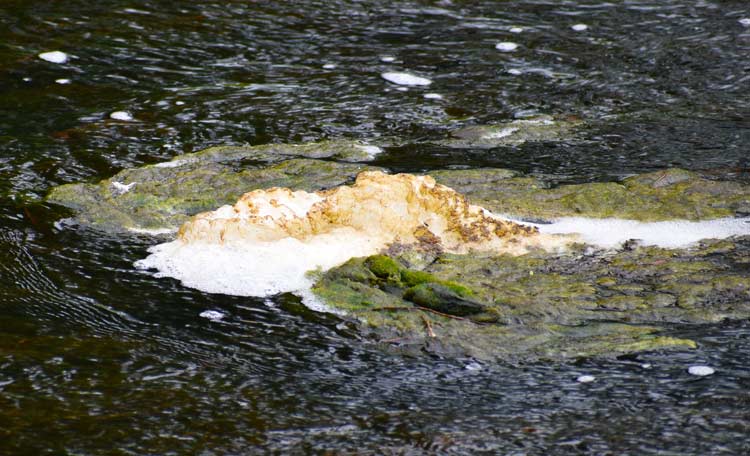
The EPA’s Water Quality in 2025: An Indicators Report shows that there has been little change in water quality indicators in 2025, with overall water quality still unsatisfactory in many areas. Nutrient levels remain too high in a large proportion of water bodies, and slightly more than half; 54% of rivers and lakes are in good or better biological quality. So the question must be asked locally: why is the River Suir still being neglected? For the past 14 years, we have heard promises, plans, meetings, schemes, visits and announcements, but the visible condition of parts of the Suir, particularly around Thurles, remains totally unacceptable.
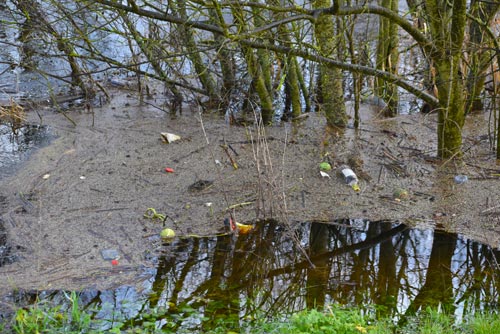
River Suir, Thurles, Co. Tipperary. Pic: G. Willoughby.
On 25 May 2026, Tipp Mid West Radio reported that North Tipperary TD Mr Michael Lowry said he was submitting a funding application for works on the River Suir between Templemore and Ballycamas. That announcement is indeed welcome, but it also raises a very simple question: after so many years of concern about the condition of the Suir, why are we still at the stage of applications, announcements and proposed works?
We are also told that the Government has amended the Minor Works Scheme, that Tipperary County Council has been allocated €150,000 for river conveyance works, and that funding applications of up to €2 million may be made to cover remedial works. Mr Lowry has said he will work with Cllr Micheál Lowry to progress a plan for the River Suir, and Minister Kevin “Boxer” Moran is expected to visit Thurles to view the river’s condition. That is welcome, but it cannot become yet another photo opportunity, followed by another decade of delay.
The EPA is clear that excess nutrients from agriculture, wastewater and run-off remain the greatest challenge to improving water quality. It has also said that while some areas are improving, those gains are being offset by declines elsewhere, and that the scale and pace of action must increase.
LAWPRO is working across the wider River Suir catchment to reduce damaging discharges, while community groups and Rivers Trust initiatives are encouraging local people, landowners and stakeholders to get involved in protecting the Suir and its tributaries. That community involvement is important, but communities cannot do this alone.
The missing ingredient for the River Suir is not more talk, it is delivery.We need clear answers:
► What works will be carried out? ► When will they begin? ► Who is responsible for delivery? ► Has the funding application now been submitted? ► What section of the river will be prioritised first? ► How will pollution and damaging discharges be reduced? ► How will progress be measured and reported publicly?
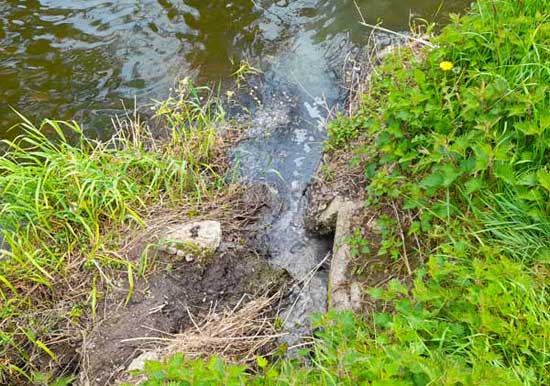
River Suir, Thurles, Co. Tipperary. Pic: G. Willoughby.
The River Suir is one of this region’s greatest natural assets. It should not be treated as an afterthought. Clean water supports biodiversity, public health, recreation, tourism, farming, fishing and local pride.
After 14 years of discussion, the people of Thurles and the wider Suir catchment area deserve more than statements of concern. They deserve action, visible funded and accountable.
In the middle of a housing crisis, it is unacceptable that Tipperary County Council collected not one wafer-thin copper cent in derelict property tax in 2024.
Across the country, millions in derelict-site levies remain uncollected while homes lie idle, streets are blighted, and families continue to wait for secure housing. Tipperary was reportedly the only local authority in Munster not to collect any derelict property tax in 2024/25.
Even Tánaiste Mr Simon Harris has now acknowledged the failure, saying the new derelict property tax is being driven by frustration at the lack of action and that local authorities have not done enough to tackle dereliction. If Government itself can see the system is failing, then Tipperary County Council must explain why no derelict property tax was collected here in 2024 while so many people remain in housing need.
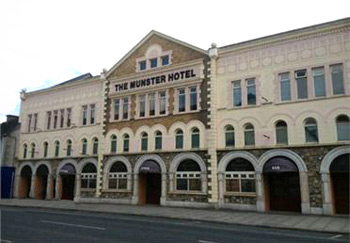
The derelicteyesore that is the Munster Hotel, Thurles, Co. Tipperary.
This is not good enough. Derelict and vacant properties are not just an eyesore. They are a wasted public resource at a time when people are struggling to rent, young families cannot buy, and many are waiting years for social housing.
In Tipperary alone, 1,358 households were recorded in 2024 as qualifying for social housing support whose need was not being met. The latest homelessness figures also show 98 adults in emergency accommodation in Tipperary during one week in April 2026.
What are our sleepy Municipal District Councillors & Politicians doing to correct this situation?Answer – Absolutely Nothing. Every suitable derelict property should be identified, pursued, taxed where appropriate, and brought back into use. Where owners refuse to act, the Council should use every legal power available, including compulsory purchase orders where necessary.
A housing crisis demands action, not excuses. Tipperary needs enforcement, accountability, and urgency. Leaving homes idle while people are desperate for housing is indefensible.
This website uses cookies to improve your experience. We'll assume you're ok with this, but you can opt-out if you wish.AcceptRead More
Privacy & Cookies Policy
Privacy Overview
This website uses cookies to improve your experience while you navigate through the website. Out of these, the cookies that are categorized as necessary are stored on your browser as they are essential for the working of basic functionalities of the website. We also use third-party cookies that help us analyze and understand how you use this website. These cookies will be stored in your browser only with your consent. You also have the option to opt-out of these cookies. But opting out of some of these cookies may affect your browsing experience.
Necessary cookies are absolutely essential for the website to function properly. This category only includes cookies that ensures basic functionalities and security features of the website. These cookies do not store any personal information.
Any cookies that may not be particularly necessary for the website to function and is used specifically to collect user personal data via analytics, ads, other embedded contents are termed as non-necessary cookies. It is mandatory to procure user consent prior to running these cookies on your website.





Recent Comments