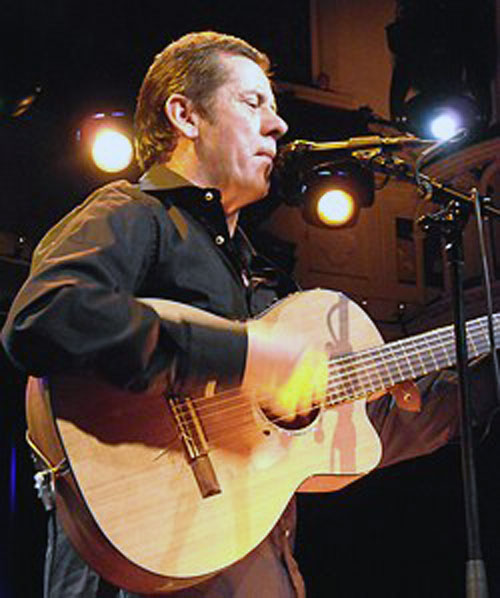
Lyrics and Vocals: Irish born (Co. Kildare) folk singer-songwriter Kevin Barry Moore better known professionally as Luka Bloom, (younger brother of folk singer Christy Moore).
Luka Bloom.
Written in 2003 as the Iraq War loomed, Luka Bloom’s song offers a quiet but resolute response to the fear and division of its time. Speaking from the perspective of an ordinary Irish citizen, it rejects the rush toward conflict and affirms our shared desire to live together in peace. More than two decades later, its simple message has lost none of its urgency or humanity.
I am not at war with anyone. I am not at war with anyone. Go away war planes, You bring fear and shame, I am not at war with anyone. I give my love to Iraq and to Syria. I give my love to Israel and to Palestine. We could live as one between the sea and sun. I am not at war with anyone. I don’t need to be friends with everyone, But I’d like to live in peace with everyone. This rush to war was wrong, I just sing my song, I am not at war with anyone. I risked my life to cross the Mediterranean. I’d love to go back home and live in peace again. But now I hope I’ll find the heart of humankind, ‘Cause I am not at war with anyone. I am not at war with anyone.
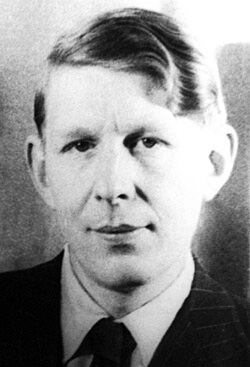
Funeral Blues by the late British-American poet W.H. Auden (1907 – 1973).
W. H. Auden’s“Funeral Blues”, (Also known as “Stop all the clocks,” a reference to its first line), is a powerful poem that captures the overwhelming grief of losing a loved one. It first appearing in a 1936 play W. H. Auden and Christopher Isherwood called “The Ascent of F6”. The poem was later substantially rewritten and published in its familiar form in 1938.
Late W. H. Auden(1907 – 1973)
Through commanding language, stark imagery, and a movement from everyday surroundings to the wider universe, Auden portrays a speaker whose loss feels so immense that time, nature, and society itself should come to an immediate halt. The poem ultimately explores how bereavement can transform a once-meaningful world into one that seems almost empty and without hope.
Funeral Blues (Read here by award winning English character actor Simon Callow.)
Stop all the clocks, cut off the telephone, Prevent the dog from barking with a juicy bone, Silence the pianos and with muffled drum Bring out the coffin, let the mourners come.
Let aeroplanes circle moaning overhead Scribbling on the sky the message ‘He is Dead’. Put crepe bows round the white necks of the public doves, Let the traffic policemen wear black cotton gloves.
He was my North, my South, my East and West, My working week and my Sunday rest, My noon, my midnight, my talk, my song; I thought that love would last forever: I was wrong.
The stars are not wanted now; put out every one, Pack up the moon and dismantle the sun, Pour away the ocean and sweep up the wood; For nothing now can ever come to any good.
International pop star Boy George, whose paternal family has strong connections with Thurles, Co. Tipperary has released a new song titled “We Will Dance Again”.
The Culture Club frontman; born George Alan O’Dowd in England, has spoken warmly about his Irish background. In a 2013 Hot Press interview, he said his father’s relatives were from Thurles, adding that his family visited Ireland regularly during his childhood.
George Alan O’Dowd – Boy George.
His new pop-reggae song was posted to X and Instagram under both its English title and the Hebrew title עוד נרקוד (Od Nirkod). Its central message supports Israel and Jewish communities following the Hamas-led attack of October 7th 2023.
The song refers particularly to the attack on the Nova music festival, where 344 civilians and 34 members of the security services were killed and 44 people were taken hostage. Its title adopts a phrase that became an expression of hope and resilience among Israelis following the massacre.
In the song, Boy George rejects allegations of genocide against Israel, characterises its military campaign as a response to the Hamas attack and declares: “I stand with the Jews.” He also criticises musicians and activists whom he believes have condemned Israel without adequately acknowledging the events of October 7th.
The release has generated sharply divided reactions. Supporters have praised Boy George for confronting antisemitism and remembering the Nova victims, while critics say the song disregards the enormous Palestinian death toll and the findings of UN inquiries concerning Israel’s conduct in Gaza. Israel rejects allegations that it has committed genocide.
Boy George is not Jewish but has frequently spoken about his affinity with Jewish people and his determination to support Jewish friends and communities. He has also said that this support does not mean he lacks compassion for Palestinians or agrees with everything happening in Israel.
For Thurles readers, the release carries an additional local point of interest; one of Britain’s most distinctive pop performers has openly identified the town as part of his extended O’Dowd family story.
Lyrics and Vocals: Written and performed by American singer-songwriter Neil Diamond(Neil Leslie Diamond).
Neil Diamond’s song,“I’ve Been This Way Before” is a reflective song about the recurring nature of human experience. The singer has most certainly known success, but also rejection, doubt, happiness and pain, and recognises that these emotional cycles will return. This realisation gives him resilience. Neither praise nor hardship is permanent, so he can accept both without being defined by either. His lyrics may also perhaps carry a spiritual meaning. References to having travelled this path before and encountering familiar souls again, can suggest reincarnation, an afterlife, or a deeper connection that survives death. Listeners commonly describe the song as spiritual and hopeful, particularly in relation to bereavement and reunion.
Neil Diamond.
Released on his 1974 album “Serenade”, “I’ve Been This Way Before” is a deeply contemplative song about resilience, spiritual recognition and the repeating patterns of life. Diamond’s narration arrives at a calm understanding; every experience passes, yet each may return in another form. The song perhaps invites us to face life’s changing fortunes with humility and hope, and perhaps to believe that the people and connections we once treasured are never entirely lost.
I’ve Been This Way Before.
I’ve Been This Way Before.
I’ve seen the light, And I’ve seen the flame, And I’ve been this way before, And I’m sure to be this way again. For I’ve been refused, And I’ve been regained, And I’ve seen your eyes before, And I’m sure to see your eyes again, Once again. For I’ve been released, And I’ve been regained, And I’ve sung my song before, And I’m sure to sing my song again. Once again. Some people got to laugh. Some people got to cry. Some people got to make it through, By never wondering why. Some people got to sing. Some people got to sigh. Some people they never see the light, Until the day they die, But I’ve been released, And I’ve been regained, And I’ve been this way before, And I’m sure to be this way again, Once again. One more time again. Just one more time.
Rain has returned to Thurles this evening, Monday, July 27th 2026, after an unusually long dry spell.
Met Éireann’s provisional summer records show that much of County Tipperary experienced sustained dry conditions through the first three weeks of July, while the nearby Gurteen weather station had recorded a notably wet June. On the available evidence, the last proper measurable rain in the Thurles area appears to have fallen around June 30th, making this evening’s rainfall the first significant rain for almost four weeks.
“Singin’ In The Rain”.
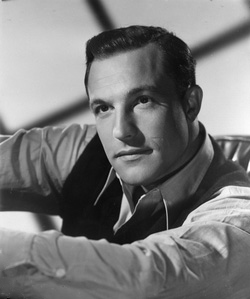
Lyrics: American lyricist and a Hollywood film producer, the late Arthur Freed[Grossman](1894–1973). Vocals: American dancer, actor, singer, director and choreographer, the late Gene Kelly(Eugene Curran Kelly)(1912–1996) latter whose parents were both of second generation Irish decent. [Derry on his mother’s side (Harriet Catherine Curran), and possibly Co. Clare (but not conclusively) on his father’s side (James Patrick Joseph Kelly)]
Late GreatGene Kelly. (Eugene Curran Kelly)(1912–1996).
Few songs capture the pleasure of a rainy evening as perfectly as “Singin’ in the Rain,” famously performed by Gene Kelly in the 1952 musical film of the same name. First introduced decades earlier, the song became immortal through Kelly’s joyful performance as he dances along a rain-soaked street, splashing through puddles and turning an ordinary downpour into an expression of happiness and romance. The sequence remains one of the most recognisable moments in cinema history.
I’m singin’ in the rain, just singin’ in the rain, What a glorious feelin’, I’m happy again. I’m laughin’ at clouds so dark up above, The sun’s in my heart and I’m ready for love. Let the stormy clouds chase everyone from the place, Come on with the rain, I’ve a smile on my face. I walk down the lane with a happy refrain, Just singin’, singin’ in the rain.
Dancing in the rain, I’m happy again.
I’m singin’ and dancin’ in the rain. I’m dancin’ and singin’ in the rain.
This website uses cookies to improve your experience. We'll assume you're ok with this, but you can opt-out if you wish.AcceptRead More
Privacy & Cookies Policy
Privacy Overview
This website uses cookies to improve your experience while you navigate through the website. Out of these, the cookies that are categorized as necessary are stored on your browser as they are essential for the working of basic functionalities of the website. We also use third-party cookies that help us analyze and understand how you use this website. These cookies will be stored in your browser only with your consent. You also have the option to opt-out of these cookies. But opting out of some of these cookies may affect your browsing experience.
Necessary cookies are absolutely essential for the website to function properly. This category only includes cookies that ensures basic functionalities and security features of the website. These cookies do not store any personal information.
Any cookies that may not be particularly necessary for the website to function and is used specifically to collect user personal data via analytics, ads, other embedded contents are termed as non-necessary cookies. It is mandatory to procure user consent prior to running these cookies on your website.





Recent Comments