There’s something special on the way for Thurles, a proper live night out with a purpose at its heart; supporting “In Our Hands”, the re-roofing campaign to preserve our Cathedral of the Assumption, for generations to come.
We’re delighted to confirm that final plans for the music night are now almost concluded. While the final details are still being agreed, the spirit of the evening is already clear; community, music, and meaningful support for a cause that matters deeply, right across the Diocese of Cashel and Emly.
Those performing have very kindly committed to making this a night that keeps the campaign front and centre, and it’s being done in a particularly fitting way. The event will also mark a milestone year for the professional performers themselves, a moment that reflects years of gigs, hard work, and loyal audiences who kept showing up. Rather than celebrating quietly, they’ve chosen to share it in the best way possible; by helping the events committee restore Thurles Cathedral roof.
So what can people expect?
A professional live music night — Upbeat, Welcoming, and Community-focused for all age groups.
Clear ticketed fundraising on the night, with a chance to win major raffle prizes.
Confirmed updates coming soon in relation to date, venue and time.
In the meantime, please keep an eye out, spread the word, and if you can, bring a friend. Nights like this work best when the whole community gets behind them — because the best kind of anniversary isn’t just looking back. It’s giving something forward.
Tickets will cost €25.00. Come for the tunes, the atmosphere, and the shared sense of doing something worthwhile — all under the one roof, all pulling in the same direction.
Lyrics: Canadian singer/songwriter guitarist, and music historian Allister MacGillivray. Vocals: Canadian retired country, pop music and 4 Grammy Award singer Anne Murray.
Anne Murray.
“Song for the Mira” was written in 1973. The “Mira”isn’t a person or a made up place-name for the lyric and video shown hereunder; it’s the actual Mira River in Cape Breton Island, at the eastern end of the Canadian province of Nova Scotia, and by extension the easy-going river communities along its banks.
Song For The Mira.
Song For The Mira.
Out on the Mira on warm afternoons, Old men go fishing with black line and spoons, And if they catch nothing they never complain, I wish I was with them again. As boys in their boats call to girls on the shore, Teasing the one that they dearly adore, And into the evening the courting begins, I wish I was with them again. Can you imagine a piece of the universe, More fit for princes and kings? I’ll trade you ten of your cities, For Marion Bridge and the pleasure it brings. Out on the Mira on soft summer nights, Bonfires blaze to the children’s delight, They dance ’round the flames singing songs with their friends, And I wish I was with them again. Can you imagine a piece of the universe, More fit for princes and kings? I’ll trade you ten of your cities, For Marion Bridge and the pleasure it brings. Now I’ll conclude with a “wish you go well” Sweet be your dreams, and your happiness swell, I’ll leave you here, for my journey begins, I’m going to be with them, Going to be with them, I’m going to be with them again. Can you imagine a piece of the universe, More fit for princes and kings? I’ll trade you ten of your cities, For Marion Bridge and the pleasure it brings. Can you imagine a piece of the universe, More fit for princes and kings? I’ll trade you ten of your cities, For Marion Bridge and the pleasure it brings.
Songwriters: American folk singer, guitarist, producer and songwriter, the late Fred Hellerman(1927-2016) and American lyricist, librettist, singer, songwriter and director, the late Marshall Barer(1923-1998). Vocals: American country music singer, songwriter, and 2010 inductee into the Country Music Hall of Fame, the late Don Williams(1939-2017).
The Late Don Williams.
One of the gentlest country No. 1s of the late ’70s – ‘I’m Just a Country Boy’, – a 1977 hit from that era.
I’m Just A Country Boy.
I ain’t gonna marry in the fall. Ain’t gonna marry in the spring, ‘Cause I’m in love with a pretty little girl, Who wears a diamond ring. And I’m just a country boy, Money have I none, But I’ve got silver in the stars, And gold in the mornin’ sun. Gold in the mornin’ sun. Never gonna kiss the ruby red lips, Of the prettiest girl in town. Never gonna ask her if she’d marry me, I know she’d turn me down. ‘Cause I’m just a country boy, Money have I none, But I’ve got silver in the stars, And gold in the mornin’ sun. Gold in the mornin’ sun. I never could afford a store bought ring, With a sparklin’ diamond stone. All I could afford is a lovin’ heart, The only one I own. ‘Cause I’m just a country boy, Money have I none, But I’ve got silver in the stars, And gold in the mornin’ sun. Gold in the mornin’ sun.
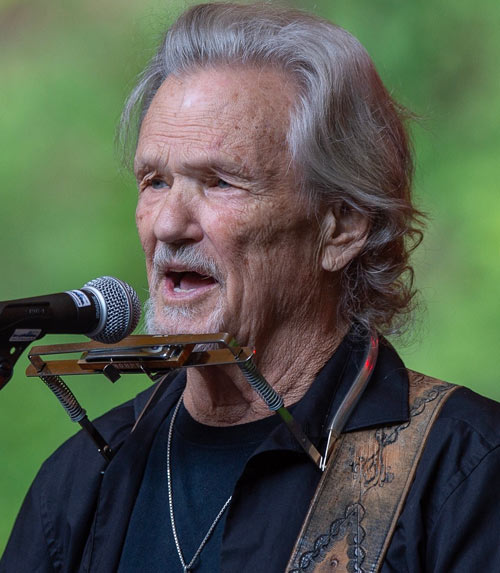
Lyrics and Vocals: American singer, Song writer, Musician and Actor the late Kris Kristofferson. (1936–2024).
The Late Kris Kristofferson.
Kris Kristofferson’s gospel-leaning country classic ‘Why Me ?’ feels less like a performance and more like a plainspoken prayer. Released as a single in March 1973 from the album “Jesus Was a Capricorn“, it became the biggest solo hit of his career, topping Billboard’s Hot Country Songs in July 1973. Kristofferson later linked it to a moment at a church service when the preacher asked, ‘Is anybody feeling lost?’, and his hand went up. So, with that honesty at the heart of it, here’s ‘Why Me ?’.
‘Why Me ?’
Why me Lord, what have I ever done, To deserve even one, Of the pleasures I’ve known. Tell me Lord, what did I ever do, That was worth loving You, Or the kindness You’ve shown. Lord, help me Jesus, I’ve wasted it, So help me Jesus, I know what I am, But now that I know that I’ve needed You, So Help me Jesus, my soul’s in Your hand. Try me Lord, if You think there’s a way, I can try to repay, All I’ve taken from You. Maybe Lord, I can show someone else, What I’ve been through myself, On my way back to You. Lord, help me Jesus, I’ve wasted it, So help me Jesus, I know what I am. But now that I know that I’ve needed You, So help me Jesus, my soul’s in Your hand. Lord, help me Jesus, I’ve wasted it, So help me Jesus, I know what I am. But now that I know that I’ve needed You, So help me Jesus, my soul’s in Your hand. Jesus, my soul’s in Your hand.
Lyrics and Vocals: Irish singer, songwriter and entertainer of the country and Irish genre Johnny McEvoy.
Johnny McEvoy.
The song hereunder “You Seldom Come to See Me Anymore” sees Johnny McEvoy at his best: warm, gentle, and heartbreakingly direct, where a few simple lines say what a whole argument never could. It was even one of the nearest he came to breaking the UK charts, helped along by strong record sales in the North of Ireland. So if you know it, sing it, and if you don’t, you’ll certainly feel it.
You Seldom Come See Me Any More.
You Seldom Come See Me Any More.
What’s your hurry, can’t you stay and pass an hour away? And we’ll sit and dream awhile by candlelight. For when the long day’s over, that’s the time I fear the most, When I hear your footsteps fade into the night. You’re restless, tell me why there’s a teardrop in your eye, And I’ve seen it there a hundred times before. And I know you’re going to leave me and it always breaks my heart, For you seldom come to see me any more. I well recall that day when my ship it sailed away, To a far off distant land across the sea, Where a cruel war was raging, where time was standing still, And blind hatred was the order of the day. You’re restless, tell me why there’s a teardrop in your eye, And I’ve seen it there a hundred times before, And I know you’re going to leave me and it always breaks my heart, For you seldom come to see me any more. Now I know it can’t be fair for a soldier’s wife to hear, How he helped to keep his country proud and free, And no bronze nor fancy ribbons can ever heal the pain, When he comes back half the man he used to be. You’re restless, tell me why there’s a teardrop in your eye, And I’ve seen it there a hundred times before, And I know you’re going to leave me and it always breaks my heart, For you seldom come to see me any more. You seldom come to see me any more.
This website uses cookies to improve your experience. We'll assume you're ok with this, but you can opt-out if you wish.AcceptRead More
Privacy & Cookies Policy
Privacy Overview
This website uses cookies to improve your experience while you navigate through the website. Out of these, the cookies that are categorized as necessary are stored on your browser as they are essential for the working of basic functionalities of the website. We also use third-party cookies that help us analyze and understand how you use this website. These cookies will be stored in your browser only with your consent. You also have the option to opt-out of these cookies. But opting out of some of these cookies may affect your browsing experience.
Necessary cookies are absolutely essential for the website to function properly. This category only includes cookies that ensures basic functionalities and security features of the website. These cookies do not store any personal information.
Any cookies that may not be particularly necessary for the website to function and is used specifically to collect user personal data via analytics, ads, other embedded contents are termed as non-necessary cookies. It is mandatory to procure user consent prior to running these cookies on your website.









Recent Comments