“Dhá fháid é an lá, tiocfaidh an tráthnóna”. “However long the day, evening will come”.
Lyrics and Vocals: Irish ballad singer, entertainer and songwriter Johnny McEvoy.
Matthew.
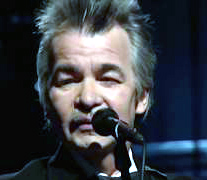
Johnny McEvoy.
What are you thinking of Matthew my friend, As you sit in your room all alone. You can see the bright lights in the city below, In the place where you once called your home, And I’m sure you can still hear the laughter and noise, Of your kids as they run and they play, And you thought you were doing the best that you could, But it just didn’t work out that way.
Chorus. Just didn’t work out, just didn’t work out, Just didn’t work out that way. You thought you were doing the best that you could, But it just didn’t work out that way.
And your mother’s long gone and your father is too, And there’s times that you wish you were dead, And this morning the nurse took your whiskey away, When she said you’re not right in the head, And when your wife calls you can’t think of her name, And her visits get shorter each day, And you wish in your heart you could walk out that door, But it just doesn’t work out that way.
Repeat Chorus.
I can see you’ve been thinking again of the past, And the place where the tall cedar grows. You remember the evening you planted that tree, But I’m sure that nobody else does, And it grew to the sky, as the years drifted by, And I’m sure it’s still standing today, But Matthew it’s somebody else’s tree now, Cause it just didn’t work out that way.
Repeat Chorus.
So close your eyes Matthew, say good night to the world, There’s a better one waiting for you. The time here is over, it’s time to move on, There’s nothing here left you can do, But you could have moved mountains and danced on the moon, You could have turned night into day, And you thought you were doing the best that you could, But it just didn’t work out that way.
Lyrics: American singer, songwriter, musician, bandleader and activist Ms Emmylou Harris and American songwriter and singer Mr William Thomas Danoff(Starland Vocal Band). Vocals: Irish actress, singer, Laurence Olivier Award winner, three time BAFTA Award winner and an Academy Award nominee, the extremely attractive and talented Ms Jessie Buckley.
Boulder To Birmingham.
[Incidently, the distance between Boulder and Birmingham USA is 1294.8 miles by road.]
Ms Jessie Buckley.
I don’t want to hear a love song. I got on this airplane just to fly, And I know there’s life below me, But all that you could show me, Was the prairie and the sky. And I don’t wanna hear a sad story, Full of heartbreak and desire. Last time I felt like this, I was in the wilderness and the canyon was on fire. I stood on the mountain, In the night and I watched it burn, I watched it burn, I watched it burn. I would rock my soul in the bosom of Abraham. I would hold my life in his saving grace. I would walk all the way from Boulder to Birmingham, If I thought I could see, I could see your face. Well, you really got me this time, And the hardest part is knowin’ I’ll survive. I’ve come to listen for the sounds, Of the trucks as they move down, Out of ninety five, And pretend that it’s the ocean, Runnin’ down to wash me clean, to wash me clean, Baby, don’t you know what I mean? I would rock my soul in the bosom of Abraham. I would hold my life in his saving grace. I would walk all the way from Boulder to Birmingham, If I thought I could see, I could see your face. I would walk all the way from Boulder to Birmingham, If I thought I could see, I could see your face, If I thought I could see, I could see your face.
The late John Prine (1946–2020), regarded as one of the most influential songwriters of his generation.
Lyrics: American singer and songwriter of country-folk music, the late John Edward Prine(1946–2020). Vocals: American singer-songwriter and producer Brandi Marie Carlile.
I Remember Everything.
I’ve been down this road before, I remember every tree. Every single blade of grass, Holds a special place for me. I remember every town, And every hotel room. Every song I ever sing, On a guitar out of tune. I remember everything, Things I can’t forget, The way you turned and smiled on me, On the night that we first met. I remember every night, Your ocean eyes of blue. How I miss you in the morning light, Like roses miss the dew. I’ve been down this road before, Alone as I can be, Careful not to let my past, Go sneaking up on me. I’ve no future in my happiness, Though regrets are very few. Sometimes a little tenderness, The best that I could do. I remember everything, Things I can’t forget. Swimming pools of butterflies, That dropped through the net. And I remember every night, Your ocean eyes of blue. How I miss you in the morning light, Like roses miss the dew. How I miss you in the morning light, Like roses miss the dew.
Loving him was easier (than anything I’ll ever do again).
Lyrics & Music: American singer, songwriter, and actor, the late Kristoffer (Kris) Kristofferson (1936 – 2024) Vocals: American folk, pop, rock and blues singer, songwriter and author Rosanne Cash.
Loving him was easier (than anything I’ll ever do again).
I have seen the morning burning golden on the mountain in the skies, Aching with the feeling of the freedom of an eagle when she flies. Turning on the world the way he smiled upon my soul as I lay dying. Healing as the colours in the sunshine and the shadows of his eyes. Waking in the morning to the feeling of his fingers on my skin. Wiping out the traces of the people and the places that I’ve been. Teaching me that yesterday was something that I never thought of trying. Talking of tomorrow and the money, love, and time we had to spend. Loving him was easier than anything I’ll ever do again. Coming close together with a feeling that I’ve never known before in my time. He ain’t ashamed to be a man nor afraid to be a friend. And I don’t know the answer to the easy way he opened every door in my mind, But dreaming was as easy as believing it was never gonna end, And loving him was easier than anything I’ll ever do again. Loving him was easier than anything I’ll ever do again.
Brian Wilson, the legendary frontman and co-founder of the band “The Beach Boys”, sadly, has died at the age of 82 years. His family announced in a statement, shared on line, “We are heartbroken to announce that our beloved father Brian Wilson has passed away,” his family stated . “We are at a loss for words right now. Please respect our privacy at this time as our family is grieving. We realise that we are sharing our grief with the world.”
I Get Around
Lyrics: Beach Boys band members Brian Wilson and Mike Love. Vocals: American Rock Band “The Beach Boys” .
Brian Wilson was born in 1942 in Hawthorne, California. He formed a group “The Beach Boys” along with his younger brothers Carl and Dennis, cousin Mike Love and friend Al Jardine; before going on to become one of America’s biggest and greatest rock bands, selling more than 100 million records globally, according to the group’s own website.
Music magazine Rolling Stone ranked them at 12 on its list of the “100 Greatest Artists of All Time”.
Wilson’s song writing with the group included three number one singles I Get Around, Help Me, Rhonda and Good Vibrations.
Wilson’s wife, Melinda passed away in 2024 after 24 years of marriage, having adopted five children; Dakota Rose, Daria Rose, Delanie Rose, Dylan and Dash, who joined his two daughters, Carnie and Wendy, from his first marriage.
In the same year his wife died (2024) it was revealed that he was suffering from dementia.
This website uses cookies to improve your experience. We'll assume you're ok with this, but you can opt-out if you wish.AcceptRead More
Privacy & Cookies Policy
Privacy Overview
This website uses cookies to improve your experience while you navigate through the website. Out of these, the cookies that are categorized as necessary are stored on your browser as they are essential for the working of basic functionalities of the website. We also use third-party cookies that help us analyze and understand how you use this website. These cookies will be stored in your browser only with your consent. You also have the option to opt-out of these cookies. But opting out of some of these cookies may affect your browsing experience.
Necessary cookies are absolutely essential for the website to function properly. This category only includes cookies that ensures basic functionalities and security features of the website. These cookies do not store any personal information.
Any cookies that may not be particularly necessary for the website to function and is used specifically to collect user personal data via analytics, ads, other embedded contents are termed as non-necessary cookies. It is mandatory to procure user consent prior to running these cookies on your website.







Recent Comments