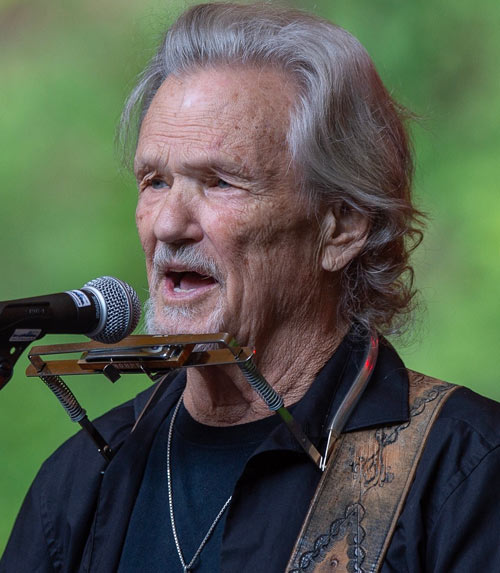
Lyrics and Vocals: American singer, Song writer, Musician and Actor the late Kris Kristofferson. (1936–2024).
The Late Kris Kristofferson.
Kris Kristofferson’s gospel-leaning country classic ‘Why Me ?’ feels less like a performance and more like a plainspoken prayer. Released as a single in March 1973 from the album “Jesus Was a Capricorn“, it became the biggest solo hit of his career, topping Billboard’s Hot Country Songs in July 1973. Kristofferson later linked it to a moment at a church service when the preacher asked, ‘Is anybody feeling lost?’, and his hand went up. So, with that honesty at the heart of it, here’s ‘Why Me ?’.
‘Why Me ?’
Why me Lord, what have I ever done, To deserve even one, Of the pleasures I’ve known. Tell me Lord, what did I ever do, That was worth loving You, Or the kindness You’ve shown. Lord, help me Jesus, I’ve wasted it, So help me Jesus, I know what I am, But now that I know that I’ve needed You, So Help me Jesus, my soul’s in Your hand. Try me Lord, if You think there’s a way, I can try to repay, All I’ve taken from You. Maybe Lord, I can show someone else, What I’ve been through myself, On my way back to You. Lord, help me Jesus, I’ve wasted it, So help me Jesus, I know what I am. But now that I know that I’ve needed You, So help me Jesus, my soul’s in Your hand. Lord, help me Jesus, I’ve wasted it, So help me Jesus, I know what I am. But now that I know that I’ve needed You, So help me Jesus, my soul’s in Your hand. Jesus, my soul’s in Your hand.
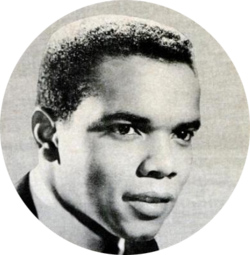
Lyrics and Vocals: Irish singer, songwriter and entertainer of the country and Irish genre Johnny McEvoy.
Johnny McEvoy.
The song hereunder “You Seldom Come to See Me Anymore” sees Johnny McEvoy at his best: warm, gentle, and heartbreakingly direct, where a few simple lines say what a whole argument never could. It was even one of the nearest he came to breaking the UK charts, helped along by strong record sales in the North of Ireland. So if you know it, sing it, and if you don’t, you’ll certainly feel it.
You Seldom Come See Me Any More.
You Seldom Come See Me Any More.
What’s your hurry, can’t you stay and pass an hour away? And we’ll sit and dream awhile by candlelight. For when the long day’s over, that’s the time I fear the most, When I hear your footsteps fade into the night. You’re restless, tell me why there’s a teardrop in your eye, And I’ve seen it there a hundred times before. And I know you’re going to leave me and it always breaks my heart, For you seldom come to see me any more. I well recall that day when my ship it sailed away, To a far off distant land across the sea, Where a cruel war was raging, where time was standing still, And blind hatred was the order of the day. You’re restless, tell me why there’s a teardrop in your eye, And I’ve seen it there a hundred times before, And I know you’re going to leave me and it always breaks my heart, For you seldom come to see me any more. Now I know it can’t be fair for a soldier’s wife to hear, How he helped to keep his country proud and free, And no bronze nor fancy ribbons can ever heal the pain, When he comes back half the man he used to be. You’re restless, tell me why there’s a teardrop in your eye, And I’ve seen it there a hundred times before, And I know you’re going to leave me and it always breaks my heart, For you seldom come to see me any more. You seldom come to see me any more.
Lyrics and Vocals: American singer and songwriter, the late John Lester Nash Jr.(1940-2020).
Johnny Nash.
Released in 1972, “I Can See Clearly Now” is the bright, reggae-laced, pop-soul single that became Johnny Nash’s signature recording; written and produced by Nash, it pairs an easy, sun-after-storm groove, with a simple message of resilience, moving from setback and confusion to renewed confidence and perspective.
I Can See Clearly Now.
I Can See Clearly Now.
I can see clearly now, the rain is gone. I can see all obstacles in my way. Gone are the dark clouds that had me blind, It’s gonna be a bright (bright), bright (bright), Sun-shiny day. It’s gonna be a bright (bright), bright (bright), Sun-shiny day. I think I can make it now, the pain is gone. All of the bad feelings have disappeared. Here is the rainbow I’ve been prayin’ for, It’s gonna be a bright (bright), bright (bright), Sun-shiny day. Look all around, there’s nothin’ but blue skies. Look straight ahead, nothin’ but blue skies. I can see clearly now, the rain is gone, I can see all obstacles in my way. Gone are the dark clouds that had me blind. It’s gonna be a bright (bright), bright (bright), Sun-shiny day. It’s gonna be a bright (bright), bright (bright), Sun-shiny day. Gonna be a bright (bright), bright (bright), Sun-shiny day. Oh, what a bright (bright), bright (bright), Sun-shiny day…
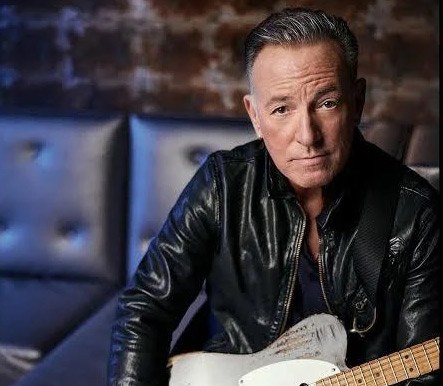
Lyrics And Vocals: American singer, songwriter and guitarist Bruce Frederick Joseph Springsteen rightly named the “Boss”.
I personally welcome and strongly supports Bruce Springsteen’s “Streets of Minneapolis”, released as an urgent act of witness and solidarity with Minneapolis, a city now in distress, and with immigrant neighbours who have been left feeling exposed and afraid.
In his accompanying statement, Mr Springsteen dedicated the song to the people of Minneapolis and to “our innocent immigrant neighbors,” and to the memory of Mr Alex Jeffrey Pretti and Mrs Renée Nicole Macklin Good.
This song release matters not only for what it condemns, but also for what it protects; the idea that a community is more than its sirens and headlines, it is families, friendships, small kindnesses, and the ordinary love that holds a place together when the temperature drops and the pressure rises.
In that sense, “Streets of Minneapolis” lands like a fierce kind of love letter: not romantic in the shallow sense, but a vow that people are worth defending, and that grief should never be met with total indifference.
Bruce Springsteen.
Mr Springsteen’s words and the song in its framing are explicit about the moral claim he is making and we stand with that claim, and with the principle behind it. Artists should/must be free to respond to public events, to challenge authority, and to stand visibly with those they believe are being harmed. There are moments when politics becomes personal; when a city’s name is spoken like a prayer; when strangers hold the line for one another; when a song becomes that “comforting hand on a shoulder”.
Streets of Minneapolis.
Streets Of Minneapolis.
Through the winter’s ice and cold, Down Nicollet Avenue, A city aflame fought fire and ice, ‘Neath an occupier’s boots. King Trump’s private army from the DHS, Guns belted to their coats, Came to Minneapolis to enforce the law, Or so their story goes. Against smoke and rubber bullets, In dawn’s early light, Citizens stood for justice, Their voices ringing through the night. And there were bloody footprints, Where mercy should have stood, And two dead left to die on snow-filled streets, Alex Pretti and Renee Good.
Oh our Minneapolis, I hear your voice, Singing through the bloody mist. We’ll take our stand for this land, And the stranger in our midst. Here in our home they killed and roamed, In the winter of ’26. We’ll remember the names of those who died, On the streets of Minneapolis.
Trump’s federal thugs beat up on, His face and his chest, Then we heard the gunshots, And Alex Pretti lay in the snow, dead. Their claim was self defense, sir, Just don’t believe your eyes, It’s our blood and bones, And these whistles and phones, Against Miller and Noem’s dirty lies.
Oh our Minneapolis, I hear your voice, Crying through the bloody mist, We’ll remember the names of those who died, On the streets of Minneapolis.
Now they say they’re here to uphold the law, But they trample on our rights, If your skin is black or brown my friend, You can be questioned or deported on sight.
In a chant of ICE out now, Our city’s heart and soul persists, Through broken glass and bloody tears, On the streets of Minneapolis.
Oh our Minneapolis, I hear your voice, Singing through the bloody mist. Here in our home they killed and roamed, In the winter of ’26. We’ll take our stand for this land, And the stranger in our midst. We’ll remember the names of those who died, On the streets of Minneapolis. We’ll remember the names of those who died On the streets of Minneapolis.
END.
Let compassion be stubborn, to let dignity be non-negotiable, and to let love for neighbour outrun fear.
Donovan’s ‘Hitchhiking Song’ – “To Try for the Sun“.
Donovan’s “To Try for the Sun” doesn’t come roaring in with big declarations, rather it arrives quietly, carrying the kind of determination you only really notice when it stays with you.
Released in the US in January 1966, the single backed with “Turquoise,” gives us a song that feels like a soft-spoken pledge, “Keep moving, even when there’s no proof the road will lead you anywhere”.
To Try for the Sun.
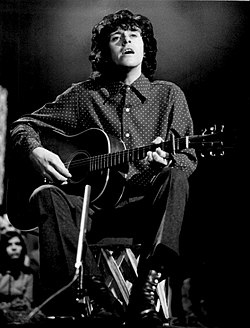
Donovan Phillips Leitch.
Lyrics and Vocals: Scottish musician, songwriter and record producer, Donovan Phillips Leitch, known mononymously as Donovan.
To Try for the Sun.
We stood in the windy city, the gypsy boy and I. We slept on the breeze in the midnight with the raindrops and tears in our eyes. And who’s going to be the one they say it was no good what we done? I dare a man to say I’m too young for I’m going to try for the sun. We huddled in a derelict building and when he thought I was asleep, He laid his poor coat round my shoulder, and shivered there beside me in a heap. And who’s going to be the one, that says it was no good what we done? I dare a man to say I’m too young for I’m going to try for the sun. We sang and cracked the sky with laughter, our breath turned to mist in the cold. Our years put together count to thirty, but our eyes told the dawn we were old. And who’s going to be the one that says it was no good what we done ? I dare a man to say I’m too young for I’m going to try for the sun. Mirror, mirror, hanging in the sky, won’t you look down what’s happening here below? I stand here singing to the flowers, so very few people really know. And who’s going to be the one they says it was no good what we done? I dare a man to say I’m too young, for I’m going to try for the sun. We stood in the windy city, the gypsy boy and I. We slept on the breeze in the midnight, with the raindrops and tears in our eyes. And who’s going to be the one, they say it was no good what we done? I dare a man to say I’m too young for I’m going to try for the sun.
END.
The song is tied to Donovan’s early, uncertain years, around Hatfield, Hertfordshire, U.K., his busking, hitchhiking, sleeping rough at times, and learning how to persist before anything “works out”. Alongside him was close friend and fellow traveller David “Gypsy Dave” Mills, part of the shoestring, unconventional arty style life that fed directly into his earliest writing.
Donovan later described “To Try for the Sun” as essentially a hitchhiking song, and even clarified that its “windy city” isn’t Chicago, it’s Manchester. That detail keeps the track grounded: real roads, real cold air, real miles.
The hitchhiking of the 1970’s for the most part here in Ireland has faded, shaped by reported safety fears, a culture of distrust, and the sheer availibility and convenience of cars and modern travel.
The song’s message still lands, hope without hype, and a simple decision to always keep trying, anyway.
This website uses cookies to improve your experience. We'll assume you're ok with this, but you can opt-out if you wish.AcceptRead More
Privacy & Cookies Policy
Privacy Overview
This website uses cookies to improve your experience while you navigate through the website. Out of these, the cookies that are categorized as necessary are stored on your browser as they are essential for the working of basic functionalities of the website. We also use third-party cookies that help us analyze and understand how you use this website. These cookies will be stored in your browser only with your consent. You also have the option to opt-out of these cookies. But opting out of some of these cookies may affect your browsing experience.
Necessary cookies are absolutely essential for the website to function properly. This category only includes cookies that ensures basic functionalities and security features of the website. These cookies do not store any personal information.
Any cookies that may not be particularly necessary for the website to function and is used specifically to collect user personal data via analytics, ads, other embedded contents are termed as non-necessary cookies. It is mandatory to procure user consent prior to running these cookies on your website.






Recent Comments