Over €17m diverted from criminals to the Irish exchequer.
The Criminal Assets Bureau (CAB) is a multi-agency statutory body established under the Criminal Assets Bureau Act 1996. The Bureau’s remit is to target a person’s assets, wherever situated, which derive, or are suspected to derive, directly or indirectly, from criminal conduct. Since its inception, the Bureau has been at the forefront of fighting organised crime in this jurisdiction and disrupting the activities of criminal gangs by depriving them of ill-gotten assets.
The Bureau has staff drawn from An Garda Síochána, the Office of the Revenue Commissioners (including Customs), the Department of Social Protection and the Department of Justice.
The latest Annual Report from the Bureau has now been published for 2024, showing €17.052 million was returned to the Irish Exchequer, due to their activities.
The Bureau sold twenty forfeited properties by 2024; the highest number sold in any one year. One of these properties was sold for €931,000, one of the highest sales prices ever achieved for any one asset.
An updated Proceeds of Crime Bill is now understood to be making its way through the Oireachtas currently and if implemented same is expected to strengthen the State’s ability to further identify, freeze, and confiscate assets linked to serious and organised crime. Once passed into law, the Criminal Assets Bureau should have stronger investigative powers and will be able to dispose of assets much more quickly than is currently the case.
Some of the Bureau’s other key achievements of the year included:
46 search operations conducted, consisting of 227 individual searches in 13 counties.
21 new cases commenced under the Proceeds of Crime Act during 2024.
Submission of 30 new Proceeds of Crime files to the Criminal Asset Section of the Chief State Solicitor’s Office for progression through the courts.
The Bureau held its second publicly advertised online auction which received global interest, realising in excess of €216k.
Yet one must be forgiven for asking, is this simply yet another tax generated on the hard pressed, ordinary Irish household?
Let us think for a moment:-
(1) Crimes in question are rightly identified by Criminal Assets Bureau. (2) Proceeds amounting to €17.052 million are now returned to the Irish Exchequer. Question: What fraction of this significant sum will actually be channelled back into local rural communities, where the crime identified first originated? Note: Every time a drug seizure is made, criminals take to rural Ireland to steal/plunder, often by force, valuables, goods etc, from the residents in towns and villages, to the benefit of the Irish Exchequer.
“Surely this amounts to a tax in another name”.
We wait to see how much of this €17.052 million, will be returned to Irish local communities.
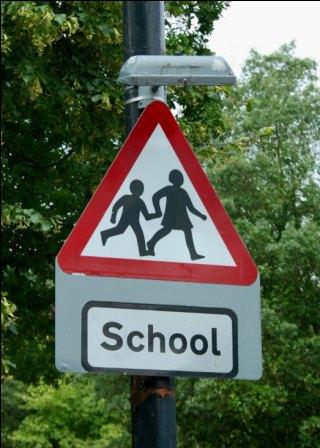
Five operators of bus and taxi services In Tipperary appeared today in a Competition and Consumer Protection Commission led prosecution at the Central Criminal Court in Dublin, where they pleaded not guilty to alleged anti-competitive conduct in the school transport sector.
Defendants Mr Andrew Walsh of Derrymore, Roscrea; Mr Raymond Heney of Camas, Cashel; Mr Noel Browne of Bansha; Mr Larry Hickey of Ardmayle, Cashel, and Mr Anthony Flynn of Golden Road, Cashel, all resident in Co Tipperary, face a single charge under the Competition Act 2002, alleging that each engaged in a concerted practice between November 1st 2014 and December 31st 2016, aimed at preventing, restricting or distorting competition in the provision of school-transport services in counties Tipperary, Limerick, Clare, South Galway and Waterford.
Presiding Judge Mr David Keane empanelled a jury of seven men and five women to hear the case, which is expected to last up to six weeks.
The prosecution arises under Section 4(1) of the Competition Act 2002, which prohibits any agreement, decision or concerted practice, whose object or effect is to prevent, restrict or distort competition in trade.
The defendants’ pleas of not guilty mean the matter will now proceed to full trial, where the court will examine evidence including tenders, contracts, communications between operators and the structure of the school transport market.
Private operators bid for contracts to provide specific routes as part of the scheme. When operators agree or coordinate how to bid (or not bid) for these contracts, the effect can be to reduce competition: fewer bidders means less pressure on prices and potentially lower quality of service.
The national competition regulator, Competition and Consumer Protection Commission (CCPC) is empowered, under the Competition Act 2002, to prosecute concerted practices or agreements between competitors which have the object or effect of restricting competition.
The school-transport scheme involves significant public expenditure. For example, in a recent review the cost was estimated at about €509 million for the 2024 year. If competition is distorted in the contracting of these services, the State and ultimately families and taxpayers may face higher costs or receive less efficient service. Coordinated bidding or allocation of routes undermines the competitive tendering process.
By pursuing criminal cases in this domain, the Consumer Protection Commission (CCPC) is signalling that collusion in public-service contracts (including school transport) is taken seriously.
2025 marks the highest number of deportations from the Irish State in over 20 years.
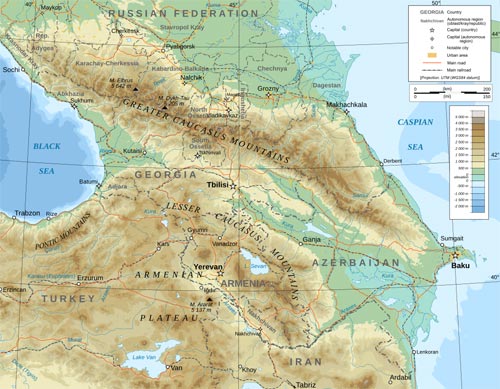
The Government today confirms the successful completion of a deportation operation from Ireland to Georgia. A charter flight departed from Dublin at approximately 9:30pm on Monday November 3rd carrying 52 individuals subject to removal orders to Tbilisi, arriving at 2:30am Irish time this morning.
Of the 52 passengers, 45 were adults and 7 were minors, with the minors all travelling as part of family units. This marks the sixth charter-flight removal operation carried out out of the State so far this year.
Charter operations, despite their significant cost, have meaningfully enhanced the capacity of An Garda Síochána to enforce a higher number of deportation orders, forming part of the broader suite of measures to strengthen immigration enforcement and removal pathways.
With yesterday’s operation, the total number of people removed by charter flights this year now stands at 205, with a further 146 individuals removed on commercial flights. This year is shaping up to be the highest number of removals by charter and commercial flights from the State in over 20 years, underscoring the Government’s commitment to ensuring the integrity of the Irish immigration system.
A voluntary return programme remains available for persons who have no lawful status in the Irish State or whose applications for international protection have been withdrawn or refused.
The returnees on yesterday’s flight were accompanied throughout by Garda officers, medical staff, an interpreter and a human-rights observer, thus ensuring that all necessary supports and safeguards were in place.
The Irish Department of Justice and Equality is responsible for immigration policy, international protection, enforcement of removal orders and the maintenance of an immigration system that is fair, efficient and respectful of human rights.
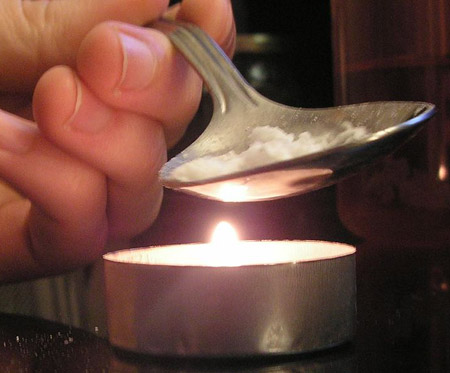
A man has been arrested following the seizure of more than €8 million (116 kilos) worth of suspected cocaine in Co Laois.
The discovery was made on October 28th 2025, during a planned search of a house and surrounding lands at Kilnaseer, south-west of Ballacolla, Co. Laois, as part of an operation targeting an organised crime group based in west Dublin.
Gardaí from the National Drugs and Organised Crime Bureau recovered 116kg of suspected cocaine hidden in nearby woodland, together with several electronic devices.
A man in his 30s was arrested and is being detained at a Laois garda station under anti-gang legislation.
Detective Chief Superintendent Séamus Boland (Head of the Garda National Drugs and Organised Crime Bureau), said gardaí remain committed to targeting those who collaborate with and facilitate organised crime and to disrupting drug trafficking routes into Ireland.
Separately, and earlier this year, in February 2025, drugs said to be worth more than 14 million euro were seized in Mountmellick, in the same county, and three men were arrested following yet another successful garda operation. In last February’s seizure, approximately 182kg of cocaine and 4kg of cannabis herb was seized and in a follow-up search in west Dublin, approximately 17kg of cocaine was seized, together with 25,000 euro in cash. Then the total estimated value of the drugs seized in Laois was more than 14 million euro.
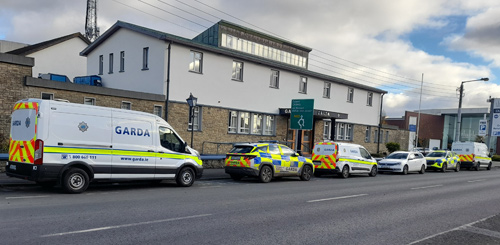
The staffing situation at Thurles Garda Station has been flagged by local people as being inadequate to meet the demands of the districts community. Thurles Garda station is indeed struggling from a lack of Garda manpower as our picture hereunder shows today, with Garda vehicles parked up due simply to the lack of Garda drivers.
A Rank of Garda Vehicles with no officers available to drive them.
In other areas we are aware from Oireachtas Data, that on some days of the week, there are only six Gardaí; (two in Newport-Killaloe, two in Nenagh on outside duty, and one or two in the Roscrea area), thus rendering the current situation in the north of Tipperary as being totally insufficient. This leads to the obvious concerns now being raised by our local community, regarding response times and the ability of Gardaí to continue to provide a visible, reassuring presence in the now Thurles sub-district.
At national level Senior Gardaí are constantly reviewing the allocation of resources solely in the context of operational need, crime trends and policing demands, e.g, Dublin City centre, however, no specific timetable for additional deployment of Gardaí to the Thurles area has as yet been publicly communicated.
Implications for the area within the Thurles sub-district and the overall Tipperary community.
The shortage of Garda personnel has several practical implications:
Fewer officers are available for community-based policing and visible patrols, thus undermining public confidence.
Potential delays in response to incidents, especially in Tipperary’s rural hinterlands served by the Thurles sub-district.
Administrative and procedural tasks (such as sign-offs for passport forms, motor-tax documentation) may become harder to obtain locally, increasing inconvenience for local citizens.
The burden on those Gardai on duty greatly increases, with fewer officers available for proactive policing, referrals and outreach.
What is now needed?
A clear commitment is now required from the Department of Justice and the Garda Commissioners’ office, regarding the allocation of additional Gardaí to be deployed in Thurles and required in the districts rural outlying stations.
Enhanced support for community policing models that allow for proactive engagement, rather than purely reactive responses.
Transparent monitoring of whether the new operational model being rolled out in the Garda service will result in more boots on the ground in Thurles, not continuous reduced cover.
Conclusion: The current staffing shortfall at Thurles Garda Station poses a legitimate concern for local residents especially the elderly. Without timely action to bolster numbers, there is a risk that both the visible policing presence and the capacity for community engagement will remain constrained. As the Garda service progresses with reforms and new deployment models, ensuring that rural and regional stations like Thurles are adequately resourced remains a matter of extreme urgency.
I searched the available public databases [including the An Garda Síochána and the Oireachtas (Parliament PQ records)] for station-specific deployment figures (e.g. cars, drivers, shifts) for Thurles Garda Station, but could not locate any recent publicly-released data that details:-
the number of patrol vehicles assigned to Thurles Garda station;
the number of available drivers or officers authorised to drive same vehicles;
the shift-cover breakdown for drivers/vehicles at Garda station:
Next Question: Are all our salaried Public Representatives still on Summer Holidays or have they hibernated for the Winter?.
This website uses cookies to improve your experience. We'll assume you're ok with this, but you can opt-out if you wish.AcceptRead More
Privacy & Cookies Policy
Privacy Overview
This website uses cookies to improve your experience while you navigate through the website. Out of these, the cookies that are categorized as necessary are stored on your browser as they are essential for the working of basic functionalities of the website. We also use third-party cookies that help us analyze and understand how you use this website. These cookies will be stored in your browser only with your consent. You also have the option to opt-out of these cookies. But opting out of some of these cookies may affect your browsing experience.
Necessary cookies are absolutely essential for the website to function properly. This category only includes cookies that ensures basic functionalities and security features of the website. These cookies do not store any personal information.
Any cookies that may not be particularly necessary for the website to function and is used specifically to collect user personal data via analytics, ads, other embedded contents are termed as non-necessary cookies. It is mandatory to procure user consent prior to running these cookies on your website.




Recent Comments