Rise In Assaults On Healthcare Workers Raises Urgent Safety Questions.
New figures show that 2,373 assaults against healthcare workers have already been recorded this year, including 23 sexual assaults.
The data, provided by the HSE, confirms that up to June 4th there were: ► 1,765 direct physical assaults. ► 585 verbal assaults. ► 23 sexual assaults. ► 103 incidents classified as “moderate”.
Thankfully, no incident so far this year has been classified as “major”, but that should not hide the seriousness of what frontline staff are facing every day.
A “moderate” incident can mean a significant injury requiring medical treatment, counselling, a report to the Health and Safety Authority, more than three days off work, or a hospital stay of several days. Healthcare workers should not have to accept violence, intimidation or sexual assault as part of their job.
One question that now needs to be examined more openly is whether alcohol and illegal drug use are contributing to some of these incidents. The current figures do not break down how many assaults involved intoxication, but the HSE’s own safety guidance recognises that people under the influence of alcohol or drugs can create sudden risks for staff.
If substance misuse is part of the problem, it must be part of the solution too, alongside safer staffing levels, proper security, better reporting, staff supports, and a zero-tolerance approach to violence in healthcare settings.
Our healthcare workers care for us in our most vulnerable moments. They deserve to be protected in theirs.
A Government That Protects Childhood But Discards Human Life Has Lost Its Moral Authority.
Ireland’s Government now speaks of protecting children from social media. An Taoiseach Mr Micheál Martin has called social media “the public health issue of our time,” and ministers are currently considering a ban for those aged under-16 years.
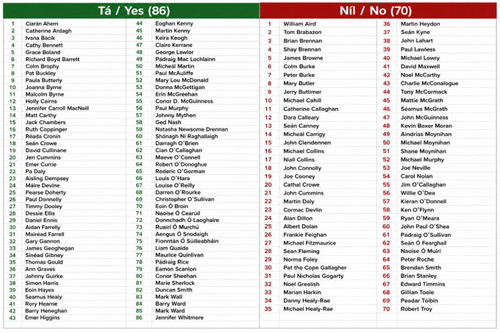
But before the State appoints itself guardian of the child, it should answer a harder question; “What value does this Irish State place on life in the first place?” This same Irish political system, that now wants to shield teenagers from algorithms, has just voted to advance the removal of the three-day waiting period before abortion. Under current Irish law, abortion is available up to 12 weeks, with a mandatory three-day wait between the first consultation and access to abortion medication. Our Dáil has now voted 86 to 70 to progress same legislation that would remove that short waiting period.
That is not a minor administrative change. It is a strong moral statement. A society that cannot tolerate even three days of reflection before ending unborn life should be very slow to lecture parents about their responsibility. A government that treats a three-day waiting period as an obstacle, while presenting social media regulation as child protection, is not showing any moral consistency. Rather it is showing moral confusion. Shame on us if we have reached the point where the unborn child is spoken of mainly as a problem to be processed instantly, while the State congratulates itself for protecting older children from their mobile phones.
This is especially hard to justify in a country where contraception is widely available and increasingly funded by the public. The HSE’s free contraception scheme covers GP consultations, prescriptions, long-acting reversible contraception such as implants and coils, the contraceptive patch and ring, oral contraceptive pills, injections, emergency contraceptionfor eligible age groups and abortion made available free through the HSE for eligible residents.
So we must ask plainly; “How did a society with so many ways to prevent conception become so casual about ending life after conception?“ This is not about denying the complexity of crisis pregnancies. It is not about lacking compassion for women in fear, in poverty, in abandonment, illness or distress. A truly pro-life society must be pro-mother, pro-family, pro-housing, pro-care, pro-disabilitysupport, pro-adoptionreform and pro-real help. But compassion cannot mean pretending there is no second life involved. Nor should compassion become a political costume worn only when same is convenient.
When it comes to social media, government says children must be protected because platforms are powerful, addictive and harmful. Fair enough. But parents cannot fight global technology companies alone. Here the Irish State has a legitimate role in regulating platforms that profit from children’s attention. But when it comes to unborn life, many of the same political voices from all political parties insist that the Irish State should step back, speed up access, remove pauses, and call such action “progress“.
The old model, where “parents decided what children watch, read, and do”, made more sense when the risks were local, visible, and interruptible; television in the sitting room, a phone line, a shop, a playground, a magazine. Social media is different because parents are not just dealing with content; they are dealing with algorithmic feeds, infinite scroll, recommendation systems, private messaging, behavioural targeting, peer pressure, age misrepresentation, and devices carried everywhere.
Coimisiún na Meán’s Online Safety Framework already reflects that shift: it says digital services must be made accountable for protecting people, especially children, from online harm. That does NOT mean Ireland is a nation of failed parents. The call for regulation is partly an admission that even good parents are being put in an unfair contest against platforms with far more data, design expertise, money, and behavioural leverage. Calling parents “failed” risks letting platforms and policymakers off the hook. To leave parents to fight the consequences individually, then to introduce State-managed verification, surveillance, and bureaucratic controls as being the remedy, is not a healthy social contract.
That contradiction is glaring.The State SHOULD NOT become the parent. Ireland’s Constitution recognises the family as the primary and natural educator of the child, and parental authority should not be casually displaced by government decree. The role of the State should be to defend the conditions in which families can flourish, through safe communities, accountable platforms, decent housing, proper healthcare, and a culture that honours life rather than managing its disposal.
But this coalition government guided by Sinn Féin, a party that supports terrorism, increasingly behaves as though family authority is optional; moral tradition is embarrassing, and life itself is negotiable. That is why the proposed under-16 social media ban should be treated with caution. Not because children do not need protection; indeed they do. Not because platforms should be left alone; they most definitely should not. But because a government that has lost moral seriousness about the beginning of life, cannot simply be trusted to become the moral guardian of childhood.
Ireland is NOT a nation of failed parents. We are a nation whose parents are being undermined from both sides: by technology companies that commercialise childhood, and by political leaders who too often replace moral responsibility with managerial control. The answer is not State parenthood, but it is NOT Silicon Valley parenthood either. The answer is a renewed culture of life and responsibility; parents first, families respected, platforms restrained, mothers supported, children protected, and unborn life recognised as something more than an inconvenience.
A government that wants to protect children online should begin by recovering reverence for children everywhere; including the child not yet born.
Minister for Justice, Home Affairs and Migration Mr Jim O’Callaghan has confirmed that 42 South African nationals were removed from the State on a charter deportation flight this week. The flight departed Dublin Airport at 3.30pm on Thursday, June 18th 2026, and landed in Johannesburg at 4.00am Irish time, this morning Friday, June 19th.
Those removed were 9 men, 18 women and 15 children. The Department confirmed that all children were travelling as part of family units. The operation was the fourth deportation charter flight carried out so far in 2026. Three earlier charter operations this year removed 130 people from the State, including 67 EU citizens removed on grounds of criminality. This follows six charter operations in 2025, during which 205 people were removed from Ireland. Of these, 182 were people subject to deportation orders, while 23 EU nationals were removed under Removal Orders. The aircraft for the latest South Africa operation was provided by Air Partner Ltd at a cost of €735,000, excluding VAT, for a return flight. The Department said the total cost of the operation is not yet available, as the invoicing process has not been completed.
Minister O’Callaghan said Ireland’s immigration system must be “rules based and robust”, adding that the enforcement of deportation orders is necessary for the system to work effectively and to maintain public confidence. He also stressed that the vast majority of South African nationals living in Ireland are legally resident and make a positive contribution to society. He thanked An Garda Síochána and officials from his department for their work in carrying out what he described as complex operations.
The Department has also confirmed a significant increase in deportation orders in recent years. In 2025, 4,700 deportation orders were signed, a 96% increase on 2024. Up to June 12th 2026, a further 2,108 deportation orders had been signed. Departures from the State have also increased. In 2024, 1,122 people left Ireland through enforced deportation, voluntary return or other mechanisms. In 2025, that figure rose to 2,111, an increase of 88%. Up to June 12th, 2026, 1,034 people had departed through these pathways.
However, voluntary return remains the Department’s preferred method for removing people who have no legal status in the State, including those refused international protection. In 2024, 934 people availed of voluntary return. That increased to 1,616 in 2025, while 712 people had used the voluntary return process up to June 12th, 2026.
Separately, new figures show there have been 27 critical incidents at International Protection Accommodation Service centres so far this year. Minister O’Callaghan confirmed the figure in a written Dáil reply to Independent Ireland. The 27 critical incidents recorded to date in 2026 compare with 62 in all of 2025, 55 in 2024, 50 in 2023, 37 in 2022 and 14 in 2021. The Minister said the figures should be viewed in the context of the large increase in the number of people living in IPAS accommodation. Current resident numbers are approximately 33,000 across 305 centres, compared with just over 7,000 residents at the end of 2021. Overall, 2,568 incidents have been recorded at IPAS centres so far this year, compared with 5,725 in 2025. The Department said incidents in IPAS accommodation can range from general or minor issues, such as complaints about behaviour or noise, to critical incidents involving mental health, self-harm or the unexpected death of a resident.
Minister O’Callaghan said IPAS teams engage with centre management when incidents occur and that providers are expected to comply with incident response policies. He also said centre management maintain ongoing contact with local Gardaí and that An Garda Síochána are contacted where there are concerns about violence or criminal activity.
The Minister also confirmed that 1,909 warning letters have been issued to IPAS residents so far this year. This compares with 4,127 warning letters in 2025 and 3,170 in 2024. There have also been 239 transfers between IPAS centres so far in 2026, compared with 544 transfers in 2025 and 521 in 2024.
In a separate Dáil response; Minister O’Callaghan said the Department’s allocation for IPAS accommodation in 2026 is €1.1 billion. This compares with spending of €1.27 billion in 2025. He said this is the first time in five years that the budget for international protection accommodation and supports is lower than the previous year.
Further charter removal operations are expected to take place during 2026.
The Dáil vote to advance Sinn Féin’s morally reprehensible Bill, abolishing the mandatory three-day waiting period before abortion, is a deeply troubling moment for Ireland.
While this was not yet the final passing of this law, it was nevertheless a decisive and shameful step. The Bill passed Second Stage by 86 votes to 70, with no abstentions recorded. It now moves to further scrutiny, but the message from a majority of TDs is already clear; one of the few remaining safeguards in Ireland’s abortion law is now in their sights.
The three-day wait was not an extreme measure. It was a modest pause. It recognised that abortion is not ordinary healthcare, but the ending of a developing human life. It gave space for reflection, for pressure to ease, and perhaps for a mother to receive support, hope and alternatives. Removing it makes abortion faster, easier and more routine.
This is Sinn Féin’s Bill. Under Mary Lou McDonald’s leadership, a party that speaks constantly about housing, poverty, families and equality has chosen to put its political weight behind stripping away a safeguard for unborn children. That says a great deal about the moral direction of the party. Sinn Féin presents itself as the voice of ordinary Ireland, yet here it has helped lead an attack on the most voiceless human beings in the Irish State.
Will there be a referendum? As things stand, probably not. The 2018 referendum removed constitutional protection for the unborn and handed the Oireachtas power to legislate for abortion. That means TDs can now change abortion law without returning to the people, unless a future constitutional amendment is proposed. This is exactly why voters were previously warned that legal protections could be steadily dismantled once the Eighth Amendment was gone.
The voting record also deserves close attention. Published breakdowns show no abstentions, but several TDs were absent or not recorded as voting. The absent/not-recorded names listed include, note; Tipperary TD Alan Kelly, Thomas Byrne, Niamh Smyth, Peter “Chap” Cleere, James O’Connor, Jennifer Murnane O’Connor, James Lawless, Conor D. McGuinness, Denise Mitchell, John Brady, Rose Conway-Walsh, Sorca Clarke, Helen McEntee, Hildegarde Naughton, Patrick O’Donovan, Neale Richmond, Verona Murphy, Charles Ward and Richard O’Donoghue.
In Tipperary, Mr Alan Kelly of Labour, (Tipperary North), was listed as absent. Both Mr Michael Lowry and Mr Ryan O’Meara voted NO; in Tipperary South, Mr Séamus Healy voted YES, while Mr Mattie McGrath and Mr Michael Murphy voted NO.
And where are the Churches? The bishops have made statements defending life, but many ordinary christians feel the public witness has been far too quiet, cautious and muted. At a moment like this, Ireland does not need whispers. It needs moral clarity.
This vote should not be forgotten. Every TD who voted Yes, and every TD who failed to vote should be remembered. Ireland deserves better than this.
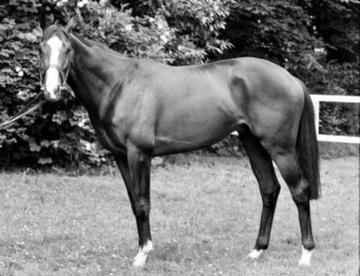
For more than four decades, the kidnapping of Shergar has stood as one of the darkest and strangest crimes in Irish racing history. The Derby-winning stallion, whose ten-length victory at Epsom in 1981 remains the widest winning margin in the race’s long history, was stolen from Ballymany Stud in County Kildare, on the night of February 8th, 1983.
Now Princess Zahra Aga Khan, daughter of the late Aga Khan, has spoken publicly about the trauma for the first time. Her account adds a chilling new detail; Shergar was not kept alive for a long ransom negotiation. She says he was killed within two days of being taken, and that his death was carried out “in an awful way.”
The ransom demand was £2 million, but it was never paid. Princess Zahra has explained that the decision was not as simple as one wealthy owner refusing to hand over money. Shergar had been syndicated, meaning the Aga Khan did not own him outright. The other shareholders had to be considered, and there was also a deeper moral question: if the money was going to the IRA, could it later be used against human beings?
Shergar.
That question helps explain why the ransom was withheld. It was not just about money, insurance, or ownership structure. It was about refusing to fund violence. Shergar had not been insured against kidnapping. As Princess Zahra put it, who would ever have imagined that someone would kidnap a horse? Yet that is exactly what happened. Armed men broke into the stud, took the horse, and briefly abducted groom Mr Jim Fitzgerald, before releasing him. Shergar’s body to date has never been found.
The IRA has long been suspected of carrying out the kidnapping. The commonly accepted version is that the operation was amateurish and badly planned. The kidnappers were prepared for a ransom demand, but not for the reality of handling a valuable, nervous, full-grown thoroughbred stallion. Shergar was a national symbol of Irish breeding and racing, but to the gang that took him, he seems to have been a fundraising target they did not know how to control.
This is where Mr Sean O’Callaghan (Irish Republican Army’s Southern Commander) enters the story. Mr O’Callaghan was a former Provisional IRA member who later became an informer for the Gardaí. In later accounts, he claimed the Shergar plot was an IRA fundraising operation that went wrong almost immediately. His version was that the kidnappers could not manage the horse, that Shergar panicked, and that he was killed shortly after being taken. Princess Zahra’s new account appears to strengthen the general outline that Shergar died early in the abduction rather than after a prolonged captivity.
In 2008, The Sunday Telegraph reported claims from another IRA member that Shergar was killed after a planned vet failed to appear and the ransom was not paid. With Gardaí searches making release difficult, allegedly decided it was too risky to let the horse go and ordered him shot four days after the kidnapping. The source said two men entered the stable, one with a machine gun, and Shergar died a violent, bloody death.
“There was blood everywhere and the horse even slipped on his own blood. There was lots of cussin’ and swearin’ because the horse wouldn’t die. It was a very bloody death.”
But Mr O’Callaghan’s role also raises an important political point: what, if anything, is the Sinn Féin connection? The true Sinn Féin connection is not that Sinn Féin has been proved to have ordered or carried out the Shergar kidnapping. No such proof has been established, and no one was ever convicted over Shergar’s disappearance. The documented Sinn Féin connection is Mr Sean O’Callaghan himself. He was not only a former IRA figure and later informer; he was also elected in 1985 as a Sinn Féin councillor in Tralee, County Kerry. That means one of the best-known sources for the IRA account of Shergar’s death, had a real political connection to Sinn Féin.
That distinction matters. Sinn Féin was widely regarded during the Troubles as the political wing of the republican movement, while the Provisional IRA was the armed organisation. The two were closely associated in public perception and republican politics, but they were not the same legal entity. So the accurate statement is this: the Shergar kidnapping has long been attributed to the Provisional IRA, and one of the key later sources on the alleged IRA role, Mr Sean O’Callaghan, was also a Sinn Féin councillor. That is the real Sinn Féin link personal, political, and historical, not a proven party role in the crime itself.
Princess Zahra’s comments bring the story back from conspiracy and folklore to its human and moral core. Shergar was not an abstract symbol, a ransom asset, or a political bargaining chip. He was a remarkable animal, described by those who knew him as kind and gentle, and he was killed because criminals tried to turn him into money.
The tragedy is sharpened by what he represented. Shergar was one of the greatest racehorses of his generation, a symbol of Irish racing excellence, and a source of national pride. His kidnapping was not only a blow to the Aga Khan’s family and racing operation; it was an act that shocked Ireland and Britain because it violated something people regarded as beyond politics.
More than forty years later, the essential facts remain grim. Shergar was kidnapped. A ransom was demanded. The money was not paid, partly because it could have funded violence. The IRA has long been suspected. Mr Sean O’Callaghan, a former IRA man, Garda informer, and later Sinn Féin councillor, gave one of the most influential accounts of what happened. Princess Zahra has now added that Shergar was killed within two days, and in a terrible way.
Shergar’s remains have never been recovered. His killers were never brought before a court. But the latest account from Princess Zahra makes one thing clearer than ever; the kidnapping was not a clever political operation. It was a cruel, bungled crime that destroyed one of racing’s greatest horses.
This website uses cookies to improve your experience. We'll assume you're ok with this, but you can opt-out if you wish.AcceptRead More
Privacy & Cookies Policy
Privacy Overview
This website uses cookies to improve your experience while you navigate through the website. Out of these, the cookies that are categorized as necessary are stored on your browser as they are essential for the working of basic functionalities of the website. We also use third-party cookies that help us analyze and understand how you use this website. These cookies will be stored in your browser only with your consent. You also have the option to opt-out of these cookies. But opting out of some of these cookies may affect your browsing experience.
Necessary cookies are absolutely essential for the website to function properly. This category only includes cookies that ensures basic functionalities and security features of the website. These cookies do not store any personal information.
Any cookies that may not be particularly necessary for the website to function and is used specifically to collect user personal data via analytics, ads, other embedded contents are termed as non-necessary cookies. It is mandatory to procure user consent prior to running these cookies on your website.



Recent Comments