Government approves publication of Criminal Law and Civil Law (Miscellaneous Provisions) Bill 2025.
The Government has approved the publication of the Criminal Law and Civil Law (Miscellaneous Provisions) Bill 2025, a wide-ranging package of reforms designed to address urgent pressures across the justice system and deliver key Programme for Government commitments.
The Bill will, among other measures, criminalise “sex for rent” arrangements; strengthen protections for victims in sexual offence trials; support responses to prison overcrowding and violence, and modernise aspects of forensic and court procedures.
Key measures in the Bill
Criminalise the exploitative practice commonly known as “sex for rent”.
Reform the disclosure of counselling records in sexual offence trials.
Expand the use of community service as an alternative to short custodial sentences.
Remove the legal barrier to the regulated use of incapacitant spray by prison officers.
Enable more advanced DNA analysis in missing and unknown persons cases.
Facilitate bail and suspended sentence bonds being taken in custody settings.
Put regulated outdoor seating for licensed premises on a permanent statutory footing.
Allow the Chief Justice to delegate certain non-judicial functions to other judges.
Tackling exploitation: new “sex for rent” offences.
The Bill introduces two specific criminal offences:
Offering accommodation in exchange for sexual activity.
Advertising accommodation in exchange for sexual activity.
These provisions cover both landlord–tenant arrangements and rent-a-room situations. The offences focus on the offer or advertisement itself; there is no requirement to prove that sexual activity occurred. The proposed penalty is a Class A fine of up to €5,000.
Protecting victims: counselling records in sexual offence trials The Bill will amend the law on the disclosure of counselling records in sexual offence trials by requiring a disclosure hearing in all cases, ensuring judicial oversight and that the privacy rights of victims and survivors are fully considered.
Responding to prison overcrowding and violence: Community service in lieu of custody.
To support non-custodial sentencing, the Bill will:
Require courts to consider a community service order (CSO) as an alternative to prison sentences of up to 24 months (currently 12 months)
Require courts to give reasons where a CSO is not imposed
Increase the maximum community service hours from 240 to 480
Incapacitant spray for prison officers
The Bill will also remove the legal barrier to the use of incapacitant spray by prison officers, with use to be regulated under provisions made by the Minister through the Prison Rules. The Department has indicated these provisions are intended to be introduced by Committee Stage amendments.
Improving missing persons investigations: advanced DNA analysis. The Bill amends the Criminal Justice (Forensic Evidence and DNA Database System) Act 2014 by inserting a new definition of “DNA profile” for missing and unknown persons cases. It also provides for more than one DNA profile to be generated from a relevant sample, to support more powerful identification techniques.
Modernising court processes, bail and suspended sentence bonds.
To better support remote/video-link participation in bail and sentencing hearings for people in custody, the Bill will:
Amend the Criminal Procedure Act 1967 to allow bail bonds to be entered before members of An Garda Síochána (where the person is in Garda custody)
Amend the Criminal Justice Act 2006 to allow suspended sentence bonds to be entered before prison governors (where the person is in custody)
These changes are intended to reduce the need for escorts to and from court and deliver time and cost efficiencies.
Civil law measures: outdoor seating for licensed premises: The Bill gives permanent effect to legal provisions for a regulated outdoor seating regime for licensed premises.
Judiciary: delegation of non-judicial functions: The Bill includes provisions to allow the Chief Justice to delegate certain non-judicial functions to other members of the judiciary.
Provisions not proceeding: Measures from the General Scheme relating to the Gambling Regulation Act 2024 are no longer proposed for inclusion in this Bill, as they have been provided for separately, under the Courts and Civil Law (Miscellaneous Provisions) Act 2025.
Politicians who condemn the deaths of children in Gaza, voted to strip protections from children at home, demonstrating a blistering display of hypocrisy.
The vote in Dáil Éireann exposed a stark and shameful contradiction at the heart of Irish political life. Parties and politicians who repeatedly condemn the killing of children in Gaza, and who speak in sweeping moral language about the sanctity of human life, were prepared to back legislation that would remove key safeguards for unborn children in Ireland.
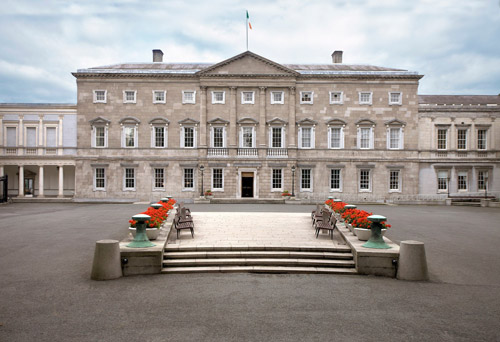
Leinster House, the seat of the Oireachtas, the parliament of Ireland. “Answer not a fool according to his folly, lest thou also be like unto him” – Proverbs 26:4.
The Health (Regulation of Termination of Pregnancy) Bill, brought forward by People Before Profit, sought to abolish the three-day waiting period for abortion on request, permit access to abortion throughout pregnancy, and decriminalise abortion provision within the State. The Bill was narrowly defeated by roll-call vote,73 votes to 71 votes. However, two senior female cabinet members Minister for Health Ms Jennifer Carroll MacNeill and Minister for Foreign Affairs Ms Helen McEntee, together with Minister for Public Expenditure Mr Jack Chambers are understood to have voted in favour of the Bill.
Yet the vote revealed something the public cannot ignore: Sinn Féin, Labour, the Social Democrats and People Before Profit, alongside the above named senior government figures, were prepared to support a far-reaching removal of legal protections for the unborn, while continuing to posture as champions of children’s lives in other international conflicts.
This is not merely inconsistency. It is moral double-standards dressed up as compassion. Time now to take a closer look at candidates before casting future votes.
When children die in Gaza, these parties demand outrage and action. But when asked to defend vulnerable life here at home, many of the same voices moved to weaken the last remaining vestiges of protections for unborn children and to expand abortion access in a way that opponents believe would normalise termination up to birth.
If the death of a child is a moral outrage in Gaza, then the destruction of a child’s life in Ireland cannot be treated as morally weightless simply because it happens quietly, clinically and behind a different set of political slogans.
Yes, time and space do matter in moments of crisis.
This is the core question Irish people deserve answered plainly: How can politicians speak with absolute moral certainty about children’s lives overseas, while voting to diminish protections for children at home in Ireland?
The public are not completely stupid. Voters can see the selective empathy and the convenient moralising. If these parties truly believe every child matters, then that principle must apply consistently, not only when it is politically fashionable, safely distant, or useful for social media outrage.
We call on Sinn Féin, Labour, the Social Democrats, People Before Profit and some government ministers to explain their position honestly, without spin:
Do they believe there should be any legal protection for unborn children?
Do they accept any limit at all on abortion access.
Do they recognise any moral weight in the life of the unborn child?
Until they answer clearly, their condemnations of the deaths of children in Gaza will ring hollow to many Irish people, not because Gaza does not matter, but because their proclaimed moral principles are being applied selectively without using rational, thus making them unfit to run this country.
Gardaí are investigating a serious assault that occurred in Cahir, Co Tipperary, in the early hours of this Saturday morning, December 20th 2025.
Shortly after 1:40am, an incident took place in the Abbey Street and Barrack Street area. A man aged in his 20s was treated at the scene by emergency services before being brought to Tipperary University Hospital with serious injuries. This mprning he remains in hospital in a critical condition.
The scene has been preserved for a technical examination and investigations are ongoing.
Gardaí are appealing to anyone who may have witnessed the incident, or who was in the vicinity of Abbey Street and Barrack Street between 1:15am and 2:00am, to come forward. Any person who may have video footage (including dash-cam footage) from the area during that time is requested to make it immediately available to investigating Gardaí.
Anyone with other information is asked to contact Cahir Garda StationTel: 052 744 5630, the Garda Confidential Line Tel: 1800 666 111, or indeed any Garda station.
Funding the fallout, voting down the fix; a Tipperary contradiction that now needs immediate answers from elected representatives.
Tipperary is far from short when it comes to finding people with big hearts. You see it in the dog rescues and sanctuaries that keep going on often bare fumes, using volunteers who juggling jobs, families and fundraising, while trying to pick up the pieces for neglected animals nobody else will take responsibility.
So it lands badly, to put it mildly, when our county’s TDs can applaud welfare funding with one hand and, with the other, vote down a measure many people see as a basic line in the sand, when it comes to animal cruelty.
On Wednesday, December 17th 2025, Dáil Éireann rejected the Animal Health and Welfare (Ban on Fox Hunting) Bill 2025 at Second Stage, by 124 votes to 24.
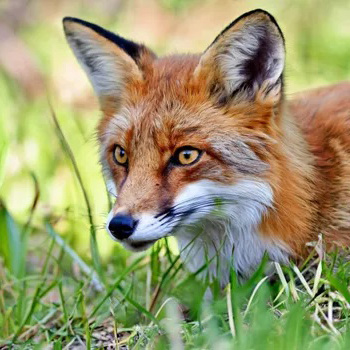
Irish for a Fox – ‘Madra Rua‘(translates into english literally as “Red Dog”). ‘Sionnach‘ also Irish word for “Fox”. Its etymology is sometimes linked to the word “shenanigans,” meaning “I play the fox”.
Was this an attempt by TDs at catching the farming vote? The Bill aimed to outlaw the use of dogs to hunt or flush out foxes, and to prohibit trapping or snaring foxes in order to eradicate them.
In County Tipperary, the Dáilvoting record was as clear as it was discomforting.
According to Tipperary local Press & Radio, Mr Séamus Healy was the only Tipperary TD to vote in favour of the Bill. Mr Mattie McGrath, Mr Michael Lowry, Mr Ryan O’Meara, and Mr Michael Murphy voted against the Bill. Mr Alan Kelly as usual sat on the fence, abstaining.
That’s not a “difference of emphasis”. That’s Tipperary’s Dáil delegation, overwhelmingly, either opposing the ban outright or declining to back it. And here’s where the contradiction bites: only days earlier, government announced what it described as the highest-ever allocation under the Animal Welfare Grants Programme, €6,434,803 to 94 charities nationwide. Tipperary’s share, some of our elected representatives reported, was less than €134,000 across six groups this year; down from “just shy of €200,000” for same six groups granted funding last year.
PAWS (Mullinahone): €10,000, (down from over €76,000 last year according to local radio).
Let me be crystal clear: those groups deserve every cent and more. They are doing essential public-good work, rescuing, rehabilitating, rehoming, some educating. But that is exactly why voters are entitled to ask a tougher question than the usual “aren’t the grants grand?” photo-op.
Why is “animal welfare” easy when it’s tidy, but difficult when it’s political?
Grants are safe. Everyone likes a grant. A minister gets to say “record funding”; a TD gets a local headline; the public gets to feel the county is decent and compassionate. And yes, to be fair, it is.
But fox hunting legislation forces a proper choice. Not a vague sentiment. A vote.
Supporters of the ban argue it’s simple: using packs of dogs to chase and tear apart a wild animal for sport, belongs in the past. Opponents dress it up as “rural reality” and “pest control”. Yet reporting on the Bill is clear on one crucial point: it would not have outlawed the shooting of foxes on one’s land for the purpose of protecting livestock. This was not, in black-and-white terms, a proposal to leave farmers helpless. It was a proposal to stop a specific practice: using dogs to hunt, flush out foxes, before tearing them into pieces, and other certain killing methods by trapping/snaring. So when four Tipperary TDs voted against it and one abstained, people are entitled to ask: what, exactly, are you defending and why?
“No” is not a policy. If the argument is that the Bill was flawed, then where is the alternative from our representatives?
Where is the concrete plan for stronger animal welfare rules that reduce suffering in practice, not just in speeches?
Where is the push for enforceable oversight, transparent standards, independent monitoring, real penalties?
Where is the willingness to say, publicly, that certain traditions don’t get a free pass any more because they are vote catching, loud, organised, or longstanding?
Because while Leinster House argues, it’s local communities that carry the consequences of a lax welfare culture, and the rescues that pick up the pieces. The same county that depends on Mo Chara, Roscrea SPCA, Haven, Great Hounds in Need, Cappanagarrane, and PAWS to cope with the everyday reality of neglect, abandonment and injury is being asked to accept political leadership that stops short the minute the issue becomes controversial.
A simple ask for 2026: explain yourselves.
Tipperary doesn’t need performative compassion. It needs consistency. If you’re Mattie McGrath, Michael Lowry, Ryan O’Meara or Michael Murphy, tell people plainly why you voted against the ban, given it did not prevent farmers from shooting foxes to protect livestock. If you’re Alan Kelly, tell people why you abstained when the county’s position was being written into the record. And if you’re Séamus Healy, tell people what you think should happen next, now that the Bill has been defeated.
Here’s the call to action: contact your TD, not with slogans, but with two questions:
If you oppose this ban, what specific alternative will you support to strengthen animal welfare in this area?
Will you commit to voting for stronger protections the next time the issue comes before the Dáil?
Because funding the rescues is the right thing to do. But it is not enough to keep funding the fallout while voting down efforts, however imperfect, to reduce cruelty at source.
A Sinn Féin activist is reported to be among three people arrested following the seizure of an estimated €4 million worth of suspected cocaine during searches in the south east of the country.
Gardaí said the operation, involving the Garda National Drugs and Organised Crime Bureau and Revenue Customs, took place on Wednesday, December 17th, as part of Operation Tara targeting organised crime groups. A business premises in Co. Kildare and a residential address in Co. Wexford were both searched, with officers seizing 58kg of suspected cocaine valued at approximately €4.06 million (subject to analysis).
Two men aged in their 30s and 40s and a woman in her 40s were arrested. Gardaí said they were detained under provisions of the Criminal Justice Acts in connection with alleged facilitation of drug trafficking for an organised crime group.
The suspected drugs are to be sent to Forensic Science Ireland, and investigations are continuing.
This website uses cookies to improve your experience. We'll assume you're ok with this, but you can opt-out if you wish.AcceptRead More
Privacy & Cookies Policy
Privacy Overview
This website uses cookies to improve your experience while you navigate through the website. Out of these, the cookies that are categorized as necessary are stored on your browser as they are essential for the working of basic functionalities of the website. We also use third-party cookies that help us analyze and understand how you use this website. These cookies will be stored in your browser only with your consent. You also have the option to opt-out of these cookies. But opting out of some of these cookies may affect your browsing experience.
Necessary cookies are absolutely essential for the website to function properly. This category only includes cookies that ensures basic functionalities and security features of the website. These cookies do not store any personal information.
Any cookies that may not be particularly necessary for the website to function and is used specifically to collect user personal data via analytics, ads, other embedded contents are termed as non-necessary cookies. It is mandatory to procure user consent prior to running these cookies on your website.





Recent Comments