|
|
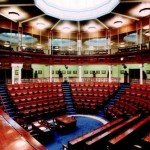 A thief stuck a pistol in a man’s ribs and said, “Give me your money“. A thief stuck a pistol in a man’s ribs and said, “Give me your money“.
The gentleman, shocked by this sudden action, said “You cannot do this; I’m a member of Dáil Éireann ! ”
The thief said, “In that case, give me my money! “
Question: What do you call someone in Dáil Éireann who is honest, ethical, intellectual, law abiding, and truthful?
Answer: A tourist.
Question: What’s the difference between the Irish Government and the Mafia?
Answer: One of them is organized.
Paddy: “My uncle ran for the Senate last year.”
Kathleen: “Really? What does he do now?”
Paddy: “Nothing – he got elected.”
A teacher in a small County Tipperary town asks her class how many of them would vote for Fianna Fáil.
Not really knowing anything about Fianna Fáil, but wanting to be liked by their teacher, all the kids raised their hands except one girl, Mary.
The teacher asked Mary why she had decided to be different.
Mary said, “Because I would vote for Fine Gael“
The teacher then asked, “Why would you not vote for Fianna Fáil ?”
Mary said, “Well, my mom votes Fine Gael and my dad votes Fine Gael, so I would vote Fine Gael !”
The teacher is a member of the local Fianna Fáil electoral committee, so she asked Mary, “What if you’re mom was a moron and you’re dad was an idiot, what would that make you?”
Mary replied, “That would make me a Fianna Fáil voter.”
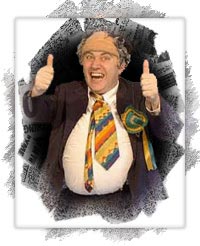
‘Das Riiiight’, it’s official folks, Irelands most popular comedian and Thurles native, Pat Shortt has been named Tipperary Person of the Year by the Tipperary Association in Dublin. Pat will be presented with his award on April 3rd, along with former Tipperary inter-county goalkeeper Tony Reddin, who won this year’s Tipperary Association Hall of Fame award.
The popular “Killinaskully” star on receiving the news of his award, stated modestly:-
“I have won a few awards recently but this one is the most important. It’s great to be recognised at home by your own peers and from your own county. I’m very proud of my County and Thurles where I hail from”.
Born in Kickham Street, Thurles, son of well known Primary school teacher Christopher Shortt, Pat was educated at the Christian Brothers School in Thurles before going on to the College of Art in Limerick. It was there he met Jon Kenny from which saw the birth of the popular comedy duo D’Unbelievables and the familiar comment “das riiight”.
An actor of note, Pat as stated has appeared with Druid Theatre Company in their production of Martin McDonough’s “The Lonesome West”. Movie titles include ‘Angela Money Dies Again’ (with Mia Farrow), ‘This Is My Father‘ (with Brendan Gleeson, Aidan Quinn, Stephen Rae and James Caan) ,’The Closer You Get” (with Ian Harte, Niamh Cusack and Sean McGinley) and in ‘Man About Dog‘ written by Belfast-born Pearse Eliot. Most recently Pat played the role of Wheeler McCoy in the movie ‘Strength & Honour’ as well as the lead role of “Josie” in the afore mentioned movie ‘Garage‘. Garage is the second feature from director Lenny Abrahamson and writer Mark O’Halloran. It picked up the CICAE Art and Essai Cinema Prize at the Cannes Film Festival. Pat also won an IFTA award for best actor in “Garage” at the Irish Film and Television Awards.
Also a very accomplished musician Pat has recorded with many bands and toured extensively in the U.S. with the brass section of ‘The Saw Doctors’. In 2006, he scored a huge hit in Ireland with the song “The Jumbo Breakfast Roll” The song was a number one hit in Ireland for six weeks with sales going 4 times platinum.
[wpyt_profile1]yD6Gpn80yWI[/wpyt_profile1]
Television credits include Tom in Fr. Ted, (Channel 4) and Bobby in The Fitz (BBC) however it was his many characters in “Killinaskully” which made him a household name in every Irish home.
For those of you who have not yet seen the genius of Pat Short live do not fear, hereunder are some of the venue’s at which he will be performing Shortt-ly
6th & 7th March – Royal Theatre Castlebar
13th, 14th & 15th March – INEC Killarney
19th, 20th & 21st March – Forum Waterford
25th & 26th March – River Side Park Hotel Enniscorthy
 Seventy five year old Paddy wanted a loan of €1000 from his local bank. Seventy five year old Paddy wanted a loan of €1000 from his local bank.
The Bank Manager viewed his loan application with rather obvious apprehension.
“Paddy for what purpose do you need this money?” he asked.
“Sure I wants to visit me daughter across the water in England” was the response.
“Paddy, you will appreciate I hope, that €1000 is a considerable sum to lend, do you have any collateral ?” asked the banker.
“Sure I don’t understand, exactly what does you mean by collateral Sir?” asked Paddy mystified.
“Allow me to put it simpler for you Paddy, do you own anything of value that we could sell later in the event you should be unable to repay this loan. Have you got a house for example?” asked the Bank Manager.
“O begod I do Sir”, replied Paddy, “Sure I owns a solid stone, one roomed house, newly thatched and close to the bog in Glengoole“.
Not very impressed with this reply, the banker decided to probe his client further.
“Well do you own any livestock?” queried the Banker.
“Yis Sir, begod I have a herd of about two thousand Merino sheep grazing up in them Ballingarry hills” replied Paddy.
Some what happier with this disclosure, the Bank Manager finally decided to award Paddy his €1000 loan, subject to clarification, readers will understand.
One month later, to the very day, seventy five year old Paddy was back in the bank.
He pulled out a very large roll of €50 notes from his dirty jacket.
“I be’s here to pay me debts sir”, he informed the Bank Manager.
He then handed the banker the full required amount to clear his indebtedness to the bank.
The banker eyed the remaining large roll of €50’s still gripped tightly in Paddy’s fist.
“Well Paddy,thanks very much”, said the Bank Manager, “but do you mind if I ask you, what are you going to do with the rest of that money?”
“I be going to hide it safely under the mattress on me bed Sir” said Paddy, “Sure it will cover me funeral expenses when I die, and I won’t be a burden on anyone.”
“Well why don’t you deposit it safely in my bank,” the banker asked.
“What does you mean by deposit it.” asked Paddy suspiciously, gripping his money more tightly.
“You put the money in our bank and we take good care of it for you. If you want to use it anytime in the future you can come in here and withdraw it.” said the manager.
Paddy leaned across the counter “Don’t mind me asking, but do you have any collateral Sir?”.
A School Inspector from the Department of Education paid a supprise visit to a local primary school
The Sixth Class were in the middle of a discussion relating to words and their meanings.
The teacher asked the inspector if he would like to lead the discussion on the word ‘tragedy’, so the Inspector asked the class for an example of a ‘tragedy’.
 A little girl raised her hand: ‘If a school bus carrying fifty children drove over a cliff, killing everyone inside, that would be a ‘tragedy’ A little girl raised her hand: ‘If a school bus carrying fifty children drove over a cliff, killing everyone inside, that would be a ‘tragedy’
I’m afraid not, explained the Inspector – that’s what we would call a ‘great loss‘
A little boy stood up and offered the following example: ‘If my best friend, who lives on a farm, is playing in the field and a tractor runs over him and kills him, then that would be a ‘tragedy.’
‘No’, said the Inspector, ‘that would be an accident‘.
The room went silent. No other children volunteered. The Inspector searched the room. ‘Isn’t there someone here who can give me an example of a tragedy?’
Finally, at the back of the room, little Johnny raised his hand…
In a quiet voice he said: ‘If a plane carrying a group of top Irish banking executives fly over Iraq and were struck by a ‘friendly fire’ missile & blown to smithereens, then that would be a ‘tragedy’
‘Fantastic!’ exclaimed the Inspector ‘That’s right, and can you tell me why that would be a tragedy?’
‘Well,’ says little Johnny ‘it has to be a tragedy, because it certainly wouldn’t be a ‘great loss’ and it probably wouldn’t be an ‘accident’ either!’
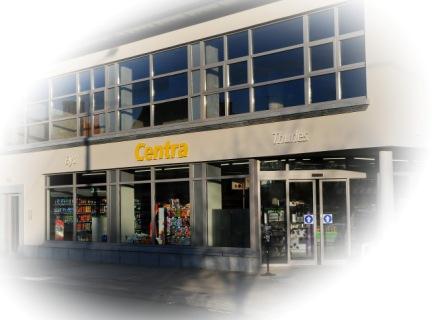 Mary and her husband John were shopping in the new Ely’s Thurles Centra Supermarket, Slieve-na-mon Road, Thurles, Co.Tipperary. Mary and her husband John were shopping in the new Ely’s Thurles Centra Supermarket, Slieve-na-mon Road, Thurles, Co.Tipperary.
John picks up a crate of canned Guinness and sticks it in the shopping trolley, being pushed by his wife.
“What do you think you are doing? demands his wife Mary.
“Are you blind, can’t you see they’re on special offer, they’re only €10 for 24 large cans”, said John.
“Put them back, we can’t afford them”, said Mary in a somewhat annoyed tone.
Several shopping aisles later Mary, his wife, picks up a €20 jar of face cream and places it in the shopping trolley.
“What do you think you’re doing” said John.
“It’s my normal face cream and it helps to make me to look more beautiful”, says Mary confidently.
Well said John sarcastically “So do 24 cans of Guinness and they are only half the price.”
|
Support Us Help keep Thurles.info online by donating below. Thank you.
Total Donated 2026: €290.00
Thank You!
Daily Thurles Mass Livestream
|





Recent Comments