“Whenever you read a good book, somewhere in the world a door opens to allow in more light.” – Vera Nazarian.
Sadly a number of rare books, maps, and letters; readily identified as previously having being housed in St. Patrick’s College Library, (situated in Cathedral Street, Thurles, Co. Tipperary) were actioned off at the Gresham Hotel, Upper O’Connell Street, Dublin, recently (December 13th 2016 last to be precise), by Auctioneers Fonsie Mealy, Castlecomer, Co. Kilkenny, as part of their Christmas 2016 sale.
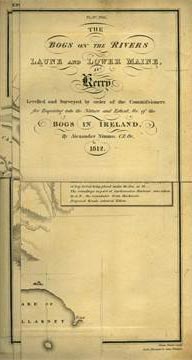
Lot No 734
Dozens of books, with visible St Patrick’s College library stamp and shelf numbers, were among some 800 or so items in this December 13th auction. There were several with handwritten ownership marks of Archbishop James Butler (Lot No’s. 555, & 745.) priced at €6,000 – €8,000 or Archbishop Robert Laffan (Lot No’s. 691, & 693.) and at least one book donated by former early 20th century Thurles Town Clerk, local historian and IRB 1916 Volunteer, the late Mr James (Jimmie) Kennedy, with his name on it (Lot No, 630.).
There were also maps (Beaufort 280, Report of Bogs Lot No, 734.) priced at €1,800 – €2,500, Taylor & Skinner (Lot No 693) and several books with engraved views (Grose, Bartlett 215, Eyzingen (Lot No, 706) priced at €3,000 – €4,000), latter which can be made immensely more profitable by tearing our the maps or engravings and selling the pages separately in antique frames.
There were many travel books (if my memory serves me correct) reflecting Fr James Ryan’s fondness for travel – the man who brought the Pallottines to Thurles. There was an early report on the United States, (Lot No, 290.) priced at €1,000 – €1,500). There were several collections of Irish Statute laws; useful for obtaining knowledge and further understanding regarding the penal laws of the 1700’s, (Lot No’s 531, 710, 664.).
It must be to our great shame, as a community, that Thurles has been deprived of such historic works, now gone to ‘God knows where’, and this action must be seen as comparable to the wanton vandalism of moving the Protestant Bolton Library (Please read full report here) from Cashel, Co. Tipperary to Limerick city.
Just a few of the assets stripped from St. Patrick’s College which I identified from Fonsie Mealy’s Catalogue.
Lot No. 280. Description: “Map: Beaufort (Dan. Aug.) Ireland Civil and Ecclesiastical, v. large engraved linen backed folding map, published by James Wyld, London 1829, finely hand cold. in outline, in slipcase. V. good. As a map, w.a.f. “ (1).Estimated value(Asking Price): €300 – €400.
Lot No. 435. Description: “We could vex Lord Doneraile in this Way” Croke (Archbishop Thomas W.) [1824-1902] A very good collection of three ALS to Michael [Murphy], evidently a church administrator at Doneraile, where Dr. Croke was formerly parish priest. All three letters on his headed notepaper from The Palace, Thurles, one dated 1876. The first letter, dated May 11, marked ‘Private’, states that Mr. Dudley [a teacher?] is leaving Doneraile, ‘having been very badly [treated?] by Lord Doneraile. ‘It occurs to me that we ought to give him an address and testimonial. First and foremost, he deserves it – and, secondly, we could vex Lord D. in this way.’The second letter, a fortnight later, welcomes the news of a testimonial for Mr. Dudley (as though he himself had nothing to do with it), and promises a subscription of £5. Both with excellent signatures.The third letter, dated 1876, is on a matter concerning cattle. Also with this lot is a small notebook containing church accounts for Doneraile Parish, 1866-1870, signed by Michael Murphy, countersigned in various places by T.W. Croke [parish priest]; and with a cabinet photograph of Dr. Croke (stained). Dr. Croke, from Co. Cork, was educated at the Irish Colleges in Paris and Rome. According to William O’Brien, he was present at the barricades in Paris during the revolution of 1848. He was appointed to Doneraile in 1865, and attended the First Vatican Council in 1870 as theologian to the Bishop of Cloyne. He became Bishop of Auckland in New Zealand in 1870, and was appointed Archbishop of Cashel and Emly in 1875. He is best known for his strong support for the G.A.A. in its early years.” (1). Estimated value(Asking Price), €400 -€600.
Lot No. 569. Description: “Milner (Rev. J.) An Inquiry into Certain Vulgar Opinions concerning The Catholic Inhabitants and the Antiquities of Ireland, L. 1868. First, cont. hf. calf; Usher (Dr. J. ) A Discourse on the Religious anciently professed by the Irish and British, D. 1815, hf. cloth; Clowry (Rev. W.) Controversial Letters in reply to Rev. Mr. Daly, Rev. Dr. Singer etc., to which are added The Letters Signed B.E., D. 1827, L.S. on t.p., boards. (3)“. Estimated value(Asking Price): €400 -€600.
Lot No. 577. Description: “Laborde (M. Leon de) Journey through Arabia Petraea to Mount Sinai and The Excavated City of Petra, 8vo L. 1836. First English Edn., frontis L.S. on title, fold. map, & 24 full page plts. & map, text illus., orig. hf. calf, tooled gilt spine.” (1). Estimated value(Asking Price): €150 – €200.
Lot No. 594. “Early Limerick Printing Meagher (Rev. Andrew) The Popish Mass, Celebrated by Heathen Priests,[1]… or A Sermon Preached at Thurles, on Sunday 2nd August 1767. 8vo Limerick (T. Welsh) 1771. Sole Edn., list of subs., one leaf of preface torn with some loss, errata at end, cont. sheep worn. Scarce.” (1). Estimated value(Asking Price): €160 – €220.
“You may say that I’m a dreamer, but I’m not the only one I hope someday you’ll join us and the world will be as one” Extract from the song ‘Imagine’ with lyrics by John Lennon.
In our blog of January 21st 2017 last we called on Co. Tipperary elected representatives, from all political parties, to come together under one single umbrella; to find real solutions for our current poorly represented and grossly neglected town of Thurles and indeed the county of Tipperary.
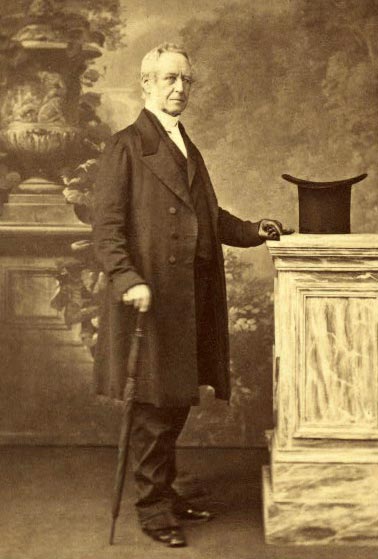
Archdeacon Henry Cotten, C of I, Thurles & Chairperson of the Thurles and Rahealty Famine Food Committee.
Today we turn to history (knowledge acquired by investigation), to demonstrate, via a study of the past, the importance of politicians uniting under one umbrella; taking time to disregard their own personal differences, prejudices and beliefs, in favour of finding fair, equal and paramount solutions to the needs of every person residing in this forgotten rural ‘Premier County’.
Back then in 1845 it was not Irish elected Members of Parliament who came to the rescue of those shivering in the cold and wet, anxiously expecting the fragments of cold ‘stir-about’ that remained following the workhouse pauper meal. Rather it was religious leaders; Quakers, and here in Thurles Fr. William Barron (Administrator within the Thurles Roman Catholic community) closely working together with Archdeacon Henry Cotten (Head of the Thurles Church of Ireland community).
It was these same religious communities, whom we are so quick to condemn today that carried our town through the ‘Great Famine’ period, while at the same time encouraging the importance of education, which today 172 years later, has raised us out of hopeless misery and abject poverty.
In examining factual history; we ask the question “What were living conditions like in the town of Thurles, Co. Tipperary in 1847; the third year of the ‘Great Famine’ (1846 -1852), during a period of mass starvation, disease and the mass emigration and migration from rural Irish towns, villages and their hinterlands?”
For Thurles the most accurate answers to these queries are set out in two ‘Question and Answer Reports’ sent out by the Thurles and Rahealty Famine Food Committee, which met in the rented parlour of the home of Dr Robert C. Knaggs MD. (MD – Medical Doctor), Main Street, Thurles (Today known as Liberty Square, Thurles, in the building currently occupied by Ulster bank.)
First Report – British Association for the Relief of Extreme Distress in Ireland and Scotland.
The first of these reports was sent to the British Association for the Relief of Extreme Distress in Ireland and Scotland and forwarded to Lieutenant Col. Douglas on February 11th 1847. This Association had been formed in January 1847, in London, supported by bankers and other prominent people, to provide, “competent machinery for administering the public munificence”. Queen Victoria (Alexandrina Victoria) had requested that her name be placed at the head of the list of donors[1] to this Association with a contribution of £2,000.00 and later added a further £500, one sixth of whose total funds only went to support the potato failure in Scotland.
[1] It would be Charles Stewart Parnell (1846 – 1891), Irish nationalist politician and one of the most powerful figures in the British House of Commons in the 1880’s who later would spread the untruth, indeed myth, that Queen Victoria of England was the only sovereign who gave nothing out of her private purse to a starving Irish people.
The Stoney family (latter family name originally Danish), were once prominent landlords, here in North Tipperary. Ethel Sara Stoney (1881–1976), was born on November 18th, at Podanur, in the city of Coimbatore in Tamil Nadu, India, the daughter of Edward Waller Stoney (Borrisokane, North Tipperary) and Sarah Crawford (Cartron Abbey, Co. Longford); Protestant Anglo-Irish gentry.
Her father was Chief Engineer of the Madras Railways, which played a pioneering role in developing railways in southern India, before being merged in 1908 with Southern Mahratta Railway to form the Madras and Southern Mahratta Railway.
Educated at Alexandra School and College, Dublin, and at Cheltenham Ladies College, before attending lectures at the Sorbonne in Paris, she returned to join her parents in Madras, preferring to use her middle Christian name that of ‘Sara’. On October 1st 1907 she married Julius Mathison Turing, son of Reverend John Robert Turing and Fanny Boyd, in Dublin.
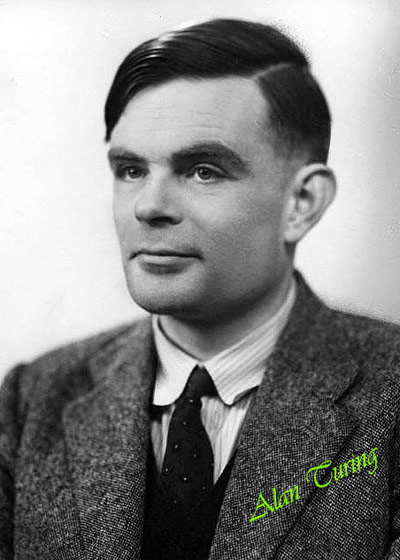
Many television viewers recently would have watched the film “The Imitation Game” which starred amongst others Benedict Cumberbatch and Keira Knightley. This film, which grossed over $233.6 million at the box office, was based on the life of Sara Turing’s son Alan Mathison Turing. Born on June 23rd 1912, the second and last child (after his brother John Ferrier Turing) later he would be regarded as being one of the greatest figures of the twentieth century.
Those of you, our readers, who viewed this film (Highly recommended viewing, I might add) will be aware that Alan Turing was educated at Sherborne College and Cambridge University, and received a PhD from Princeton, having sailed on the liner Berengaria to New York arriving at Princeton in September 1936. A brilliant mathematician and cryptographer Alan was truly the founder of modern day computer science and artificial intelligence and designed a machine to help break secret Enigma encrypted messages [1] being then circulated by the Nazi German war machine during World War 2.
[1] Enigma devices were electro-mechanical rotor cipher machines developed and used in the mid-twentieth century to convey and protect sensitive commercial, diplomatic and military communications. Invented by the German engineer Arthur Scherbius towards the end of World War I, these early models were also used commercially by Japan, Italy and most notably Nazi Germany before and during World War II.
Many readers however will not be aware that Alan’s mother was a member of this same Stoney family who once resided at Tombrickane, Kyle Park, Borrisokane, North Co. Tipperary.
Prime Minister Sir Winston Churchill once stated that Alan Turing made the single biggest contribution to the Allied victory in the war against Nazi Germany, possibly saving the lives of an estimated 2 million people, through his efforts in shortening World War 2. Churchill was first introduced to Alan Turing during a visit to the highly secretive Hut No 8 at ‘Bletchley Park’, establishment in September 1941. The following month Turing and three other cryptographers wrote directly to Sir Winston Churchill seeking further administrative resources; a request which Prime Minister Churchill immediately made available.
Described as one of the greatest figures of the twentieth century, in 1945 Turing was awarded the OBE by King George VI for his wartime services which included (between the years 1939 – 1942), the breaking of U-boat Enigma messages, thus ensuring allied victory in the battle of the Atlantic. His work continued to remain top secret for many years and Turing machines still remain, to this very day, a central object for study in the theory of computation.
Apart from his work in breaking Nazi Enigma codes from 1945 to 1947, Turing worked on the design of the ACE (Automatic Computing Engine) at the British National Physical Laboratory and presented a paper (February 19th 1946), laying out his vision for the first detailed design of a stored-program computer.
Alas, in 1952 his brilliant career was to be halted; brought about by a short homosexual affair with a 19 year old, named as Arnold Murray. “Eaten bread is soon forgotten” as my grandmother used to say, and Alan’s private life would now come into conflict with an ingrate society displaying short term memory.
Turing and Murray were both prosecuted for homosexual acts, (under section 11 of the then Criminal Law Amendment Act 1885), then considered illegal whether carried out in private or in public. Now with the loss of security clearance to fund his work, Alan chose chemical castration as an alternative to the punishment of a long gaol sentence.
Between 1953 and 54 much of his work in biology and physics remained unfinished and on the 7th of June 1954 Alan was found dead as a result of cyanide poisoning, in Wilmslow, Cheshire. Although suicide was suspected, Alan left no suicide note, having eaten an apple apparently laced with cyanide. This apple however was never fully tested, leaving his mother to never accept the Coroner’s suicide verdict or indeed understand Alan’s actual motivation to end his life.
Certainly his humiliation by prosecutors and the cruel effects of his hormone treatment would have greatly influenced his then mental state, but it was not until September 2009 that former British Labour Prime Minister Mr Gordon Brown would make a formal apology on behalf of the British Government, firstly recognising his contribution to World War 2 and secondly for Turing’s treatment stating ‘he deserved better’. On the 12th of June 1954, Alan’s body was cremated at Woking Crematorium, St John’s, and his ashes scattered.
Perhaps the apple with the bite taken out, which constitutes the logo on the back of your iPhone or MacBook Pro after all remains as a tribute to Alan Turing, although Apple the American multinational technology company headquartered in Cupertino, California, apparently dismiss this association.
Regarding his mother Ethel Sara Stoney from North Tipperary; her death came during the early part of her 95th year, on March 6th 1976, while she resided at Stoneycrest, Churt Road, Hindhead, Surrey, England, and following her death, like her son, she too was also cremated.
Perhaps someone will unveil a small commemorative plaque during 2017 in memory of Sara and Alan at Borrisokane; if only in our quest to encourage elusive tourists.
Three Irishmen who fought in France in the Second World War; namely, Mr Albert Sutton, Mr James Moore and Mr Jack Allshire (Latter named whose award was posthumously accepted by his wife, Mrs Barbara Allshire) were awarded with the Legion of Honour by Minister Jean-Marc Todeschini at a ceremony in Glasnevin Cemetery, Dublin today.
The Legion of Honour; full name National Order of the Legion of Honour (In French: Ordre national de la Légion d’honneur) is the highest French order for military and civil merits, established by Napoléon Bonaparte in 1802 and divided into five degrees of increasing distinction: Chevalier (Knight), Officier (Officer), Commandeur (Commander), Grand Officier (Grand Officer) and Grand-Croix (Grand Cross). The order’s motto is “Honneur et Patrie” (“Honour and Fatherland”).
Mr James Moore, aged 92, was born on June 5th 1924 in Borrioskane, Co. Tipperary, and presently resides in the Coolbawn area of North Tipperary. After the ceremony Mr Moore spoke briefly of the landing on a Normandy beach just a few days after D-Day while being bombed from the air. Indeed the first dead German he remembers seeing was an airman who had been shot down, aged, he believes, no more than 19 or 20 years old.
Thurles WW1
Meanwhile back here in Thurles on today, Remembrance Sunday(The closest Sunday to eleventh day of the eleventh month), let us never forget some 73 soldiers, including one Victoria Cross recipient; all who were residents of the area and who lost their lives during WW1.
For the Fallen. [Extract from the poem by Robert Laurence Binyon (1869-1943)]
“They shall grow not old, as we that are left grow old: Age shall not weary them, nor the years condemn. At the going down of the sun and in the morning We will remember them.”
Tipperary Library Service to host a panel discussion on the 1916 Rising.
Executive Librarian (Thurles Library), M/s Ann-Marie Brophy reports:
As 2016 draws to a close, Tipperary County Council Library Service will hold an author panel event; same entitled: – ‘1916: Remembering the Rising’.
The Source Library
Invitation.
Join our panel discussion to remember, reflect and re-imagine this pivotal period in Irish history. The panel will feature writers who have approached the subject in diverse and interesting ways. Chaired by Mr Fran Curry, broadcaster with Tipp FM and he will be joined in conversation by M/s Marita Conlon-McKenna, Dr Fearghal McGarry, and M/s Mary Morrissy. The event will take place on Thursday 24th November, at 7.00pm in the Source Library & Arts Centre, Cathedral Street, Thurles, Co. Tipperary.
Panel Discussion – Guest Members. Marita Conlon-McKenna is a well known author of fiction for both children and adults. Her latest novel, ‘Rebel Sisters’, is set in Ireland during the 1916 Rising and is based on the real life Gifford sisters – Muriel, Grace, and Nellie – three young women at the very heart of the Rising. ‘Rebel Sisters’ has been shortlisted for the ‘Popular Fiction Book of the Year’ at the Bord Gáis Energy Irish Book Awards.
Dr Fearghal McGarry is based in Queen’s University, Belfast, and is the author of many books about Irish modern history, including ‘The Rising: Ireland, Easter 1916’. Much of his recent research on the Easter Rising of 1916 has focused on the role of memory and commemoration in Irish history.
Mary Morrissy is the author of ‘The Rising of Bella Casey’, which explores the life of Bella Casey, an ambitious young schoolteacher, and her relationship with her brother, the celebrated Irish playwright Sean O’Casey.
As stated, the panel will be chaired by Mr Fran Curry, well known broadcaster from Tipp FM. This free event is presented by Tipperary County Council Library Service and has received funding from the Tipperary 2016 Programme.
For further information:
Please contact M/s Ann-Marie Brophy, (Executive Librarian), Tipperary County Council Library Service at Telephone: 0761 06 6100.
Promises to be a ‘must attend’ event for lovers of Irish History.
This website uses cookies to improve your experience. We'll assume you're ok with this, but you can opt-out if you wish.AcceptRead More
Privacy & Cookies Policy
Privacy Overview
This website uses cookies to improve your experience while you navigate through the website. Out of these, the cookies that are categorized as necessary are stored on your browser as they are essential for the working of basic functionalities of the website. We also use third-party cookies that help us analyze and understand how you use this website. These cookies will be stored in your browser only with your consent. You also have the option to opt-out of these cookies. But opting out of some of these cookies may affect your browsing experience.
Necessary cookies are absolutely essential for the website to function properly. This category only includes cookies that ensures basic functionalities and security features of the website. These cookies do not store any personal information.
Any cookies that may not be particularly necessary for the website to function and is used specifically to collect user personal data via analytics, ads, other embedded contents are termed as non-necessary cookies. It is mandatory to procure user consent prior to running these cookies on your website.







Recent Comments