Sinn Féin leader Ms Mary Lou McDonald has condemned the recent/latest US and Israeli strikes, calling them “an act of unprovoked military aggression” and urging a halt to military action and a return to diplomacy.
Wrapped in the sanctimony of condemning ‘unprovoked military aggression,’ Sinn Féin’s moral certainty jars with a past in which civilians were too often treated as collateral.
That phrase, “unprovoked military aggression”, is designed to do a lot of work in a very small space. It tells you who the villains are, who the victims are, and who holds the moral high ground. It’s a clean sentence. A righteous sentence. The kind of sentence that fits neatly into a clip for an evening news bulletin.
The problem for Sinn Féin is that Ireland’s memory is not short, clean and neat, and neither is modern Sinn Féin’s own history. Because, while Sinn Féin is a political party, it was long widely regarded as the political wing of the Provisional IRA, even if both have emphasized separateness since the 1990s. That association matters, not as a cheap talking point, but because it drags out a very specific set of ghosts into any conversation about violence and legitimacy. And those ghosts have names, dates, and places, where civilians paid the ultimate price.
Civilians in the crosshairs: Provisional IRA (PIRA) If readers want to understand why some people hear “unprovoked aggression” and immediately wince; you don’t need to reach for ideology. You just need a calendar of factual events .
21st July 1972 – Belfast (“Bloody Friday”): 22 bombs in 75 minutes. 9 killed, around 130 seriously injured.
31st July 1972 – Claudy, Co. Londonderry (“Bloody Monday”): Three car bombs, 9 civilians killed, 30 injured.
17th February 1978 – La Mon House Hotel/Restaurant, near Comber, Co. Down: an incendiary device killed 12 and injured 30 in a restaurant setting.
27th August 1979 – Mullaghmore, Co. Sligo (Mountbatten assassination): a bomb on a boat killed four, including teenagers Nicholas Knatchbull (14yrs) and Paul Maxwell (15yrs).
8th November 1987 – Enniskillen, Co. Fermanagh (Remembrance Day bombing): a bomb at a ceremony killed 11 people initially, most of them civilians.
20th March 1993 – Warrington, England: bombs in litter bins killed two children (Jonathan Ball, 3yrs; Tim Parry, 12) and injured 56 persons.
23rd October 1993 – Shankill Road, Belfast: a bomb detonated prematurely in a fish shop; 10 killed, including eight civilians and two children.
These aren’t “military operations.” They’re not “surgical strikes.” They’re the messy, brutal reality of what happens when violence is sold as strategy and civilians are treated as collateral, or as leverage. So when Sinn Féin’s leader uses the language of moral clarity about foreign wars, people are entitled to ask: where was that clarity when Irish and British civilians were being blown apart in pubs, streets, shops, at ceremonies, and in restaurants? Again, ordinary people, normal venues, lives ended in pieces.
Real IRA: Omagh and the moral bankruptcy of “after”. Then there’s Omagh, the moment that shattered any illusion that mass-casualty bombing belonged to the past. 15th August 1998 – Omagh, Co. Tyrone: the Real IRA bombing killed 29 and injured 200 plus. Whatever someone wants to call it; be it ‘war’, ‘resistance’, ‘conflict’, Omagh made one thing undeniable; there is no political argument that redeems the slaughter of civilians in a town centre.
The point isn’t “whataboutism.” It’s credibility. Defenders will say, “Sinn Féin today is not the Provisional IRA”. True, in the direct operational sense. But Sinn Féin can’t have it both ways, it can’t trade on a revolutionary heritage when it suits, then act offended when that heritage is raised as a moral mirror. Britannica’s phrasing is blunt for a reason: “Sinn Féin was long widely regarded as the political wing of the Provisional IRA”.
So yes, Ms McDonald can condemn foreign strikes as “unprovoked military aggression.” But if Sinn Féin wants to speak like an international referee, it should expect people to replay their tapes, and on their tapes, watch as civilians scream, burn, bleed and die. No, it’s not ancient history. No, it’s the price paid by ordinary people who never got to vote on anybody’s future “strategy.” And it’s why moral language, used cheaply, can sound less like principle, and more like a theatre performance, for the less informed.
“Unprovoked Military Aggression”,said Ms Mary Lou McDonald. Let us take a look at Iran’s weapons support and who it armed, and roughly for how long, up until this year (2026).
Hezbollah (Lebanon): since1982 – (44 years). Hamas + Palestinian Islamic Jihad (PIJ) associated with Sinn Féin: the former commonly described as armed/supported since the 1990s era – (30–36 years).
Major war-theater pipelines. Houthis / Ansar Allah (Yemen): at least since 2014 (and UN panels have identified Iranian-origin missile/UAV remnants in Yemen) – (12+ years.) Syrian government / pro-Assad forces: widely reported military support since 2011 – (15 years).
Newer state-to-state channel. Russia: transfers tied to the Ukraine war since 2022; UK/France/Germany have publicly condemned Iran’s ballistic missile transfers – (4 years).
Hezbollah timeline: 1982: Hezbollah emerges, founded in the context of Israel’s invasion of Lebanon with Iranian support. 18th Apr 1983: U.S. Embassy bombing, Beirut: 63 killed. Frequently attributed in U.S. accounts to Hezbollah-linked networks / “Islamic Jihad Organization 23rd Oct 1983: U.S. Marine barracks bombing, Beirut: 241 U.S. service members killed.23rd Oct 1983: French paratrooper barracks bombing, Beirut: 58 French soldiers killed. 20th Sep 1984: U.S. Embassy annex bombing (Aukar), Beirut: 23 killed. 3rd Dec 1984: Kuwait Airways Flight 221 hijacking: 2 killed (two U.S. passengers murdered). 14th–30th Jun 1985: TWA Flight 847 hijacking (Athens): 1 killed (U.S. Navy diver Robert Stethem). 12 Apr 1985: El Descanso restaurant bombing (Spain): 18 killed. 7th Mar 1992: Assassination of Ehud Sadan (Israeli Embassy security chief), Ankara: 1 killed, 3 injured; claimed by “Islamic Jihad Organization,” Hezbollah suspected/denied. 17th Mar 1992:Israeli Embassy bombing, Buenos Aires: 29 killed, 242 injured; claim of responsibility by “Islamic Jihad Organization,” which has been linked to Iran/Hezbollah in many accounts. 28th Jan 1993: Attempted murder of Jak Kamhi (prominent Turkish Jewish figure): shot and survived; discussed in intelligence/terrorism reporting as part of Iran/Hezbollah-linked activity. 17th Mar 1994: Attempted bombing of the Israeli Embassy, Bangkok: failed after suspects’ car crash; C4 reportedly found. 18th Jul 1994: AMIA bombing, Buenos Aires: 85 killed; widely attributed by Argentine judicial/official actions and major reporting to Hezbollah with Iranian backing, (Iran denies). 19th Jul 1994: Alas Chiricanas Flight 901 bombing (Panama): 21 killed; long unresolved, later treated publicly by U.S. sources as Hezbollah-linked. Apr 1996: Hezbollah rocket fire into northern Israel (Grapes of Wrath period): Hezbollah fired Katyusha rockets; exact counts/precise injury figures vary by source. 25th Jun 1996: Khobar Towers bombing (Saudi Arabia): 19 killed; attribution often tied to Saudi Hezbollah/Hezbollah al-Hejaz, but it is politically disputed in some accounts. 7th Oct 2000: Abduction of three Israeli soldiers: abducted, later confirmed dead; remains returned in 2004 exchange. 14th Feb 2005: Assassination of Rafik Hariri (Beirut): 22 killed. International legal proceedings convicted Hezbollah members (in absentia), while also noting limits on proof regarding leadership direction. 12th Jul 2006: Cross-border raid: 8 Israeli soldiers killed, 2 captured; triggers the 2006 Lebanon War. 26th May 2011: Attempted assassination of Israel’s consul in Istanbul: some reporting ties it to Iran/Hezbollah; treated as alleged. Feb 2012: India/Georgia diplomat attack attempts: widely discussed as an Iran-linked campaign, sometimes described as Iran/Hezbollah-linked. 2012: Bulgaria (Burgas) bus bombing: 6 killed (+ bomber); Bulgarian/EU assessments attributed involvement to Hezbollah operatives; Hezbollah denies. 2012: Azerbaijan plot against Israeli ambassador / Chabad-linked targets: widely described as Iran-linked; “Iran/Hezbollah” appears in some reporting/claims. Apr 2014: Bangkok plot targeting Israeli tourists (Passover/Songkran period): Thai authorities arrested suspects described in reporting as Hezbollah members/agents. May–Jun 2015: Cyprus ammonium nitrate seizure: Reuters reported Cyprus believed it foiled a major attack; Israel said it bore Hezbollah hallmarks. 2015: London-area ammonium nitrate cache, widely reported as a 2015 discovery later revealed publicly. Nov 2023: Brazil: foiled plot targeting Jewish-linked sites: Brazilian federal police said suspects were recruited/funded by Hezbollah; treated as alleged pending full public case details. 27th Jul 2024: Majdal Shams (Golan Heights) strike: 12 killed; a rocket attack. Israel/U.S. blamed Hezbollah; Hezbollah denied responsibility.
So should the USA and Israel attack be therefore described as “Unprovoked Military Aggression”? If a strike is responding to an armed attack carried out by an Iran-backed aggressor, supporters can surely argue that it’s actions are not “unprovoked.”
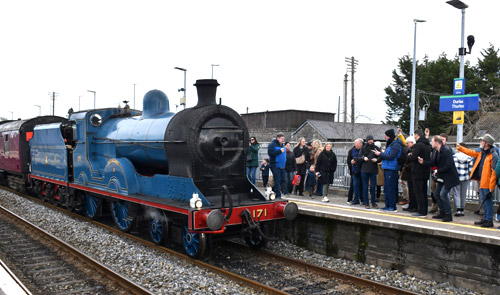
The No. 171 “Slieve Gullion” Steams into Thurles at 11:57am This Morning, Marking Another Milestone for Irish Main Line Steam.
Great Northern Railway (Ireland) S Class 4-4-0 No. 171 “Slieve Gullion”, arrived into Thurles Railway Station at 11:57am this morning, drawing a warm welcome as the Railway Preservation Society of Ireland’s (RPSI) flagship steam locomotive continues its return to regular main line operation.
Today’s working forms part of the RPSI’s “An Sáirséal” Steam & Diesel Special operating between Dublin Connolly and Limerick, with No. 171 hauling the train from Dublin Connolly to Thurles, before an 071 Class diesel takes over for the onward run to Limerick.
Built by Beyer, Peacock & Co. in Manchester in 1913, No. 171 is one of the celebrated GNR(I) S Class express passenger locomotives, named after a mountain in the south of County Armagh, Northern Irelandand, is synonymous with the golden age of Irish main line steam.
Following an extensive overhaul and a long period out of traffic, No. 171 returned to steam in July 2024, officially launched back into service at Whitehead in September of that year, and later resumed main line, revenue-earning passenger work in November 2025, its first such duties since 2002.
An RPSI spokesperson said the Thurles arrival is “another proud moment for everyone who contributed to bringing ‘Slieve Gullion’ back; proof that Irish main line steam remains very much alive, and still capable of turning heads wherever it goes.”
“Where Tipperary leads, Ireland follows” is attributed to Thomas Davis (1814–1845), a writer, poet, and prominent figure in the Young Ireland movement. He used this phrase in the 1840s in his “The Nation” newspaper, to praise the counties intense nationalistic spirit, earning it the title of “The Premier County”, thus highlighting Tipperary’s role in both political and social movements.
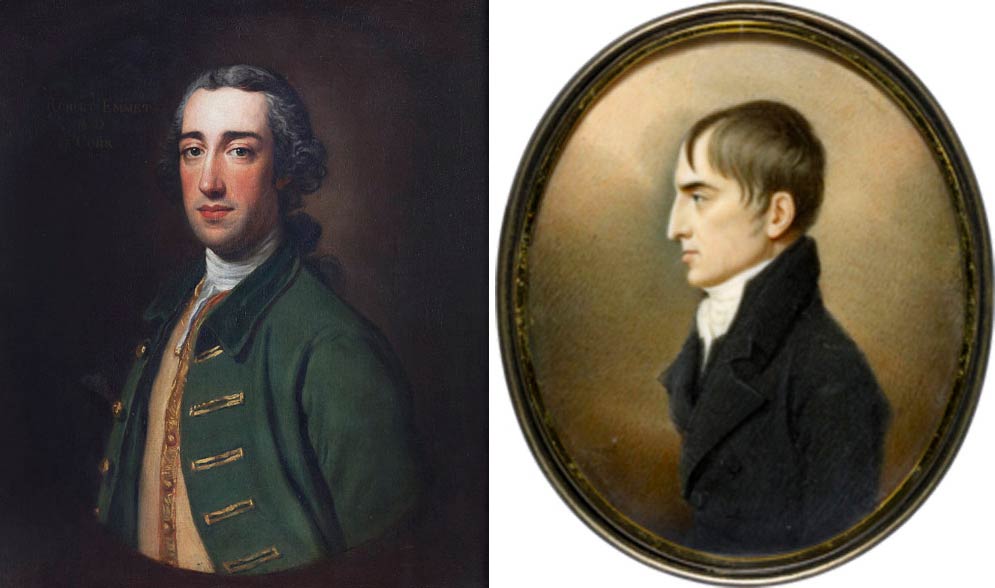
Dr. Robert Emmet M.D., the father of Irish Republican, orator and rebel leader Robert Emmet (1778 – 1803), was born in Tipperary town on November 29th 1729, the younger of two sons in a family where medicine was already a calling. While no biographical sources name a townland or house, a carefully researched account helps narrow the scene; his father’s Will referred to “the house where he resided in Tipperary”, with family interests tied to the town’s trade and market life. In other words, the Emmets belonged to the working, improving fabric of Tipperary town, not some anonymous dot on a map.
Left: Dr. Robert Emmet. Right: Executed Rebel Robert Emmet. Note the striking resemblance (around the mouth) in all Emmet family featured portraits.
His rebel leader son today has three towns in Co. Tipperarywith streets named after him : In Thurles:Emmet Street (L-4021) connecting Barry’s Bridge and Thomond Road, is most often incorrectly spelt, by Tipperary Co. Council, as “Emmett Street”. His rebel son is also commemorated on the 1798 memorial, visible standing in Liberty Square today, and locally referred to as the “Stone Man”. In Tipperary Town: Emmet Street is one of the main streets laid out connecting Dillon Street, and it’s still an everyday address in use today. In Clonmel: Emmet Street is a more central street (for example, Tipperary County Council lists its Civic Offices there, and An Post lists Clonmel Post Office as being on Emmet Street).
“Where Tipperary leads Ireland follows”. That line, by Thomas Davis, fits him surprisingly well, because the Emmet story becomes a pattern seen again and again in Irish life; provincial beginnings, serious education, success in a southern city, and finally the pull of Dublin’s institutions and power.
A doctor, made in Edinburgh and shaped by Europe. To study medicine properly in the 18th century was to look outward, and Robert Emmet did just that. He graduated at the University of Edinburgh, one of the then great medical schools of that era. A letter he wrote to a Cork newspaper, in 1763, even suggests time spent studying in Paris, the kind of continental polish ambitious doctors prized.
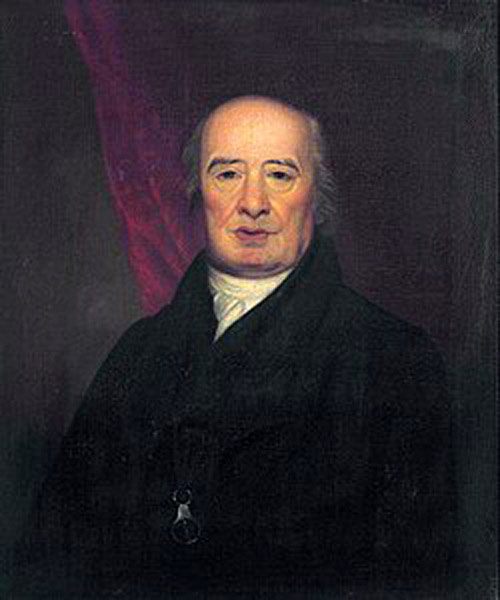
Thomas Addis Emmet.
By the time he returned to Ireland, he was not simply a local practitioner, he was the sort of physician who could move between worlds, rural and urban, Irish and European, private practice and public appointment.
Cork years: Reputation, Marriage, and a growing household: Emmet settled down to practise in Cork, and it was here that his name began to carry weight. The board of Cork’s Charitable Infirmary would later formally thank him for “the great care” he took of patients, the kind of public endorsement that tells you a doctor was not merely competent, but trusted.
In November 1760, he married Ms Elizabeth Mason, linking him to another established family network (the Masons of Munster). Some of their children can be identified clearly in sources, and they anchor the family’s Cork chapter. Christopher Temple Emmet, born in Cork in 1761. He married Anne Western Temple, daughter of Robert and Harriett (Shirley) Temple. Thomas Addis Emmet, born in Cork on April 24th 1764. He married Jane Patten (1771–1846), a daughter of John Patten and Jane (née Colville) Patten, in 1791.
Emmet was also a man of projects. The Munster account shows him involved in property and land, advertising holdings and opportunities in the countryside, a reminder that professional families often broadened their income in practical ways, through farms, leases, and investments.
The turning point –Dublin and the post of State Physician: Then came the step that changed everything. In March 1770, Emmet took up office in Dublin as state physician, after purchasing the office from the widow of the former holder for £1,000; a role that required presence in the capital and placed him close to the heart of administration. The move was abrupt enough that he was winding down Cork affairs and property as he departed; the record even notes the precise start, March 6th 1770.
Dublin was not just a new address. It was a new scale of life, bigger circles, bigger expectations, and a household that would become famous for reasons he could not control.
The sources are blunt about the family’s size and its sorrow; their son Robert was the seventeenth child, but only the fourth to ever survive. That single line captures both prosperity and loss; the realities of family life even among the comfortable classes in the 1700s.
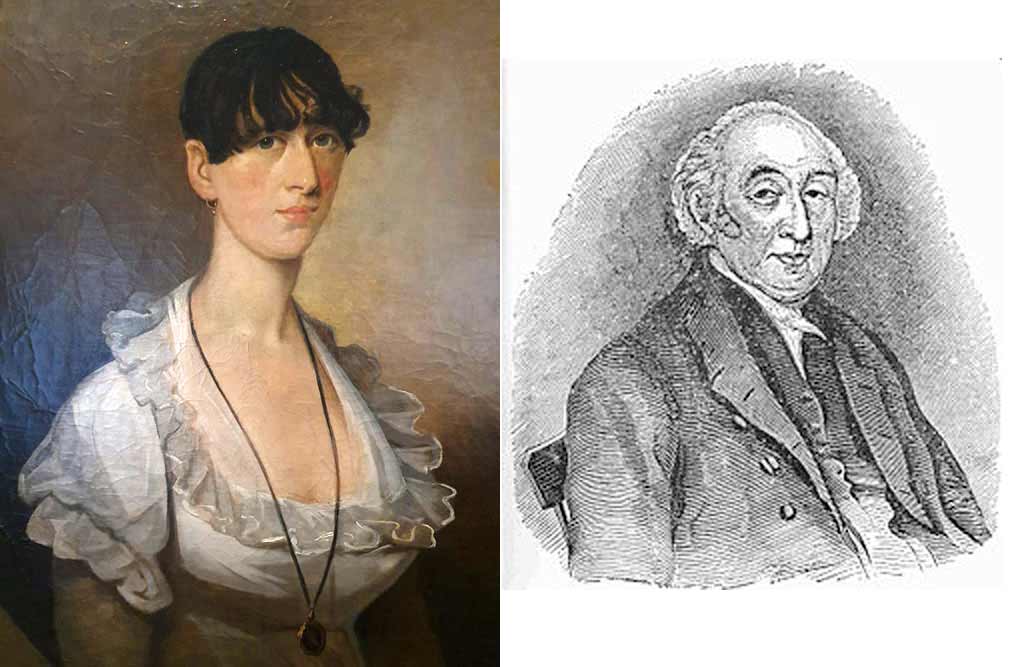
Mary Anne Holmes, (née Emmet) and husband Robert.
The four surviving children are identifiable: Christopher Temple Emmet, born Cork, 1761, and a distinguished barrister and poet, who died aged 27 years, in 1788, followed some months later by his wife. Thomas Addis Emmet, born Cork, April 24th, 1764 and a leader of the United Irishmen, before being forced into exile and later becoming a renowned lawyer in New York city. Mary Anne Holmes, (née Emmet) writer and poet, wife of barrister Robert Homes, former born in Dublin, on October 10th, 1773. Robert Emmet, (Executed Rebel in 1803), born March 4th, 1778 at 109/110, St Stephen’s Green, Dublin. The family’s Dublin story is inseparable from that address: a prosperous, educated household in the capital, and the cradle, ultimately, of one of Ireland’s most remembered names.
Final years and death: Dr. Emmet lived long enough to see his children grown and their talents emerging, and long enough, too, to sense that Irish politics were shifting underfoot. He died on December 9th 1802, and accounts of the period record his burial in the Churchyard of St Peter’s Church, Aungier Street Dublin.
He did not live to witness the family’s most dramatic and tragic chapter, that came less than a year later, when his youngest surviving son Robert junior, stepped into Irish history. It was on his death, that rebel Robert, using the £2,000 left to him by his father, laid preparations for a failed rising against what he described as “the cruel English government and their Irish ascendancy”, on July 23rd, 1803. Chief Justice Lord Norbury sentenced the rebel Emmet to be hanged, drawn and quartered, as was customary for conviction of treason. On September 20th, 1803, Emmet was executed in Thomas Street in front of St. Catherine’s. He was hanged and then beheaded once dead. Today, his actual burial place is still unknown, thus inspiring the phrase, “Do not look for him. His grave is Ireland.”
Still, step back from the legend and the Emmet story comes into sharp focus; a birth in Tipperary, a medical education in Edinburgh, professional success in Cork, a state appointment in Dublin, and a family whose “only four surviving” children would go on to shape Irish public life, literature, law, and rebellion.
The Vee in the running for national “Best Drives” award, and here’s how to back Tipperary.
One of Ireland’s most dramatic road trips is in the spotlight this week, with The Vee shortlisted in the Best Drives series, run by The Journal in association with Allianz Insurance. The series celebrates standout scenic routes around the country, and the overall winner will be rewarded with a dedicated video feature shared across The Journal’s platforms.
Why ‘The Vee’ is turning heads: The nomination describes ‘The Vee’, (VIEW HERE ), as “one of the most visually stunning drives in Ireland”, and it’s easy to see why. Named for its famous V-shaped bend, the route climbs into the Knockmealdown Mountains and opens up sweeping views over valleys and patchwork farmland below On clear days, you’re treated to big skies and big horizons, with views stretching towards the Galtee Mountains, home to Galtymore (917.9m), widely noted as the highest inland mountain in the country. And then there’s the height of the pass itself: The Vee rises to around 610 metres (2,000 feet) above sea level, adding that unmistakable “mountain road” feel, especially as the road curls past the lake and viewpoint.
The suggested starting route: The drive can be started from either Clonmel or Cahir, continuing through Clogheen, up and over The Vee, and onwards towards Lismore. It’s a route that manages to feel like a proper road trip without demanding an entire day, ideal if you want a scenic spin with a few memorable stops built in.
Don’t miss Bay Lough: A highlight mentioned in the nomination is Bay Lough, latter a quiet, upland lake close to the high point of the pass. It’s a natural “pull in, step out, and take it all in” moment, whether you’re after photos, fresh air, or a calm pause mid-drive. The nomination also suggests taking to the water, including kayaking, as part of the experience, underlining the sense that this is more than a nice view from a car window; it’s an outdoorsy corner of the county worth lingering in.
A route on the Tipperary–Waterford line: The Vee sits right on the border, straddling Tipperary and Waterford, a gateway drive that shows off the best of both sides of the mountains, with wide open panoramas and that signature V-shaped turn that gives the route its name.
How to vote: Tipperary County Council has urged people to “support Tipperary with your vote” as the poll goes live. To take part, look up The Journal’s “Allianz Best Drives” poll HERE and please do cast your vote for The Vee. (As we go to press now running in second place).
Tip: As always on upland routes, take it handy on bends, expect changing conditions, and pull in safely when stopping for photos, the views will still be there when you arrive.
A Roof to Save, A Night to Remember – Major New Fundraiser To Be Unveiled Soon.
Something Big Is Coming: Major New Fundraiser for Cathedral of the Assumption, Thurles – Set for Early May.
Almost every family in the Thurles area has at least one thread that leads back to Thurles Cathedral. It might be the memory of a baptism carried in a shawl and whispered prayers. It might be First Communion photographs taken on the steps, Confirmation day nerves, or the steady comfort of familiar hymns sung from the choir. For others, it is the bright lift of a wedding morning and, sooner or later for us all, the quiet dignity of farewells; funerals, anniversaries, candles lit for names we still speak.
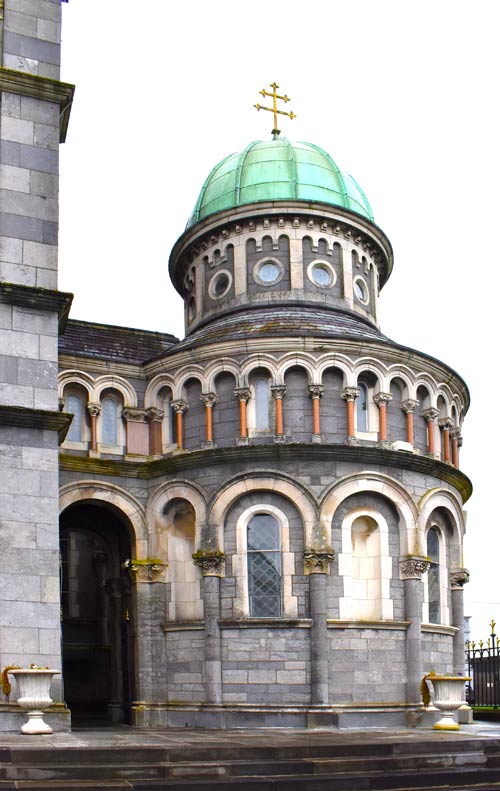
Thurles Cathedral Baptistery.
Thurles Cathedral isn’t just a landmark you pass on the way through Thurles town; no it is a place where lives are marked, where time is measured in sacred moments, and where the community’s joys and sorrows have been gathered and held for generations.
And then there’s the detail that catches you almost immediately as you approach from the street. To the right, slightly apart, like a gentle prologue before the main story, stands a circular building, modest in scale yet rich in meaning.
That round building is the baptistery; its separation from Thurles Cathedral is no accident, and it is one of the things that makes Thurles so quietly distinctive. In Ireland, baptisteries are typically absorbed into the body of the church. Here in Thurles, it stands free, echoing the great continental tradition, where baptism, the beginning of the Christian journey, was given its own threshold-space; a place of welcome, entry, and promise, before you pass into the larger embrace of the Cathedral itself.
Stand for a moment, let the little round baptistery hold your gaze, and watch how stone and light conspire to make something quietly, heart-stoppingly beautiful.
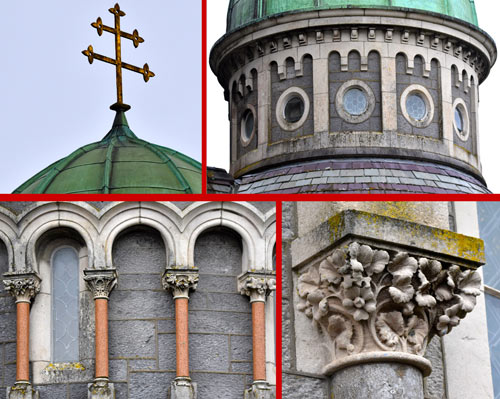
Built in locally quarried limestone, the baptistery shares the Cathedral’s grounded, elemental strength; stone that feels native to its own landscape. Yet it totally refuses that tiresome, boring, and tedious lack of variety that results so often in dull routine. String courses and carved details break the grey with crisp definition, and in places lighter stone is introduced to lift the eye and relieve the broad limestone planes.
Then comes the architecture’s music; the repetition of arches. Below, a long, slender rhythm of limestone, pillars support lower arcade. Above, the upper arcade rests on a colonnade of stunted pillars in polished red Aberdeen granite, a sudden richness, a warmth of colour that feels almost like a flourish, as if the building has discovered ornament and decided to rejoice in it. Higher still, an upper wall, smaller in circumference than the lower, becomes more intricate, same richly decorated and pierced by twelve circular openings that read like little moons of daylight.
And naturally, the gaze rises again, to the dome, a crowning that seems to gather the whole circular form into a single upward gesture. At its summit sits the archiepiscopal cross with two arms, the sign that this Cathedral belongs to an archbishopric; not only a parish church, but a mother church with a wider symbolic reach.
All of which brings us to the urgent present. Beauty like this depends on something deeply unromantic but absolutely essential, a sound roof. And right now, Thurles is seeking to re-roof the building and a major conservation step and fundraising is underway to make that possible. It is the sort of work that doesn’t make headlines the way a new project might, yet it is the work that decides whether what we love will endure; keeping out water, preventing slow damage, protecting artistry and memory alike.
In a way, it is fitting that the baptistery greets you first. A baptistery is about beginnings. And this moment is another beginning, too; the community’s chance to put its shoulder under the task, to protect what has protected so many of our milestones, and to ensure that the Cathedral remains not just admired, but kept.
A Gentle Call To Action. If this place has ever held even one moment of your life; a prayer, a photograph, a hymn, a vow, a farewell, consider doing one small thing to help it hold those moments for the next family, and indeed the next.
A donation, a fundraiser, a share with someone who has moved away, but still carries Thurles in their heart, it all matters. Roofs are saved the way communities are built: not by one grand gesture, but by many hands doing what they can, when they can.
A major new fundraising event to support the re-roofing of the Cathedral of the Assumption, Thurles will be unveiled soon, with an early May 2026 date now in the diary. Watch this space and be ready to help keep a roof over the place that has held so many of our life’s moments. Because some buildings are more than stone. They are memory made visible, and now, quite literally, the future of this one is “In Our Hands“.
This website uses cookies to improve your experience. We'll assume you're ok with this, but you can opt-out if you wish.AcceptRead More
Privacy & Cookies Policy
Privacy Overview
This website uses cookies to improve your experience while you navigate through the website. Out of these, the cookies that are categorized as necessary are stored on your browser as they are essential for the working of basic functionalities of the website. We also use third-party cookies that help us analyze and understand how you use this website. These cookies will be stored in your browser only with your consent. You also have the option to opt-out of these cookies. But opting out of some of these cookies may affect your browsing experience.
Necessary cookies are absolutely essential for the website to function properly. This category only includes cookies that ensures basic functionalities and security features of the website. These cookies do not store any personal information.
Any cookies that may not be particularly necessary for the website to function and is used specifically to collect user personal data via analytics, ads, other embedded contents are termed as non-necessary cookies. It is mandatory to procure user consent prior to running these cookies on your website.






Recent Comments