“You Will Die in Prison”, is a Tipperary man’s true story, which will be featured on RTÉ One Tonight, September 3rd, at 10:35pm.
A Tipperary man, wrongly imprisoned in Iran, states that he continues to suffer following his treatment in an Iranian prison. Mr Bernard Phelan, a Tipperary man who spent some seven months in an Iranian prison, has said the trauma of his ordeal continues to affect both him and his family.
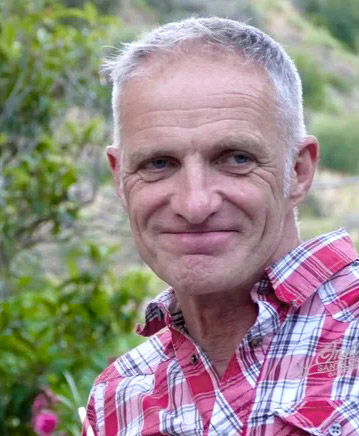
Mr Bernard Phelan
Mr Phelan, originally from Clonmel, Co Tipperary, revealed that he recently suffered a stroke, which doctors have conclusively linked to post-traumatic stress disorder.
The 65-year-old, who holds both Irish and French citizenship, had been travelling to Iran since 2017, first as a tourist and later to develop trekking holidays. In October 2023, he was arrested, accused of providing information to an enemy state, before being held in prison until May of 2023. He was forced to go on hunger strike, before finally being pardoned and released on humanitarian grounds.
Speaking about his time in captivity, Mr Phelan said he was haunted by fears that his father would die before his release. Their reunion following his eventual return was he stated, “deeply moving”. He later got a chance to meet President Michael D Higgins, latter who failed to criticise Iran for its constant call for the total destruction of the state of Israel and for its funding and the arming of terrorist organisations, namely Hamas and Hezbollah, not to mention its violations of human rights against its very own citizens. In mid-2024, Irish President Mr Higgins had written to Iran’s new president Mr Masoud Pezeshkian to congratulate him on his new appointment. The letter was not officially published by the President’s office, but was circulated online and received some criticism, including from members within Fine Gael, who rightly accused President Higgins of being “tone deaf” to civil rights issues within Iran. Former Minister for Foreign Affairs Mr Charlie Flanagan had rightly informed the Press that he felt Mr Higgins’ views on Iran were “somewhat misplaced”. The Irish President then falsely accused the Israeli embassy in Ireland of circulating the letter, when in fact it was proven to have been circulated by the Iranian embassy as a “Look Ireland Supports Iran” PR stunt.
Mr Phelan now called for stronger EU action in securing the release of European citizens wrongly imprisoned abroad. Mr Phelan believes, and with justification, that European citizens are not being helped by EU authorities.
His story will be told in a new RTÉ documentary entitled, “You Will Die in Prison”, being airing tonight on RTÉ One at 10.35pm.
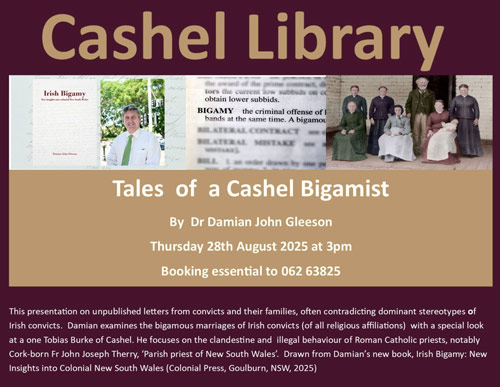
Ms Maura Barrett, (Cashel Library) Reports: An exciting lecture on a Cashel Bigamist, from the early 1800’s, will take place in Cashel Library on Thursday 28th August at 2:30pm.
This illustrated presentation will examine key themes arising from research into Irish convicts who had been transported to New South Wales in the early 19th century.
Australian-based Dr Damian John Gleeson, has been visiting Tipperary since the early 1980s and is descendant of the Gleeson, O’Brien and Collins families of Nenagh Co. Tipperary and Errinagh, Silvermines, Nenagh, Co. Tipperary.
As a qualified genealogist and historian, Mr Gleeson’s works include An Enduring Flame: St Patrick’s Mortlake, 1885-2020: An Irish-Australian Working-Class Community(Mortlake, NSW, 2021), winner of the City of Canada Bay Heritage Award in 2021, and The Rock of St George: celebrating the 125th anniversary of the first St Joseph’s Church/School, Rockdale (Rockdale City, NSW, 2017), winner of the Ron Rathbone Local History Prize, Bayside Council, 2017.
N.B. This exciting lecture is free to attend, but remember places for such popular events are limited. Please call Cashel library Tel: 062 63825, to secure your place.
Visitors attending this event can locate the Cashel Library building; situated on Friar Street, Lady’s Well, Cashel, Co. Tipperary, HERE. (Eircode E25 K798).
Thurles supporters of Daniel O’Connell used their bare hands to grab food at subscription dinner.
On March 25th, 1925, the Scottish inventor John Logie Baird gave the first public demonstration of televised silhouette images, shown in motion at Selfridges department store in London.
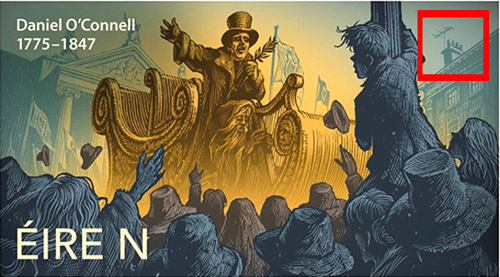
But now a new stamp launched by An Post yesterday, July 30th, appears to deny that above statement. The background of this new stamp appears to show a television aerial on the chimney of a Dublin house, behind the nationalist leader Daniel O’Connell; latter known as “The Liberator”, (1775-1847). Daniel O’Connell, is correctly acknowledged as the political leader of Ireland’s Roman Catholic majority, during the first half of the 19th century.
One stamp, of two launched yesterday, costing €1.65 each, shows O’Connell travelling through our capital city, seated on a rather elaborate golden chariot/sled, possibly depicting his release from Richmond Prison in 1844. He had been released following a three months jail sentence, having proposed a monster meeting in Clontarf, Dublin, latter which had been declared illegal. The proposed meeting, due on the 8th of October, was declared illegal by the then government and banned. O’Connell was afraid there would be violence, if the meeting went ahead so he cancelled it. This disappointed many of his following resulting in a decline in O’Connell’s popularity.
The background to the left-hand-side of one of these two new stamps, directly behind O’Connell, shows the front of the General Post Office, (O’Connell Street, Dublin), while the background on the right-hand-side (See image framed in red hereunder) depicts a building with a chimney which displays an old style television aerial.
One of the newly launched Daniel O’Connell commemorativestamps.
Television was not imported into Ireland until 1949, some 104 years after the image and times depicted on the stamp.
We understand that the stamps were developed by the Irish designer/artist Mr David Rooney, without the use of AI during the stamps design.
Some 12 years previous, in 2013, the Central Bank of Ireland issued a silver €10.00 commemorative coin in honour of James Joyce, latter which misquoted a famous line from “Ulysses”, despite being warned on two occasions by the Department of Finance over difficulties with design.
Ireland’s Central Bank later stated, after 10,000 coins were minted and launched, that the error was “an artistic representation of the author and text and not intended as a literal representation”. The author himself had written: “Signatures of all things I am here to read.”. The Central Bank included a “that” in its final sentence, with their coin design reading: “Signatures of all things that I am here to read”, possibly if the truth was know to avoid copyright.
But down here in Tipperary, “The Liberator” was well known and much loved, both prior to and after his death on May 15th 1847 in Genoa, Italy.
He first came to Thurles as a guest of Mr Nicholas V. Maher M.P. in 1829, attending at Maher’s home (Today Thurles Golf Club), for a banquet given in his honour. He also attended at Stephen Smee’s Corn-store, on lower Kickham Street, (In front of the present Pallottine College) to attend a subscription dinner. The large attendance of both agricultural labourers and small landowning farmers, who came to show support, was afterwards seen as an embarrassment by O’Connell, as those Thurles people in attendance were seen to behave in somewhat of a voracious and ravenous fashion, used their bare hands to grab food from the available containers.
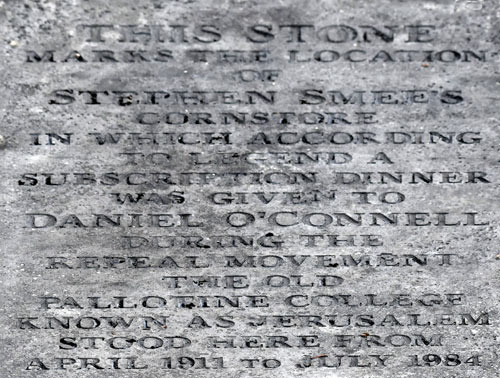
A Memorial plaque (pictured above) in the Pallottine College grounds records this latter event.
It reads: “This stone marks the location of Stephen Smee’s Corn-store in which, according to legend, a subscription dinner was given to Daniel O’Connell during the Repeal Movement. The Old Pallottine College, known as “Jerusalem” (later) stood here from April 1911 to July 1984.”
The Repeal Movement/Association was a mass Irish political movement set up by the same Daniel O’Connell in 1830, to campaign for a repeal of the Acts of Union of 1800, between Great Britain and Ireland. This Association’s aim was to revert Ireland to the fully devolved government which had briefly been achieved by Henry Grattan and his patriots, in the 1780s.
Perhaps local councillors and their officials, who have successfully destroyed most of the rich history of Thurles, might contact The Pallottine College Phone: 0504 21202, E mail: pallottinefathers@gmail.com and arrange to have this plaque professionally cleaned, to honour the 250th year of O’Connell’s birth.
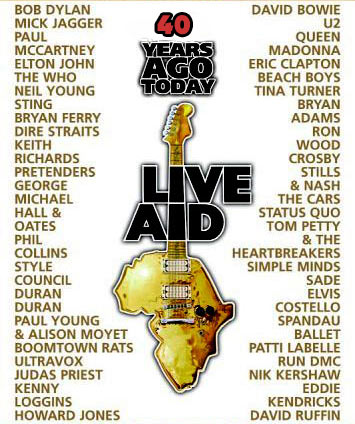
Today, Sunday July 13th, marks the 40th anniversary of Live Aid, a two-venue benefit concert and music-based fundraising initiative held on Saturday July 13th 1985. It was a day when the world rocked united in a common goal.
One year earlier, 41 years ago, on November 25th 1984, “Boy George”(George Alan O’Dowd, whoseparents, Jerry and Dinah O’Dowd, are Thurles, Co. Tipperary natives), had participated in the successful Band Aid single “Do They Know It’s Christmas?”.
Latter Band Aid had been founded by Bob Geldof and James “Midge” Ure. The song raised £8 million in its first year alone, for famine relief in Ethiopia.
The 1985, Live Aid event was also organised by Dún Laoghaire native, Irish singer, songwriter and political activist Bob Geldof; again in association with Scottish singer, songwriter and record producer James “Midge” Ure, to raise further funds for the 1983–1985 famine relief fund in Ethiopia. Others involved in organising Live Aid were Harvey Goldsmith, who was responsible for the Wembley Stadium concert, and Michael C. Mitchell, who put together the American side.
More than 75 acts played at Wembley Stadium in London, UK and at John F. Kennedy Stadium, (later demolished in 1992) in Philadelphia USA on that day, with 1.9 billion people, or 40% of the then world’s population, in 150 nations, watching the live broadcast from their home.
However, it was the 21-minute rock session by 1970’s British rock band “Queen”, [Freddie Mercury (lead vocals, piano), Brian May (guitar, vocals), John Deacon (bass) and Roger Taylor (drums, vocals)], that stole the show that day 40 years ago; who today is still recognised as one of the greatest live rock performances of all time.
Ireland donated to Live Aid in 1985, was £7 million, same donations per capita more than any other country in the world.
A National Day of Commemoration saw ceremonies being held at several locations across Ireland this morning. This morning’s events were organised to honoured all Irish men and Irish women who died in all wars including those who lost their lives while on service with the United Nations and other international organisations, in the service of peace.
A commemoration ceremony held at Dublin’s Royal Hospital, Military Rd, Kilmainham, Dublin 8, was attended by Irish President Mr Michael D Higgins, Taoiseach Mr Micheál Martin and Tánaiste Mr Simon Harris. Others attending included members of the Government; the Council of State; the Diplomatic Corps; Defence Forces; veteran’s organisations, the judiciary and representatives from Northern Ireland. They were joined by relatives of those who sadly died in past wars or on UN peace keeping service, together with relatives of 1916 rising leaders.
Today’s Dublin’s Royal Hospital ceremony included a wreath-laying by President Higgins on behalf of the people of Ireland, before ending with a fly-past by the Irish Air Corps.
Other ceremonies which took place at locations around Ireland, including Fitzgerald’s Park, Cork city; Galway University, Co. Galway; Kilkenny Castle, Kilkenny City; Limerick City; City Hall Sligo Town, Co. Sligo and at the John Condon Memorial, situated in Waterford City.
This website uses cookies to improve your experience. We'll assume you're ok with this, but you can opt-out if you wish.AcceptRead More
Privacy & Cookies Policy
Privacy Overview
This website uses cookies to improve your experience while you navigate through the website. Out of these, the cookies that are categorized as necessary are stored on your browser as they are essential for the working of basic functionalities of the website. We also use third-party cookies that help us analyze and understand how you use this website. These cookies will be stored in your browser only with your consent. You also have the option to opt-out of these cookies. But opting out of some of these cookies may affect your browsing experience.
Necessary cookies are absolutely essential for the website to function properly. This category only includes cookies that ensures basic functionalities and security features of the website. These cookies do not store any personal information.
Any cookies that may not be particularly necessary for the website to function and is used specifically to collect user personal data via analytics, ads, other embedded contents are termed as non-necessary cookies. It is mandatory to procure user consent prior to running these cookies on your website.



Recent Comments