|
|
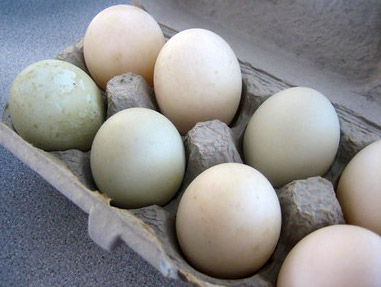
FSAI recall batches of Slaney Farm Fresh Duck Eggs due to possible presence of Salmonella.
Alert Summary dated Wednesday, July 31st 2024.
Category 1: For Action.
Alert Notification: 2024.35.
Product Identification: Slaney Farm Fresh Duck Eggs; All pack sizes.
Batch Code: All best before dates up to and including 21/08/2024.
Country Of Origin: Ireland.
Message: Slaney Farm is recalling all pack sizes of the above batches of their Farm Fresh Duck Eggs due to the possible presence of Salmonella. Point-of-sale recall notices will be displayed in stores supplied with the implicated batches.
Nature Of Danger: People infected with Salmonella typically develop symptoms between 12 and 36 hours after infection, but this can range between 6 and 72 hours. The most common symptom is diarrhoea, which can sometimes be bloody. Other symptoms may include fever, headache and abdominal cramps. The illness usually lasts 4 to 7 days. Diarrhoea can occasionally be severe enough to require hospital admission. The elderly, infants, and those with impaired immune systems are more likely to have a severe illness.
Action Required: Comsumers, Wholesalers, Distributors, Caterers and Retailers:
Retailers: Including market stalls and online retailers, are requested to remove the implicated batches from sale and display recall notices at point-of-sale.
Caterers/restaurants/cafes: Are requested to cease using the implicated batches immediately.
Wholesalers: are requested to withdraw and recall the implicated batches from their customers and instruct them to display recall notices at point-of-sale. Wholesalers must notify their inspector of any onward distribution of the implicated batches.
Consumers: Consumers are advised not to eat the implicated batches.
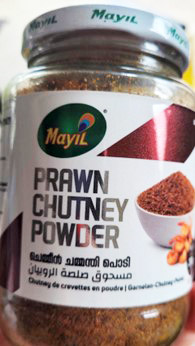
Food Safety Authority of Ireland confirm incorrectly declared Crustaceans in Mayil Prawn Chutney Powder.
Alert Summary dated Monday, July 29th 2024.
Allergy Alert Notification: 2024.A27.
Allergen(s): Crustaceans.
Product Identification: Mayil Prawn Chutney Powder; pack size 200g.
Batch Code: All batches and all best-before dates.
Country Of Origin: India.
Message: All batches of Mayil Prawn Chutney Powder contain crustaceans which are incorrectly declared on the label.
This may make the batches unsafe for consumers who are allergic to or intolerant of crustaceans.
The Food Safety Authority of Ireland (FSAI) today would like to remind consumers of its advice that duck eggs should only be eaten after they have been thoroughly cooked. Consumers should not use raw duck eggs in any dishes that will not be cooked thoroughly before eating. The FSAI, together with the National Health Protection Office of the HSE, are currently investigating an outbreak of illness involving five human cases of Salmonellosis within the last 12 months and linked to the consumption of duck eggs. The investigation is ongoing.
Duck eggs are legitimately available on the Irish retail market and are used by some people instead of hens’ eggs in cooking and baking. Producers are responsible for ensuring the safety of food placed on the market. However, from time-to-time, Salmonella occurs in duck eggs. Salmonella can cause serious illness. The risk is greatest for people who are very young, for older people, and for people who have a suppressed immune system.
The FSAI advises consumers to only eat duck eggs that have been thoroughly cooked and to only use raw duck eggs in dishes that will be cooked thoroughly before eating. Maintaining stringent hygiene practices, such as washing hands and preparation surfaces, is important when handling or breaking raw duck eggs. Therefore, duck eggs should always be handled and cooked carefully.
Specifically, it is advised that:
- Duck eggs should not be eaten raw or lightly cooked.
- Duck eggs should only be eaten after they have been thoroughly cooked, until both the white and yolk are solid. A duck egg is heavier and larger than a hen’s egg, and therefore needs more cooking time.
- Dishes that contain duck eggs should be cooked until they are piping hot all the way through.
- Do not use raw duck eggs in the preparation of products that contain raw or lightly cooked egg, such as homemade mayonnaise, tiramisu, icing, hollandaise sauce.
- When using duck eggs in cooking or baking, pay attention to hygiene when breaking duck eggs and handling the empty shells afterwards, and do not eat or taste the raw mix.
- After handling raw duck eggs, always wash hands thoroughly.
- Ensure all utensils and preparation surfaces that have been in contact with raw duck eggs are washed thoroughly before being re-used.
- Store duck eggs in the fridge away from ready-to-eat food.
The investigation into the outbreak is ongoing and the FSAI will provide further updates, as necessary.
For more information, see our Q&A advice for consumers and Health Protection Surveillance Centre Factsheet on Salmonella.
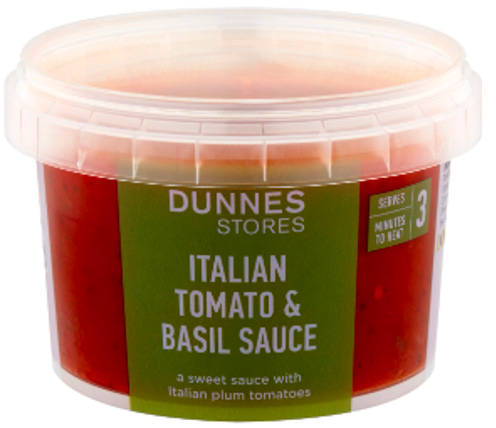
Food Safety Authority of Ireland confirm presence of milk in batch of Dunnes Stores Tomato & Basil Sauce.
Allergy Alert Notification dated Friday, July 26th 2024.
Allergy Alert Notification: 2024.A26.
Allergen: Milk.
Product Identification: Dunnes Stores Tomato & Basil Sauce 250g.
Batch Code: 24285 use by date: 12.09.24.
Country Of Origin: Ireland.
Message:
The above batch of Dunnes Stores Tomato & Basil Sauce contains milk which is not mentioned on the label. This may make the batch unsafe for consumers who are allergic to or intolerant of milk.
Unmonitored private drinking water supplies are a potential risk to public health, says Environmental Protection Agency (EPA).
- Many people in Ireland get drinking water from small private supplies which are not registered or monitored and may therefore be putting their health at risk.
- Only 1,665 small private supplies are registered with local authorities across the country. Unregistered supplies are not being monitored by local authorities.
- The number of private group schemes with E. coli failures increased in 2023, impacting approximately 4,600 people.
- 21 private group schemes, supplying 22,000, people failed the standard for Trihalomethanes (THMs) – up from 16 schemes serving 16,000 people in 2022.
- €38.5 million of available Government funding that could have been invested in improvements to private supplies between 2019-2023 was not used.
The Environmental Protection Agency (EPA) today released the Drinking Water Quality in Private Group Schemes and Small Private Supplies 2023 report.
There are over 370 group water schemes supplying drinking water to 190,000 people across rural communities in Ireland today.
In addition, many commercial and public premises supply water to the public from their own drinking water well. These are called small private supplies and can include schools, creches, nursing homes, self-catering accommodation and sports clubs. Only 1,665 small private supplies are registered nationally, and the total number remains unknown. Unregistered supplies are not being monitored by local authorities, creating a potential public health risk for consumers.
E. coli:
One in twenty small private supplies and private group schemes failed to meet E. coli standards in 2023. Twenty-two private group schemes failed the standard for E. coli, putting the health of approximately 4,600 consumers at risk.
E. coli failures were recorded in 71 small private supplies, that were monitored by local authorities, posing a risk to consumers that use these supplies. Meeting E. coli standards is a minimum requirement in the provision of safe drinking water and failures indicate a lack of proper disinfection.
Trihalomethanes (THM)
In 2023, 21 private group schemes supplying 22,000 people failed the standard for Trihalomethanes (THMs), up from 16 schemes serving 16,000 people in 2022. There is a legal limit for THMs which suppliers must meet in order to protect public health. Greater effort is needed by these private group schemes to improve treatment systems and minimise exposure to THMs.
Launching the report, Dr Tom Ryan, EPA Director said: “All drinking water produced in Ireland, whether it comes from a public or private supply, should be of high quality. Urgent action is needed by suppliers and local authorities to address these failings, in order to protect the public health of consumers.
Local authorities must take proactive steps to identify and register small private supplies in their areas and the legislation needs to be amended to make it an offence for a supplier not to be registered, in the interests of public health.”
The Department of Housing, Local Government and Heritage’s review of the rural water sector, completed in January 2023, identifies key issues that must be addressed to improve water quality. While some issues have been progressed, such as simplifying the application process for funding of upgrades for groups schemes; remaining issues must be tackled if improvements in private water quality are to be achieved.
Mr Noel Byrne, Programme Manager of the EPA’s Office of Environmental Enforcement said: “It is very disappointing to see an underspend of €38.5 million of Government support when there are ongoing water quality issues in group water schemes. The EPA welcomes recent improvements to the application process which should make it easier for group water schemes to access funding and deliver improved drinking water quality. However, every effort is needed by suppliers, local authorities, and the Department to get funding to the schemes that need it most.”
The EPA report on Drinking Water Quality in Private Group Schemes and Small Private Supplies – 2023 is available on the EPA website.
|
Support Us Help keep Thurles.info online by donating below. Thank you.
Total Donated 2026: €290.00
Thank You!
Daily Thurles Mass Livestream
|





Recent Comments