Closure Order served on Bansha foodstore as FSAI reports four January closures.
A food business in Bansha, Co Tipperary has been served with a Closure Order after an inspection found unsafe food being held for sale or supply past its ‘use by’ date, the Food Safety Authority of Ireland has confirmed.
What the Closure Order means for the Bansha premises. The notice relates specifically to the holding of foods labelled with ‘use by’ dates for the purpose of sale or supply. (It does not restrict the sale or supply of foods labelled with a ‘best before’ date.) The FSAI said one of the reasons for enforcement action during January included unsafe food placed on the market that was past its ‘use by’ dates.
FSAI: “No excuse for bad practice”. Commenting on the January enforcement list, FSAI chief executive Mr Greg Dempsey said inspectors are continuing to find recurring problems, including poor hygiene and pest issues, and stressed that a robust food safety management system and a clean premises are basic legal requirements.
Other January Closure Orders (briefly). The FSAI report also lists three other businesses served with Closure Orders in January:
The Shamrock Lodge (kitchen only), Finglas, Dublin 11. White Sands Hotel (small ground-floor kitchen), Portmarnock, Co Dublin. Chillers Restaurant and Lounge, Clondalkin, Dublin 22.
The FSAI notes that details of enforcement orders are published on its website, and that Closure Orders and Improvement Orders remain listed for a period after issues found are corrected.
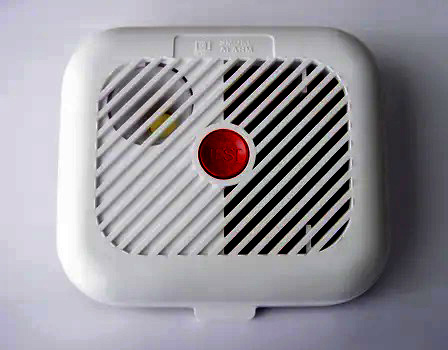
The scheme targets those at greatest risk in the event of a house fire, including older people, people living alone and residents in isolated rural areas, by providing and fitting smoke alarms where needed.
A spokesperson said: “Smoke alarms provide an early warning that can save lives. We are urging households, particularly those with older residents or anyone living alone, to apply and to make sure their alarms are working.”
National fire safety advice consistently stresses that many fatal fires occur in homes without a working smoke alarm, underlining the importance of fitting and maintaining alarms.
How to apply. Application forms: Same are available online through Tipperary County Council and can be returned by email or by post/hand delivery. Email:smokealarms@tipperarycoco.ie Post/Hand delivery: Smoke Alarms, Fire Service HQ, Nenagh Fire Station, Limerick Road, Nenagh
Simple safety checks Tipperary Fire and Rescue Service is also reminding households to:
Ensure there are at least two working smoke alarms, including one on each level of the home.
Keep exits clear and have an escape plan.
For general council contact details, see Tipperary Fire and Rescue Service information pages HERE.
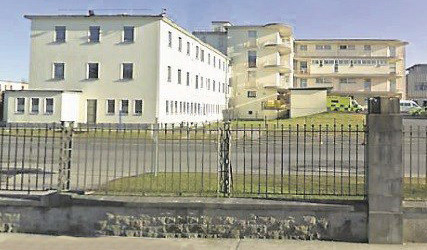
The HSE has confirmed ongoing discussions with Bon Secours Hospital Limerick on a proposal that would allow appropriate medical patients to be transferred from University Hospital Limerick (UHL) during periods of peak demand, in a bid to relieve chronic overcrowding.
Under the proposed arrangement, patients would be treated and cared for in Bon Secours Limerick as the private hospital continues the phased opening and expansion of services at its new facility, which is reported as a €213 million development.
UHL remains the region’s only 24-hour Emergency Department, serving a catchment of more than 400,000 people across North Tipperary, Limerick, Clare and parts of Cork and Kerry.
Current position In a statement, Bon Secours said: “As the new Bon Secours Hospital Limerick opens an additional ward, discussions are being finalised to support the public system in providing care for several medical patients from University Hospital Limerick.”
The HSE Mid West said it has been in discussions with Bon Secours “about transfer of appropriate patients… to alleviate pressure on UHL during periods of peak demand”, adding that it hopes an agreement will be finalised “in the coming weeks”.
Overcrowding context Latest figures, reported this week, show UHL continuing to account for the highest numbers of patients awaiting admission. On Friday, the Irish Nurses and Midwives Organisation reported 107 patients on trolleys and in other inappropriate spaces at UHL, while the HSE’s TrolleyGAR, reporting, indicated 55 admitted patients waiting on trolleys at the hospital.
Overcrowding has persisted despite recent expansion works, including the official opening of a €105 million 96-bed block at the UHL campus in October 2025.
Background and longer-term planning The current pressure on UHL is widely linked to the mid-west reconfiguration in 2009, which saw 24-hour emergency departments closed and services centralised, including in Ennis, Co. Clare and Nenagh, Co. Tipperary, as well as St John’s Hospital Limerick.
The Government has also recently indicated it will progress a “blend” of options advised by HIQA to address urgent and emergency care capacity in the region, following its review, as outlined by Minister Ms Jennifer Carroll MacNeill.
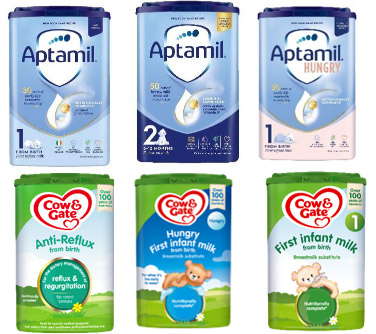
Danone recall specific batches of Aptamil and Cow & Gate infant formula and follow-on formula due to the possible presence of cereulide.
Alert Summary dated Friday, 6th February 2026.
Category 1: For Action. Alert Notification: 2026.05. Product Identification: Please see table below. Batch Code: Please see implicated expiry dates in the table below. Country Of Origin: Ireland.
Message: Danone is recalling the below specific batches of its Aptamil and Cow & Gate infant formula and follow-on formula sold in Ireland due to the possible presence of cereulide. Recall notices will be displayed at point-of-sale.
Please see Questions and Answers: Danone is advising customers to contact its Aptamil careline team on Tel: 1800 22 1234 (https://www.aptaclub.ie), or its Cow & Gate careline on Tel: 1800 570 570 (https://candgbabyclub.ie) if they have any queries regarding this recall.
In addition, Danone is recalling specific batches of its Aptamil and Cow & Gate infant formula and follow-on formula sold in the UK due to the possible presence of cereulide. The below batches may indirectly be distributed to Ireland from the UK.
Nature Of Danger: Cereulide toxin is produced by the bacterium Bacillus cereus. The toxin may be pre-formed in a food and is extremely heat resistant. Consumption of foods containing cereulide toxin can lead to nausea and severe vomiting. Symptoms can appear within five hours. The duration of illness is usually 6 to 24 hours.
Retailers: Same are requested to remove the implicated batches from sale and display recall notices at point-of-sale. Wholesalers/distributors: Same are requested to contact their affected customers and recall the implicated batches and provide a point-of-sale recall notice to their retailer customers. Consumers: Parents, guardians and caregivers are advised not to feed the implicated batches to infants or young children.
FSAI warn of recall of a batch of Et Voilá Pains au Chocolat due to the possible presence of metal pieces.
Alert Summary Dated Thursday, February 5th 2026.
Category 1: For Action Alert Notification: 2026.04 Product Identification: Et Voilá! Pains au Chocolat; pack size: 4 pack Batch Code: Best before date: 05/02/2026
Message: The above batch of Et Voilá! Pains au Chocolat 4 pack is being recalled due to the possible presence of metal pieces.
Recall notices will be displayed at point-of-sale in Tesco stores.
Action Required: Consumers and retailers: Retailers are requested to remove the implicated batch from sale and display a recall notice at point-of-sale.
Consumers: Consumers are advised not to eat the implicated batch.
This website uses cookies to improve your experience. We'll assume you're ok with this, but you can opt-out if you wish.AcceptRead More
Privacy & Cookies Policy
Privacy Overview
This website uses cookies to improve your experience while you navigate through the website. Out of these, the cookies that are categorized as necessary are stored on your browser as they are essential for the working of basic functionalities of the website. We also use third-party cookies that help us analyze and understand how you use this website. These cookies will be stored in your browser only with your consent. You also have the option to opt-out of these cookies. But opting out of some of these cookies may affect your browsing experience.
Necessary cookies are absolutely essential for the website to function properly. This category only includes cookies that ensures basic functionalities and security features of the website. These cookies do not store any personal information.
Any cookies that may not be particularly necessary for the website to function and is used specifically to collect user personal data via analytics, ads, other embedded contents are termed as non-necessary cookies. It is mandatory to procure user consent prior to running these cookies on your website.







Recent Comments