The Department of Agriculture have issued an order to house poultry flocks and other captive birds, same coming into effect from today, in an effort to protect them from Avian influenza.
This order follows five detections of Avian influenza virus; more commonly called bird flu, found in wild birds across Ireland since December 2024 last.
Detections have already been identified in counties Galway and Dublin last December, with three further cases pinpointed in January of this year in counties Donegal, Westmeath and Wexford.
Following these identified cases, the Department of Agriculture has announced this immediate housing order to protect poultry flocks and captive birds from mixing with wild birds, who may be infected by the virus.
All ready in Northern Ireland, 64,000 birds are set to be slaughtered at one commercial poultry unit, situated in Co. Tyrone, following the discovery of a suspected case.
According to the HSE Health Protection Surveillance Centre, [HPSC] Avian influenza or “bird flu” is a disease of birds caused by type A strains of the influenza virus. It can affect all species of birds, some other animals (e.g. cats, horses) and can, although very rarely, infect humans. Only the virus types of the H5 and H7 types are known to cause the highly pathogenic (HPAI) form of the disease. The most well-known example is the avian influenza subtype H5N1 viruses, currently circulating in poultry in parts of Asia and north-east Africa, which have caused human disease and deaths since 1997. Other avian influenza subtypes, including H7N9 and H9N2, have also infected people. Some of these infections have been very severe and some have resulted in deaths, but many infections have been mild or even without symptoms in humans. To date, Hong Kong has reported 21 cases of H7N9 in humans, all traced to mainland China and involving contact with poultry.
A Tipperary family has now settled their High Court action, taken against the HSE seeking €600,000, following the death of a 51-year-old father of five, just days after a road traffic accident.
The High Court heard that a significant small bowel injury was overlooked completely by staff at Cork University Hospital.
Then patient, Mr Patrick Connolly slowly deteriorated before dying of a heart attack, while in the care of staff at Cork University Hospital, five days after the tragic road accident outside Tipperary town on December 28th, 2021.
The court were informed that no particular attention was paid to a bowel injury in the hospital and Mr Connolly’s health gradually deteriorated. Mr Connolly was in a lot of pain, was vomiting and had two heart attacks. He died after his second heart attack on January 2nd, 2022. The HSE admitted that Mr Connolly had a small bowel perforation that was not diagnosed in a timely manner.
The health service also admitted that if a laparoscopic assessment had been carried out at any time from Mr Connolly’s admission to hospital, until the time of his first heart attack, there would have been a high likelihood of him surviving the accident.
The collision had occurred when a car driven by Ms Mary Lowry, latter a central witness in the Mr Moonlight murder trial, had collided with a motorcycle ridden by Mr Patrick Connolly; with his son as a pillion passenger.
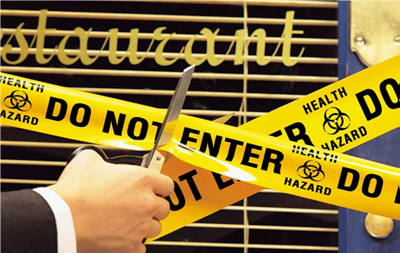
In total eleven Enforcement Orders were served on food businesses in Ireland during January 2025.
The Food Safety Authority of Ireland (FSAI) today reported that 11 Enforcement Orders were served on food businesses during the month of January for breaches of food safety legislation, pursuant to the FSAI Act, 1998 and the European Union (Official Controls in Relation to Food Legislation) Regulations, 2020. The Enforcement Orders were issued by Environmental Health Officers in the Health Service Executive (HSE).
Five Closure Orders were served under the FSAI Act, 1998 on:
Miner’s Rest Public House(Closed Area: The external drinks storage room), Ballingarry, Thurles, Co. Tipperary. (See closure Order Report HERE)
The Turk Grill(Take Away), 23 Grattan Street, Sligo
Ella’s Heaven Café and Bakery, 95A Talbot Street, Dublin 1
Three Closure Orders were served under the European Union (Official Controls in Relation to Food Legislation) Regulations, 2020 on:
Xpress Pantry(Closed activities: Part of the activities of the business, its establishments, holdings, or other premises be ceased – The manufacture and wholesale of foods of animal origin and subsequently being placed on the market), Unit 9, Dunshaughlin Business Park, Dunshaughlin, Co. Meath.
Indian Tiffins(Restaurant/Café), 143 Parnell Street, Dublin 1.
Bewley’s Café(Closed activity: Part of the activities of its establishment be ceased, specifically the use of the vacuum packing machine), 78/79 Grafton Street, Dublin 2.
Three Prohibition Orders were served under the FSAI Act 1998 on:
Miner’s Rest Public House, Ballingarry, Thurles, Co. Tipperary.
La Citadel(Retailer), Unit 4, Glebeview House, River Mall, Swords, Co. Dublin.
M Tee Ventures(Retailer), Unit 1, Glebeview House, River Mall, Main Street, Swords, Co. Dublin.
Some of the reasons for the Enforcement Orders in January include: active cockroach infestation; rodent activity and rodent droppings; raw fish vacuum packed in the same machine where ready-to-eat foods were vacuum packed with no documented cleaning and disinfection procedure or cleaning schedule in place for the vacuum packer; damp and mould growth; personal items such as shoes, a gazebo and scooter in a food production area; complete lack of cleaning; all surfaces stained and dirty with waste food debris and a build-up of dust; no evidence of a food safety management system in place; a business that had not been approved by a competent authority for the operations taking place; unlabelled food items with no traceability information provided.
Dr Pamela Byrne, Chief Executive, FSAI, reiterated that the legal onus is on food businesses to ensure they fully comply with food safety legislation at all times. “Food businesses have a fundamental legal responsibility to ensure the food they produce is safe to eat. The Enforcement Orders served in January highlight unacceptable breaches of food safety legislation, including inadequate pest control, poor hygiene standards, and a lack of proper food traceability. These non-compliances pose a serious risk to consumer health and also undermine confidence in the food industry. It is essential that all food businesses implement and maintain a robust food safety management system to prevent such violations. The law is clear, food safety is not optional, and food businesses that fail to comply will face enforcement action.”
Also, during the month of December 2024, one prosecution was taken by the Health Service Executive in relation to: Vicos Grill (Take Away), 1 Ludlow Street, Navan, Meath.
Irish Vehicle drivers with the following medical conditions may face licence removal under new Irish regulations.
Drivers across Ireland have been warned of at least five medical conditions that could cause their driving licences to be revoked under new rules.
It is a requirement that thousands of motorists across Ireland must submit what’s called a Medical Form to the National Driver Licence Services every year, if they have any long-term injury or an illness that may affect their ability to drive in complete safety.
Failure to submit this required form, could place drivers at risk of fines, driving bans, or legal action by the Irish authorities. The Road Safety Authority has a comprehensive list of medical conditions, as well as treatments being received, that may affect a drivers ability to hold a driver’s licence.
Hereunder, are five of the major conditions that could cause your licence to be revoked if you do not report them to the authorities:
Epilepsy and Sudden Blackouts.
Heart Conditions (Including Arrhythmia and Heart Attacks).
Severe Vision Impairment.
Diabetes with Severe Hypoglycaemia (Low blood sugar).
Neurological Disorders (Including Dementia and Parkinson’s Disease).
Conditions like Dementia, Parkinson’s Disease, Multiple Sclerosis(MS), or Motor Neurone Disease(MND) can also significantly impair reaction time, coordination, and cognitive function, making it absolutely vital that drivers submit a medical form to the NDLS.
The conditions that require motorists to submit a medical report can be found hereunder:
Diabetes treated by insulin and or sulphonylurea tablets (your doctor can advise whether you are on these or not) no need to tell us if managed by other tablets and or diet.
Epilepsy.
Stroke or TIAs (minor strokes) with any associated symptoms lasting longer than one month.
Fits or blackouts.
Any type of brain surgery, brain abscess or severe head Injury involving in-patient treatment or a brain tumour or spinal injury or spinal tumour.
An implanted cardiac pacemaker.
An implanted cardiac defibrillator (ICD)
Repeated attacks of sudden disabling dizziness.
Any other chronic neurological condition such as multiple sclerosis, motor neurone disease, or Huntington’s disease.
A serious problem with memory or periods of confusion.
Persistent alcohol misuse or dependency.
Persistent drug misuse or dependency.
Serious psychiatric illness or mental health problems.
Parkinson’s disease.
Sleep Apnoea syndrome.
Narcolepsy.
Any condition affecting your peripheral vision.
Total loss of sight in one eye
Any condition affecting both eyes, or the remaining eye if the driver only has one eye (Not including colour blindness or short or long sight).
A serious hearing deficiency.
Severe learning disability.
Any persistent problems with arms or legs which restricts driving to an automatic vehicle.
Any persistent problems with arms or legs which restricts driving to an adapted vehicle.
How to Check if you may be at risk.
Consult Your Doctor – If you have any of the conditions listed above or suspect a medical issue affecting your driving, seek medical advice immediately.
Check the RSA Guidelines – The RSA provides a full list of reportable conditions on their website.
Take an Eye Test – If you’re unsure about your vision, book an eye test to ensure you meet all legal requirements.
This website uses cookies to improve your experience. We'll assume you're ok with this, but you can opt-out if you wish.AcceptRead More
Privacy & Cookies Policy
Privacy Overview
This website uses cookies to improve your experience while you navigate through the website. Out of these, the cookies that are categorized as necessary are stored on your browser as they are essential for the working of basic functionalities of the website. We also use third-party cookies that help us analyze and understand how you use this website. These cookies will be stored in your browser only with your consent. You also have the option to opt-out of these cookies. But opting out of some of these cookies may affect your browsing experience.
Necessary cookies are absolutely essential for the website to function properly. This category only includes cookies that ensures basic functionalities and security features of the website. These cookies do not store any personal information.
Any cookies that may not be particularly necessary for the website to function and is used specifically to collect user personal data via analytics, ads, other embedded contents are termed as non-necessary cookies. It is mandatory to procure user consent prior to running these cookies on your website.









Recent Comments