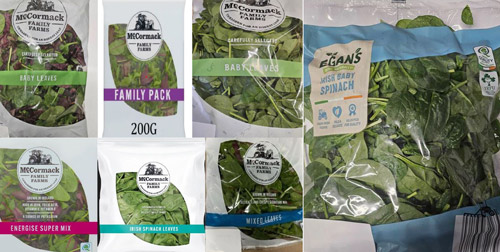
The Food Safety Authority Of Ireland have once again recalled various branded Spinach and Mixed Leaves products, produced by McCormack Family Farms, due to the detection of Listeria monocytogenes.
McCormack Family Farms has recently returned to full business operations following a temporary halt due to a Listeria recall affecting their products in late July 2025. The company confirmed they have resumed full production after implementing corrective actions, including enhanced cleaning and daily lab testing of product samples, to ensure food safety and overcome this issue.
Alert Summary dated Saturday, 30th August 2025.
Category 1: For Action. Alert Notification: 2025.47. Product Identification: Please see table below. Batch Code: Please see table below. Country Of Origin: Ireland.
Product name.
Pack sizes.
Batch codes.
McCormack Family Farms Baby Leaves Mixed Leaves.
500g.
JD233, JD234, JD235, JD237, JD238, JD239, JD240.
McCormack Family Farms Baby Leaves Spinach.
500g.
JD237, JD238, JD239, JD240.
McCormack Family Farms Baby Leaves Energise Mix.
500g.
JD233, JD237.
McCormack Family Farms Irish Spinach Leaves.
100g, 200g & 250g.
JD 238, JD239, JD240.
McCormack Family Farms Mixed leaves.
75g & 100g.
JD234, JD238, JD239.
McCormack Family Farms Energise Super Mix.
100g & 200g.
JD233, JD239, JD240.
McCormack Family Farms Oriental Mix.
1kg.
JD234, JD235, JD239.
McCormack Family Farms Red Chard.
100g & 1kg.
JD238.
McCormack Family Farms Family Pack.
200g.
JD239, JD240.
Egan’s Irish baby Spinach.
250g.
JD 239, JD240.
Message: The above branded Spinach and Mixed Leaves products are being recalled by McCormack Family Farms due to the detection of Listeria monocytogenes. Recall notices will be displayed at point-of-sale in stores. There is currently no evidence that this food recall is linked with the listeriosis outbreak related to ready-to-heat meals that is currently under investigation. Please see News Article HERE.
Nature Of Danger: Symptoms of Listeria monocytogenes infection can include mild flu-like symptoms, or gastrointestinal symptoms such as nausea, vomiting and diarrhoea. In rare cases, the infection can be more severe, causing serious complications. Some people are more vulnerable to Listeria monocytogenes infections, including pregnant women, babies, and people with weakened immune systems, including the elderly. The incubation period (time between initial infection and first symptoms appearing) is on average 3 weeks but can range between 3 and 70 days.
Action Required From Manufacturers, Wholesalers, Distributors, Caterers & Retailers:
Retailers: Same are requested to remove the implicated products from sale and display recall notices at point-of-sale.
Wholesalers/Distributors: Same are requested to contact their affected customers and recall the implicated products and provide a point-of-sale recall notice to their retailer customers.
Caterers: Same should not use the implicated products.
Consumers: Consumers are advised not to eat the implicated products.
The mid-term evaluation of Ireland’s National Hazardous Waste Management Plan 2021-2027 by the EPA shows mixed results in terms of implementation.
Ireland remains reliant on facilities in European countries to export hazardous wastes, posing a risk around management of complex waste materials in a sustainable way.
There has been some progress in establishing national infrastructure for the collection of household hazardous wastes (e.g. surplus paint) and farm hazardous waste (e.g. Pesticides or chemicals). However, sustained investment is needed.
A national take back scheme for the collection of unused and expired medicines is needed.
Hazardous waste generation decreased from 580,000 tonnes in 2019 to 381,000 tonnes in 2023 due to, for example, a decrease in dredging activity and lower volumes of contaminated soils.
The Environmental Protection Agency (EPA) has today published its report on the mid-term evaluation and implementation of Ireland’s National Hazardous Waste Management Plan 2021-2027. The Plan sets out measures to improve the prevention and management of hazardous waste such as: (1) Farm hazardous waste including spent sheep dip; (2) Unused and expired medicines; (3) Household hazardous waste including surplus paint; (4) Assessment of national infrastructure and capacity.
Progress on the plan’s priority areas has been variable with notable improvements and progress in some areas, with limited advancement in others.
Hazardous waste generation decreased from 580,000 tonnes in 2019 to 381,000 tonnes in 2023 due to, for example, a decrease in dredging activity and lower volumes of contaminated soils.
Commenting on the report, Mr David Flynn, Director of the EPA’s Office of Environmental Sustainability, said: “Our report, published today, highlights a strong case for investment in Ireland’s hazardous waste treatment infrastructure. This is needed to ensure highly polluting hazardous wastes are properly and safely managed. Ireland exports half of its hazardous waste for treatment. We cannot continue to rely on other countries to treat significant quantities of hazardous wastes generated in Ireland.”
This mid-term evaluation presents updates on the implementation of all the recommendations and actions identified in the Plan with seventeen recommendations completed or on-track to date.
Mr Warren Phelan, Programme Manager for the Circular Economy, added: “The report shows some progress in establishing systems for the collection of household hazardous and farm hazardous wastes. However, the setting up of a national take back scheme for unused and expired medicines has been slow. Sustained investment to ensure the durability and resilience of these systems is needed. Producers whose products result in hazardous wastes, such as paints, oils and farm chemicals, need to take greater responsibility, including funding for their safe management.”
The report Mid-term evaluation of the National Hazardous Waste Management Plan 2021-2027 – Incorporating the 2024 Annual Report is now available on the EPA website, HERE.
The Order of Malta Cadet Unit gives young people, aged between 10-16 years-of-age, the opportunity to make new friends, learn, very often, life saving first aid skills while give back to their local community.
People who erect signs in neglected, often polluted areas, claiming that the area is being “Managed for Wildlife”, sadly in many cases suffer from delusions of adequacy. When opportunity permits or when you next exercise your dog, take a stroll along the pavement on Emmett Street in the town. Here over the stone wall two “Managed for Wildlife” signs exist. [Note this same area was ‘strimmed’, bare, twice this year, making walking and flying insects homeless, but the wildlifesigns continue to remain in place.]
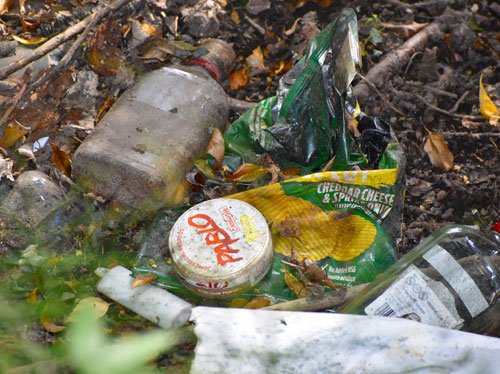
To those who claimed at a recent Local Authority Waters Programme (LAWPRO) meeting that they regularly entered the River Suir to remove discarded litter, sadly, the evidence seen by me today contradicts that claim. No one person has entered the river Suir, in the past 2 years, as images taken of litter today and in the past will confirm. See here and then view images shown in video, accompanying this report, (Note the timber pallets).
River Area In Thurles Town Centre “Managed for Wildlife”.
In an email sent to Thurles Municipal District Council requesting that for the sake of appearances, “a group of volunteers might be assembled to clean up the entirety of the River Suir from Barry’s Bridge to the Swinging gates at the junction of Emmett Street – Same work to include removal of sediment and reeds/weeds from the area“, alas the reply came back in the negative. Tipperary Co. Co. Council would have objections as would OPW and Inland Fisheries. We already were aware that LAWPRO would object. At least we now know the funded bodies responsible for the decline and destruction of our River Suir over the past 12 years.
At the junction at Emmett Street and Thomand Road, take a walk through the “Swinging Gates” entrance. Glance to your right to view dumped, strewn, sacks of what appears to be ladies assorted garments, which have lain there for months. This area is also “Managed for Wildlife”, as is the area travelling west from the children’s play park, close to the foot bridge. Here more garments are discarded; throw away, no longer wanted or needed. Yes, this is the work of an uncouth, uncaring resident, but nowadays we pay hefty community taxes to have such matters cleaned up in a timelier fashion. Again I ask the question, “For what exactly do we pay Property Tax?
The Need To Attract Tourism. Some weeks ago local councillors were making local headlines, seeking that a bus should immediately be funded by the government to transport passengers from Thurles Railway Station into Thurles town, latter now almost devoid of its once rich heritage, thanks to the same councillors and their officials. At Thurles Railway Station, regrettably yet another “Managed for Wildlife” sign is parked at the end of the platform, its deluded phizog guarding a small grassy area of ground 4.6mts(15ft) x 1.3mtrs(4ft). The terminally dehydrated grass here is no longer cut and since the sign was erected, this latter, flowerless plot, just described, together with the available quality flower pots strewn about the area; (latter previously voluntarily tended by locals,) today demonstrates a total lack of ambition for our town’s first impressions. (See Video). Truth is, if I were travelling to Thurles by rail, I would get back on the train.
Croke Street in Thurles for the most part has set an example for the rest of the town. Despite local residences being landed with hideosity and dereliction, facing unto their homes, they have introduced flowers, in an effort to distract eyes from an unsightly, ugly, unfinished, concrete structure.
Protecting Biodiversity – A Polite Name For Lack Of Motivation And Neglect. In Thurles, Co. Tipperary, ‘protecting biodiversity’ has become a polite name for neglect. As I stated on August 19th last, when it comes to areas within Thurles town, an outsider could be forgiven for thinking that our supposed “protection of biodiversity” is little more than a convenient disguise for neglect. What greets the eye in many places is not thoughtful conservation, but total dereliction; footpaths with weeds, vacant sites left to rot and green spaces littered with rubbish. This isn’t stewardship of the natural world; it is abandonment dressed up as environmental concern. Where real biodiversity currently exists in Thurles is to be tarmacked over, to build a new Drive-Thru McDonald’s burger joint, supported by Tipperary Co. Council.
Genuine biodiversity protection requires care, planning and pride of place; what Thurles, too often, shows is disregard, negligence and a shocking lack of ambition for our town’s appearance and well-being. If this is what passes for protecting our environment, then it is no wonder that so many residents feel our community is being failed at the most basic level.
It seems that the difference between the big business mindset and the mindset of environmentalists boils down to big business believing “I have rights” versus the environmentalists understanding “I have obligations”. Perhaps instead of thinking that we are “born with rights”, we should choose instead to think that we are “born with obligations”, thus requiring us to serve present and future generations, and while in doing so, serve the healthy needs of the planet on which we reside, each of us for a relatively short period.
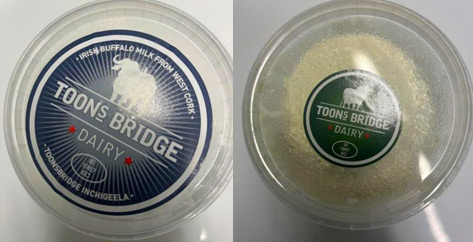
Food Safety Authority Of Ireland Recall Toons Bridge Dairy Ricotta and Buffalo Ricotta Cheeses due to the presence of Listeria monocytogenes.
Alert Summary dated Wednesday, August 27th 2025.
Category 1: For Action. Alert Notification: 2025.46. Product Identification: Please see table below. Batch Code: Please see table below. Country Of Origin: Ireland.
Message: The below batches of Toons Bridge Dairy Ricotta & Buffalo Ricotta cheeses are being recalled due to the presence of Listeria monocytogenes. Recall notices will be displayed at point-of-sale.
Note: There is currently no evidence that this food recall is linked with the listeriosis outbreak related to ready-to-heat meals or the recall of spinach and mixed leaves products. Please see this News Article.
Nature Of Danger: Symptoms of Listeria monocytogenes infection can include mild flu-like symptoms, or gastrointestinal symptoms such as nausea, vomiting and diarrhoea. In rare cases, the infection can be more severe, causing serious complications. Some people are more vulnerable to Listeria monocytogenes infections, including pregnant women, babies, and people with weakened immune systems, including the elderly. The incubation period (time between initial infection and first symptoms appearing) is on average 3 weeks but can range between 3 and 70 days.
Action Required: Manufacturers, Wholesalers, Distributors, Caterers and Retailers:
Retailers: Same are requested to remove the implicated batches from sale and display recall notices at point-of-sale. Wholesalers/Distributors: Same are requested to contact their affected customers and recall the implicated batches and provide a point-of-sale recall notice to their retailer customers. Caterers: Same should not use the implicated batches. Consumers: Consumers are advised not to eat the implicated batches.
This website uses cookies to improve your experience. We'll assume you're ok with this, but you can opt-out if you wish.AcceptRead More
Privacy & Cookies Policy
Privacy Overview
This website uses cookies to improve your experience while you navigate through the website. Out of these, the cookies that are categorized as necessary are stored on your browser as they are essential for the working of basic functionalities of the website. We also use third-party cookies that help us analyze and understand how you use this website. These cookies will be stored in your browser only with your consent. You also have the option to opt-out of these cookies. But opting out of some of these cookies may affect your browsing experience.
Necessary cookies are absolutely essential for the website to function properly. This category only includes cookies that ensures basic functionalities and security features of the website. These cookies do not store any personal information.
Any cookies that may not be particularly necessary for the website to function and is used specifically to collect user personal data via analytics, ads, other embedded contents are termed as non-necessary cookies. It is mandatory to procure user consent prior to running these cookies on your website.






Recent Comments