The Department of Health has confirmed a further 1,903 confirmed cases of Covid-19 here in the Irish Republic . The number of people in our hospitals with the virus, today stands at 219, up 13 patients on yesterday, of whom 37 are in our ICU’s, an increase of 1 on yesterday’s figures.
The Department of Health in Northern Ireland have confirmed a further 1,610 cases of coronavirus today, up from 1,467 on Wednesday. There are 341 patients with Covid-19 in hospitals in Northern Ireland, with 42 patients with Covid-19 in their intensive care units.
Both the above confirmed figures bring to 3,513 the number of new Covid-19 cases confirmed on the whole island of Ireland, just over the past 24 hours; an increase of 228 on yesterday’s figures.
Here in the republic of Ireland, there have been, sadly, a total of 169 Covid-19 deaths since the beginning of April 2021. Note: While some of those who died would have had underlying conditions, including 7 persons who were fully vaccinated; 94 deaths occurred in April 2021; 37 in May 2021; 14 in June 2021; 16 in July 2021 and to-date in August sadly a further 8 deaths.
The risk of ending up seriously unwell for the vast majority of people is now preventable because of the implemented vaccination programme. In relation to death reporting; since mid-May, there has been a difficulty in reporting figures for Covid-19 deaths, due to the Russian cyber-attack on the HSE’s outdated IT systems.
It has been confirmed that more than three million people have been to-date fully vaccinated in Ireland and by this weekend 90% of adults will be at least partially vaccinated while 80% will be fully vaccinated.
News on the positive side.
Irish citizens and businesses have so far donated more than one million Covid vaccines to poorer countries, through a UNICEF campaign. The ‘Get a Vaccine, Give a Vaccine’ campaign has raised more than €2.5 million since it was launched last June.
The HSE Health Service Executive have, since last night, opened registration for vaccination for children aged 12 to 15 years. Already by mid-morning today, over 42,000 non vaccinated children had signed-up according to HSE figures, with many having already received appointments for this coming weekend. Around 280,000 children will be eligible for immunisation with either the Pfizer or Moderna vaccines.
Parents and guardians are being asked to keep in the forefront of their minds that the Covid virus remains a risk to anyone who has not suffered from the virus or who remains unvaccinated.
As North Tipperary politicians congratulate themselves, via social media, in relation to the “welcoming” of progress on projects for which they personally have had no hand, act or part in; staff at University Hospital Limerick (UHL) are being totally ignored. Latter medical facility, which serves the residents of North Tipperary, are today treating the highest number of Covid-19 patients (16) and patients with suspected cases of the virus (13) in the Irish Republic.
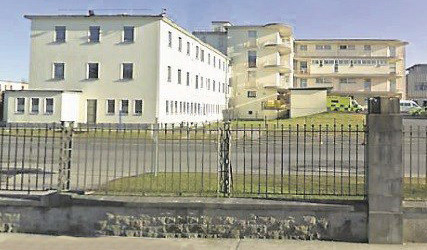
University Hospital Limerick (UHL)
Not surprisingly, due to this same political abandonment and parliamentary shabbiness, same UHL staff are also left caring for the largest number of seriously ill patients within the Irish State; same resigned to lie for days on trolleys.
Management at UHL were recently, and not for the first time, forced to introduce visiting restrictions in an effort to manage an outbreak of the Covid-19 virus, on a number of wards within the facility.
In the past fortnight, there were some 732 cases of Covid-19 virus in the mid-west region alone, the majority being in Co.Limerick (469 cases), followed by Co. Clare (163 cases), and North Co. Tipperary (100 cases); same numbers confirmed by the Department of Public Health Mid West region.
The availability of general beds at UHL has improved somewhat, from zero beds available (August 8th 2021) to 14 available beds yesterday, according to figures provided by HSE . As at that date, there were 4 ICU beds remaining at the Limerick hospital facility, with 1 Covid patient being treated in intensive care.
Yesterday at UHL, there were 43 patients assigned to trolleys, awaiting for admission to a bed, including 31 in the Limerick emergency department, and 12 on hospital wards; again confirmed figures published by the Irish Nurses and Midwives Organisation (INMO).
Previously on August 3rd there were 55 patients on trolleys in the Limerick hospital’s emergency department and on wards; same the highest number reported in any hospital within the Irish State, so far in the month of August.
Some 98 single beds opened at UHL, just last January 2021, have not yet been used to offset overcrowding at UHL emergency department. The reason for this is mainly because they were being used for seriously-ill patients, all deemed to be at highest-risk of death, should they contract Covid-19 which had already broken out within the overcrowded UHL facility.
The recent recorded surge of patients, which was experienced in UHL last July was due mainly to a wave of older people attending, who had experienced delayed care because of the Covid-19 pandemic, and were acutely ill due to same unavoidable neglect. Same patients, when attending were quite ill, so there was a greater need for longer hospital stop overs.
So Tipperary politicians please, enough of this old fashioned self-congratulatory “welcoming” and “calling for” nonsense, which we are fully aware you have had no hand, act or part in personally; rather address current problems which your electorate elected you to undertake.
The Department of Health has confirmed 1,819 new cases of Covid-19 within the Irish Republic. There are 206 people in our hospitals, with 36 of these virus patients in our ICU’s; latter up 3 cases on yesterday.
Over 78% of adults have now been fully vaccinated against the virus representing almost just 60% of our total population. Over 89% of adults have received one dose and the vaccine portal will open for children aged 12-15 years, from tomorrow.
Meanwhile in Northern Ireland, sadly, 3 further deaths of patients who had tested positive for Covid-19 have been confirmed. There have also been 1,467 new confirmed cases in the last 24-hour reporting period, with 321 Covid-positive patients in hospital; 40 in intensive care.
Both these confirmed figures bring to 3,285 the number of new Covid-19 cases confirmed on the whole island of Ireland, just over the past 24 hours an increase of 473 on yesterday’s figures.
Drug Tests: The World Health Organization (WHO) has announced major international trials of three drugs to find out whether they can improve the condition of patients who are/will be hospitalised due to the Covid pandemic. The drugs artesunate, imatinib and infliximab will be tested on thousands of volunteer patients in more than 600 hospitals in some 52 countries in an effort to improve the long term effects, being suffered by those struck down by the virus pandemic.
We understand that artesunate is already used to treat severe malaria; imatinib is a drug used for certain cancers, while infliximab is a treatment for immune disorders such as Crohn’s and rheumatoid arthritis.
Education: Primary and secondary schools which are due to reopen within the next two to three weeks, will find out next week when they will receive carbon dioxide (CO2) monitors. Same is expected to help monitor air quality in available classrooms.
Business: The Irish Small and Medium Enterprise association (ISME) has said employers should be allowed to ask if employees have been vaccinated before deciding if they can be allowed to return to offices. The leading business representative group state that businesses would be acting irresponsibly should they fail to do so.
The Department of Health has confirmed 1,508 new Covid-19 cases in the Republic of Ireland today. The number of patients in our hospitals today number 206 patients being treated. Of those persons in hospital, 33 are being treated in our intensive care units.
In Northern Ireland, sadly 2 further Covid related deaths have been reported. The northern Department of Health has confirmed 1,305 new cases in the last 24-hour period; an increase of 274 new cases, based on yesterday’s confirmed figures.
These figures bring to 2,813 the number of new Covid-19 cases confirmed on the whole island of Ireland over the past 24 hours.
University Hospital Limerick, this morning, had the largest number of confirmed Covid-19 patients in the Republic of Ireland; latter treating 18 confirmed cases of the new variant.
Meanwhile, coronavirus cases in China have hit a seven-month high, after a cluster at a testing site drove up their Delta variant numbers, challenging Beijing’s previous grip on this worldwide pandemic.
This latest surge in China is believed to have started from infections among airport cleaners in neighbouring Nanjing city, which in turn sparked a chain of cases across the country.
In a push to incentivise more people to get vaccinated; regional leaders and the federal government in Germany will end all free coronavirus tests next October. So from October next those who refuse to get vaccinated will have to pay to prove they are infection-free. However, children and people who for health reasons cannot be vaccinated, will still be able to get tested free of all charges.
The Department of Health has confirmed 1,522 new cases of Covid-19 in the Irish Republic. There are currently 217 people being treated for the virus in our hospitals; up 9 on yesterday. Of these patients 34 remain in intensive care units; an increase of 3 on yesterday figures.
The HSE Chief Executive Mr Paul Reid has confirmed that almost 9,000 people received a vaccine dose at a walk-in centre over last weekend.
Chief Medical Officer Dr Tony Holohan said that over the past fortnight 20,000 cases of the virus have been reported, with 17% of these in people who are doubly vaccinated. This he stated is entirely in keeping with what we expect as an increasing proportion of our population get vaccinated. It should be noted that this does not mean current vaccines are not effective.
Meanwhile, in Northern Ireland, sadly 8 further coronavirus deaths have been notified and 1,031 new cases have been confirmed during the past 24 hours. There are 245 confirmed Covid patients in hospital, in Northern Ireland, with 41 in ICU’s; 34 of whom remain on ventilators.
The Director of Public Health at the HSE’s National Immunisation Office has said that the first vaccines for those aged between 12 to 15 are expected to be administered this weekend.
Here in the Republic, Cork University Hospital remains the most overcrowded, with 47 patients waiting on trolleys, due to the temporary closure of Bantry General Hospital. University Hospital Limerick serving North Tipperary has the second highest number, with 41 patients waiting for a bed, followed by University Hospital Galway (39), Sligo University Hospital (26) and Mayo University Hospital (26).
The current 217 Covid related infections is putting our health service under increasing pressure.
The total worldwide number of known virus cases identified up to 4.30pm this evening, now stands at well over 202,970,177 confirmed cases, with global deaths at well over 4,298,791 million and rising.
Please do continue to wear face coverings and to socially distance. The latter has proven to have significantly limited the spread of COVID-19 in the past.
This website uses cookies to improve your experience. We'll assume you're ok with this, but you can opt-out if you wish.AcceptRead More
Privacy & Cookies Policy
Privacy Overview
This website uses cookies to improve your experience while you navigate through the website. Out of these, the cookies that are categorized as necessary are stored on your browser as they are essential for the working of basic functionalities of the website. We also use third-party cookies that help us analyze and understand how you use this website. These cookies will be stored in your browser only with your consent. You also have the option to opt-out of these cookies. But opting out of some of these cookies may affect your browsing experience.
Necessary cookies are absolutely essential for the website to function properly. This category only includes cookies that ensures basic functionalities and security features of the website. These cookies do not store any personal information.
Any cookies that may not be particularly necessary for the website to function and is used specifically to collect user personal data via analytics, ads, other embedded contents are termed as non-necessary cookies. It is mandatory to procure user consent prior to running these cookies on your website.





Recent Comments