The Food Safety Authority of Ireland (FSAI) today reported that Environmental Health Officers in the Health Service Executive (HSE) served eleven Closure Orders and two Prohibition Orders on food businesses during the month of October for breaches of food safety legislation, pursuant to the FSAI Act, 1998 and the European Union (Official Controls in Relation to Food Legislation) Regulations, 2020.
Eight Closure Orders were served under the FSAI Act, 1998 on:
The Crescent Stores(Closed areas: 1. Storeroom 1st floor; 2. Adjoining corridor area)(Retailer), 1 Thomas Street, Clonmel, Co. Tipperary Corrib Oil Spar Express, Castlerea (Retailer), Patrick Street, Castlerea, Roscommon West Wing Restaurant, N17 Business Park, Galway Road, Tuam, Galway Kimchi Hop House(Restaurant/ Café), 160 – 161 Parnell Street, Dublin 1 Base Wood Fired Pizza(under appeal) (Restaurant/Café), Unit 1, Aldi Centre, Mill Road, Killincarrig, Greystones, Wicklow. Camile Thai(Service Sector), 5 Dolphin’s Barn Street, Dolphin’s Barn, Dublin 8 TOP 3 CHINESE (Restaurant/ Café), 2 Lower Kilmacud Road, Stillorgan, Co. Dublin The premises occupied by The Lunch Bag Unlimited Company, at Killester, Raheny, Clontarf Educate Together National School(Service Sector), Collins Avenue East, Clontarf West, Dublin 5
Three Closure Orders were served under the European Union (Official Controls in Relation to Food Legislation) Regulations, 2020 on:
Diamond Pizza (Restaurant/Café),163 Drumcondra Road Lower, Drumcondra, Dublin 9 Nua Bia (Service Sector), Poppintree Sports Centre, Balbutcher Lane, Poppintree, Ballymun, Dublin 11 Cellar 22 and Floritz(Closed activities: the activity of vacuum packing ready-to-eat foods in the raw-designated vacuum packing machine and the preparing and serving of raw beef for direct consumption, namely beef tartare must cease immediately)(Restaurant Café), 22 Saint Stephen’s Green, Dublin 2
Two Prohibition Orders were served under the European Union (Official Controls in Relation to Food Legislation) Regulations, 2020 on:
Foodliner Supermarket(Butcher Shop), Main St, Ballaghaderreen, Roscommon Lucaci Fast Travel(Retailer), Unit 3, Lagan Road, Cabra East, Dublin 11
Some of the reasons for the Enforcement Orders in October include: evidence of rodent activity in food handling and storage areas, with rat droppings found in a kitchen and cleaning equipment store, a dead rat discovered under a dishwasher, and mice droppings observed inside presses and drawers storing opened and prepacked foodstuffs, as well as utensils; inadequate pest proofing and a failure to clean and disinfect the premises following the discovery of rodent activity in areas where food and food contact materials were stored; sightings of mice near a delicatessen counter; food handling staff not trained or supervised to an appropriate level; insufficient evidence of an effective food safety management system based on HACCP principles; inadequate procedures for the safe thawing of foodstuffs; a lack of basic cleaning and disinfection of food preparation surfaces and equipment; mould growth and dirt accumulation behind kitchen chill units; the absence of hot water, hand soap and paper towels at wash hand basins; defective drainage systems where grease traps and waste pipes were discharging into open containers and food placed on the market not properly labelled or traceable through appropriate documentation.
Mr Greg Dempsey, Chief Executive, FSAI, said “October’s Enforcement Orders once again highlight the importance of maintaining strong food safety and hygiene practices across all food businesses. Issues such as inadequate pest control, poor cleaning standards and unsafe food storage continue to be the main reasons for enforcement action. These are entirely preventable non-compliances when proper food safety management systems are in place. While the majority of food businesses take their legal responsibilities very seriously, we continue to see a small number of businesses subject to enforcement action, including closure, due to their non-compliances with basic food safety standards.”
“With the busy Christmas period fast approaching, we are reminding food businesses to start preparing now so that they have robust food safety procedures in place to deal with increased demands and pressures on their business. Food safety must always be their top priority,” added Mr Dempsey.
Details of the food businesses served with Enforcement Orders are published on the FSAI’s website. Closure Orders and Improvement Orders will remain listed in the enforcement reports on the website for a period of three months from the date of when a premises is adjudged to have corrected its food safety issue, with Prohibition Orders being listed for a period of one month.
Why An Electric Soup Maker Might Be The Smartest Buy This Black Friday.
The Kitchen Essential You’ll Want Before Black Friday: Why an Electric Soup Maker Is Worth Its Weight in Gold.
As the darker evenings draw in and the chill of winter settles over Tipperary, few things rival the comfort of a steaming bowl of homemade soup. It’s nourishing, cost-effective, and one of the simplest ways to ensure your five-a-day. Yet many households still rely on pre-prepared supermarket soups, often costing around €2.40 for just two portions, a habit that quickly adds up.
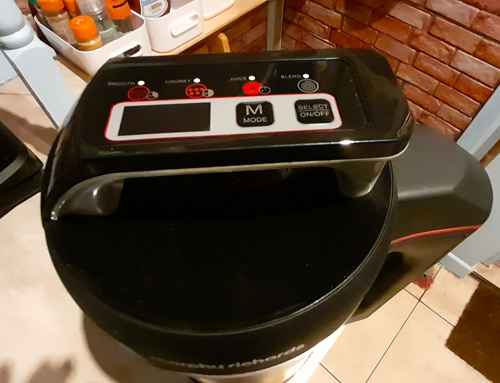
That’s where a good soup maker proves its worth[View Here]. Compact, efficient, and easy to use, a 1,600 ml model will quickly pay for itself, while helping households cut food waste and embrace healthier eating. With the right ingredients on hand, you can prepare delicious, nutritious soups in under half an hour; ideal for busy families or anyone looking for warmth and real sustenance during the winter months. With its fully sealed design, you’ll have it sparkling clean in seconds; just run it under tap water then dry and it’s ready to go!
Black Friday Bargains on the Horizon If you’ve been thinking about upgrading your kitchen gear, there’s good news. Black Friday, one of the biggest retail events of the year, takes place this year on Friday, November 28th, followed by Cyber Monday on December 1st.
While it’s not a public holiday in Ireland, the shopping event has grown enormously in recent years, with retailers offering discounts both in-store and online; often across the entire weekend. From electronics to homeware and kitchen gadgets, there’s no better time to pick up a few practical bargains that will see you through the winter season.
A soup maker, in particular, is one investment that will pay dividends long after the Black Friday sales are over. Not only does it make healthy eating easy, but it also delivers that simple satisfaction of homemade food, rich in flavour and free from those unnecessary perservatives/additives.
A Simple, Delicious Winter Soup: To show just how easy it can be, here’s a tried-and-tested recipe that serves six generous portions at a total cost of about €2.00, proof that real healthy eating for a family doesn’t have to be expensive.
Ingredients: 3 sticks celery. 4 carrots. 1 small parsnip. 1 medium onion. 1 medium potato. 3 pieces broccoli. 2 Knorr stock cubes. 800–900 ml boiling water. Salt and black pepper to taste. Adding a dash of turmeric is optional
Method: Slice all the vegetables into small pieces and place them into your 1,600 ml soup maker. Add the boiling water, stock cubes, seasoning, and turmeric (if using). Secure the lid into place and select your smooth-soup setting on the lid. About 21 minutes later, your delicious, piping-hot soup will be ready to serve, with the machine having done all the work including telling you it is ready and switching itself off.
Tip: Always follow the machine’s instructions regarding the ‘MAX’ fill marker, overfilling can affect performance.
A Feast Fit for Royalty Enjoy your fresh, homemade soup with a slice (or two) of fresh brown bread available fresh from Townhouse Deli on Slievenamon Road, Thurles, and your simple meal transforms into a feast fit for royalty. The deli’s warm, crusty loaves baked fresh daily, perfectly complement a hearty winter soup, bringing comfort and local flavour to the table.
The Smart Seasonal Investment Whether you’re cooking for one or feeding a family, a soup maker is one of the most practical, and rewarding, kitchen gadgets you can own. With Black Friday on the horizon, it’s well worth keeping an eye out for discounts. You’ll be saving money, eating better, and keeping warm all winter long, one bowl at a time.
John Magnier Donates 14-Acre Site To Tipperary GAA For Major Training Expansion.
Coolmore Morris Park, Thurles.
Tipperary GAA has announced that businessman and horse breeder, Mr John Magnier has generously donated a 14-acre site adjoining Coolmore Morris Park in Thurles, paving the way for the development of a new state-of-the-art Centre of Excellence.
The additional land will allow Tipperary GAA to significantly expand its existing facilities, including the creation of new sand-based pitches and cutting-edge training infrastructure, designed to support both elite and grassroots development.
Welcoming the announcement, Tipperary GAA CEO, Mr Murtagh Brennan described the gift as a milestone for Gaelic games in the county: “This investment represents a watershed moment for Gaelic games in Tipperary and underscores our long-term commitment to nurturing athletic excellence and supporting the next generation of hurlers and footballers,” he stated. “Crucially, this expansion will serve not only our elite teams but also the thousands of young boys and girls who represent the future of Tipperary GAA. It will provide a safe, modern and inclusive environment for youth development, physical wellbeing, and personal growth.”
Mr Brennan added that the new Centre of Excellence will act as a focal point for the wider community: “The wider Tipperary community will also benefit, with this facility acting as a hub for participation, pride and connection across our county. Tipperary GAA extends its sincere gratitude to Mr Magnier for his outstanding generosity and vision. This development is not just an enhancement of facilities, it is an investment in the future of our county, our players, and our sporting community.”
The expansion of the Coolmore Morris Park is expected to ensure that Tipperary GAA will continues to thrive at all levels, providing its many athletes with the resources needed to reach their fullest potential.
IFA calls for housing order to protect poultry as avian flu confirmed in Co Carlow.
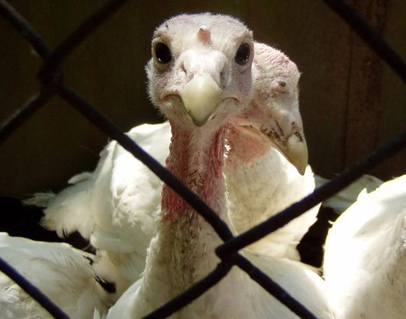
The Irish Farmers’ Association (IFA) has called for the introduction of a housing order requiring free-range poultry farmers to keep their birds indoors, as authorities confirm an outbreak of avian flu in a commercial turkey flock in Co Carlow, a county bordering on Co. Tipperary.
The virus, which causes the disease, is known as HPAI H5N1 and has been in circulation among wild birds over the past year.
Mr Nigel Sweetnam, Chair of the IFA National Poultry Committee, said the measure is urgently needed to help contain the spread of the highly contagious disease and safeguard farmers’ livelihoods. He urged all poultry farmers to be on high alert and to contact their vet and the Department of Agriculture, immediately, if they suspect any signs of avian flu.
Mr Sweetnam said farmers should watch for indicators such as high mortality and lethargic birds, and highlighted the importance of establishing exclusion zones around affected farms where movement of birds in and out is tightly controlled under veterinary supervision.
With the whole pattern of bird flu changing/mutating; the virus has appeared earlier than usual this year and in different geographical areas, with two outbreaks in Co. Cork.
Mr Sweetnam believes that a housing order should be comparable to restrictions in place during the Covid-19 pandemic, thus limiting movement and requiring birds to be kept indoors. The IFA continues to engage with the Department of Agriculture on measures to contain the outbreak and protect Ireland’s poultry sector. The Department is reminding all flock owners to maintain the highest standards of biosecurity, including disinfecting footwear and equipment, restricting visitors, and preventing contact between domestic poultry and wild birds.
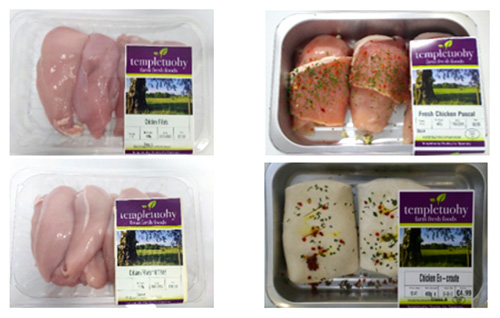
FSAI recall specific batches of some Templetuohy Farm Fresh Foods chicken products, due to the possible presence of Salmonella.
Alert Summary dated Monday, November 3rd 2025
Category 1: For Action Alert Notification: 2025.59 Product Identification: Please see table below for product details. Batch Code: Use by date: 06/10/2025
Message: The below batches of Templetuohy Farm Fresh Foods chicken products are being recalled due to the possible presence of Salmonella. Although these batches are past their use by date, they are suitable for home freezing. Consumers are advised to check their freezers for the implicated batches. Recall notices will be displayed at point-of-sale.
Nature Of Danger: People infected with Salmonella typically develop symptoms between 12 and 36 hours after infection, but this can range between 6 and 72 hours. The most common symptom is diarrhoea, which can sometimes be bloody. Other symptoms may include fever, headache and abdominal cramps. The illness usually lasts 4 to 7 days. Diarrhoea can occasionally be severe enough to require hospital admission. The elderly, infants, and those with impaired immune systems are more likely to have a severe illness.
Action Required:Manufacturers, wholesalers, distributors, caterers & retailers: Retailers: Same are requested to remove the implicated batches from sale and display recall notices at point-of-sale. Consumers: Consumers are advised not to eat the implicated batches.
This website uses cookies to improve your experience. We'll assume you're ok with this, but you can opt-out if you wish.AcceptRead More
Privacy & Cookies Policy
Privacy Overview
This website uses cookies to improve your experience while you navigate through the website. Out of these, the cookies that are categorized as necessary are stored on your browser as they are essential for the working of basic functionalities of the website. We also use third-party cookies that help us analyze and understand how you use this website. These cookies will be stored in your browser only with your consent. You also have the option to opt-out of these cookies. But opting out of some of these cookies may affect your browsing experience.
Necessary cookies are absolutely essential for the website to function properly. This category only includes cookies that ensures basic functionalities and security features of the website. These cookies do not store any personal information.
Any cookies that may not be particularly necessary for the website to function and is used specifically to collect user personal data via analytics, ads, other embedded contents are termed as non-necessary cookies. It is mandatory to procure user consent prior to running these cookies on your website.







Recent Comments