This Wednesday, April 1st, history comes alive across Ireland, but nowhere more vividly than in the heart of Tipperary. As part of the popular “Free Wednesday” initiative, visitors are invited to step beyond the everyday and into centuries of rich heritage, with free access to nearly 40 iconic sites nationwide. From majestic castles to hidden architectural gems, this unique opportunity opens doors, literally and figuratively, to Ireland’s past, offering unforgettable experiences for families, explorers, and culture enthusiasts alike.
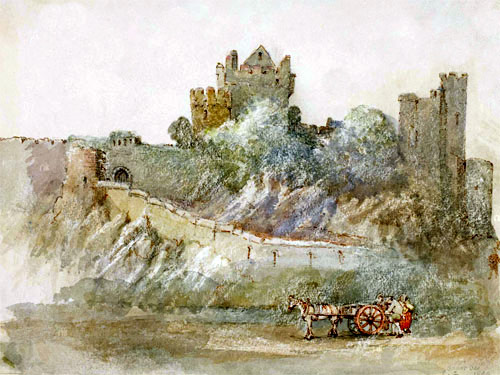
The Swiss Cottage, Cahir, Co. Tipperary.
In Co. Tipperary, the spotlight shines brightly on a remarkable collection of historic landmarks, including Cahir Castle, Ormond Castle, Roscrea Castle, and the enchanting Swiss Cottage. These sites, steeped in stories of medieval power, elegant design, and rural life, showcase the county’s extraordinary contribution to Ireland’s built heritage. Many locations across the country have also recently reopened following conservation efforts, adding a renewed sense of discovery for returning and first-time visitors alike.
With no booking required and access granted on a first-come, first-served basis, this is a rare chance to immerse yourself in Ireland’s cultural legacy; completely free of charge. Whether wandering through ancient halls, admiring intricate craftsmanship, or simply soaking up the atmosphere of centuries gone by, tomorrow Wednesday promises a journey through time not to be missed.
Dáil Dining – Soup Up 50c, – Calamari Up €1.50, – Wine Heroically Holds the Line.
TDs and Senators have been hit with fresh price increases in the Dáil bar and Members’ restaurant, with higher charges for food introduced in November 2025, while the price of wine, in a brave display of stability, remained unchanged.
According to records released under FOI, the cost of a glass of the Oireachtas Merlot or Sauvignon Blanc is still €6.60, and the €25 bottle price (€60 in the Cashel Palace) also remains in place, proving that in uncertain times, some pillars of national life must not be disturbed.
Meanwhile, the food menu has not been so fortunate: Members’ Restaurant: Tough Choices, like whether to get Dessert and Soup. At lunchtime, soup is now €5.50, up from €5. On the afternoon menu: Deep fried Calamari (with Lemon and Garlic Aioli Rose – a Dip that is great with Chips), from €8 to €9.50. A prime beef burger has increased from €12 to €13.80. [Surprising increase move, what with all this cheap South American beef coming into Éire]. Desserts were repriced to €5.80, up from €5.00, offering options including, Mixed Berry Crumble, Strawberry Cheesecake,assorted Ice Cream, or Fresh Fruit Salad“for the health conscious you understand”.
Dail Bar.
A Soup, Main Course and Dessert now comes in at just over €25, roughly €3 above last year’s prices, but still comfortably below what most people might expect to pay for an equivalent three-course meal in nearby rural Tipperary or indeed in Dublin 2.
In the evening: A Chargrilled Sirloin or Rib-Eye Steak with Fries remains €20.50; this follows a €2.50 increase late last year. Grilled Lamb Cutlets (côtelettes d’agneau grillées) come in at €16 having been replaced by pan-roasted lamb rump (often called chump) at €18.50, (latter a tender, flavorful, and relatively inexpensive cut, that combines the succulence of roasting with the crispy, caramelized crust of pan-searing).
Members’ Bar: Modest Increases, with a few “Steep” surprises.
Evening menu increases included: Gourmet Beef Burger: €12 → €15 [again surprising increase, what with friends in Bord Bia, the Irish Food Board and Dawn Meats] House Chicken Caesar Salad: Possibly imported from the Netherlands, the UK, Brazil, or Thailand, €9 → €11.50. (Tough enough when one can buy a whole Chicken cooked and still hot in Dunnes Stores for €6.75).
Nevertheless, the ambience of the dining area remains reassuringly consistent: muted tones, soft seating, and that steady confidence of a place that rarely needs to check the prices on the street outside. It’s the kind of place where the calamari is deep-fried, the questions are lightly grilled, and accountability is strictly off-menu, while the décor continues to project polished wood, clean lines, and an overall feeling that someone else is picking up the Tab, emotionally, if not financially. In fact the room does what it says on the tin, while remaining dignified, understated and quietly insulated from the chaos of lunch with everyone beyond the M50 and the non-subsidised majority.
I refer to the 14 Inch Mobile Phone Screen Magnifier Folding Stand Holder Portable for Movie Video Enlarger 3D Phone Agnifier Screen Pull Design for All Smartphone (Colour Black).
Mobile Phone Screen Magnifier.
The foldable Screen magnifier phone holder [View Here] is simple and easy to use, making it the ideal gifts for men and women of all ages. It is also suitable as a Kitchen Gadget receipe holder, Christmas gift, New Year gift, Birthday gift, Mothers Day gifts, Fathers Day gifts, Valentine’s Day, and various anniversary gifts for both him/her.
Thin foldable mobile phone amplifier, super slim when folded which allows for being carried around in your bag or briefcase.
The Simple and Stylish design makes this product your best choice of holiday gifts for your friends or loved ones.
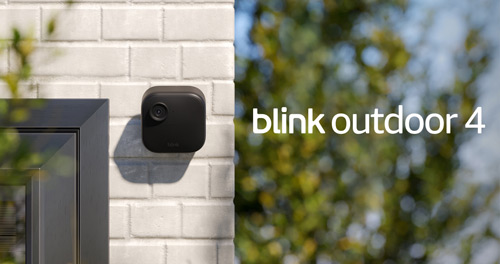
The Blink Outdoor 4, a wireless HD smart security camera with a two-year battery life and IP65 weatherproof rating, has to stands out this Black Friday as one of the most compelling home-security bargains online. With this 2-camera system bundled with the Sync Module Core, now reportedly reduced by around 59%, the value proposition is hard to ignore.
In a season when home burglaries tend to rise, particularly over darker winter evenings and especially around Christmas, when homes may be unoccupied or gifts visible through windows, investing in reliable external surveillance is increasingly prudent.
Long battery life & low maintenance: Blink claims up to two years on two AA lithium batteries, a rare advantage among battery-powered outdoor cameras. Hassle-free, wireless installation: The wireless design avoids messy complicated wiring, making it easy for homeowners to place cameras where they are most needed. Weather resistance & durability: With IP65 rating, Blink Outdoor 4 is built to withstand rain, wind, and cold, essential for Irish winter conditions. Good video quality & effective motion detection: Users in the Thurles area report satisfactory 1080p HD video and reliable motion-activated alerts.
Local storage option (no mandatory subscription): The included Sync Module Core allows for local USB storage, (latter not included but can be purchased cheaply HERE) giving homeowners control over their surveillance footage without needing to pay for a cloud plan.
Why this deal matters, especially now: With many discounts across the board this Black Friday, the steep reduction in price makes Blink Outdoor 4 a very attractive entry point for homeowners seeking upgraded security, especially for those living alone, in a period where opportunistic burglaries tend to increase. The balance of ease of installation, decent video quality, weather-proofing and low maintenance makes it a very sound choice for people who want visible deterrence and peace of mind, without investing in a fully wired CCTV system.
Given the current price drop, this looks very much like one of the “best deals online” for outdoor, battery-powered home-security cameras.
Let’s start with the need and wisdom of shopping around to reduce the cost of living.
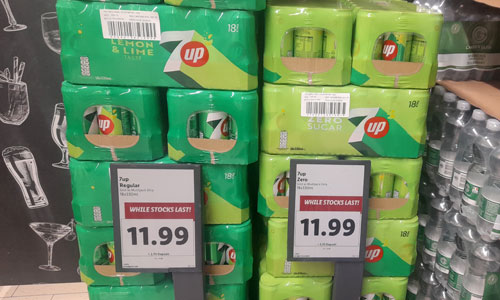
Shoppers in Thurles are noticing striking price differences between local supermarket products. A local check in Thurles this week found that an 18-can slab of 7UP Zero was priced at €8.99 in Aldi: – €9.00 in Dunnes Stores: – €11.00 in Tesco: – €11.99 in Lidl: and €14.00 in SuperValu, demonstrating a spread that boldly underscores the point I am about to make and provides proof (as if proof was needed) that it pays to shop around and forget about loyalty.
Locked-In Loyalty – Why Staying with the same Provider is a costly mistake.
Households today are under pressure from multiple fronts, stagnant wages, rising rents, an inflationary drift in everyday goods purchased. In that context, taking time to compare providers for utilities, insurance, broadband or mobile and food is no longer a luxury; it’s a survival tactic. Because when you’re already squeezed, paying above-market rates for services and products you cannot do without, feels less like choice and more like injustice.
The smart consumer doesn’t just accept the default: they should demand value, they should compare, they should switch and not out of triviality, but out of necessity.
Moreover, competition only works if consumers engage: if everyone stays loyal out of inertia, then suppliers have no incentive to drive down costs or improve service. So shopping around is not merely savvy, it’s a civic duty in a market where you’re obliged to pay, but you still deserve fairness.
The Elephants In The Room: Now let’s address the elephants in the room: the cost of essential services in Ireland, particularly electricity and internet, is woefully high and increasingly indefensible. The internet provider Vodafone is down in Thurles yet again this morning, leaving people working from home without a service. Regardless they will still send the same monthly bill at the end of this month and expect people to pay. Over the past 12 month the Vodafone service failed over 34 times; on one occasion last August for a period of 3 consecutive days. It is easier to ride a camel through the eye of a needle, than to complain to the commission for Communications Regulation (ComReg). Why they still continue to exist, few people understand. When it comes to internet access, Irish consumers got 39% less value for their internet compared to UK users, and is placed only 22nd among European countries. Put simply: one of your most basic bills is much higher here than most of our European neighbours; this isn’t an incidental detail; it’s a structural cost burden.
Household electricity prices in Ireland were measured at €0.3736 per kWh in the first half of 2024, the highest in the EU for Irish households. In effect, Irish households are paying €350-plus annually, more for electricity than is the EU average.
What is especially galling is that when something is labelled “essential” it really ought to be priced in a way that doesn’t punish people just for being connected or powered. The fact that despite high VAT, network/levy costs, infrastructure investment and other “legitimate” components, the final bills remain so elevated it suggests a failure somewhere, either in regulation, competition, or both.
In short:shopping-around is vital; but it also shouldn’t be the only defensive mechanism. The system should not rely solely on consumers being alert and mobile. When essential services carry a premium burden, it erodes disposable income, squeezes savings, and perpetuates inequality.
Where to Find the Cheapest Bills in Ireland.
How to shop smart and cut your household costs. Irish households continue to face some of the highest utility costs in Europe. Here’s how and where to compare providers for cheaper electricity, broadband, insurance, and more.
The Invisible Tax : How Irish Households Fund High Utility Costs Rising Costs, Shrinking Choices: With electricity, broadband and insurance prices ranked among the highest in Europe, Irish households are paying a heavy premium for essentials. The truth is that loyalty rarely pays, and staying with the same provider year after year can cost you hundreds of euros more than is necessary. Fortunately, there are independent tools that make comparing and switching simple. Spending just an hour reviewing your main bills once a year can make a real difference to your budget.
Shop Around or Pay the Price: How to Fight Back Against Sky-High Utility Costs.
Electricity & Gas: Bonkers.ie : – the most comprehensive comparison site for Irish consumers. It lists every licensed energy supplier, breaks down standing charges and tariffs, and estimates your annual savings. Switcher.ie : – a clear, easy-to-use alternative, often with cashback offers for new customers. CRU.ie : – the Commission for Regulation of Utilities. It doesn’t compare prices, but it regulates the market and ensures the above sites remain impartial – supposedly. Tip:Watch out for 12-month “introductory rates”. Once they expire, prices jump sharply, so set a reminder to review before renewal.
Insurance Chill.ie : – compare car, home and travel insurance in one place. CompareInsuranceIreland.ie : — independent comparisons that include smaller providers.
Note: Sometimes it pays to check insurers directly; Aviva, Allianz, AXA, or 123.ie can offer better rates to new customers than through a website or program that collects related items of content and displays them or links to them, (known as aggregators). Tip: Neveraccept automatic renewals. The biggest insurance savings go to switchers, not loyal customers.
Banking & Mortgages. CCPC Money Tools : – the official comparison hub from the Competition and Consumer Protection Commission. It covers current accounts, credit cards, personal loans, and mortgage rates. Tip: If you took out a mortgage more than three years ago, check your rate. Switching lenders can save thousands over the lifetime of your loan.
Final Word – Financial Self-defence and Resistance. Ireland’s high cost of living is not likely to drop overnight, but smart shopping can make it more manageable. Reviewing your main bills; for energy, broadband, and insurance, once a year is a simple act of financial self-defence. In a system where essential services cost more than they should, comparison isn’t just wise; it’s a quiet form of resistance.
This website uses cookies to improve your experience. We'll assume you're ok with this, but you can opt-out if you wish.AcceptRead More
Privacy & Cookies Policy
Privacy Overview
This website uses cookies to improve your experience while you navigate through the website. Out of these, the cookies that are categorized as necessary are stored on your browser as they are essential for the working of basic functionalities of the website. We also use third-party cookies that help us analyze and understand how you use this website. These cookies will be stored in your browser only with your consent. You also have the option to opt-out of these cookies. But opting out of some of these cookies may affect your browsing experience.
Necessary cookies are absolutely essential for the website to function properly. This category only includes cookies that ensures basic functionalities and security features of the website. These cookies do not store any personal information.
Any cookies that may not be particularly necessary for the website to function and is used specifically to collect user personal data via analytics, ads, other embedded contents are termed as non-necessary cookies. It is mandatory to procure user consent prior to running these cookies on your website.








Recent Comments