|
|
It was with great sadness that we learned of the death, yesterday Sunday 11th January 2026, of Mrs Theresa Maher (née Phelan), Clongour Road, Thurles, Co. Tipperary and formerly of Curraghduff, Upperchurch, Thurles, Co. Tipperary.
Pre-deceased by her parents John and Mary Phelan, infant son John, sisters Freddie, Mary, Kathleen, brothers Tommy and Patrick; Mrs Maher passed away peacefully while in the care of staff at Padre Pio Nursing Home, Holycross, Thurles.
Her passing is most deeply regretted, sadly missed and lovingly remembered by her sorrowing family; loving and devoted husband Martin (Musha), son Patrick, daughters Geraldine, Olive, Bernadette, Theresa, Lucie and Marie, sister Annie Coffey, sisters-in-law Nora Phelan, Anne Phelan, brothers-in-law Paddy Roche, Mick Coffey and Paddy Ryan (Patsy), sons-in-law Paul Earley, Paul Garity, John Hurme, Johnny Lawlor, Kevin Walsh and Patrick’s partner Joyce, grandchildren Scott, Michelle, Stephanie, Jonathan, Jacqueline, P.G., Kiara, Maeve, Shane, Chloe, Jack, Sophie, Melissa, Dennis, Garrett, Kylie, Martin and great-grand daughter Freya, cousins, extended relatives, neighbours and friends.
Requiescat in Pace.
Funeral Arrangements.
The earthly remains of Mrs Maher will repose at Hugh Ryan’s Funeral Home, Slievenamon Road, Thurles, (Eircode E41 CP59), on Friday afternoon, January 16th, from 5:00pm until 7:00pm same evening.
Her remains will be received into the Cathedral of the Assumption, Cathedral Street, Thurles, (Eircode E41 A528) on Saturday morning, January 17th, at 10:30am to further repose for Requiem Mass at 11:00am, followed by interment, immediately afterwards, in St Patrick’s Cemetery, Moyne Road, Lognafulla Thurles, Co. Tipperary.
For those persons who would wish to attend Requiem Mass for Mrs Maher, but for reasons cannot, same can be viewed streamed live online, HERE.
The extended Maher and Phelan families wish to express their appreciation for your understanding at this difficult time, and have made arrangements for those persons wishing to send messages of condolence, to use the link shown HERE.
Note Please: Family flowers only. Donations if desired to Dementia Ireland.
Ar dheis Dé go raibh a h-anam dílis.
It was with great sadness that we learned of the death, yesterday Saturday 10th January 2026, of Mr John Lahart, Avondale, Cashel Road, Killenaule, Thurles, Co. Tipperary.
Pre-deceased by his son Nigel, his parents Jack and Peg, brother Jim and sister Eileen; Mr Lahart passed away peacefully, while at his place of ordinary residence, surrounded by his loving family, following a short illness most bravely borne.
His passing is most deeply regretted, sadly missed and lovingly remembered by his sorrowing family; loving and heartbroken wife Rena, son Daniel, daughters Cora, Andrea and Gemma, adored grandchildren Cillian, Cayla, Emily, Sonny and Dylan, son-in-law Steve, brothers Billy, Thomas and Eamon, brothers-in-law Eugene, Pat, Dick, Jim, Donal and Derek, sisters-in-law Marian, Mary, Lily and Maire, nephews, nieces, extended relatives, neighbours and a wide circle of friends.
Requiescat in Pace.
Funeral Arrangements.
The earthly remains of Mr Lahart will repose at O’Connell’s Funeral Home, Killenaule, Thurles, (Eircode E41 HH66), tomorrow afternoon, Monday January 12th, from 4:30pm until 7:00pm, before being received into the Church of St Mary, Bailey Street, Killenaule, Thurles, at 7:30pm, same evening.
Requiem Mass for Mr Lahart will be offered on Tuesday morning at 11:30am followed by interment, immediately afterwards in Crosscannon Cemetery, Killenaule, Thurles, Co. Tipperary.
For those persons who would wish to attend Requiem Mass for Mr Lahart, but for reasons cannot, same can be viewed streamed live online, HERE.
The extended Lahart family wish to express their appreciation for your understanding at this difficult time, and have made arrangements for those persons wishing to send messages of condolence, to use the link shown HERE.
Note Please: Family Flowers Only. Donations in lieu, if desired, to Irish Cancer Society in memory of Mr John Lahart.
The Lahart family would like to thank, most sincerely, the staff of Tipperary University Hospital, Clonmel, South Tipperary, Palliative Care Team, Irish Cancer Society, Carers, Dr Jaco and staff at Fethard Medical Centre and J.F O’Sullivan‘s Pharmacy for the exceptional care shown to Mr Lahart throughout his illness.
Ar dheis Dé go raibh a anam dílis.
It was with great sadness that we learned of the death, today Friday 9th January 2026, of Mrs Bridie Fennessy (née Garrett) Corbally, Clonoulty, Co. Tipperary.
In her 92nd year and pre-deceased by her husband Jim, parents Tommy and Biddy (née Shanahan), her brothers John, Tommy, Stephen, Jimmy and Andrew, sisters Judy and Marion; Mrs Fennessy passed away peacefully, surrounded by her loving family, following an illness most bravely borne, and while in the care of staff at Woodlands Nursing Home, Dundrum, Co. Tipperary.
Her passing is most deeply regretted, sadly missed and lovingly remembered by her sorrowing family; loving son Seamus, daughter-in-law Maura (née Ralph), brothers Michael, Christy and Oliver, cherished grandchildren Stephen, Phelim and Caoimhe, their partners Caoimhe, Ilaria and Peter, cousins (especially Marion Shanahan), nephews, nieces, extended relatives, neighbours and a wide circle of friends.
Requiescat in Pace.
Funeral Arrangements.
The earthly remains of Mrs Fennessy will repose at Hayes Funeral Chapel, Clonoulty, (Eircode E21 CY91) on Sunday afternoon, January 11th, from 4:00pm until 6:00pm same evening.
Her remains will be received into the nearby Church of St John the Baptist, Clonoulty on Monday morning, January 12th, at 11:00am, to further repose for Requiem Mass at 11:30am, followed by interment, immediately afterwards, in Clonoulty Old Cemetery, Clonoulty, Co. Tipperary.
For those persons who would wish to attend Requiem Mass for Mrs Fennessy, but for reasons cannot, same can be viewed streamed live online, HERE.
The extended Fennessy family wish to express their appreciation for your understanding at this difficult time, and have made arrangements for those persons wishing to send messages of condolence, to use the link shown HERE.
Ar dheis Dé go raibh a h-anam dilís.
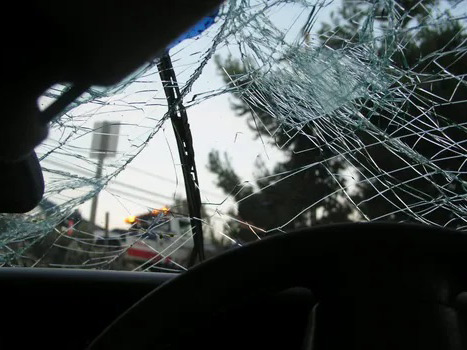
Concerns have been voiced over road deaths recorded in Ireland and Tipperary during the period 2025.
Provisional figures published by the Road Safety Authority (RSA) and An Garda Síochána show a concerning increase in road fatalities during 2025.
An Garda Síochána recorded 179 fatal collisions in 2025, resulting in 190 fatalities on Irish public roads and in public places, including car parks and other non-public roads.
An RSA report, covering public roads only, in line with historic trends, found 185 deaths in 174 fatal collisions on public roads during 2025. This compares with 171 deaths in 157 fatal collisions in 2024, an 8% increase year-on-year.
Key findings (RSA public-road figures, 2025)
Road user breakdown:
- 76 drivers, 41 pedestrians, 30 motorcyclists, 21 passengers, 14 pedal cyclists, 3 e-scooter users.
- The RSA highlighted increases among drivers and vulnerable road users (pedestrians, cyclists and motorcyclists).
- Cyclist deaths were the highest recorded since 2017, while motorcyclist fatalities were the highest since 2007.
- Approximately three-quarters of those killed were male, with one-quarter female.
- February and June recorded the fewest fatalities (11 each), while November (21) and December (24) recorded the highest.
- The average number of deaths per month in 2025 was 15, compared with 14 per month in 2024.
County Tipperary: confirmed context figures:
While the RSA end-of-year release does not set out a full county-by-county total in its news statement, published RSA research provides verified longer-term context for County Tipperary.
An RSA “County Briefing on Tipperary” reports that between 2018 and 2022 there were 47 fatalities in County Tipperary, representing 7% of total fatalities during that period.
In a Garda Roads Policing review covering January to June 2025, a county table listed Tipperary with 2 fatalities at that point in the year (part of a national total of 82 to end-June).
An Garda Síochána Assistant Commissioner Ms Catharina Gunne described 2025 as “a devastating year” for families and communities impacted, and said Gardaí will continue targeted enforcement in 2026 focusing on the most dangerous behaviours.
Five Garda trainees have been removed from training programme after alleged “shower prank” at Templemore Garda College, Templemore, Co. Tipperary.
Five trainee gardaí are no longer participating in the Garda training programme following an alleged incident at the Garda Training College in Templemore, Co Tipperary, involving the misuse of handcuffs.
The incident, which was reported earlier this year, is alleged to have involved another trainee being handcuffed and left under a running shower. It has also been claimed that the trainee’s mattress had been placed on top of a wardrobe beforehand.
Last June, it was reported that five trainees had been suspended and that an internal investigation had been launched. A Garda spokesperson at the time said An Garda Síochána did not comment on ongoing internal investigations.
In a later update, press reported that the inquiry into the incident was ongoing and that those involved had not completed their training.
In a statement issued in response to further queries this month, a Garda spokesperson said: “A small number of Garda trainees are no longer involved in the training programme. An Garda Síochána has no further comment”.
|
Support Us Help keep Thurles.info online by donating below. Thank you.
Total Donated 2026: €300.00
Thank You!
Daily Thurles Mass Livestream
|





Recent Comments