|
|
 Mr John O’Gorman. Clogheen, Co. Tipperary native, Mr John O’Gorman, this afternoon was elected the Chairperson of Ireland’s largest farmer-owned Co-Operative, Dairygold.
The Dairygold Co-Operative boasts 7,100 Shareholders, 2,900 milk suppliers and 1,250 staff working across its sites in Ireland, the UK, Germany, Spain and China. In 2017, Dairygold processed over 1.3 billion litres of milk from its Membership.
Holding a Bachelor degree in Accounting and Business Management and a Diploma in Corporate Direction, Food Business from UCC; Mr O’Gorman, was first elected to the Board of Dairygold in January 2013.
He is married to spouse Alison, with a family of three daughters, and previously served as Vice-Chairman of Dairygold, since just last year. He now replaces the former Chairperson Mr James Lynch, latter who served for the previous three years, thus having served out the maximum term permitted on the Board of Dairygold.
Mr O’Gorman stated that he was honoured to have been elected to serve as Chairperson of Dairygold, confirming the Co-Operative was a long-standing and ambitious organisation, holding deep commitment to both its membership and its shareholders. He also stated that he looked forward to working closely with the Board’s Chief Executive Mr Jim Woulfe, and his dedicated professional staff.
Having paid tribute to his outgoing predecessor, highlighting the latter’s great leadership and stewardship; he confirmed his enthusiasm to playing his part in Dairygold’s continued growth and future success.
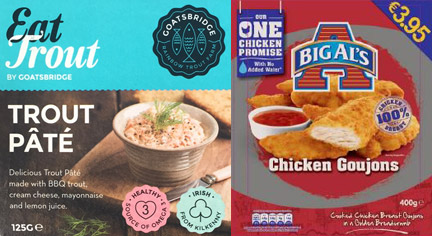
Two food products have been recalled by the Food Safety Authority of Ireland.
Goatsbridge Trout Pâté – Recalled December 5th.
A batch of Goatsbridge Trout Pâté, (country of origin Ireland) is being recalled due to the presence of Listeria monocytogenes. Listeria monocytogenes has been implicated, within the past decade, as the causative organism in several serious outbreaks of food-borne disease.
Point-of-sale recall notices in the case of this product should be displayed in all retail outlets, which sold the implicated batch of pâté.
Big Al’s Chicken Chunks, Chicken Dippers & Chicken Goujons – Recalled December 6th.
A number of Big Al’s chicken products may be dangerous to people with certain allergies, according to the FSAI. The products include some batches of Big Al’s chicken chunks, chicken dippers and chicken goujons on sale without a full list of ingredients published on its packaging.
Big Al’s Chicken Goujons (400g packs), with a price mark of €3.95 and best before date of December 2018, were found to have undeclared milk and mustard constituents, thus making the batches unsafe for consumers who are allergic to or intolerant of mustard or milk.
Big Al’s Chicken Chunks (377g packs), and Chicken Dippers (378g packs), were also found to have undeclared mustard constituents.
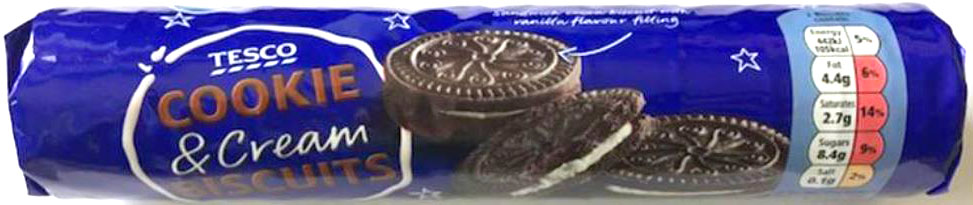 Tesco supermarkets are recalling all best before dates and all batches of its Cookie and Cream Biscuit range. Tesco supermarkets are recalling all best before dates and all batches of its Cookie and Cream Biscuit range.
The biscuits are understood to contain milk which is not mentioned on the label. This could make the implicated batches unsafe for some consumers who are allergic to or indeed intolerant of milk or its constituents.
Tesco request that customers please return the affected products to any of their stores, where a full refund will be given, with no receipt required from the consumer.
Should you require further details, consumers are advised to contact Customer Services directly on Tel: 1850 744 844.
Tesco apologises to customers for any inconvenience which may have been caused.
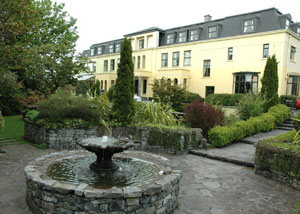 Anner Hotel, Thurles, Co. Tipperary. Weeks of speculation locally that the Anner Hotel, Dublin Road, Thurles was about to change hands, was confirmed on Sunday last with the news that Capital Investment Fund plc., latter owned by Austrian Invester Mr Thomas Roeggla, has indeed purchased the property.
Capital Investment Fund plc. already own several hotel here in Ireland including:- Mount Wolsey, Tullow, Co. Carlow; Aghadoe Heights, Killarney, Co. Kerry; Metro Hotel, Dublin Airport, Santry Cross, Ballymun Rd, Ballymun, Co. Dublin; Diamond Coast, Enniscrone, Co. Sligo; Cavan Crystal Hotel, Dublin Road, Cavan and Farnham Estate Spa & Golf Club, Coras Point, Co. Cavan.
The 95 bedroomed Anner Hotel was rescued from receivership status, in February 2014 last, by the local Maher brothers; namely Michael, Seamus and P.J., latter with extensive development and legal experience.
Over the past three years the brothers completed a total refurbishment of the property, raising its standards to that of a highly acclaimed 4 Star Hotel. With wonderful landscaped gardens ideal for photo opportunities, and banqueting facilities offering a varied selection of menus, the Anner Hotel Thurles soon became renowned not just as a popular wedding venue, but also an inescapable stop over for those wishing to avoid, for a time at least, the hectic pace of city life.
The handover of the property is expected to take place slowly over the coming weeks, to ensure that all confirmed future business contracted, remains totally uninterrupted.
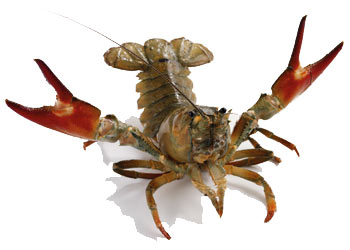 Earlier this year (May 2017 last), a large numbers of freshwater crayfish were reported as dead, on a stretch of the River Suir, downstream from Clonmel, in South Co. Tipperary. Earlier this year (May 2017 last), a large numbers of freshwater crayfish were reported as dead, on a stretch of the River Suir, downstream from Clonmel, in South Co. Tipperary.
Analysis, then carried out confirmed that the cause of this crayfish mortality was a water multicellular fungus or mold known as ‘Crayfish Plague’. The disease, which arrived possibly through imported crayfish from North America, or in ships ballast water, has left all agencies including the National Parks and Wildlife Service (NPWS); Inland Fisheries Ireland; and Tipperary County Council, working to contain the outbreak.
Alas, yet another outbreak has been now been confirmed, this time on the Lorrha River, in North Tipperary. Dead freshwater crayfish have been located and DNA analysis confirm that the cause of death is again Crayfish Plague, according to the National Parks and Wildlife Service.
The disease was first discovered here in Ireland in 1987, for the first time; however, based on known current information and research, some 100% mortality of this crayfish population is expected. This situation in turn will create major consequences for the future ecology of this stretch of the Lorrha River, since no resistance to this disease, as yet to date, has been discovered in relation to the native European crayfish population.
All person entering Irish rivers, for any reason, are now once again being urged to observe the practice of ‘Check, Clean and Dry’, when leaving or entering fresh water areas. Wet gear, including boats, waterproof clothing and other associated equipment used, should be checked for mud, silt and plant material, before disinfecting or washing; using boiling water, and before allowing a drying period of at least 24 hours. Like ballast water, ensure also that water introduced internally in boats and other water craft, are also treated. This procedure is essential in the prevention of the spread of Crayfish Plague to other, as yet, unaffected fresh water areas.
|
Support Us Help keep Thurles.info online by donating below. Thank you.
Total Donated 2026: €40.00
Thank You!
Daily Thurles Mass Livestream
|





Recent Comments