Recall of various branded Turkey and Ham Dinners, produced by Ballymaguire Foods, due to the possible presence of Listeria monocytogenes.
Alert Summary dated Friday, July 18th 2025.
Category 1: For Action Alert Notification: 2025.33 Product Identification: Please see table below. Batch Code: All pack sizes, all batch codes and all use by dates. Country Of Origin: Ireland
Message: The below Turkey & Ham Dinners are being recalled due to the possible presence of Listeria monocytogenes. Recall notices will be displayed at point-of-sale.
Product name.
Approval Number.
Centra Turkey & Ham Dinner.
4008
Supervalu Turkey & Ham Dinner.
4008.
Good Food Turkey & Ham Dinner 4008.
4008.
Nature Of Danger: Symptoms of Listeria monocytogenes infection can include mild flu-like symptoms, or gastrointestinal symptoms such as nausea, vomiting and diarrhoea. In rare cases, the infection can be more severe, causing serious complications. Some people are more vulnerable to Listeria monocytogenes infections, including pregnant women, babies, and people with weakened immune systems, including the elderly. The incubation period (time between initial infection and first symptoms appearing) is on average 3 weeks but can range between 3 and 70 days.
Action Required:Manufacturers, Wholesalers, Distributors, Caterers and Retailers:
Retailers: Same are requested to remove the implicated Turkey & Ham Dinners from sale and display recall notices at point-of-sale. Wholesalers/Distributors: Same are requested to contact their affected customers and recall the implicated Turkey and Ham Dinners and provide a point-of-sale recall notice to their retailer customers. Caterers: should not use the implicated Turkey & Ham Dinners.
Consumers:Consumers are advised not to eat the implicated Turkey and Ham Dinners.
Update to undeclared allergens in specific batches of various Bao Long Soup Seasonings
Alert Summary dated Wednesday, July 16th 2025.
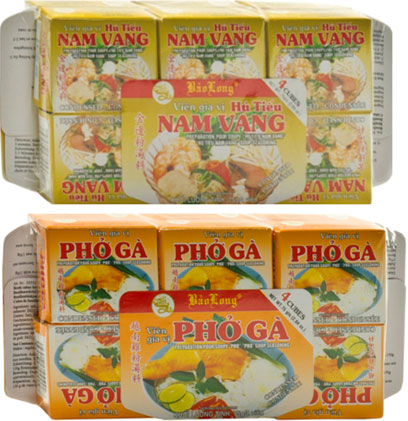
Allergy Alert Notification: 2025.A27 (update 1) Allergen: Soybeans Product Identification: (1) Bao Long Pho Ga Soup Seasoning; pack size 75g, (2) Bao Long Hu Tieu Nam Vang Soup Seasoning; pack size: 75g Batch Code: All batch codes and all best before dates. Country Of Origin: Vietnam
Message: Further to FSAI food allergen alert 2025.A27, the above additional batches of Bao Long Soup Seasonings contain soya which is not declared on the label. This may make the implicated batches unsafe for consumers who are allergic to or intolerant of soya. Therefore, these consumers should not eat the implicated batches.
Food Safety Authority Of Ireland Warn Of Undeclared Allergens In Specific Batches Of Various Bao Long Soup Seasonings.
Alert Summary dated Thursday, July 10th 2025.
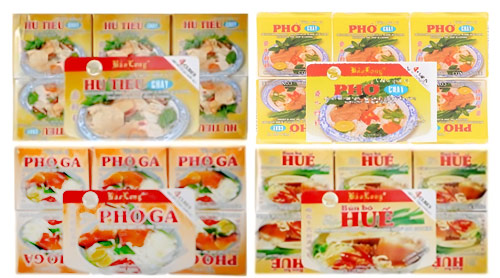
Allergy Alert Notification: 2025.A27 Allergens: Soybeans, crustaceans, cereals containing gluten, as per table shownhereunder. Product Identification: Please see table below. Batch Code: Please see table below. Country Of Origin: Vietnam
Product name.
Pack size.
Batch code
Allergens.
Bao Long Chicken Noodle Soup Seasoning.
75g.
2301.
Soybeans.
Bao Long Hue Noodle Soup Seasoning.
75g.
2302.
Crustaceans.
Bao Long Vegan Pho Soup Seasoning.
75g.
2315.
Soybeans.
Bao Long Vegan Hu Tieu Soup Seasoning.
75g.
2316.
Soybeans and cereals containing gluten (wheat).
Message: The above batches of Bao Long Soup Seasonings contain some allergens that are not declared on the label. This may make the implicated batches unsafe for consumers who are allergic to or intolerant of soya, cereals containing gluten (wheat) and/or crustaceans. Therefore, these consumers should not eat the implicated batches. The affected batches are being recalled.
These recalled air fryers are understood to have a manufacturing defect that can cause the defective appliance to overheat, potentially leading to a fire being ignited and thus the risk of serious injury or indeed death.
While as yet no incidents have been reported in Ireland to date, there have been reports in the UK of these same products igniting.
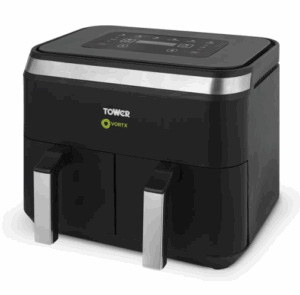
To this end, the CCPC is now urging consumers to check if they presently own one of the five affected models shown hereunder:-
T17023 Tower 2.2Ltr Manual Air Fryer.
T17061BLK Tower 4Ltr Manual Air Fryer.
T17067 Tower 4Ltr Digital Air Fryer.
T17087 Tower 2Ltr Compact Manual Air Fryer.
T17129L Vortx 8L Dual Basket Air Fryer.
To locate the model number, consumers should unplug their air fryer and check the appliance rating label located on the rear end of their air fryer. The model number will begin with the letter T.
Consumers, who may have purchased one of the above affected models, are advised to stop using the product immediately, unplug it and contact Tower Housewares via the website towerhousewares.co.uk or email towerproduct@customersvc.co.uk.
These products Director of Communications at the CCPC Grainne Griffin said the recall “covers five Tower air fryer models with a dangerous manufacturing defect that could cause the models to overheat.were manufactured between the years 2020 and 2024 and were sold in various retailers including Tesco Ireland, Lidl, Argos, DID, Dealz, Tower Housewares website, through Amazon with other retailers possibly also be included.
Food Safety Authority of Ireland (FSAI) warn of possible presence of soya in specific batches of Mang Tomas All Purpose Sauce.
Alert Summary dated Friday, July 4th 2025.
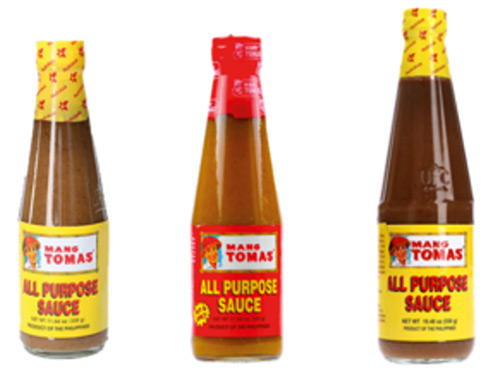
Allergy Alert Notification: 2025.A26. Allergen: Soybeans. Product Identification: Please see table below. Batch Code: Please see table below. Country Of Origin: Philippines.
Message: The below batches of Mang Tomas All Purpose Sauce may contain soya, which is not declared on the label. This may make the batches unsafe for consumers who are allergic to or intolerant of soya, and therefore, these consumers should not eat the implicated batches.
This website uses cookies to improve your experience. We'll assume you're ok with this, but you can opt-out if you wish.AcceptRead More
Privacy & Cookies Policy
Privacy Overview
This website uses cookies to improve your experience while you navigate through the website. Out of these, the cookies that are categorized as necessary are stored on your browser as they are essential for the working of basic functionalities of the website. We also use third-party cookies that help us analyze and understand how you use this website. These cookies will be stored in your browser only with your consent. You also have the option to opt-out of these cookies. But opting out of some of these cookies may affect your browsing experience.
Necessary cookies are absolutely essential for the website to function properly. This category only includes cookies that ensures basic functionalities and security features of the website. These cookies do not store any personal information.
Any cookies that may not be particularly necessary for the website to function and is used specifically to collect user personal data via analytics, ads, other embedded contents are termed as non-necessary cookies. It is mandatory to procure user consent prior to running these cookies on your website.




Recent Comments