Archives

Chocolate Easter Eggs, Peppa Pig, & The Price Of “Pester Power”

The Easter Supermarket Aisle is really a ‘Confession’ of what we Value.

Not taste. Not ingredients. Not children’s health. What we value and what we reward, is packaging that wins the argument in the moment.

Enter into any Irish supermarket in the weeks before Easter and you’ll find it, that dazzling wall of foil, cartoon faces and glossy packaging, positioned strategically at child height.
Now walk a child past that wall of Easter eggs and watch what happens. They don’t scan ingredients. They scan cartoon characters, colour and sparkle. Their attention is being bought through design and the bill is handed to parents at the till.

That’s why the palm oil conversation matters. Not because palm oil is a cartoon villain, but because it’s often part of a bigger formula: cheaper fats, big sweetness, high profit margin, huge volume.
And, when you attach that formula to a licence kids already love, you get a product that sells itself and most importantly for the retailer, sells fast.

Palm Oil Conversation Matters.

A Tesco listing for a Tesco Peppa Pig Easter product includes “Vegetable Fats (Palm, Shea…)”.
Read that again; the most child-attractive packaging can be paired with ingredients designed to protect a price point, not a growing body.
Now here’s the part that will annoy people. Supermarkets will say, “We simply stock what customers buy.”

Yes True, but incomplete.
Retailers shape what customers buy. They choose what gets eye-level space, what gets aisle-end promotion, what gets “2 for €X”. They decide what looks like the normal choice.
If the loudest, sweetest, most character-heavy egg is placed where every family must pass, then “choice” becomes a bit of theatre. A kid asks. A parent caves. The system works exactly as is so designed.

And don’t pretend we don’t know the long game. Health guidance remains consistent: keep saturated fat lower overall and don’t let it quietly dominate the diet.
We also know that diets built around ultra-processed treats don’t damage a child in one day, they train preferences and routines over years.

The tragedy is that Irish makers who are trying to do it better are often invisible to children.

That’s a strong ethical and ingredient choice. But on a crowded Easter shelf, a subtle box can’t compete with the instant dopamine or feel-good hit of a character egg.

So here’s my fair, defensible ask:
Supermarkets: Stop hiding Irish quality behind adult-looking packaging and premium-price assumptions. Give local makers seasonal visibility where families actually shop. Supermarkets aren’t trying to harm children. They are, however, designed to maximise sales per metre of shelf space. Character products sell fast, drive “pester power”, and deliver predictable seasonal turnover. Artisan chocolate can be slower-moving, pricier, and less visually “grabby” for small hands.
Irish chocolatiers: You don’t need to slap a cartoon face on everything, but you do need to meet kids where they are. Easter is visual. Make “better ingredients” look fun. The uncomfortable truth is that the better chocolate product often loses the packaging battle. Here’s where Easter gets unfair. Many artisan brands package beautifully for adults; elegant boxes, subtle colours, premium cues, but kids don’t buy with adult eyes.
Parents: Don’t let the aisle decide for you. Flip the box. Read the fat list. Buy the fun, but buy it with open eyes. Look for palm oil/palm kernel oil on the label (it will be named).

Easter should be a treat. It shouldn’t be a marketing lesson where children learn that the brightest box is automatically the best choice.

If we really want better food culture, we have to reward it, not just applaud it.
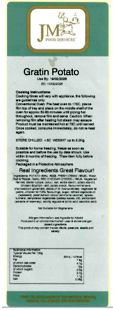
Two Food Allergen Alerts.

Incorrectly declared sulphur dioxide in a batch of JM Food Services Gratin Potato.

Alert Summary dated Friday, 13th February 2026.

Allergy Alert Notification: 2026.A07.
Allergens: Sulphur dioxide and sulphites.
Product Identification: JM Food Services Gratin Potato; pack size: 650g.
Batch Code: Use by date: 29/01/2026

Message: Sulphur dioxide is incorrectly declared on the ingredients list of the above batch of JM Food Services Gratin Potato. This may make this batch unsafe for consumers who are allergic to or intolerant of sulphur dioxide and sulphites and therefore, these consumers should not eat the implicated batch. Although this batch is now past its use by date, it is labelled as suitable for home freezing.
Consumers are advised to check their freezers for the implicated batch.

*——–*————*————*————*

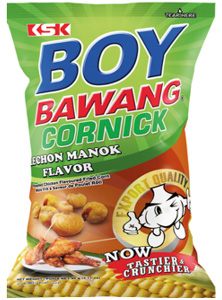
Undeclared wheat in specific batches of KSK Boy Bawang Cornick Lechon Manok Flavor.

Alert Summary dated Friday, 13th February 2026.

Allergy Alert Notification: 2026.A08
Allergens: Cereals containing gluten
Product Identification: KSK Boy Bawang Cornick Lechon Manok Flavor (Corn Snacks Roasted Chicken Flavour; pack size: 90g
Batch Code: Please refer to table below for implicated best-before dates.
Country Of Origin: Philippines

Message: The below batches of KSK Boy Bawang Cornick Lechon Manok Flavor (Corn Snacks Roasted Chicken Flavour) contain cereals containing gluten (wheat) which is not mentioned on the label. This may make the batches unsafe for consumers who are allergic to or intolerant of gluten (wheat), and, therefore, these consumers should not eat the implicated batches.
The affected batches have been recalled.

Implicated best-before dates: 14.03.2026, 17.06.2026, 18.08.2026, 14.11.2026, 14.01.2027, 17.03.2027, 24.04.2027.

Food Alert.

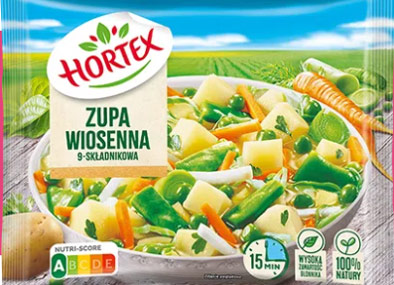
Recall of a batch of frozen Hortex Zupa Wiosenna 9-Składnikowa due to the possible presence of glass fragments.

Alert Summary dated Wednesday, 11th February 2026.

Category 1: For Action
Alert Notification: 2026.07
Product Identification: Hortex Zupa Wiosenna 9-Składnikowa (9 Ingredient Spring Soup); frozen; pack size: 450g
Batch Code: LS0C1070925 2 T 080925 1117; best-before date: 03/2027.
Country Of Origin: Poland

Message: The above batch of Hortex Zupa Wiosenna 9-Składnikowa (9 Ingredient Spring Soup), is being recalled due to the possible presence of glass fragments. Recall notices will be displayed at point-of-sale.

Action Required: Caterers & Retailers:
Retailers: Same are requested to remove the implicated batch from sale and display recall notices at point-of-sale.

Consumers: Consumers are advised not to eat the implicated batch.

Food Allergen Alerts.

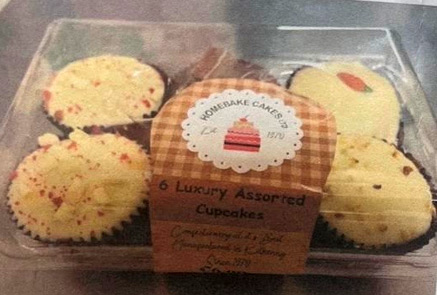
Undeclared hazelnuts in a batch of Homebake Cakes 6 Luxury Assorted Cupcakes.

Alert Summary dated Wednesday, February 11th 2026.

Allergy Alert Notification: 2026.A06.
Allergen: Nuts (hazelnuts).
Product Identification: Homebake Cakes 6 Luxury Assorted Cupcakes; pack size: 450g.
Batch Code: 6864; best before date: 20/03/2026
.

Message: The above batch of Homebake Cakes 6 Luxury Assorted Cupcakes contains nuts (hazelnuts) which is not declared in the list of ingredients. This may make the batch unsafe for consumers who are allergic to or intolerant of nuts (hazelnuts) and therefore, these consumers should not eat the implicated batch.

The affected batch is being recalled.

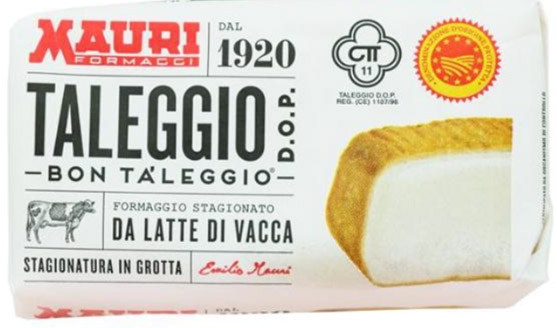
Recall Of Mauri Formaggi Taleggio Bon Ta’leggio D.O.P. Cheese.

Recall of a batch of Mauri Formaggi Taleggio Bon Ta’leggio D.O.P. cheese due to the possible presence of Listeria monocytogenes.

Alert Summary dated Wednesday, February 11th 2026.

Category 1: For Action.
Alert Notification: 2026.06.
Product Identification: Mauri Formaggi Taleggio Bon Ta’leggio D.O.P.; pack size: 200g.
Batch Code: 4564914; use-by: 02.03.2026.
Country Of Origin: Italy
.

Message: The above batch of Mauri Formaggi Taleggio Bon Ta’leggio D.O.P. is being recalled, due to the possible presence of Listeria monocytogenes. Recall notices will be displayed at point-of-sale.

Nature Of Danger: Symptoms of Listeria monocytogenes infection can include mild flu-like symptoms, or gastrointestinal symptoms such as nausea, vomiting and diarrhoea. In rare cases, the infection can be more severe, causing serious complications. Some people are more vulnerable to Listeria monocytogenes infections, including pregnant women, babies, and people with weakened immune systems, including the elderly. The incubation period (time between initial infection and first symptoms appearing) is on average 3 weeks but can range between 3 and 70 days.

Action Required: Retailers, Consumers.
Retailers: Same are requested to remove the implicated batch from sale and display recall notices at point-of-sale.
Consumers: Consumers are advised not to eat the implicated batch.