|
|
Congratulations to Siobhain O’Doherty from Nenagh, County Tipperary, who ran in yesterdays 10km Dublin Flora Women’s Mini Marathon, coming second in a time of 35 minutes and 31 seconds, just three seconds behind the overall winner Caitríona Jennings from county Donegal.
 Well done also to the 40,057 other women who took part in this annual event, many raising much needed money for their various local charities. Well done also to the 40,057 other women who took part in this annual event, many raising much needed money for their various local charities.
This year Cantwell Quality Water Services Ltd. (QWS) from Urlingford, Tipperary supplied quality Tipperary sourced water to over 26 separate ‘Drinking Stations,’ along the chosen marathon route.
Each of these drinking stations was equipped with QWS’s new Easifold 1000 litre Intermediate Bulk Container (IBC ), for the fast supply of drinking water to all 40,057 participants. Over the full day’s event QWS supplied in excess of 33,000 litres of potable pure Tipperary drinking water.
The Tipperary company of Cantwell Quality Water Services Ltd, one of the leading companies presently supplying Irish County Councils and Festival Event Management with fresh drinking water, was awarded the contract for this event, based on it’s considerable ability in providing a fast efficient service, while using the latest and most up-to-date hygienic water monitoring equipment.
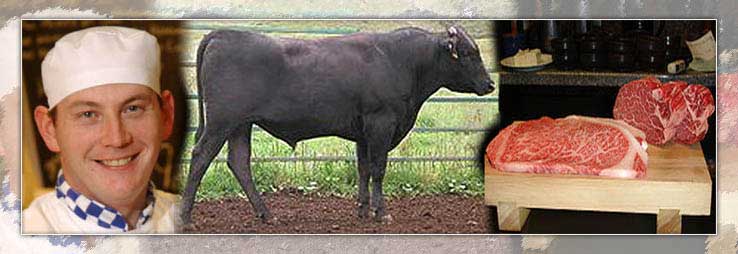 Kobe Beef Irish consumers will soon be able to buy a Tipperary home grown version of highly-prized and pricey Japanese Kobe beef.
Well that is according to award-winning butcher Pat Whelan, owner of James Whelan Butchers, here in Clonmel, Co Tipperary, who is supporting this initiative. Kobe beef (Named after sixth-largest city in Japan.) is the particular product of cattle known as the black Tajima-ushi breed of Wagyu (Translated: Japanese cow.) that produce this highly-prized meat.
Wagyu cattle were introduced into Japan in the second century as as beasts of burden, used mostly in rice cultivation. However as beef consumption became more prominent in society, farmers began hiring workers to massage the animals’ backsides to improve their meat quality. The mountainous topography of the islands of Japan have resulted in small regions of isolated breeding of these animals, yielding herds that developed and maintained qualities in their meat which differ significantly from all other breeds of cattle.
Some of the biggest Wagyū herds outside of Japan are now farmed in New Zealand while in the United States, Japanese Wagyū cattle have been bred with “Aberdeen Angus cattle” to create a crossbred animal that are better able to survive the native climate and U.S. ranching methods.
Herd isolation and distinctive feeding techniques, which resulted from limited grazing land availability, have led to distinguishing features that make the meat both superior in marbling texture, in the ratios of unsaturated versus saturated fats and a higher percentage of omega-3 and omega-6 fatty acids
The animals, which are being reared in Tipperary, will be treated with the same level of attention and care, as this well known Japanese breed of Wagyu
Described as the ‘foie gras of beef,’ producing a tender, naturally enhanced flavour, Kobe meat usually retails at up to €35 per 150 grams of filet steak sold retail, but Mr Whelan claims that his operation are aiming to produce this meat for a fraction of that price, for their discerning customers.
The first Irish born and bred Kobe style beef should be on the meat shelf by August of next year.
Whelan Butchers, currently based in Clonmel, Tipperary, now have their sights set on expanding into the Dublin meat market initially and ultimately into the export market, to cope with the huge international demand for this expensive, but prized meat.
Contributor Proinsias Barrett comments here on our recent post “70 Jobs Lost As O’Connors Nenagh Supermarket Closes.”
Proinsias writes:
“In the words of Joni Mitchell in her song ‘Big Yellow Taxi,’ – ‘You don’t know what you’ve got ’till it’s gone.‘
We already know the situation milk and other foodstuff producers are facing here in Ireland, with the bulk buying retail chains. If, as a producer, you don’t play ball with the multi-national grocery retailers you go out of business. Spotlight or Panorama recently aired a very good documentary on the difficulties faced by small/medium producers in getting their products out to customers. Usually the only way is through the ‘Big 5‘ multi-national chains. If you complain about the prices they are willing to pay, or go public about bulk deals etc, you usually end up with your product being subject to ‘quality issues and removed from display.’
 Yet each year the profit margins of the these mega retailers increase further, into the Super Normal Profit category, while food and clothing prices are on the increase because, we are told of high oil prices, and increased demand globally for meat and dairy (China and India and emerging demand in parts of Africa). Yet each year the profit margins of the these mega retailers increase further, into the Super Normal Profit category, while food and clothing prices are on the increase because, we are told of high oil prices, and increased demand globally for meat and dairy (China and India and emerging demand in parts of Africa).
Again, we the consumer, are being led by the nose. The processing of ‘food ‘ has evolved considerably in the last two decades, allowing what was once waste meat products being ‘processed ‘ into products for human consumption. Jamie Oliver, that crusader for natural wholesome un-processed home cooked food, refers to this product as ‘pink slime.‘ Technology has developed a machine which can literally suck the ‘meat ‘ out of bone and offal and using chemicals such as ammonia, various derivatives of sodium and mono-sodium glutamate, this slime now ends up being passed for human consumption in various forms such as Deli meats and canned meats. In fact he went so far as to say if you want real un-tampered with mince meat you have to physically watch your butcher mince some traceable beef or steak before your eyes.
People don’t know enough about the products they eat every day and buy every day from the Big 5. Look at the packaging in some of the mega retailers, labels like ‘product of several countries ‘ or ‘produced in the EU ‘ or simply ‘packed in the Republic of Ireland by such and such, for such and such.’ Nothing, no information what-so-ever. The meat could be hormone pumped intensively farmed pink slime, from countries where certain chemicals and food additives are allowed, which aren’t necessarily allowed over here. Simply by importing raw-materials and re-packing them here you can loophole many food regulation laws.
Haven’t Galtee and Denny admitted to importing ‘ham products ‘ from everywhere and anywhere, re-packing them and selling the meat as ‘a taste of Ireland ‘ and so on, citing issues with regular supply here in Ireland as the reason, claiming they didn’t want to ‘let down ‘ their customers with irregular availability and supply patterns. We have to get back to buying locally produced food, and it is happening slowly, but the mega retailers will fight it tooth and nail.
You have to question your environment and the laws governing your health and your children’s health. Because a product is available for sale doesn’t mean its ok. Who says it’s OK? Someone who may regularly receive ‘gifts ‘ from a company trying to get around quality and traceability issues. Even the advertising standards commission are literally backlogged with cases of false advertising or advertisers making false claims. Skin products, health products, toilet products, kitchen products, we are led to believe every day that these things are essential to our daily lives. The advert on telly suggests that everyone else is using them so we should too. Now with summer well and truly around the corner the mega retailers are stocking up on weed killer, ant killer, insect killer, various sprays and potions and my favourite: jeyes fluid (who incidentally recently removed the warning from their ‘fluid ‘ which used to state ‘harmful to skin and all aquatic organisms ‘) … lovely… I’ll have two please.
Maybe I have strayed a little from the initial point I wanted to make, which is that while we all have free choice we should exercise it with caution. When all the small producers are gone we will be totally reliant on these mega retailers who have profit at the centre of their operations. Not the joy of producing something of quality, or supporting local produce, or contributing to the local economy. The amount of low paid jobs offered by these Big 5, as opposed to the destruction of local business/producers, doesn’t equate. We are (will be) the real losers. Twenty years ago, almost 100% of chicken consumed in Ireland was produced here, now this has fallen to 50% at best. It cannot be fresh if it has to travel half way around the world to the shelves of our mega retailers.
It has been proven that a market in a town or village causes a knock on effect of bringing in more business to already established shops in the vicinity. I suggest that the Saturday market which used to be a feature of Thurles be re-vamped and re-established on Liberty Square, and traffic restricted to essential only. The market, before it was banished over to Parnell Street car park, had admittedly become more of a brick-a-brack affair than a market proper, but with some insight and a will to change, a Saturday market in Thurles featuring a size-able amount of locally produced goods will eventually break the stranglehold the big retailers are imposing on us and on our friends and neighbours who are struggling to find a market for their produce.”
Green Party Politics may have vanished from Irish life, well for the moment, but Thurles Town and Tipperary, as a county, are both fast emerging as Ireland’s leader, when it comes to ‘green‘ business and ecological initiatives.
“Exploring the possibilities of Tipperary becoming an Eco County,” will headline an event to be hosted in Thurles, on Wednesday April 6th (from 5.30pm to 8.30pm) at the Tipperary Institute, by Coláiste Éile, in association with the Tipperary Institute and with Green Works Tipperary.
This workshop will launch a new ‘Tipperary Green Business Network,’ supported by the North Tipperary LEADER Partnership and Tipperary North County Enterprise Board.
Since it opened its doors to students in1996, the Tipperary Institute here in Thurles, has been to the fore in pioneering courses in renewable energy and sustainable rural development.
Over a decade ago, Eco-Tourism was introduced to Tipperary, with Ireland’s first eco-holiday cottage, the Ronga EcoBooley project near Clogheen, in Cahir.
Music courtesy of the late and great Johnny Cash
The Amergin Centre, which is a cross-departmental ‘Centre of excellence,’ bringing together expertise in the fields of environmental science, sustainable development, engineering, physics, electronics and administration for Sustainable Energy Development based at the Institute, is now leading in research on renewable energy with the Tipperary Energy Agency supporting the county in the reduction of CO2 emissions by stimulating and implementing best practice in the field of sustainable energy. The agency is assisting the development of Templederry Community Wind Farm and are also involved in the development of sustainable transport in the county, with projects in Personalised Travel Planning and Eco Driving in Local Authority Vehicles.
The Sustainable Energy in Rural Village Environments (SERVE) project is managed by the North Tipperary County Council and the Tipperary Energy Agency. This pioneering project has made a region in Tipperary a world leader in the implementation of sustainable energy actions and the reduction of energy consumption in rural areas, and could be widely replicable right across the EU.
Continue reading Thurles & Tipperary Pioneering Another Shade Of Green
 Green Dragon Innovation Challenge 2011 The Agri Aware Green Dragon Secondary Schools Innovation Challenge is back and set again to entice all our young innovators to develop original and ground breaking ideas. Students are encouraged to develop the concept of a new product or service within three sectors with huge potential for development, namely: food, agriculture and the environment.
Twenty five finalists will battle it out at the national final in March 2011 for the highly coveted prize of a development fund worth €8,000.
Agri Aware with the support of Bord Bia and AIB Bank are calling on second level students of all ages to look outside their classroom, identify a gap in one of these three sectors and apply what they have learned to the real world.
The challenge is open to all second level students. It doesn’t matter if you are a first or a sixth year, the submission will be judged on the merit of the idea and not your age.
Students nationwide will pitch their ideas to the Green Dragons with the hope of following in the footsteps of last year’s highly successful winner, Paul Bowden from Thurles CBS Co. Tipperary.
IFA President John Bryan commented, “The Green Dragon is an excellent way to get our young people thinking about the huge economic possibilities that lie within the agricultural, food and environmental sector.”
Interested pupils, teachers and parents should visit Here for more information.
Note: Due to the recent adverse weather conditions resulting in the closure of many schools, the closing date for registration to the Green Dragon Innovation Challenge is now Friday January 21st, 2011.
|
Support Us Help keep Thurles.info online by donating below. Thank you.
Total Donated 2026: €40.00
Thank You!
Daily Thurles Mass Livestream
|





Recent Comments