|
|
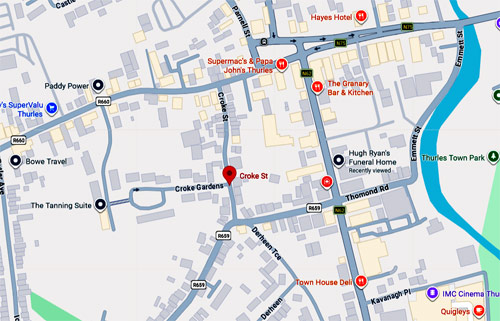
Tipperary County Council have granted planning permission for six social housing apartments on Lower Croke Street, Thurles, Co. Tipperary.
Selected Site: Tipperary County Council – [Add File Number 2461122 to search panel on link https://www.eplanning.ie/TipperaryCC/searchresults/recvdate ].
Tipperary County Council have granted planning permission for a new social housing development that will deliver six one-bedroom apartments on Lower Croke Street, (Formerly known as Stradavoher), Thurles, Co. Tipperary.
The board of directors of Thurles Lions Trust applied to the local authority to build the scheme on a vacant town-centre site. The development will comprise two new buildings providing a total of six one-bed apartments, all intended for social housing.
A number of local residents made submissions during the planning process, raising concerns about storm-water capacity and the potential for overlooking of neighbouring properties. One objection argued that a proposed balcony (on apartment 5), would allow direct overlooking into a private garden and negatively impact on privacy.
Another submission warned the project could place added pressure on a storm drainage/sewerage system that, they claimed, is already struggling with surface-water run-off; contributing to flooding risk for older homes on the street.
Despite the objections, the council have approved the development subject to conditions.
These include the removal of the proposed balcony for apartment 5, requirements to keep the public road clean and tidy during construction, and that all service cables be routed underground.
The developer must also submit a public lighting scheme for council approval, agree details of external finishes in advance, and comply with restricted construction hours: Monday to Friday (8am–6pm) and Saturday (8am–2pm).
Thurles & Tipperary Says Stop The “Junket” Slur – Start the Accountability – Publish the Outcomes of St Patrick’s US Missions.
Ireland must travel, must engage, and must report back, in black and white.
Ireland should maintain the St Patrick’s Day diplomatic programme within the United States, including the Taoiseach’s White House engagement, because it is one of the few annual moments when a small island reliably gets direct access to the world’s most consequential decision-makers, investors and influencers.
But if we are truly serious about ‘people before posturing’, then every travelling politician and councillors must also be required to prove value for money and publish measurable outcomes on return.
That is the missing piece in this annual debate: loud accusations of “junkets” on one side, defensiveness on the other, and far too little mandatory, standardised reporting to the public.
It has been reported that nine or ten ministers are expected to travel to up to 15 US states around St Patrick’s Day. Meanwhile, FOI figures reports show €1,096,493 spent on 569 St Patrick’s Day events globally, with an average cost per event of €1,927.
That is not inherently scandalous. It can be excellent diplomacy. But it must be auditable diplomacy.
Engagement is not endorsement, it’s statecraft.
Tourism matters too; and we should never insult the American people. The United States is one of Ireland’s most important tourism markets and supports jobs right across this island, from hotels and restaurants to visitor attractions, guides and local festivals.
Tourism Ireland notes that in 2023 the island welcomed over 1.2 million US visitors, who spent about €1.7 billion here, making the US the most important overseas market for revenue.
Tourism Ireland’s USA Market Profile 2024 reports 1.3 million American tourists, €2.0 billion in spend, and 11.4 million bed nights; figures that underline just how much Irish employment depends on maintaining goodwill with ordinary American people, not just the political class in Washington.
You can disagree robustly with any US administration, while still showing respect to the American public, the diaspora, and the millions who choose Ireland in good faith.
Diplomacy that drifts into contempt is not “taking a stand” – it is self-harm.
Some opposition voices argue our Taoiseach should not go to Washington at all. People Before Profit TD Mr Richard Boyd Barrett has said it is “not appropriate” for Mr Martin to present President Donald Trump with shamrock this year.
Labour MEP Mr Aodhán Ó Ríordáin has also publicly taken a “No to the Shamrock ceremony” position. Labour leader Ms Ivana Bacik has also ‘raised conditions’ around any visit if threats continue.
Whatever the merits of ‘snub the White House’ rhetoric, it is just gesture politics unless those calling for such a boycott can set out a credible alternative strategy, which of course they haven’t.
Yes, they are entitled to their stance. But the public is entitled to ask a harder question: what is their alternative plan to protect Irish jobs, Irish exports and Irish leverage, in real time, when the stakes are highest?
Ireland cannot clap itself on the back for moral purity, while leaving Irish workers, exporters and inward investment exposed.
The national interest is not served by boycotts that make headlines at home and achieve nothing in Washington.
The public interest test: show the receipts and the results.
If critics insist on calling these trips “junkets”, and who can blame them, then the answer is simple: remove the ambiguity.
From this year onwards, every minister and senior office-holder travelling on St Patrick’s missions should be required to publish a short, standard “Outcomes Report” within 30 days of returning, laid before the Oireachtas and posted publicly.
That report should include:
- Full itinerary (meetings, organisations, purpose).
- Total cost (travel, accommodation, hospitality), itemised.
- Concrete outcomes (investment leads, trade barriers raised, diaspora commitments secured, cultural/tourism campaigns launched).
- Follow-up actions with named officials/agencies and deadlines.
- What did not happen (meetings refused, issues parked, risks flagged).
This is not bureaucracy, it is basic democratic accountability. If nearly €1.1m is being spent globally on St Patrick’s Day events, the public should see, clearly, what Ireland gets in return.
A direct challenge to the “boycott brigade”.
It is easy to demand that Ireland “takes a stand” from a safe distance. It is harder to sit across the table from power and argue Ireland’s case, on trade, immigration, investment, peace and international law, and then come home and account for what was achieved.
If the likes of People Before Profit and a Labour MEP want to oppose engagement, let them publish their own alternative: a costed, credible strategy that protects Irish livelihoods and advances Irish values, without access, without dialogue, and without influence. Otherwise, it is politics as performance. Who elected these people anyway?
Ireland should go – and Ireland should know.
Ireland should absolutely maintain the St Patrick’s diplomatic programme in the US, and Irish politicians should visit American cities beyond Washington because that is where investment decisions, diaspora networks and industry clusters live.
But also the era of “trust us” travel must end.
Go. Engage. Promote Ireland. Protect jobs. Defend values, and then report back to the over taxed individuals who fe..ing paid for it all.
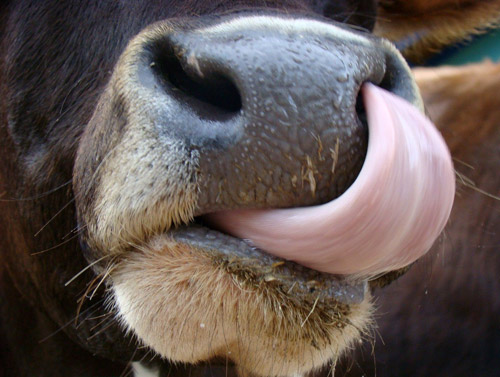
Farmers across Co, Tipperary are being urged to heighten vigilance and review on-farm biosecurity measures, following confirmation of bluetongue virus serotype 3 (BTV-3) confirmed in a herd of cattle in Co. Wexford, the first confirmed case in the Irish State.
The confirmation is “unwelcome” but not unexpected, pointing to the spread of the virus across Europe, Great Britain and recently in Northern Ireland.
Bluetongue is a viral disease of ruminants that can affect cattle and sheep, as well as goats, deer and llamas. The disease does not pose a risk to human health or food safety and is spread primarily by biting midges.
The current spell of colder weather should reduce the risk of onward spread at this time, as the virus cannot replicate effectively in midges when daily temperatures are below 12°C. Further sampling is under way to clarify the wider epidemiological picture.
While there are no implications for meat and dairy exports to the EU, UK and most international markets, the Minister warned the outbreak will affect exports of live cattle and sheep, with added costs and logistical requirements to meet importing-country rules.
Separately, the Department has already confirmed that bluetongue vaccination will be permitted in Ireland in 2026 for cattle and sheep, following detections of BTV-3 in Northern Ireland. Farmers are advised to engage with their private veterinary practitioner on the timing and suitability of any vaccination programme.
The Irish Creamery Milk Suppliers Association (ICMSA) described the Wexford confirmation as “hugely worrying” for the family concerned and the wider farming community, and said supports must be available for those impacted.
Advice to Tipperary farmers: what to do now
Although the confirmed case is in Wexford, farmers in Tipperary are being asked to remain alert and to act early if anything looks amiss:
- Monitor stock daily and contact your vet immediately if you see signs consistent with bluetongue (which can vary by species and individual animal), including fever, lethargy, lameness, facial swelling, mouth/eye/nose irritation or discharge, and sudden drops in performance.
- Tighten biosecurity around animal movements and visitors; keep accurate records and follow Department guidance if any restrictions or control measures are introduced.
- Reduce midge exposure where practical (e.g., housing vulnerable animals at peak midge activity times and using appropriate veterinary-approved insect control measures).
- Keep up to date with official Department updates as sampling continues and any control zones/movement measures are clarified.
Farmers are being encouraged to take the situation seriously but calmly, with early reporting seen as critical to limiting spread and protecting the live trade, particularly as the sector prepares for the 2026 vaccination programme.
As Promised: Time to Construct Plans and Attempt to Find a “Bookable Visitor Experience,” for Thurles.
Thurles Tourism Debate: Part IV.
Concerns over Tipperary’s ability to sustain and grow tourism have intensified following a recent council presentation on our tourism performance and marketing activity; but then in the words of T.C. Haliburton and later P.T. Barnum, “Talk is Cheap” and the words of councillors and officials come easier than their actions.
Thurles ‘A Sellable Product’.
“Thurles: Cathedral, Liberty Square & Local Stories, Lár na Páirce.” (90–120 mins)
The promise: (what the visitor gets.)
A guided, easy walking loop that explains Thurles through three stops foreigners can understand instantly:
Cathedral of the Assumption:
Big visuals + a clear “why it matters” story: architecture, stained glass, music/choir tradition, and key moments that root the town in Irish life.
Liberty Square heritage loop:
2–3 short, memorable stories (old shopfronts, civic points, photo stops); stories, the kind people repeat afterwards. e.g. See links Bridget Fitzpatrick, – District Inspector Michael Hunt. – Vogue Magazine. – King Charles III, Association. – the stories are endless the work is already highlighted.
Lár na Páirce:
Framed as “Irish life & identity through games”, sell as a cultural stop, not a sports lecture.
Why it’s easy to sell:
- Walkable and simple (no specialist knowledge needed).
- Weather-proof-ish if you plan “pause points” under cover (shopfront canopies / a proper bus shelter if installed is a cheap win).
- Perfect as an add-on stop between other major routes.
Why Irish Rail is a big advantage for Thurles.
Thurles has a very strong practical selling point; it’s a rail town with visitor basics already in place.
From Irish Rail’s station information, Thurles station is 0.5 miles to the town centre, has toilets, passenger shelters, an enclosed waiting room, and strong accessibility (lifts to platforms, accessible toilet, ramps). It’s also on key intercity routes including Dublin Heuston – Cork (directs and intermediate), plus services connecting towards Limerick/Ennis and Tralee.
That means we can pitch Thurles as:
“Arrive by train, walk the town, back on the train.”
Ideal for weekend/day-trip groups who dislike motorway fatigue, parking stress, or long coach days.
In Part V, of our Thurles Tourism Debate, in the coming days we will assist in where to contact/sell and will provide a short, copy/paste social media advert.
Note: Since two paid tour guides with proper temperament, will be required to undertake this work, (yes we already have two knowledgable individuals, trained by myself), thus creating two jobs, which is more than our Tipperary public reps. have created in the past 20 years.
Time to increase failed footfall and reverse the deliberate destruction of our town centre, (Liberty Square), as a centre for business.
Community groups across Tipperary are being invited to celebrate and showcase their local wetlands, following the appointment of Mr Darragh Kelly as Tipperary’s new Community Water Officer.
Mr Kelly has spent the past number of years working in the Environment Section of Kilkenny County Council and has said he is delighted to take on this new role, supporting communities to protect and enhance local waters and wetlands.
Coming from a farming background, Mr Kelly said he has a strong interest in the outdoors, including fishing and hiking, and is particularly fond of exploring Slievenamon.
World Wetlands Day — 2 February 2026.
This year’s World Wetlands Day will be marked on Monday, 2nd February 2026, the International Day that commemorates the signing of the Ramsar Convention ♦ on Wetlands.
♦ The Ramsar Convention (or Convention on Wetlands) is an International Treaty for wetland conservation, signed in Ramsar, Iran, in 1971, promoting the “wise use” of wetlands for sustainable development, especially for waterfowl habitats.
The 2026 theme is: “Wetlands and traditional knowledge: Celebrating cultural heritage”, highlighting the links between wetlands, communities, and the knowledge passed down through generations.
Funding now open for World Wetlands Day promotions.
Mr Kelly has confirmed that the Small Grants and Events Scheme 2026 portal opened for applications on Monday, 19th January at 11.00am, specifically for World Wetlands Day promotion.
Groups and organisations are encouraged to make contact if they would like to organise an event to celebrate a local wetland — from guided walks and talks to school visits, clean-ups, wildlife sessions or community information events. Revised scheme guidelines for 2026 are also available.
How to apply.
The information portal is now available HERE, so do get in touch.
Anyone wishing to organise an event or looking for support is invited to contact Mr Kelly directly @ Darragh Kelly, Community Water Officer (Tipperary), Mobile: 085 8333383.
|
Support Us Help keep Thurles.info online by donating below. Thank you.
Total Donated 2026: €300.00
Thank You!
Daily Thurles Mass Livestream
|





Recent Comments