Agriculture accounts for 40% of deaths; three work-related fatalities recorded in Co. Tipperary.
Provisional figures published by the Health and Safety Authority (HSA) show 58 people died in work-related incidents during 2025, a 61% increase on the 36 deaths recorded in 2024. The HSA said the work-related fatality rate rose to 2.1 per 100,000 workers in 2025, up from 1.3 in 2024, while noting the long-term trend remains downward.
61% increase in work-related incidents during 2025.
Sector breakdown. The agriculture sector recorded 23 fatalities, accounting for 40% of all work-related deaths in 2025, from a sector employing approximately 4% of the workforce. Construction recorded 10 fatalities (up from five in 2024), while manufacturing recorded 5 fatalities (up from none in 2024).
Leading causes. The leading causes of workplace fatalities in 2025, included incidents involving heavy loads/falling objects, machinery or vehicles, and falls from heights.
Older and self-employed workers disproportionately affected. Of the 58 deaths recorded, 19 victims (33%) were aged 65 or over, with the oldest aged 88. Self-employed workers accounted for 23 deaths (40%), underlining the heightened risks faced by people working alone or without wider organisational supports.
County figures – Ref: Co. Tipperary. The HSA’s provisional county breakdown shows three work-related fatalities in Co Tipperary during 2025.
Commenting on the figures, HSA Chief Executive Mr Mark Cullen said the increase is “deeply concerning” and urged employers and workers to remain vigilant and avoid complacency regarding safety.
ALDI Ireland has confirmed it is reducing retail prices across its private label butter range, with immediate effect, with the new prices now available nationwide, including at the ALDI store on Kickham Street, Thurles (Eircode E41 YP28).
This move follows a series of recent price reductions by the retailer on key household staples across its range, including milk, bread, fresh fruit and vegetables, lunchbox essentials and meat.
New Kilkeely butter prices (effective immediately): Kilkeely Pure Irish Creamery Butter 454g – €3.39 (down from €3.99). Kilkeely Pure Irish Creamery Butter 227g – €2.09 (down from €2.39). Kilkeely Unsalted Irish Butter 227g – €2.09 (down from €2.39).
ALDI have confirmed it will continue to review the market daily, to ensure it remains the best value retailer on price, noting it has cut prices on hundreds of products over recent months.
Mr Niall O’Connor, (Country Managing Director of ALDI Ireland), said the retailer was focused on helping shoppers after a costly Christmas period and reiterated ALDI’s commitment to value across its range.
This price reduction on butter is the latest in a wider programme of cuts by the discounter on everyday essentials in recent months.
Uisce Éireann is to submit a Strategic Infrastructure Development planning application, alongside a Compulsory Purchase Order (CPO) application, to An Coimisiún Pleanála for the Water Supply Project Eastern and Midlands Region, described as the largest-ever water project in Irish history.
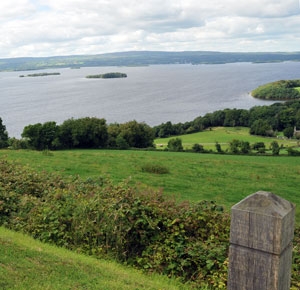
What does the project propose? Uisce Éireann plans to abstract water from Parteen Basin (Lower River Shannon), treat it near Birdhill, Co Tipperary, and pipe treated water about 170km through counties Tipperary, Offaly and Kildare to a new termination reservoir at Peamount, Co Dublin, connecting into the Greater Dublin Area network.
How much water would be taken? Uisce Éireann says the scheme would abstract a maximum of 2% of the average/long-term average flow at Parteen Basin.
Why is it being pursued? Uisce Éireann says the Eastern & Midlands region is over-reliant on a single source (the River Liffey system) and that population/economic growth and climate pressures will increase demand; it says a new source is needed for resilience.
What is the cost and timeline? Subject to planning, Uisce Éireann proposes construction starting in 2028, completing within five years, with an estimated budget of €4.58bn–€5.96bn and more than 1,000 direct jobs at peak construction.
How many landowners are affected? Reporting on the scheme states the underground pipeline would cross lands belonging to about 500 owners.
What are objectors saying? 1) Environmental impact on the Shannon / Natura 2000 protections. A key objection is potential ecological impact on the Shannon system. Parteen Basin is within the Lower River Shannon SAC (site code 002165), and critics argue abstraction/infrastructure must be proven not to adversely affect protected habitats/species.
2)“Fix the leaks first”. Opponents argue Dublin’s deficit should be tackled primarily through leakage reduction and network upgrades. Uisce Éireann’s own figures state about 37% of treated water is lost through leaks nationally. (Analysis has cited 37% nationally and 33% in the Greater Dublin Area lost to leaks.)
3)Demand and climate assumptions. Some stakeholders have challenged the robustness and horizon of demand forecasts,raising issues such as planning beyond 2050, climate impacts and high-demand users (including data centres and large energy users), particularly during drought.
4) Cost escalation and value-for-money. Objectors highlight the multibillion price tag (often described as “about €6bn”) and warn of further escalation; reporting has referenced a worst-case risk scenario exceeding €10bn in official correspondence.
5) Land access, CPO concerns, disruption and compensation/tax. Landowner objections include disruption during construction, long-term land constraints, and concerns about compensation treatment (including tax/VAT implications).
What is Uisce Éireann’s response ?
It says the abstraction would be capped at 2% of Parteen Basin flows and that the application includes an EIAR and Natura Impact Statement. It says leakage reduction is part of the solution, but that a new source is still required for resilience. It points to landowner liaison and a negotiated voluntary wayleave/land package agreed with farming bodies.
What happens next ? Uisce Éireann says planning notices run from 12 December 2025 and planning documents will be available from 19 December 2025 once lodged. The project page states submissions/observations to An Coimisiún Pleanála may be made from January 6th 2026 until February 25th 2026 at 5.30pm.
Landmark US case seen as “a warning shot” for Ireland and EU food policy.
Earlier this month, the European Commission has recalled consignments of frozen Brazilian beef products imported into the EU, after it was found they contained hormones banned by the bloc. The banned hormones were detected in shipments that arrived into Europe earlier this month.
Co. Tipperary and Irish public health advocates are calling on the Government and EU institutions to accelerate action on ultra-processed foods (UPFs), following a landmark lawsuit filed this week, by the City of San Francisco against some of the world’s biggest food manufacturers.
And now, a case, taken by San Francisco; the first of its kind brought by a public authority, alleges that companies including Coca-Cola, PepsiCo, Kraft Heinz, Nestlé and others engineered and aggressively marketed ultra-processed products while knowing they were driving a crisis in obesity and chronic disease, in breach of unfair competition and public nuisance laws.
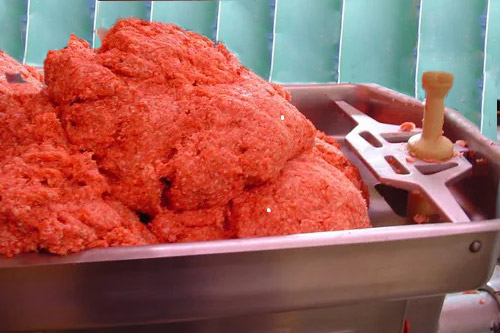
Ultra-Processed Meat.
Various groups promoting healthy diets in Ireland claim that the lawsuit should be “a wake-up call” for Ireland, where research shows ultra-processed foods account for around 45.9% of the average household shopping basket, placing the Irish State in line with the highest consumers in Europe.
What San Francisco is saying, very clearly, is that this is not just about individual willpower, it’s about products and marketing strategies that put profit before people’s health.
Ireland has one of the highest levels of overweight and obesity in Europe. We cannot ignore the role of an increasingly ultra-processed food environment in that picture.
According to the HSE and recent national surveys, around 60% of Irish adults and over one in five children are now living with overweight or obesity.
The San Francisco lawsuit draws heavily on emerging international evidence, including a major Lancet series published last month, which found consistent associations between high UPF intake and increased risks of obesity, type 2 diabetes, cardiovascular disease, some cancers, depression and premature death.
The message is that ultra-processed foods are not just empty calories, they are strongly linked with chronic disease across multiple organ systems. Ireland cannot afford to be a bystander while other jurisdictions start to hold industry to account.
While Ireland has introduced measures such as the sugar-sweetened drinks tax and restrictions on marketing high-fat, salt and sugar (HFSS) foods to children, the various groups promoting healthy diets, note that current rules focus mainly on nutrients, not on the degree of processing or the cumulative impact of additives, texture engineering and aggressive branding.
At EU level, the Farm to Fork Strategy includes a commitment to a harmonised, mandatory front-of-pack nutrition label and stronger nutrient profiles to restrict health and nutrition claims on unhealthy products. However, progress has been slow and does not yet directly address ultra-processing as such.
Various groups promoting healthy diets are urging the Irish Government to:
Back strong EU-wide front-of-pack labelling that is easy to understand and compatible with emerging evidence on UPFs;
Tighten marketing rules, particularly digital advertising and brand promotions aimed at children, to cover ultra-processed categories rather than just narrow nutrient thresholds;
Set clear procurement standards so that publicly funded schemes – including school meals, hospitals and other State services – progressively move away from serving ultra-processed products as default options;
Monitor and report the proportion of the Irish food supply and advertising spend accounted for by ultra-processed products.
Ireland now needs to recognise the same underlying problem: a food system where the cheapest, most available and most heavily promoted options are the very products most closely linked with long-term illness.
People in Ireland now has a choice, to wait and react, or to lead in protecting people’s health.
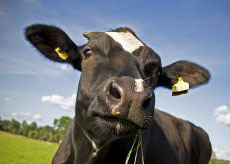
The Department of Agriculture, Environment and Rural Affairs (DAERA) has declared a 20-kilometre Temporary Control Zone (TCZ) near Bangor, Co. Down, after surveillance indicated a possible case of Bluetongue virus (BTV) in two cows, latter the first suspected detection of the disease on the island of Ireland.
The TCZ came into force at 21:00 on Saturday last, November 29th, 2025. Under the restrictions, movement of susceptible species, including cattle, sheep, goats, deer and camelids, on or off any premises within that zone is prohibited, except when animals are being moved directly to slaughter under licence.
While preliminary results have triggered the alert, DAERA emphasises that full testing and investigations are ongoing. The suspected cases were detected via the Department’s active disease-surveillance programme.
Authorities stress the serious implications if the virus becomes established. Though bluetongue poses no known risk to human health or food safety, it can have devastating effects on animal health and welfare, with possible consequences including illness, death, reduced productivity, and trade restrictions. If established livestock and farm economies could face significant disruption.
In a joint north-south effort, authorities have called for heightened vigilance and strict compliance with biosecurity and movement controls. Farmers and all livestock keepers have been urged to monitor their animals closely and to report any suspicious signs immediately to their veterinarian or the relevant veterinary office.
Bluetongue (BTV) is a viral disease that affects domestic and wild ruminants, including sheep, cattle, goats, deer, as well as llamas and alpacas. The virus is transmitted by small biting midges (species of the Culicoides midge) rather than by direct contact between animals.
There are many different serotypes of Bluetongue virus; some strains cause little or no clinical signs in infected animals, while others, especially in more sensitive species such as sheep, can lead to severe disease.
Clinical signs may include fever; loss of appetite; swelling of the face, lips or tongue; salivation or nasal discharge; lameness; and, in severe cases, ulcers, respiratory distress, reproductive losses (such as abortion), or death.
Importantly, Bluetongue poses no risk to human health or food safety: it cannot infect people, nor can it be transmitted through consumption of meat or milk from affected animals.
Why it Matters, – Risk and Implications. The insects that transmit Bluetongue, biting midges, are present in Ireland, and are typically most active during the warmer months (historically April to November).
The disease remains present in many parts of continental Europe; virus-carrying midges or the movement of infected animals or biological products (such as germinal material) means there is an ongoing risk of incursion.
If Bluetongue becomes established, the consequences could include serious welfare problems for livestock, loss of production (meat, milk, wool), increased mortality in vulnerable flocks or herds, reduced fertility or loss of offspring in pregnant animals, and the possibility of movement or trade restrictions for live animals or animal products.
Because many infections, particularly in cattle or goats, may show no obvious signs, the disease can spread undetected, making early detection and active surveillance critical to preventing outbreaks.
For Farmers & Livestock Keepers – What To Do. (1) Remain vigilant for any signs of ill-thrift, swelling, mouth or nose lesions, drooling, nasal discharge, lameness, or unexpected abortions in animals. (2) Report any suspicion immediately to your veterinary service or the relevant animal-health authority, remembering that Bluetongue is a notifiable exotic. (3) Minimise risk of midge bites: use good bio-security practices, house animals in midge-proof accommodation where feasible, especially at dawn and dusk when midges are most active. (4) Be cautious when sourcing livestock, germinal products or breeding material from regions where Bluetongue is known to circulat.
This website uses cookies to improve your experience. We'll assume you're ok with this, but you can opt-out if you wish.AcceptRead More
Privacy & Cookies Policy
Privacy Overview
This website uses cookies to improve your experience while you navigate through the website. Out of these, the cookies that are categorized as necessary are stored on your browser as they are essential for the working of basic functionalities of the website. We also use third-party cookies that help us analyze and understand how you use this website. These cookies will be stored in your browser only with your consent. You also have the option to opt-out of these cookies. But opting out of some of these cookies may affect your browsing experience.
Necessary cookies are absolutely essential for the website to function properly. This category only includes cookies that ensures basic functionalities and security features of the website. These cookies do not store any personal information.
Any cookies that may not be particularly necessary for the website to function and is used specifically to collect user personal data via analytics, ads, other embedded contents are termed as non-necessary cookies. It is mandatory to procure user consent prior to running these cookies on your website.







Recent Comments