As unsettled conditions develop, localized wind impacts expected across Tipperary.
Met Éireann’s latest forecast indicates a markedly unsettled and breezy day across County Tipperary, with conditions varying locally between Clonmel, Thurles, and Nenagh as a band of rain clears and strong, gusty winds develop through the afternoon and evening.
Overview – Tipperary Today According to Met Éireann, the day will begin wet and overcast, with rain clearing eastwards, followed by sunny spells and scattered showers. Winds will increase from the south to southwest, becoming fresh to strong and gusty, before veering westerly later.
Local Breakdown. Thurles(Mid Tipperary) – Early conditions: Rain clearing around midday. Afternoon – evening: Frequent showers with sunny intervals. Wind: Noticeably gusty, especially in open areas. Key risk: Rapid changes in conditions, calm spells followed by sharp gusts. Thurles sits in a transition zone, experiencing both the clearing rain and strengthening winds.
Clonmel(South Tipperary)–Early conditions: Persistent morning rain, clearing early afternoon Afternoon: Brighter spells with showers. Wind: Strong and gusty, but somewhat moderated by more sheltered inland terrain Key risk: Sudden squally showers bringing brief bursts of strong wind. Clonmel is likely to see more rain early, but slightly less exposed wind than northern areas.
Nenagh(North Tipperary)– Early conditions: Rain clearing earlier than the south. Afternoon – evening: More persistent showers. Wind: Strongest inland gusts across the county, due to more exposure. Key risk: Blustery westerly winds and reduced visibility in showers. Nenagh is expected to feel the strongest wind impacts locally, particularly later in the day.
Peak Impact WindowTiming: Late afternoon through evening. Conditions: Strong, gusty winds Heavy, fast-moving showers, rapid shifts between bright and squally conditions. Met Éireann highlights that such a pattern brings “scattered showers, some heavy… with gusty winds”, typical of an unstable Atlantic airflow.
Key Risks Across Tipperary: Difficult driving conditions on exposed routes. Sudden strong gusts, especially during showers. Reduced visibility in heavy bursts of rain. Localised surface water on roads.
Summary: Morning: Wet across all areas. Afternoon: Improving but increasingly windy. Evening: Most disruptive period with strong gusts and showers.
Local variation: Thurles: Mixed and changeable. Clonmel: Wetter earlier, slightly more sheltered. Nenagh: Windiest and most exposed.
Shannon-to-East Water Pipeline – Why Tipperary Communities Along the River Are Pushing Back.
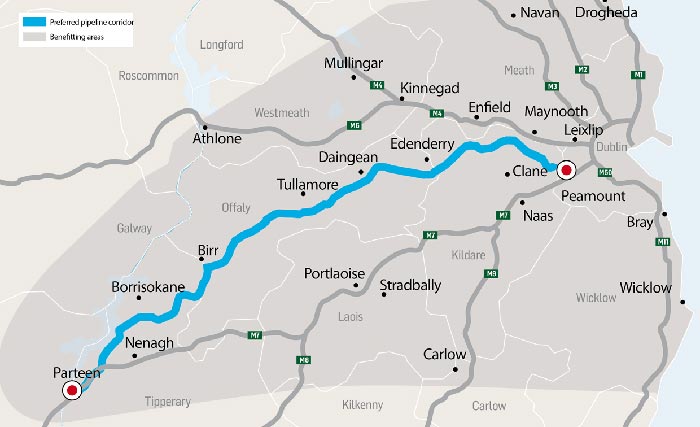
Objections are mounting in Ireland’s mid-west region over plans by Uisce Éireann to take more than 300 million litres of water a day from the River Shannon and pipe it to the Midlands, the east, and the greater Dublin Area. The utility lodged its planning application in December last for what it describes as the largest water infrastructure project in the State’s history; a 170km underground steel pipeline, linked to new treatment and storage infrastructure, designed to bolster supply for a region that includes almost half the population.
At the centre of the debate is a familiar national tension; how to secure reliable water for the country’s fastest-growing urban areas, without placing unacceptable pressure on the communities and ecosystems where that water is sourced. Uisce Éireann says the scheme is essential to reduce the greater Dublin Area’s dependence on existing sources and to provide resilience in the face of climate pressures and rising demand. It argues that leakage reduction is necessary, but not sufficient on its own, and that a major new supply route would help prevent restrictions and large-scale outages, while supporting much needed housing delivery and further economic growth.
Opponents, however, reject the idea that the Shannon must become the answer to the east’s water challenges. Community and environmental campaigners in the mid-west region contend the project is unnecessary, premature, and risky, especially during drought periods, when the Shannon system is under pressure too. Their core claim is straightforward; if leakage and inefficiencies were tackled more aggressively, particularly in the Irish capital, the scale of abstraction being proposed would not be needed. They also argue that long-term water security should come from a wider mix of measures, including demand management, smarter network operation, and exploring alternative sources, rather than relying on a single mega-project.
While Uisce Éireann states it will abstract a maximum of 2% of the long-term annual average flow at the Parteen Basin, critics say averages can be misleading. What matters most, they argue, is what happens during prolonged dry spells, exactly when Dublin’s demand spikes and river flows can be low. In those conditions, local groups fear that removing additional water upstream could reduce downstream availability and strain an already complex system balancing navigation, ecology, drinking water needs, and hydropower operations.
Environmental concerns are a major flashpoint. Local stakeholders warn of potential impacts on habitats and water quality, and they point to sensitivities around the Parteen Basin area and the broader Lough Derg–Shannon network. Angling and river-based recreation interests have also raised alarms, stressing that changing flows, even subtly, can affect fish migration patterns, spawning success, and the ecological health of tributaries and lake edges. In response, the utility maintains that modelling has focused heavily on low-flow and drought scenarios, and that statutory flow requirements and fish passage arrangements would remain protected under the proposal. It says it has submitted environmental assessment documentation as part of its application.
Cost is another source of contention. The project has been framed publicly as a multi-billion-euro investment, with estimates in the range of roughly €4.6 billion to nearly €6 billion in recent official statements, while critics warn the final bill could escalate significantly over time. For opponents, the price tag strengthens the case for exhausting cheaper, quicker measures first, especially leak repair, targeted upgrades, and region-by-region resilience projects, before committing to decades of debt and disruption. Supporters counter that, given the scale of the population and economic activity reliant on secure water in the east, claiming the long-term benefits justify the spend.
The planning process is now the arena where these arguments will be tested. The public consultation period is now closed, with local authority submissions due by 30th March. An Coimisiún Pleanála is required to decide within 48 weeks. If permission is granted, Uisce Éireann has indicated construction could begin in 2028, with completion within five years.
Whether the pipeline proceeds as proposed or is reshaped by conditions, the controversy highlights a bigger challenge Ireland cannot avoid: building a water system that is climate-ready, regionally fair, and environmentally credible, while restoring public confidence that “fixing leaks” and planning for growth are happening at the same time, not as competing priorities.
Farmers across Co, Tipperary are being urged to heighten vigilance and review on-farm biosecurity measures, following confirmation of bluetongue virus serotype 3 (BTV-3) confirmed in a herd of cattle in Co. Wexford, the first confirmed case in the Irish State.
The confirmation is “unwelcome” but not unexpected, pointing to the spread of the virus across Europe, Great Britain and recently in Northern Ireland.
Bluetongue is a viral disease of ruminants that can affect cattle and sheep, as well as goats, deer and llamas. The disease does not pose a risk to human health or food safety and is spread primarily by biting midges.
The current spell of colder weather should reduce the risk of onward spread at this time, as the virus cannot replicate effectively in midges when daily temperatures are below 12°C. Further sampling is under way to clarify the wider epidemiological picture.
While there are no implications for meat and dairy exports to the EU, UK and most international markets, the Minister warned the outbreak will affect exports of live cattle and sheep, with added costs and logistical requirements to meet importing-country rules.
Separately, the Department has already confirmed that bluetongue vaccination will be permitted in Ireland in 2026 for cattle and sheep, following detections of BTV-3 in Northern Ireland. Farmers are advised to engage with their private veterinary practitioner on the timing and suitability of any vaccination programme.
The Irish Creamery Milk Suppliers Association (ICMSA) described the Wexford confirmation as “hugely worrying” for the family concerned and the wider farming community, and said supports must be available for those impacted.
Advice to Tipperary farmers: what to do now Although the confirmed case is in Wexford, farmers in Tipperary are being asked to remain alert and to act early if anything looks amiss:
Monitor stock daily and contact your vet immediately if you see signs consistent with bluetongue (which can vary by species and individual animal), including fever, lethargy, lameness, facial swelling, mouth/eye/nose irritation or discharge, and sudden drops in performance.
Tighten biosecurity around animal movements and visitors; keep accurate records and follow Department guidance if any restrictions or control measures are introduced.
Reduce midge exposure where practical (e.g., housing vulnerable animals at peak midge activity times and using appropriate veterinary-approved insect control measures).
Keep up to date with official Department updates as sampling continues and any control zones/movement measures are clarified.
Farmers are being encouraged to take the situation seriously but calmly, with early reporting seen as critical to limiting spread and protecting the live trade, particularly as the sector prepares for the 2026 vaccination programme.
From Ultra-Processed Foods To Hormone Residues: Food Safety, Public Health & Corporate Accountability Collide.
A landmark lawsuit filed by the City of San Francisco against major food and drink manufacturers has signalled a new phase in public health enforcement, one that treats diet-related harm not as an individual failing, but as a market and regulatory failure demanding immediate accountability.
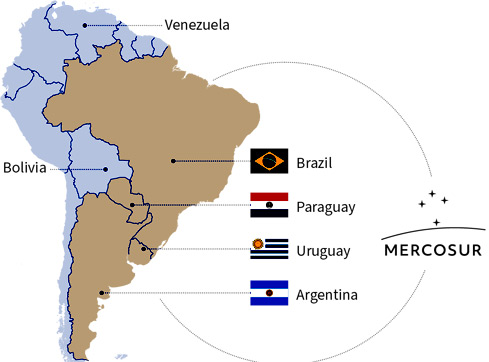
San Francisco alleges that ultra-processed foods were engineered and marketed in ways that encourage over-consumption, especially among children, and that the public ultimately pays the price through higher rates of chronic disease and spiralling healthcare costs. While that case will be tested in court, its wider message is already echoing across the Atlantic: Europe is facing its own “trust test” over what we allow into our food chain, particularly under the EU–Mercosur trade agreement.
Why this matters in Europe now: On 9 January 2026, EU member states greenlit the signature of the EU–Mercosur agreements, with the European Parliament’s consent still required before conclusion.
The European Commission states that EU rules apply equally to domestic and imported food, and that the agreement “upholds” EU food safety and animal/plant health standards.
However, confidence in “standards on paper” depends on something more basic: verifiable controls and traceability in practice.
Banned substances are not theoretical: recent Irish and EU recalls. The EU prohibits the use of hormones for growth promotion in farm animals. EFSA has also noted that ractopamine, a beta-agonist, is banned for use in food-producing animals in the EU and that the ban applies to meat produced in the EU and imported from third countries. Against that backdrop, Irish and EU reporting in recent weeks has documented the recall of Brazilian beef products after banned hormone residues were detected, including confirmation that a quantity entered the Irish market and was subject to official recall and follow-up.
The enforcement gap: what the EU’s own audit found. A 2024 European Commission DG SANTE audit of Brazil’s residue controls concluded that while many aspects of residue control plans were broadly consistent with EU principles, arrangements to guarantee that cattle destined for the EU market had never been treated with oestradiol 17β were “ineffective”. The audit stated the competent authority could not guarantee the reliability of operators’ sworn statements on non-use, and was not in a position to reliably attest to compliance with the relevant EU health certificate section.
This is the crux of the Mercosur anxiety: not whether Europe has rules, but whether Europe can consistently verify compliance, when supply chains are long, oversight differs, and commercial incentives are strong.
Ultra-processed foods and “addictive design”: the parallel problem. The San Francisco case centres on claims of deceptive marketing and products engineered to drive consumption. Meanwhile, the health evidence base around UPFs continues to expand. A major BMJ umbrella review reported that greater UPF exposure is associated with higher risk of adverse health outcomes, particularly cardiometabolic outcomes, across many studies. Controlled research has also shown that ultra-processed diets can increase calorie intake and weight gain compared with minimally processed diets under tightly controlled conditions.
The common thread is accountability: when products (or supply chains) are designed to maximise throughput and profit, public health cannot rely on consumer vigilance alone.
Calls to action Tipperary is now calling for a joined-up response that protects consumers, supports credible producers, and restores trust in our food chain: (1) A tougher “trust-but-verify” regime on imports). Full use of the EU’s Official Controls framework to ensure import compliance is proven through audits, sampling, and enforceable consequences, not assurances alone. (2)Mandatory transparency on audit findings and corrective action plans. Where EU audits identify weaknesses in residue controls or traceability, the public must see timelines, milestones and proof of remediation. (3)Stronger protections for children in the food environment. Restrictions on marketing tactics that normalise high-sugar, high-salt, heavily engineered foods to children—mirroring the direction of the San Francisco action. (4)Clearer front-of-pack information and health claims enforcement. Consumers should not need a chemistry degree to understand what they are buying, or whether “healthy” claims stand up. (5)A level playing field for farmers and processors meeting EU rules. Irish and EU producers operating under strict bans and controls must not be undercut by imports where verification is demonstrably weaker.
San Francisco has drawn a line under the era of ‘hands off’ regulation when public health harms are foreseeable and widespread. Europe is now at a similar crossroads. The EU–Mercosur debate cannot be reduced to tariffs and quotas: it is also about trust, enforcement and the credibility of our bans on hormones and other restricted substances. Public health must not be negotiated away, nor should consumers be asked to carry the risk.
Met Éireann’s figures from Gurteen AWS (Automatic Weather Station); latter situated on the grounds of Gurteen Agricultural College, Co. Tipperary, point to 28 very wet days and 33 frost days, in the Thurles area.
Met Éireann’s Annual Climate Statement for 2025 confirms that indeed 2025 was Ireland’s second warmest year on record (since 1900), continuing a clear warming trend, with 2022 to 2025 now the four warmest years in the national series.
Using the Island of Ireland dataset, Met Éireann reports an average annual air temperature of 11.14°C for 2025, 1.59°C above the 1961 to 1990 long-term average and 0.97°C above the 1991 to 2020 average. Provisional rainfall for 2025 is 1,338.7mm, around 104% of the 1991 to 2020 long-term average, placing 2025 as the 15th wettest year since 1941.
Met Éireann’s Gurteen AWS also notes the year included the warmest and sunniest spring on record, the warmest summer on record, and a very wet autumn (the 4th wettest on record), with major weather impacts including ‘Storm Éowyn‘ which witnessed record winds at Mace Head, Co. Galway.
Thurles area snapshot:(nearest official monthly “weather events” station being Gurteen, Co Tipperary) While Met Éireann’s Annual Climate Statement is national in scope, its Public Works Contracts “weather events” tables provide month-by-month counts at station level. The closest suitable station for a Thurles-area proxy is Gurteen, Co Tipperary, which recorded the following information in 2025:
Days with rainfall>10mm: 28 days in total. Monthly counts: Jan 2nd, Feb 2nd, Mar 1st, Apr 4th, May 2nd, Jun 1st, Jul 2nd, Aug 0, Sep 3rd, Oct 6th, Nov 3rd, Dec 2nd.
Frost days(minimum temperature <0°C): 33 days in total. Monthly counts: Jan 13th, Feb 5th, Mar 5th, Apr 1st, May 1st, Jun 0, Jul 0, Aug 0, Sep 0, Oct 0, Nov 4th, Dec 4th.
Wind threshold days(maximum 10-minute mean wind speed ≥15m/s): 4 days in total Monthly counts: Jan 1st, Feb 1st, Mar 0, Apr 0, May 0, Jun 0, Jul 0, Aug 0, Sep 0, Oct 1st, Nov 0, Dec 1th.
These month-by-month counts are published as an objective measure of whether weather thresholds are exceeded for public works contract purposes, and provide a useful, locally relevant indicator of very wet days, frost incidence and notable wind events in the wider mid-Tipperary area.
This website uses cookies to improve your experience. We'll assume you're ok with this, but you can opt-out if you wish.AcceptRead More
Privacy & Cookies Policy
Privacy Overview
This website uses cookies to improve your experience while you navigate through the website. Out of these, the cookies that are categorized as necessary are stored on your browser as they are essential for the working of basic functionalities of the website. We also use third-party cookies that help us analyze and understand how you use this website. These cookies will be stored in your browser only with your consent. You also have the option to opt-out of these cookies. But opting out of some of these cookies may affect your browsing experience.
Necessary cookies are absolutely essential for the website to function properly. This category only includes cookies that ensures basic functionalities and security features of the website. These cookies do not store any personal information.
Any cookies that may not be particularly necessary for the website to function and is used specifically to collect user personal data via analytics, ads, other embedded contents are termed as non-necessary cookies. It is mandatory to procure user consent prior to running these cookies on your website.








Recent Comments