Parks in Thurles, Co. Tipperary, worse than littered scenes in St. Stephen’s Green, Temple Bar and South William Street last Saturday.
Sadly the pictures hereunder were taken on Friday evening last, as the 3 day June Bank holiday weekend got underway.
Same is further proof that well paid, Thurles officials and line management within the organisation, headed by Tipperary County Council Chief Executive Mr Joe MacGrath, are sadly failing in their commitment and responsibilities, with regards to the people of Thurles town and its environs.
Picture demonstrates the inability of well paid Thurles Council officials to do their job.
As can be seen above, Clothing Pods and Bottle Pods are full to capacity, resulting in individuals leaving clothing & bottles strewn across Parnell Car-park and Thurles Town Park.
The signs on the front of the clothing Pod containers claim to be ‘Sewing the seeds of sustainability’.
The word sustainable of course is a composition of two words ‘sustain’ and ‘able’ and is defined as the processes and actions through which humans avoid the overexploitation and depletion of natural resources. No evidence of sustainability being practised here.
The sign on the front of the bottle Pod containers, however state a different message,“Look Littering is an offence. Do not leave boxes or bags full or empty. Covert CCTV will capture offenders”.
Who is responsible for this continuous failure? Where is the Thurles or covert CCTV cameras ? Who will be prosecuted?
Ammonia emissions have been non-compliant for 7 out of the last 9 years, driven by the growth of the agriculture sector.
Ireland can achieve compliance with the 2030 ceiling for ammonia through full implementation of planned ammonia reduction measures.
Ireland is compliant for 2019 with the emissions ceilings under the NEC Directive for nitrogen oxides, non-methane volatile organic compounds and sulphur dioxide.
Full implementation of planned policies and measures, including those in the Climate Action Plan that target greenhouse gas emissions, will reduce emissions of air pollutants. Further action may also be required for some pollutants to meet tougher 2030 EU emission limits.
The Environmental Protection Agency (EPA) today published a compliance assessment for emissions of five key air pollutants which impact air quality, health and the environment. The pollutants, which are subject to current and future emissions ceilings under the EU National Emissions Ceiling (NEC) Directive, are : –
ammonia,
non-methane volatile organic compounds,
sulphur dioxide,
nitrogen oxides and
fine particulate matter (PM2.5).
Emissions of other air pollutants and heavy metals not subject to NEC Directive ceilings are also reported on.
This latest report shows that, despite decreasing in 2019, ammonia emissions are still non-compliant with the EU ceiling and have now been non-compliant for 7 out of the last 9 years. Agriculture dominates emissions of ammonia (99%), which arise from animal manures and nitrogen fertiliser. However, there are some encouraging signs of abatement measures being adopted at farm level, with approximately 16% of cattle slurries applied using low emission spreading techniques, avoiding over 3,000 tonnes of ammonia emissions. There was also a four-fold increase, albeit from a low base, in the use of inhibited urea fertiliser products in 2019.
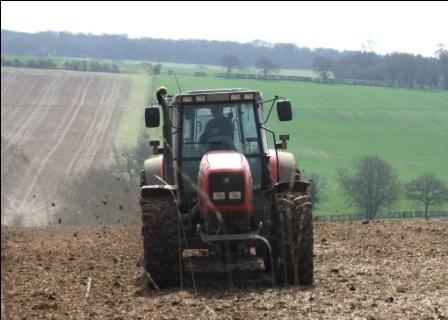
Emissions of nitrogen oxides – primarily from transport and diesel fuelled vehicles in particular – decreased by 9.2% in 2019 as vehicle NOx abatement technologies continue to improve. Emissions of non-methane volatile organic compounds also decreased slightly (1.1%) in 2019. These mostly arise from spirit production in the food and beverage industry, animal manures and fertilisers.
There was a 13.1% decrease in emissions of fine particulate matter due to lower heating requirements in 2019, while emissions of sulphur dioxide continued on a downward trend. Ireland is compliant for 2019 with the emissions ceilings under the NEC Directive for nitrogen oxides, non-methane volatile organic compounds and sulphur dioxide, whilst a ceiling for fine particulate matter doesn’t come into force until 2020.
MsSharon Finegan, (Director of the EPA’s Office of Environmental Sustainability) stated:
“Emissions of all air pollutants need to reduce further to protect air quality and health and achieve compliance with EU emissions limits. The National Clean Air Strategy, which is currently being finalised, needs to set out the proposed measures to reduce emissions. It is encouraging to see ammonia emissions beginning to be addressed at farm level. The assessment shows that Ireland can comply with the 2030 ammonia ceiling but this requires full implementation of measures in the Department of Agriculture’s AgClimatise strategy, and the National Air Pollution Control Programme. ”
Emissions of Sulphur dioxide, particulate matter, ammonia and nitrogen oxides are projected to be compliant with more challenging EU emission ceilings that will apply for 2030, provided planned measures are fully implemented.
Mr Stephen Treacy(EPA Senior Manager) stated:
“Ireland has seen big reductions in the emissions of many air pollutants over the last thirty years, including a 94 per cent fall in Sulphur dioxide emissions and an over 60 per cent drop in fine particulate matter emissions. Further emissions reductions are possible with the right measures in place. These measures are far reaching and require big changes in the Agriculture, Transport and Energy sectors including switching to cleaner fuels, technology improvements in slurry application and a significant uptake of electric vehicles. Further measures are required to reduce Non- Methane Volatile Organic Compounds emissions to meet the 2030 ceiling for this pollutant.”
These figures take account of the immediate short-term impact of COVID-19 in 2020 and in the first half of 2021.
The EPA’s new website provides targeted, timely, trusted information on Ireland’s environment.
Environment & You section highlights the key actions that can be taken by the people of Ireland to protect our environment. Key areas covered are waste, drinking water, radon, air quality and climate change.
Bins on ‘Thurles River Walk’ on last Saturday, May 29th, 2021
In the lead up to World Environment Day on June 5th next, the Environmental Protection Agency (EPA) launched its new website www.epa.ie. Providing accurate and trusted information, this new website makes it easier for people to become more involved in protecting our environment.
According to recent surveys on Irish people’s attitudes to the environment, 57% of people in Ireland are extremely worried about environmental issues and 80% of Irish people reported taking action to help the environment. Responding to this, the new Environment & You section features practical advice on what actions you can take in your home or in your community on areas such as waste, drinking water, radon, air quality and climate change.
Commenting on the launch, EPA Director General Ms Laura Burke said:
“The upcoming World Environment Day offers us all an opportunity to reflect on our impact on the environment. The EPA’s new Environment & You section is designed to highlight key actions that we can all take to become more eco-friendly and provides easy-to-read information on key environmental issues.
The development of a new EPA website was a strategic priority for the EPA. The aim is to provide accessible information and enable people to make informed choices for themselves, their families, their communities and their businesses.”
This new website is mobile-friendly and designed to provide high quality, targeted and timely environmental data, plus assessments and evidence to inform decision-making by citizens, businesses and Government. In this way the EPA continues to engage the public in the protection and improvement of the environment.
EPA Senior Communications Officer, Mr Ian Brunswick, said:
“Our homes, and the choices we make, influence our health and well-being, and that of our family and neighbours. Choices such as the fuel we use, the water we drink, how we manage our waste, the chemicals we use in our homes and gardens – these all impact our environment and our health. The new EPA website covers simple actions that individuals, groups, communities and businesses can take to both save money and improve their environment. Every topic section has key actions people can take, like Top Five Ways to Reduce Food Waste, or Take Action on Air Quality. These can assist people to improve their local environment and be a positive influence for a better future.”
Visit www.epa.ie to find out what simple actions you can take and small changes you can make to help protect your environment.
Further information: Contact Emily Williamson, EPA Media Relations Office: 053-91 70770 (24 hours) and media@epa.ie
My Waste outlines plans to put fun back into ‘Picnicking’, while taking 2.25 million single-use bottles & cups out of circulation this June Bank Holiday weekend.
More than 2.25 million single use plastic bottle and cups are used in Ireland each Bank Holiday Weekend. My Waste has some simple tips for enjoying the great outdoors and picnicking with less waste and stress this Summer.
Planning ahead for dining in the great outdoors this June bank holiday weekend will help reduce waste, keep millions of single use cups, bottles and cutlery from ending up in our waste system or as litter and reduce costs to local businesses, according to My Waste.
Each day in Ireland more than half a million single use coffee cups, and close to a quarter of a million single use plastic bottles are used – the equivalent of 2.25million single use cups and bottles over a bank holiday weekend.
My Waste, Ireland’s official guide to waste management, is appealing to day-trippers and holiday makers to reduce waste and leave no trace when picnicking and bench dining by following some simple tips:
1 – New is Not Always Best.
Exactly how much do you need for a picnic? Picnicking and bench dining are light hearted and fun events so don’t rush out to buy lots of new items for enjoying the great outdoors – use mis-matched plates and cutlery, old cushions and rugs etc. Lots of school supplies also work well for picnics such as lunch-boxes and water bottles.
2 – Reuse.
Bring your own cup/water bottle, cutlery & reusable straw etc…Using reusable cups and straws for take-away drinks and self-services not only helps to reduce this waste but also helps to reduce the cost to businesses. Tap water from home and topped up later for free at a refill.ie point will provide great hydration. A knife, fork & spoon wrapped in a cloth napkin fits in even the smallest bag.
3 – Portion Size Matters.
Be realistic about how much food will be eaten. Packing too much food is exhausting and a struggle to transport, and it is likely that it won’t all be used leading to food waste. Pack the food you like and know you will eat. Also – remember to leave room for ice-cream.
4 – Spice Up Your Life.
Have a favourite sauce or condiment? Use a small spice jar to transport a small quantity of your favourite spice or nominate one person on the picnic to bring the condiments and flavourings. If you must use sachets – only take what you need – nobody needs 20 sugars/ketchups – these will be wasted within minutes and they represent a big cost to business and to our environment.
5 – Bring it all Back Home.
Bring any waste you might have home and dispose of it in your domestic bin ensuring any food waste goes into the food waste bin and all recyclables are placed clean, dry and lose into the recycling bin.
Most of all – enjoy the Irish great outdoors this summer.
Speaking at the launch of the My Waste campaign, Minister of State Green Party Politician Mr Ossian Smyth said, “We can keep costs down for local businesses up and down the country this summer by simply bringing our own cups and containers and reducing the amount of single use items we use. Aside from the positive impact for our society and economy as we reopen, this will make a real difference to our local environment – we can prevent litter and plastic waste from single use items from polluting our natural beauty spots.”
Ms Pauline McDonogh, Waste Prevention Officer with the Southern Regional Waste Management Planning Office and My Waste spokesperson said, “By following My Waste’s simple tips holiday makers and day trippers can help protect Ireland’s beauty spots from litter and reduce unnecessary waste, all the while saving money, supporting small businesses and improving their outdoor experience.
Simply using reusable cups and bottles is a great way to minimise the amount of waste generated. It is worth noting that reusables were not banned during the Covid-19 pandemic. Government policy continues to promote contactless coffee and advocates for reusable options. There are also 1,500 free tap water points in businesses, public buildings and outdoor locations thanks to Refill Ireland”.
“After such a difficult year, it is important that we can enjoy all that Irish great outdoors have to offer. This can be achieved in a very stress-free way, by packing light or purchasing some edibles on route, using items we already have at home, and keeping that keep cup or water bottle close to hand”, she continued.
“I see the bad moon a-rising I see trouble on the way I see earthquakes and lightnin’ I see bad times today.”
Lyrics: John C. Fogerty.
[This song shown hereunder, back in the year 1969, evoked the civil discord, felt around the world, in relation to the then Vietnam War, without explicitly referring to that actual war].
Last evening, due to clear skies, Tipperary got more than a brief glimpse of this year’s supermoons; the Blood Moon.
The full moon entered our earth’s shadow yesterday, which made it appear much bigger and brighter in the heavens than is usual, however displaying a red tint.
A super blood moon, like last nights, occurs when the moon travels around our planet in an elliptical orbit, or an elongated circle, according to the space agency NASA.
Each month, the Moon passes through ‘perigee‘ (the point in the orbit of the moon at which it is nearest to the earths centre) and ‘apogee‘ (the point in the orbit of the moon or indeed any other object orbiting our earth that is at the greatest distance from the centre of our earth).
This website uses cookies to improve your experience. We'll assume you're ok with this, but you can opt-out if you wish.AcceptRead More
Privacy & Cookies Policy
Privacy Overview
This website uses cookies to improve your experience while you navigate through the website. Out of these, the cookies that are categorized as necessary are stored on your browser as they are essential for the working of basic functionalities of the website. We also use third-party cookies that help us analyze and understand how you use this website. These cookies will be stored in your browser only with your consent. You also have the option to opt-out of these cookies. But opting out of some of these cookies may affect your browsing experience.
Necessary cookies are absolutely essential for the website to function properly. This category only includes cookies that ensures basic functionalities and security features of the website. These cookies do not store any personal information.
Any cookies that may not be particularly necessary for the website to function and is used specifically to collect user personal data via analytics, ads, other embedded contents are termed as non-necessary cookies. It is mandatory to procure user consent prior to running these cookies on your website.








Recent Comments