|
|
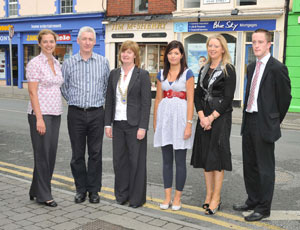 Members of Thurles Chamber Why We Should Shop Locally
Thurles Chamber launched their ‘Shop Local Campaign’ in recent weeks and erected signs on the main approach roads into the town to focus attention on the importance of shopping local. We all enjoy the fun and ease of shopping in Thurles but have we as consumers really stopped to think about the overall benefits to our town.
Protecting our local character and our reasonable current prosperity, while also retaining a supportive community.
Thurles is distinct and unlike any other town in the world. By choosing to support locally owned businesses, we immediately help maintain the town’s huge diversity and its very distinctive flavour. Many town centres in Ireland, now are beginning to look the same, with franchises and multi-nationals springing up. Independent shops on the other hand create a distinctive shopping experiences and stock new and different products. Most people can get to their local shops easily and this is especially important for our elderly, vulnerable and young people and those without any form of transport.
Local stores help to sustain vibrant, compact, walkable town centres which in turn are essential to reducing urban sprawl, unnecessary transport use, wild life habitat loss, and air and water pollution. Local stores in our town centres require comparatively little infrastructure and make more efficient use of public services relative to shopping malls. Shopping local protect and secure services with private, voluntary and public sector services clustering around our many shops. The loss of our main high street often corresponds to a reduction in these services, so as shops begin to disappear, so regretably also do the our hairdressers, our vets, our dentists, our doctors etc.
People don’t like losing shops and services in villages and small towns, but do not always equate this to how they spend their disposable incomes. Shops will only survive if customers spend locally, so if you want a vibrant town centre, where people can socialise as well as shop, businesses must also start thinking seriously about how to encourage people to shop locally. Local businesses are owned by people who live in our community, who are less likely to leave, and who are more invested in the community’s welfare and future prosperity. Keeping our shops open by buying locally helps the Thurles environs as a whole.
Locally owned businesses also build strong neighbourhoods by sustaining communities, linking neighbours, and by contributing more to Thurles causes. Local ownership means that important decisions are being made locally by people who live in the Thurles community and who themselves will feel the immediate impacts of their own decisions. Going local does not mean cutting off the outside world. It means nurturing locally owned businesses which use local resources sustainably. These businesses employ local workers at decent wages who serve, primarily, local consumers. It means becoming more self-sufficient and less dependant on foreign imports. Control will automatically now move from the boardrooms of distant and often greedy corporations and back into our own community where it must surely and indeed rightly belong.
Independent shops keep traditional Thurles products alive. They should respond more quickly to the needs of Thurles customers, stocking products to meet the changing populations need. They can also be more innovative, let us never forget, for example, that organic products were first developed not by the multinationals or franchises of this world, but by local individual and independent sole traders. Nationally, entrepreneurship fuels our economic innovation and prosperity, and serves as a key means for families to move out of the sphere of low-wage jobs.
Euros Spent Locally Have Three Times More Impact On Our Community
Your euro spent in locally owned businesses has three times the impact on your community as a Euro spent in multi-national chains. When shopping locally, you simultaneously create jobs, fund more town services through taxes, invest in neighbourhood improvement and promote community development. As stated, shops in our town’s centre create local employment and self-employment. These people in turn spend in our local economy. Evidence shows that for every £10 spent in an independent shop, £25 is generated for the local economy compared to only £14 spent in multinationals. Sole traders and independent stores are proportionally more generous in their support for local charities, schools and other community events. So supporting local shops means a financial reward both for you and our community.
Out of town shops have done an excellent job of convincing us all, that sole traders are expensive, but the evidence just isn’t there to back this up. If you add together travel, parking costs, fees and valuable time spent, all consumed in transporting larger items home, the overall cost is, in the vast majority of cases, much higher.
We talk a lot about exerting influence with our purchasing power or “voting with our purses”. It’s a fact that business respond to their customers, but your values and desires are much more influential to your local community business than ever to the franchises and multinationals.
We are all becoming increasingly aware of our CO2 emissions and our environmental impact problems. Local shops, often stock a high percentage of locally sourced goods and products, where long car, train and bus journeys aren’t required, thus helping reduce our carbon footprints. Locally grown produce can be on your table within hours of being harvested. In order to be ripe for you, shipped produce must be picked days before peak ripeness to allow for transit times. Buying local means freshness and by buying from our local farmers, freshness is guaranteed. When you purchase at locally owned businesses rather than nationally owned, more money is kept in the community because locally managed and owned businesses often purchase from other local suppliers, services and farms. Thomas Jefferson (1743 – 1826) 3rd President of the U S A (1801–1809), and principal author of the Declaration of Independence once stated:
“Cultivators of the earth are the most valuable citizens. They are the most vigorous, the most independent, the most virtuous, and they are tied to their country, and wedded to its liberty and interests by the most lasting bonds”.
A market place like Thurles containing hundreds of small businesses is the best way to ensure innovation and low prices over the long-term and Thurles has as its hinterland the richest producing farmland in europe.
The unique character of Thurles is defined to a large degree by the businesses that reside here, and this will continue to plays a huge and deciding factor in our overall satisfaction with where we live and the value of our home and property.
So it is in our own interests to Think Local – Shop Local – and Buy Local.
To quote Derek Edward Trotter (Del Boy) from Only Fools And Horses “You know it makes sence”.
This years Annual Open Day at the Cabragh Wetlands here in Thurles Co.Tipperary, is on Sunday next, August 30th. The open day will begin sharp at 1p.m.until 6p.m.
This year a wide variety of activities have been planned with all the family in mind, indeed there will be something on the day which will please both young and old.
Although the weather is promised fine, (bring the wellies and the umbrella anyway) staff at the wetland complex have taken out insurance in the form of two large marquees, one displaying local Arts and Crafts and the other will display renewable energy technologies available from local people.
Eanna ni Lamhna
 But the big attraction, for most of us, will be Éanna Ní Lámhna of RTE and An Taisce fame, who will be there to meet all visitors. Eanna can be expected to express her usual spellbinding, logical and frank views on all things green, as only Éanna can, while leading all visitors on a most informative and interesting walk through this magical natural and preserved area that is Cabragh Wetlands.
Incidentally, Éanna Ní Lámhna has, not surprisingly, just been short listed by the Reading Association of Ireland (RAI) for her book, Wild Dublin (O’Brien Press)
There will also be a children’s art competition. Children are encouraged to bring along a piece of their own art work, based on the theme ‘Nature’, in any medium and Eanna will judge their efforts on the day.
Living in the shadow of global warming and the era of the now extinct Panthera Tigris Celtica, as we do, time with one’s family is rare and this open day gives an ideal opportunity for all to relax, deflecting for a few hours, the drudgery that is daily life, while sharing in some of mother nature’s most intimate secrets.
Bring a few bob in the pocket, as raffle tickets are on sale costing €2 each. Yes, and there are some really great prizes to be won:-
1st Prize: Quality Digital Camera.
2nd Prize: Two nights B/B in The Lake Hotel, Killarney.
3rd Prize: A €100 Shopping voucher.
Note your Diary or Fridge Door Folks:
Date: Sunday next August 30th.
Time: 1pm – 6pm.
Venue: Cabragh Wetlands Thurles.
I promise, you’ll be glad you came.
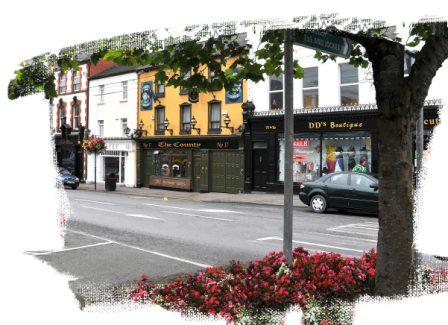 Thurles Town improves its standing in the IBAL (Irish Business Against Litter) league.
Just one of the three County Tipperary towns taking part in the Irish Business Against Litter League has achieved “litter free” status.
Thurles is ranked 30th of the 60 towns and cities in the IBAL League and has improved from its “moderately littered” ranking at the end of 2008.
The first round report from IBAL for this year rates Clonmel as “moderately littered” while Nenagh has fallen to “littered” status. Latter towns both lost their ‘litter free’ status from last year, finishing in 43rd and 49th respectively.
Litter levels throughout the country have improved once again with over 68% of Irish towns and cities now classed as “litter free” according to the latest litter survey by Irish Business Against Litter (IBAL). However, the group is warning that many areas are likely to suffer this summer with the large-scale reduction of weekend cleaning due to budget cuts. A further concern is that cities’ are not doing as well as the towns as the peak tourist season begins.
The survey of 60 towns and cities, conducted by An Taisce on behalf of IBAL, revealed Wexford to be Ireland’s cleanest town, ahead of Ennis. The number of “Litter Free” areas nationwide hit a record high of 41. Athlone and Mallow were the country’s sole litter black spots, with Arklow ‘seriously littered’.
Wexford is Ireland’s cleanest town with Athlone and Mallow the only ‘Litter Blackspots’ in the league.
Irish Business Against Litter (IBAL) was set up in 1996 as an alliance of companies who believe that litter has a significant impact on our economic well-being. The main sources of our prosperity – tourism, Foreign Direct Investment and our food industries – all depend on an image of Ireland as a clean and green island. We are now a high-cost destination for visitors, who deserve first-class standards of cleanliness.
IBAL believes that it is the job of Local Government to solve our litter problem. It is through enforcement of litter laws – not public information campaigns – that we will rid our country of this scourge.
Latest results show 36 out of 55 towns are Clean to European Norms compared to only 2 when the survey began in 2002.
 North Tipperary‘s 2009 allocation for local and regional road maintenance has been slashed by more than €4million. Deputy Noel Coonan has expressed deep frustration at this savage cut which represents a quarter of the 2009 grant allocation. Following the April Supplementary Budget, revised allocations were notified to local authorities and the actual figure for North Tipperary has just been revealed.
North Tipperary County Council’s allocation was dramatically cut by €3,731,000. Nenagh Town Council and Thurles Town Council both witnessed a 40% drop from €287,000,000 to €177,000. Templemore Town Council also lost 40% or €78,000 of its allocation. This amounts to a total of €4,029,000.
Deputy Coonan stated:
“The improvement and maintenance of regional and local roads is determined by Department for Transport resources and yet again the Government is putting lives at risk by another unfair and unsafe budgetary constraint. We needed this money to carry out vital works such as calming measures, road alleviations, flashing lights at schools, bridge improvements and patching of potholes. This move will inevitably cost jobs, a measure we can ill afford in North Tipperary as the Live Register grows steadily. Last February Minister for Transport Noel Dempsey TD unveiled a huge programme to repair Ireland’s network of local and regional roads. At the time he said: “The Programme involves projects in all areas that support employment and economic activity”. Now the Transport Minister has done a huge u-turn to the detriment of North Tipperary roads, many of which have been very badly battered over the Winter. This deals a dangerous blow to road safety across the constituency. The programme was desperately needed to eradicated numerous accident black spots and possibly saved lives as a consequence. I’m extremely disappointed to see these cuts come into place because I know this is of great concern to those living in rural Ireland who are travelling unsafe and uneven roads infested with craters everyday.”
Local and regional roads account for 94% of the Irish network. They carry about 60% of all traffic and 43% of all goods traffic.
 It’s not easy to become green in North Tipperary. Residents of Ireland’s first eco-village in Cloughjordan, Co Tipperary, described by the once native poet and patriot Thomas McDonagh, as a place “in calm of middle country“, have been told by the Tipp NR council they must now pay €160,000 to meet social and affordable housing requirements.
Being a not-for-profit formed Co-Operative, the residents had expected to be exempt from a provision that required land developers to hand over 20% of new estates for affordable housing or make a hefty financial contribution instead.
Eco – villages are urban or rural communities of people who strive to integrate a supportive social environment with a low impact way of life. To achieve this, they integrate various aspects of ecological design, permaculture, ecological building, green production, alternative energy, community building practices, and much more.
In this Cloughjordan planned “Eco Village” ninety per cent of waste will be recycled and each house will be built fully from environmentally friendly materials. There will be an orchard, a wild life area, an organic farm, community buildings, a broadband communications network and 60% of heating will come from solar energy.
Becoming a member and buying a site in this development offers the purchaser an opportunity to build their home in a unique, sustainable community, which is committed to ecological and social quality of life.
North Tipperary Council have ruled, however, that Ireland’s first sustainable village falls within the remit of the planning and development act.
Miriam Kelly, a spokesperson for The Eco Village said:
“Our vision was to create a truly social and affordable community, so it’s disappointing that we’re being treated by the Council as speculative developers.”
Paddy Heffernan director of housing for the North Tipperary Co Council said:
“We welcome this scheme, but there is no exemption in the act for this kind of development. Our hands are tied.”
Can someone please untie North Tipperary Co.Council’s hands, thus allowing them to make logical decisions on behalf of those who elected them into office?
Since these representatives are unable to make decisions on behalf of their electorate why not cancel the June county and local elections? We as a country can no longer afford public representatives manipulated by a puppeteer.
It is very appropriate then that a screening of the film The Age of Stupid, showing how we accelerate community responses to the economic downturn, resource depletion and climate change, can be viewed in Cloughjordan on Saturday 25th April next at 8.00pm. No doubt vote seeking public representatives will be in attendance with flowers in their hair, displaying their love of all things environmental.
The Age of Stupid is the new movie from Director Franny Armstrong (McLibel) and producer John Battsek (One Day In September). Oscar-nominated Pete Postlethwaite stars as a man living alone in the devastated future world of 2055, looking at old footage from 2008 and asking: why didn’t we stop climate change when we had the chance? It was first released in UK cinemas on 20th March 2009 and should be made compulsory viewing for all.
|
Support Us Help keep Thurles.info online by donating below. Thank you.
Total Donated 2026: €300.00
Thank You!
Daily Thurles Mass Livestream
|



Recent Comments