Lyrics and Vocals: Grammy Lifetime Achievement Award, American folk singer-songwriter Tom Paxton whose career spans more than sixty years.
Folk SingerTom Paxton
Tom Paxton wrote “Buy a Gun for Your Son” in the mid-1960s at the height of the Vietnam War era. He performed it on Pete Seeger’s Rainbow Quest in 1965. It is not a song in praise of guns or war; it is pure satire, using cheerful, almost advertising-like language to expose how casually children can be taught to admire violence. Paxton released it on Ain’t That News with Elektra, and more than half a century later its bite is still sharp. So before you listen to it, it is worth remembering, that the joke is bitter, the target is serious, and the question underneath it is still with us and asks what exactly are we teaching the next generation to value?
Buy A Gun For Your Son.
Buy A Gun For Your Son.
Hallelujah, Dads and Mommies, Cowboys, rebels, Yanks and commies, Buy yourselves some real red-blooded fun. If you want to make the grade, You’ve got to have a hand grenade, And a fully automatic G.I. gun.
Chorus. So buy a gun for your son right away, sir. Shake his hand like a man and let him play, sir. Let his little mind expand, place a weapon in his hand, For the skills he learns today will someday pay, sir.
Pound that kid into submission, ‘Till he’s mastered nuclear fission, Buy him plastic warheads by the score. Once he’s got the taste of blood, He’s gonna sneak up on his buddies, Starting his own thermo-nuclear war.
RepeatChorus.
Buy him khakis and fatigues, And sign him up in little leagues. Give him calisthenics as a rule, Once you’ve banished fear and dread, Then pat his seven year-old head, And send him off to military school.
RepeatChorus.
Once he’s grown to be a man, He might get tired of blasting Granny, Then you’ll see a crisis coming on. Don’t get worried, don’t get nervous, Send that kid into the service, Let him rise into the Pentagon.
At the Pentagon he’ll rise, The President he will advise, His reputation growing all the while. With your picture on the wall, He’ll get that long-awaited call, And press the firing buttons with a smile.
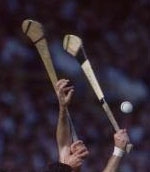
Limerick produced a ruthless attacking display at the TUS Gaelic Grounds, sweeping Tipperary aside on a 5-27 to 0-25 scoreline to secure their place in the Munster senior hurling final against Cork on Leeside on June 7.
A crowd of 29,069 paid into the Ennis Road venue, where John Kiely’s side once again underlined the strength of their round-robin form on home soil. It was Limerick’s third Championship win in succession and it sends them into an eighth consecutive Munster decider, extending their remarkable run of provincial final appearances since 2019.
The tone was set almost immediately. Aaron Gillane struck the opening goal inside the first 15 seconds, finding space straight from the throw-in before driving a low finish to the net. From there, Limerick rarely looked in danger of being reeled in.
Aidan O’Connor added Limerick’s second goal in unusual fashion when his low delivery from a 65 travelled all the way through a crowded goalmouth and ended up in the net. With Gillane also claiming another green flag later in the contest, and O’Connor finishing with a brace of his own, the Limerick full-forward line carried a constant threat.
Kiely had restored Cian Lynch to the starting team after his influential showing against Waterford, while Mike Casey was also handed a start. Shane O’Brien and Barry Nash were named among the substitutes, but Limerick’s reshuffle did little to interrupt their rhythm.
All six starting forwards were on target before half-time, with Gearóid Hegarty, Tom Morrissey, Cathal O’Neill, Lynch, Gillane and O’Connor all contributing as the home side built a commanding platform. Casey also chipped in from defence as Limerick moved 2-6 (12pts) to 0-4 ahead during the opening half.
Tipperary, despite having surrendered their All-Ireland crown eight days earlier, did offer resistance before the break. Stefan Tobin impressed with his movement and accuracy, while Darragh McCarthy, Noel McGrath, Jake Morris and Eoghan Connolly helped Liam Cahill’s side stay within range.
A run of Tipperary scores briefly brought life to the travelling support, with Tobin proving a willing outlet and McCarthy reliable from placed balls. Connolly landed a long-range effort late in the half, but Diarmaid Byrnes responded with a free of his own to leave Limerick 2-12 (18pts) to 0-14 in front at the interval.
The second half, however, belonged almost entirely to the Treaty. Limerick tightened their grip around the middle third and began to punish every gap in the Tipperary defence.
Byrnes dispatched a penalty after Kyle Hayes was fouled by Connolly, a moment that also resulted in a black card for the Tipperary player. During that spell, O’Connor struck again before Gillane completed his double, turning a competitive-looking contest into a heavy defeat for the Premier County.
Late points from Tobin, Connolly and substitute Paddy McCormack added to Tipperary’s total, but they did little to alter the complexion of the afternoon. The result leaves Tipperary fifth in the Munster table, below Waterford on scoring difference, while their wait for a Championship win over Limerick continues.
For Limerick, this was a statement performance: five goals, a 17 point winning margin, and another Munster final date secured.
The music world has lost yet another legendary voice. Dennis Locorriere, the longtime frontman and founding member of Dr. Hook, has passed away at the age of 76, following a battle with kidney disease.
Late Dennis Locorriere R.I.P.
Before the huge chart success and unforgettable singalong hits, Dennis Locorriere gave Dr. Hook one of their most heartfelt performances with ‘Only Sixteen‘; a tender remake of the classic Sam Cooke song that became a worldwide hit for the band in the mid-70s. With Dennis’s unmistakable voice full of warmth, emotion, and honesty, the song captured the innocence and heartbreak of young love in a way only he could. Decades later, it remains one of the defining songs of Dr. Hook’s legacy and a reminder of the timeless talent Dennis brought to every performance.
Best known for other timeless hits including ‘When You’re in Love with a Beautiful Woman‘, ‘Sharing the Night Together‘, and ‘Sylvia’s Mother‘, Dennis helped define the sound of 1970s soft rock and country-pop, alongside bandmate the late Ray Sawyer.
According to his management, Mr Locorriere died peacefully yesterday May 16th 2026, surrounded by family and loved ones, after facing his illness with “strength, dignity, and resilience.”
Born in Union City, Mr Locorriere enjoyed a career that spanned almost six decades, recording more than 18 albums and continuing to perform long after Dr. Hook’s chart success. He had also made the UK his home for more than two decades. Though his voice may now be silent, the songs he gave the world will continue to live on for many generations.
If the Roads Around Cashel Fall Silent, Best Turn for Home.
If you find yourself out late around the town of Cashel, Co. Tipperary, take a bit of advice from the old people; go home before the road goes quiet.
Tourists especially beware, because according to the folklore of the Galtee country, there are worse things abroad at night than a Garda checkpoint or a missed Fish & Chipper.
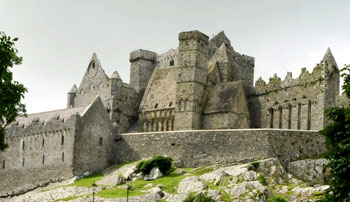
Rock of Cashel, Co. Tipperary.
Long before horror films discovered the headless horseman, Ireland already had the Dullahan, latter a charming individual who travelled the roads carrying his own head under his arm and announcing death wherever he stopped. No door lock kept him out. No gate latch held him back. The only known deterrent was gold, which feels very Irish altogether. Even supernatural evil respects inflation.
The most entertaining version of the tale comes from an old story called “The Good Woman”, collected by Thomas Crofton Croker in the nineteenth century. The story is set around the Galtee Mountains and Cashel, where a horse dealer named Larry Dodd makes the sort of decision that proves Irish folklore exists mainly to warn men against acting the maggot after dark.
Larry is riding home from Cashel one June evening after buying a horse. He’s feeling pleased with himself, no doubt after “just the one pint” that became several. Along the road he meets a mysterious cloaked woman walking alone at twilight.
Now, any sensible person in rural Ireland knows there are only three explanations for a woman silently appearing on a lonely road after sunset; a banshee, a fairy, trouble. Larry, unfortunately, ignores centuries of accumulated wisdom and offers her a lift. She says nothing. Climbs up behind him. Still says nothing, which, to be fair, should have been the first warning sign to any member of the male species.
Eventually the horse stops near the ruins of an old church. The woman slips down soundlessly and glides away across the graveyard. Larry, displaying the sort of judgement that has doomed Irish men since mythology began, chases after her looking for a kiss and catches her, only to discover she has no head.
At this point the story becomes considerably less romantic. Larry faints dead away and wakes among a gathering of Dullahans; headless ladies and gentlemen, soldiers, priests, musicians and skeletons tossing skulls around like hurling balls. Naturally enough, someone offers him a drink. Well this is still Ireland after all.
Things go poorly from there but eventually he escapes with his life, though not with his dignity, and his horse disappears entirely which may be the most authentically Irish ending imaginable. Survive supernatural terror if you like, but someone is still stealing the livestock.
So if you’re around Cashel late at night and happen to see a silent figure on the roadside, perhaps keep driving. Do not offer lifts. Do not flirt. And, absolutely do not follow mysterious women into ruined churches.
The old stories survive for a reason, and mainly because somebody ignored obvious warning signs and succeeded to live just long enough to warn the rest of us.
For many viewers, RTÉ no longer looks like an independent broadcaster but a taxpayer-supported institution protected by Government funding, despite repeated controversies.
After receiving a €725 million taxpayer-funded rescue package, RTÉ now faces growing criticism that it has become increasingly dependent on the State while asking the public to continue funding both its operations and charitable initiatives.
RTÉ is facing mounting criticism after launching a tender process that could see up to €855,000 spent on outside consultants to manage and distribute Late Late Toy Show Appeal funds, despite the broadcaster already benefiting from a massive taxpayer-funded rescue package worth €725 million over three years.
The national broadcaster is seeking a consultancy firm to oversee grant assessments, compliance, audits, reporting, PR support and fund distribution linked to the Toy Show Appeal, which has raised more than €31 million since 2020. Crucially, the tender documents confirm that the consultancy costs “will be deducted from the Fund” itself — meaning public donations intended for children’s charities will partly finance administration and consultancy fees.
The move is likely to anger many taxpayers and viewers who have already watched RTÉ receive extraordinary levels of state support following the broadcaster’s financial and governance scandals. In July 2024, the Government approved a controversial €725 million public funding package for RTÉ covering the years 2025 to 2027, effectively guaranteeing the broadcaster’s future despite collapsing public trust after the Ryan Tubridy payment controversy.
That bailout followed an earlier emergency rescue package worth €56 million approved in late 2023.
Now, critics are asking why an organisation already heavily dependent on taxpayers and public donations requires nearly another €1 million for consultants to administer a charity fund.
RTÉ insists the appeal operates efficiently, pointing to figures claiming that 96.7% of all Toy Show Appeal money raised has gone directly to frontline charities, with operating costs accounting for 3.3% of funds raised over five years. But opponents argue that almost €900,000 in administration costs remains difficult to justify given the emotional public fundraising campaigns surrounding the annual Toy Show.
The controversy comes as RTÉ also faces backlash over its politically charged decision to boycott the 2026 Eurovision Song Contest over Israel’s participation. Ireland is among several countries refusing to participate or broadcast the event this year.
The decision is expected to drive large Irish audiences toward rival UK coverage on BBC One, over the coming nights, with BBC broadcasts now becoming the default viewing option for many Eurovision fans in Ireland.
While millions across Europe tune into Eurovision from Vienna this week, RTÉ will instead stupidly air alternative programming including reruns such as ‘Father Ted’ during the final.
For many critics, the optics are increasingly damaging; a broadcaster reliant on hundreds of millions in taxpayer support, deducting consultancy fees from children’s charity donations, while simultaneously walking away from one of Europe’s biggest television events and effectively handing audiences to the BBC.
This website uses cookies to improve your experience. We'll assume you're ok with this, but you can opt-out if you wish.AcceptRead More
Privacy & Cookies Policy
Privacy Overview
This website uses cookies to improve your experience while you navigate through the website. Out of these, the cookies that are categorized as necessary are stored on your browser as they are essential for the working of basic functionalities of the website. We also use third-party cookies that help us analyze and understand how you use this website. These cookies will be stored in your browser only with your consent. You also have the option to opt-out of these cookies. But opting out of some of these cookies may affect your browsing experience.
Necessary cookies are absolutely essential for the website to function properly. This category only includes cookies that ensures basic functionalities and security features of the website. These cookies do not store any personal information.
Any cookies that may not be particularly necessary for the website to function and is used specifically to collect user personal data via analytics, ads, other embedded contents are termed as non-necessary cookies. It is mandatory to procure user consent prior to running these cookies on your website.






Recent Comments