|
|
Deputy Noel Coonan has warmly greeted the long-awaited addition of one temporary member of staff to North Tipperary’s Money Advice and Budgeting Service (MABS). It was revealed today, that a total of 19 offices nationwide are to benefit from extra staff to help deal with a backlog of applications for assistance. With a 35% to 40% increase in the number of new clients seen this year by MABS in the constituency, the Fine Gael TD is also outlining the urgent need for an office to be located in Roscrea, Co.Tipperary.
The Deputy explained that North Tipperary has two MABS offices while South Tipperary, a constituency that is smaller and more compact, has a total of three offices.
 Deputy Coonan stated: Deputy Coonan stated:
“While I welcome the extra member of staff allocated to North Tipperary, I believe we need to go a step further and set up a clinic in Roscrea to serve that vast rural midlands area. The area is not serviced by an office in nearby Birr either and Tullamore is the only office in County Offaly. From a strategic point of view, there is a pressing need for an office in Roscrea. MABS staff in the Nenagh and Thurles offices provide an excellent service to people in financial difficulty but their workload has increased phenomenally over the last year. They have been hoping for additional staff for a long time and have now been allocated a part-time money advisor.
However, the Minister for Social and Family Affairs needs to spread the net and establish a Roscrea office. Clients who attend MABS offices in North Tipperary stem from all backgrounds. It’s no longer just those living in disadvantaged circumstances that are looking for financial assistance. Clients can include those who own small businesses, those on social welfare and those in trouble with mortgage repayments, hire purchase on cars or credit cards”.
Almost 10,000 new clients were assisted by MABS staff, nationally, in the first six months of this year, with an average debt of over €15,000. Those seeking help from MABS owe a total of almost €150 million and nearly two thirds of this is owed to banks and other financial institutions. People are now desperate for help with their finances as unemployment reaches 12% and the Government provides no long-term national strategy to create and protect jobs.
At the moment North Tipperary has two full-time money advisers and two part time administrators.
MABS aids people who are experiencing financial difficulties, having problems paying off debts and in need of advice on best money management.
Meanwhile, the number of people signing on the Live Register in County Tipperary has risen by over 7,000 in the last 12 months. Latest figures from the Central Statistics Office shows that both Nenagh and Thurles experienced an increase of 174 in the last month while Clonmel recorded an increase of 170.
MABS operate a helpline (1890-283438) from Monday to Friday.
 Some of Ireland’s leading non-governmental organisations (NGO’s) and trade unions have formed a joint initiative to launch a new campaign called “The Poor Can’t Pay”. This coalition aims to mobilise all out active opposition to proposed cuts to basic social welfare payments and possible proposed cuts to the minimum wage. Some of Ireland’s leading non-governmental organisations (NGO’s) and trade unions have formed a joint initiative to launch a new campaign called “The Poor Can’t Pay”. This coalition aims to mobilise all out active opposition to proposed cuts to basic social welfare payments and possible proposed cuts to the minimum wage.
The Poor Can’t Pay initiative claim that people earning the minimum wage or who presently living on social welfare had no hand act or part in causing Ireland’s economic crisis and should therefore not be forced to pay the price for Ireland’s current recession.
The campaign was launched jointly by Age Action, Barnardos, CORI Justice, EAPN, Focus Ireland, INOU, Mandate, National Women’s Council of Ireland, SIPTU and St. Vincent de Paul (SVP).
Organisers are now calling on other NGO’s and trade unions to sign up to further add weight to the campaign.
The Poor Can’t Pay said it is now vital for the present Government to live up to its promise to protect the most vulnerable in society from the impact of a recession which is not of their making.
John Mark McCafferty of SVP speaking on behalf of the Poor Can’t Pay campaign said:
“We hear all the time from many commentators who say it is inevitable that basic social welfare payments and the minimum wage must be cut. This campaign aims to highlight that most people in Ireland do not accept this view and they actually believe that we must do all we can to protect the most vulnerable people in our society. The reality is that cuts to welfare payments will mean people going without food, essential healthcare, children getting no presents at Christmas and pensioners wondering if they can afford to keep the heat on. We all need to ask ourselves as a nation, are these the people who should be forced to pay the cost of the economic crisis? It’s important to stress that the Christmas welfare payment is not a “bonus” but rather a key part of the income of the poorest households. If it the Government does not make this payment it represents a real cut in income to the families and single people who can least afford it, adding to their hardships.”
Fine Gael TD, Deputy Noel Coonan has strongly criticised recommendations from An Bord Snip’s report which he claims will have a huge future impact on the everyday lives of the people of North Tipperary, if implemented.
Speaking to Thurles.Info today Deputy Coonan stated:
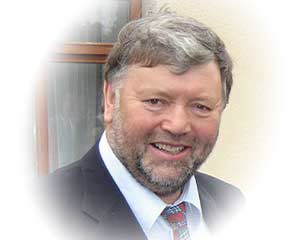 “The McCarthy report has begun an unprecedented attack on rural Ireland and in particular on the fabric of life in the midlands and County Tipperary. The proposals to close the Tipperary Institute in Thurles and Clonmel together with the drastic cuts proposed in Agriculture and Environmental Schemes strike at the very heart of the social, and economic well being of the Premier County and if implemented will guarantee untold hardship and pain on the people of Tipperary. “The McCarthy report has begun an unprecedented attack on rural Ireland and in particular on the fabric of life in the midlands and County Tipperary. The proposals to close the Tipperary Institute in Thurles and Clonmel together with the drastic cuts proposed in Agriculture and Environmental Schemes strike at the very heart of the social, and economic well being of the Premier County and if implemented will guarantee untold hardship and pain on the people of Tipperary.
The Tipperary Institute is the rock on which future development of our County depends and as such deserves the support of all elected representatives both in Government and Opposition. Fine Gael has a strong record in relation to the Tipperary Institute. It was Fine Gael in Government who purchased this site under the leadership of Garreth Fitzgerald and the Institute was made a reality under John Bruton as Taoiseach of a Fine Gael led Government. Fine Gael will continue to support the Tipperary Institute.
This attack on our county is not solely confined to McCarthy. The Present Government supported by Fianna Fail, Greens and Independents have agreed to the closure of the District Veterinary Office in Nenagh (despite all the Ri Ra over decentralization). They have implemented a ban on recruitment of students to An Garda Siochanna College, Templemore with the subsequent loss of jobs both directly and indirectly. This is a huge blow to the local economy of Mid Tipperary. These desperate decisions by Fianna Fail and their backers in Government, together with the sheer volume of recommendation in the McCarthy Report highlights the total lack of efficiency and value for money at the heart of Government for the last seven years. The question must now be asked; are the people responsible for this mess, capable of leading us into an economic recovery?”
The Government’s influential cost-cutting body dubbed “An Bord Snip Nua”, charged with finding billions in savings across all Government departments and the public sector, made its report public today.
The published report however brought what has been described as cataclysmic news for the Co. Tipperary towns of Thurles and Clonmel, with the recommendation that Tipperary Institute should be abolished as part of proposed rationalisation measures.
Vol.2. Page 69 of the report reads as follows:
D.2 Rationalisation of third level institutions
At present, Ireland has 7 universities, 14 institutes of technology and over 20 other third level educational institutions feeding into the CAO, many of which are comparatively small by international standards. Given the size and population of the country, there is scope to reduce the number of third level institutions. An Bord Snip now proposes the following rationalisation measures:
1. Abolition of the Tipperary Rural and Business Development Institute (TRBDI)
 The case for the continued existence of TRBDI is weak. The institute is located near two other IoT’s and has a high complement of staff (100) compared to the number of full-time students (338). The Group recommends that the institution be closed with existing students re-assigned to nearby IoT’s. The campus should be disposed of for the benefit of the Exchequer. The case for the continued existence of TRBDI is weak. The institute is located near two other IoT’s and has a high complement of staff (100) compared to the number of full-time students (338). The Group recommends that the institution be closed with existing students re-assigned to nearby IoT’s. The campus should be disposed of for the benefit of the Exchequer.
The present development work of the Tipperary Institute includes promoting sustainable social and economic development through providing assistance, advice, mentoring, consultancy, research and training services to communities and businesses in the region, throughout Ireland, and across Europe. Areas of work include community planning and development, business planning and development, environmental management, software development, information and communications technology development and applications, personal development, public sector management, training and research.
Local Independent TD, Deputy Michael Lowry, who presently supports the present Coalition Government, stressed that the report is only a recommendation and not a final political decision.
The Bord, whose official title is the “Special Group on Public Service Numbers and Expenditure Programmes” (SGPSNEP), was chaired by economist Colm McCarthy, assisted by liaison officer Donal McNally, who is Second Secretary General at the Department of Finance. The other members of the Bord include Maurice O’Connell, former Governor of the Central Bank, WilliamSlattery, MD of State Street International, Mary Walsh, a former partner at PriceWaterhouseCoopers, Pat McLaughlin, former Deputy CEO of the Health Services Executive supported by Dept. of Finance officials.
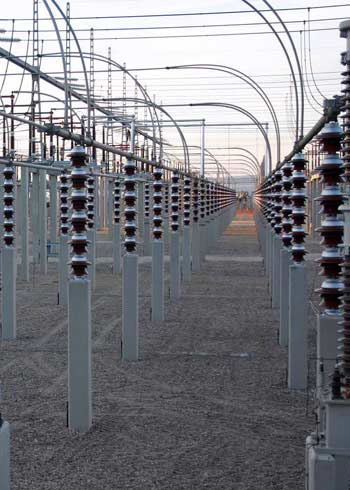 A electricity generating plant planned for Cahir Co.Tipperary has finally got the green light. A electricity generating plant planned for Cahir Co.Tipperary has finally got the green light.
An Bord Pleanála has ruled in favour of plans for a gas powered electricity generating plant near Cahir.
Mountside Properties Ltd previously had been granted permission by South Tipperary County Council to develop the project at Kilcommon, Cahir, Co.Tipperary at the end of January 2008, despite strong local opposition. Subsequently, six further appeals against the project were lodged with An Bord Pleanala.
A joint venture is expected to be carried out through Greener Peaking Ltd, and Mountside Properties interest in the joint venture is valued at some €40m.
Mountside is best known as the company which won the tender to build a €300m, 400mw gas-fired power station in Tynagh, Co Galway. It later sold down its shareholding, retaining a 20pc stake, while the remainder is owned by GE Energy Financial Services and Gama Construction.
The new company has application for planning permission for a number of small power stations in including Cahir, Co Tipperary, Kilkenny City and Claremorris, Co Mayo. In Cahir it is expected this project will now be fast-tracked.
The State Planning Appeals Board has now decided to reject their own inspectors recommendation, which was to refuse permission, and has given the green light for the development of the power plant subject to certain revised conditions.
|
Support Us Help keep Thurles.info online by donating below. Thank you.
Total Donated 2026: €300.00
Thank You!
Daily Thurles Mass Livestream
|



Recent Comments