|
|
 Five additional members of staff are to be recruited to the Thurles Garda Central Vetting Unit (GCVU) to manage approximately 65,000 vetting applications currently awaiting processing. Five additional members of staff are to be recruited to the Thurles Garda Central Vetting Unit (GCVU) to manage approximately 65,000 vetting applications currently awaiting processing.
The average processing time for vetting applications received at the GCVU is in the region of 10 to 12 weeks, given that demand is particularly high at present.
The GCVU has managed a substantial increase over recent years in the numbers of vetting applications it has receives; 187,864 in 2007, 218,404 in 2008 and 246,194 in 2009.
The GCVU provides employment vetting for a large number of organisations in Ireland, which employ persons in a full-time, part-time, voluntary or training capacity to positions where they would have substantial, unsupervised access to children and/or vulnerable adults.
An additional five persons were recently assigned to the Vetting Unit, bringing the total to 83 personnel currently assigned there, including six Gardaí and 77 Garda civilian personnel. The further five additional personnel are being recruited on a temporary basis and it is intended that these persons will commence work shortly.
Overall, this represents a very significant increase in the level of personnel assigned to the unit, which stood at only 13 before current system of Garda vetting began in 2005.
Are you interested in becoming a member of An Garda Siochana?
According to the Garda website, a Garda Trainee recruitment campaign will now commence during 2010.
To register your interest in receiving notification of the forthcoming campaign log on to www.publicjobs.ie.
About 100 trainees are to be recruited in the first Garda enrolment since the imposition of the jobs embargo in 2009.
Earlier this year at the Garda Training College here in Templemore Co.Tipperary, Minister for Justice Dermot Ahern indicated that a new recruitment campaign would be implemented in late 2010.
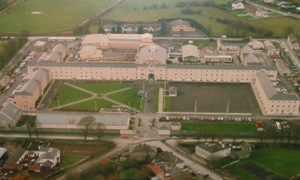 Templemore Garda Training College We can now confirm that the Minister for Finance Brian Lenihan had given approved funding for new Garda recruitment.
This campaign will establish a further panel of approved candidates who will be available for ongoing recruitment into the Garda College as trainees.
While headline grabbing local politicians are busy claiming personal credits, through use of Mail, Twitter and Facebook, regarding Dermot Ahern’s announcement, we advise you to please beware.
There are already 300 people on a panel waiting to be called and these have already been put through the recruitment process prior to the last embargo being implemented, and these persons are ready to begin training with immediate effect.
It is unlikely therefore that this new recruitment is excluding those already on the panel and if it includes those on the panel, it will only stretch out, over a longer period, the waiting time for those persons already elected to the panel.
In February this year following early retirement and natural wastage, only 170 Gardaí were promoted as follows:- 120 to Sergeant Level, 28 to Inspectors Level, 14 to Superintendent Level and 8 to Chief Superintendent Level.
But do not let us put you off, best advice for those interested in applying for posts within the Gardaí is to create a profile now at http://www.publicjobs.ie/publicjobs/en/campaign/testing.do to receive an e-mail job alert, inviting you to apply for any available posts.
Update: Click Here
A new €3.6 million building was opened this week in the Tipperary Technology Park in Thurles.
This Park is owned and managed by Shannon Development and is promoted in co-operation with IDA Ireland, Thurles Chamber, Thurles Town Council, Tipperary North County Council, Thurles Marketing Group and the private sector. and the private sector.
The new building, ‘Innovation Works 3’, is now the third building in this Technology Park and brings the total investment by Shannon Development in this parkland venture to €7.4 million.
This new building comprises a 21,500 sq/ft two-storey office building and associated site works including an increase to the existing car parking area, bringing a total industrial space in the Park to now over 45,000sq/ft.
Shannon Development has now 57 Business Technology Parks and Industrial Estates right across the Shannon Region which includes counties Clare, North Kerry, Limerick, South Offaly and North Tipperary. These parks feature turn key state of the art Office Accommodation, Distribution Warehousing and Incubation Spaces, to meet the demands of small or large scale businesses with either local or international interests.
Tipperary Technology Park is home to a number of investment projects and it has a core facility for incubating and growing new Irish technology companies. Present clients range from those operating in the cutting edge sphere of nano-biomaterials, to clients in digital cinema, to the international services sector and highlight Thurles as a superb location for entrepreneurship, in both tourism and business.
Businesses requiring further information on Tipperary Technology Park should contact Mr Brian Keating, Development Manager, at Shannon Development Tipperary Technology Park, Thurles, Tel: 086-2843803 or 0504-29300, or email: keatingb@shannondevelopment.ie
The Minister for Enterprise, Trade and Innovation, Mr Batt O’Keeffe TD, officially opened the building, against a backdrop of over 7,125 people currently unemployed in North Tipperary and with 196 further persons having just joined the dole queue in May of this year.
The Irish national overall unemployment figures now stand at over 13.7%, registering the highest number of unemployed people ever, in the history of the Irish State, with 439,100 now in receipt of support.
 Bord Gáis is ready and willing to introduce natural gas to major North Tipperary towns, but a lack of Government commitment is hindering this initiative. Bord Gáis is ready and willing to introduce natural gas to major North Tipperary towns, but a lack of Government commitment is hindering this initiative.
On Wednesday last Bord Gáis Chief Executive, Mr John Mullins, addressed the Oireachtas Communications Committee, of which North Tipperary Fine Gael TD Deputy Noel Coonan is a member.
Responding to Committee’s questions on Wednesday morning last, Mr John Mullins stated:
“We have identified 73 towns where we could introduce natural gas but only four were successful. At the end of the day, we do not make the decision on what towns get connected. Only four out of 73 towns in our most recent study got connected and it is fair to say Thurles was not far off the mark. I have no problem in laying pipes in North Tipperary and providing cheaper energy than current existing energy arrangements. The CER take our submissions and decide what we can and cannot do. I have no difficulty in bringing gas to towns if the body politic want that to happen. We did put our best foot forward.”
Following the meeting Thurles.Info spoke to Deputy Noel Coonan, who stated:
“I asked John Mullins whose fault is it that Thurles, Nenagh, Templemore and Roscrea are still without natural gas and the CEO went out of his way to confirm that Bord Gáis want to lay pipes in these towns but the Government and Commission for Energy Regulation (CER) have the final say in these matter. Bord Gáis has the engineers, the staff, the resources and the willpower needed to push ahead. Of course they are eager to do so as it would mean more customers for them but there is no financial commitment or Government support. Natural gas recently came to Tipperary Town and I question if this was influenced by having a Government Deputy residing in the constituency. We need to bring gas to these North Tipperary locations, to lower the cost of energy and to help support people in their existing jobs. It is clear that state funding is needed to deliver gas to these towns. Will the Government rise to the occasion and ensure there is competitive infrastructure in rural areas like these? I will continue to pressurize Minister Eamon Ryan on this matter.We do not have a natural gas pipe supply in the four main towns in North Tipperary and this is not satisfactory and is part of the reason why the north of the county is being left to decay.”
 Simon Coveney TD, Mayor Denis Ryan, Party Leader Enda Kenny, Deputy Noel Coonan and Cllr. Ger Darcy Well over 300 people attended a public meeting hosted by F.G. Deputy Noel Coonan in Damer Court Hotel on Monday evening last.
During the meeting Deputy Coonan received assurances from Party Leader Enda Kenny that Roscrea and North Tipperary will be high priority for Fine Gael in Government and the party will do its utmost to ensure that this now neglected region flourishes.
Roscrea town was chosen as the location for this inaugural meeting of Fine Gael’s National Campaign on the Party’s Jobs Plan NewERA which was launched last Thursday. Speaking in the Damer Court Hotel on Monday night, Deputy Coonan said he believed the large turnout sent a clear message to Deputy Kenny and Simon Coveney TD, Communications Spokesperson, that our concern is to make Roscrea a leading provincial town in Ireland as we continue to feel the brunt of this recession following the recent closure of Taro Pharmaceuticals.
Deputy Coonan, who hosted and chaired the event, kick-started the meeting stating:
“This is the first in a series of meetings to outline Fine Gael’s jobs policy and it will give hope to those who have lost their jobs or struggling to hold onto jobs. We intend to provide a positive outlook for the future which is especially important here in North Tipperary, a region which has been ravaged by job losses. I have made North Tipperary a high priority of mine in the Dáil and Deputy Kenny and Deputy Coveney have responded to that priority by coming here tonight to give confidence to the people.“
Continue reading North Tipperary High Priority for F.G. In Government
|
Support Us Help keep Thurles.info online by donating below. Thank you.
Total Donated 2026: €300.00
Thank You!
Daily Thurles Mass Livestream
|



Recent Comments