Archives

Lisheen Mine Moyne To Shed 300 Workforce

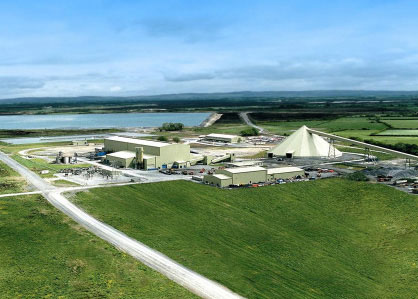
Lisheen Mine

Lisheen Mine

Mining giant Anglo American, one of the world’s largest diversified mining and natural resource groups, has announced plans to sell off Lisheen lead and zinc mine near Moyne, Thurles, as part of their plan to save the company some €80 million in the coming year.

The mine, now in its second decade of operations and one of the largest producers of Zinc concentrates in Europe, currently employs 339 employees and is one of the major employers in North Tipperary.

Lisheen Milling’s turnover was reduced by almost 50% in 2008, following the world wide collapse of zinc prices, the credit crunch and recession.

Anglo American, took a $170 million dividend out of Lisheen Milling Limited, on 16th December last and has set aside $35.5 million in the accounts of Lisheen Milling as a provision for “closure and related costs”.  These costs are expected to be incurred in 2014, at the end of the mine’s estimated life.

Unemployment Up 171 Percent In North Tipp

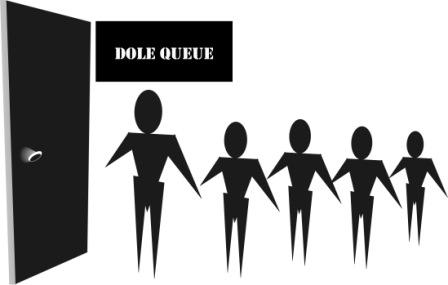
Dole QueueAlmost 4,500 people lost their jobs in North Tipperary over the last two years, according to unemployment statistics for the month of August. This represents a 171% increase on figures for August 2007. What is equally concerning,  is that a lost generation of unemployment has emerged with a 210% increase in the number of people under 25 year of age,  joining the dole over the last two years. The town of Nenagh fared the worst in this category with a 283% increase.

Four Jobs Lost Daily In North Tipperary

Recent figures from the Central Statistic Office (CSO) show that almost four people lost their job every day throughout August in North Tipperary as the Live Register grew by 116 over the month. There are now 6,985 people on the dole in North Tipperary. Sixty three people, or two people per day, lost their jobs in Nenagh over the month of August. Forty people in Thurles lost their jobs and 13 people in Roscrea over the same period.

Deputy Noel Coonan, (Fine Gael) speaking to www.thurles.info this morning stated:

“State agencies like the IDA and Enterprise Ireland need to bring foreign direct investment to North Tipperary. They need to focus additional investment in the area and bring employment back to the region. State agencies must also be pivotal in providing, upskilling and retraining to the people in North Tipperary who have lost their jobs. North Tipperary faces many serious issues along with unemployment such as the proposed abolishion of Tipperary Institute in Thurles, the drastic changes to Nenagh Hospital and cuts in the Rural Transport Programme. This present Government just keeps on dealing hammer blow after hammer blow to this constituency.”

However, Deputy Coonan believes our level of unemployment is not insurmountable:

Fine Gael has presented concrete, effective measures to protect existing jobs and create new ones. Fianna Fáil and those who support it, should take our measures on board and accept that there are other just ways. Unemployment in Nenagh has grown by a shocking 95% or 1,343 people over the last year. The corresponding figure for Thurles from August 2008 to August of this year is 84% or 1343 job losses. Roscrea witnessed a 70% increase. In total, 3,223 people lost their jobs in North Tipperary over the last year.”

CSO figures also revealed that unemployment in North Tipperary soared by a staggering 171% or 4,411 people over the last two years.

Benifits Of Shopping Local In Thurles

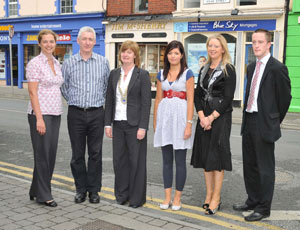
Members of Thurles Chamber

Members of Thurles Chamber

Why We Should Shop Locally

Thurles Chamber launched their ‘Shop Local Campaign’ in recent weeks and erected signs on the main approach roads into the town to focus attention on the importance of shopping local. We all enjoy the fun and ease of shopping in Thurles but have we as consumers really stopped to think about the overall benefits to our town.

Protecting our local character and our reasonable current prosperity, while also retaining a supportive community.

Thurles is distinct and unlike any other town in the world. By choosing to support locally owned businesses, we immediately help maintain the town’s huge diversity and its very distinctive flavour. Many town centres in Ireland, now are beginning to look the same, with franchises and multi-nationals springing up. Independent shops on the other hand create a distinctive shopping experiences and stock new and different products. Most people can get to their local shops easily and this is especially important for our elderly, vulnerable and young people and those without any form of transport.

Local stores help to sustain vibrant, compact, walkable town centres which in turn are essential to reducing urban sprawl, unnecessary transport use, wild life habitat loss, and air and water pollution. Local stores in our town centres require comparatively little infrastructure and make more efficient use of public services relative to shopping malls. Shopping local protect and secure services with private, voluntary and public sector services clustering around our many shops. The loss of our main high street often corresponds to a reduction in these services, so as shops begin to disappear, so regretably also do the our hairdressers, our vets, our dentists, our doctors etc.

People don’t like losing shops and services in villages and small towns, but do not always equate this to how they spend their disposable incomes. Shops will only survive if customers spend locally, so if you want a vibrant town centre, where people can socialise as well as shop, businesses must also start thinking seriously about how to encourage people to shop locally. Local businesses are owned by people who live in our community, who are less likely to leave, and who are more invested in the community’s welfare and future prosperity. Keeping our shops open by buying locally helps the Thurles environs as a whole.

Locally owned businesses also build strong neighbourhoods by sustaining communities, linking neighbours, and by contributing more to Thurles causes. Local ownership means that important decisions are being made locally by people who live in the Thurles community and who themselves will feel the immediate impacts of their own decisions. Going local does not mean cutting off the outside world. It means nurturing locally owned businesses which use local resources sustainably. These businesses employ local workers at decent wages who serve, primarily, local consumers. It means becoming more self-sufficient and less dependant on foreign imports. Control will automatically now move from the boardrooms of distant and often greedy corporations and back into our own community where it must surely and indeed rightly belong.

Independent shops keep traditional Thurles products alive. They should respond more quickly to the needs of  Thurles customers, stocking products to meet the changing populations need. They can also be more innovative, let us never forget, for example, that organic products were first developed not by the multinationals or franchises of this world, but by local individual and independent sole traders. Nationally, entrepreneurship fuels our economic innovation and prosperity, and serves as a key means for families to move out of the sphere of low-wage jobs.

Euros Spent Locally Have Three Times More Impact On Our Community

Your euro spent in locally owned businesses has three times the impact on your community as a Euro spent in multi-national chains. When shopping locally, you simultaneously create jobs, fund more town services through taxes, invest in neighbourhood improvement and promote community development. As stated, shops in our  town’s centre create local employment and self-employment. These people in turn spend in our local economy. Evidence shows that for every £10 spent in an independent shop, £25 is generated for the local economy compared to only £14 spent in multinationals. Sole traders and independent stores are proportionally more generous in their support for local charities, schools and other community events. So supporting local shops means a financial reward both for you and our community.

Out of town shops have done an excellent job of convincing us all, that sole traders are expensive, but the evidence just isn’t there to back this up. If you add together travel, parking costs, fees and valuable time spent, all consumed in transporting larger items home, the overall cost is, in the vast majority of cases, much higher.

We talk a lot about exerting influence with our purchasing power or “voting with our purses”.  It’s a fact that business respond to their customers, but your values and desires are much more influential to your local community business than ever to the franchises and multinationals.

We are all becoming increasingly aware of our CO2 emissions and our environmental impact problems. Local shops, often stock a high percentage of locally sourced goods and products, where long car, train and bus journeys aren’t required, thus helping reduce our carbon footprints. Locally grown produce can be on your table within hours of being harvested. In order to be ripe for you, shipped produce must be picked days before peak ripeness to allow for transit times. Buying local means freshness and by buying from our local farmers, freshness is guaranteed. When you purchase at locally owned businesses rather than nationally owned, more money is kept in the community because locally managed and owned businesses often purchase from other local suppliers, services and farms.  Thomas Jefferson (1743 – 1826) 3rd President of the U S A (1801–1809), and principal author of the Declaration of Independence once stated:

“Cultivators of the earth are the most valuable citizens. They are the most vigorous, the most independent, the most virtuous, and they are tied to their country, and wedded to its liberty and interests by the most lasting bonds”.

A market place like Thurles containing  hundreds of small businesses is the best way to ensure innovation and low prices over the long-term and Thurles has as its hinterland the richest producing farmland in europe.

The unique character of Thurles is defined to a large degree by the businesses that reside here, and this will continue to plays a huge and deciding factor in our overall satisfaction with where we live and the value of our home and property.

So it is in our own interests  to Think Local – Shop Local – and Buy Local.

To quote Derek Edward Trotter (Del Boy) from Only Fools And Horses “You know it makes sence”.
MABS Office Required For Roscrea

Deputy Noel Coonan has warmly greeted the long-awaited addition of one temporary member of staff to North Tipperary’s Money Advice and Budgeting Service (MABS).  It was revealed today,  that a total of 19 offices nationwide are to benefit from extra staff to help deal with a backlog of applications for assistance. With a 35% to 40% increase in the number of new clients seen this year by MABS in the constituency, the Fine Gael TD is also outlining the urgent need for an office to be located in Roscrea, Co.Tipperary.

The Deputy explained that North Tipperary has two MABS offices while South Tipperary, a constituency that is smaller and more compact, has a total of three offices.

moneyDeputy Coonan stated:

“While I welcome the extra member of staff allocated to North Tipperary, I believe we need to go a step further and set up a clinic in Roscrea to serve that vast rural midlands area. The area is not serviced by an office in nearby Birr either and Tullamore is the only office in County Offaly. From a strategic point of view, there is a pressing need for an office in Roscrea. MABS staff in the Nenagh and Thurles offices provide an excellent service to people in financial difficulty but their workload has increased phenomenally over the last year. They have been hoping for additional staff for a long time and have now been allocated a part-time money advisor.
However, the Minister for Social and Family Affairs needs to spread the net and establish a Roscrea office. Clients who attend MABS offices in North Tipperary stem from all backgrounds. It’s no longer just those living in disadvantaged circumstances that are looking for financial assistance. Clients can include those who own small businesses, those on social welfare and those in trouble with mortgage repayments, hire purchase on cars or credit cards”.

Almost 10,000 new clients were assisted by MABS staff, nationally, in the first six months of this year, with an average debt of over €15,000. Those seeking help from MABS owe a total of almost €150 million and nearly two thirds of this is owed to banks and other financial institutions. People are now desperate for help with their finances as unemployment reaches 12% and the Government provides no long-term national strategy to create and protect jobs.
At the moment North Tipperary has two full-time money advisers and two part time administrators.

MABS aids people who are experiencing financial difficulties, having problems paying off debts and in need of advice on best money management.

Meanwhile, the number of people signing on the Live Register in County Tipperary has risen by over 7,000 in the last 12 months. Latest figures from the Central Statistics Office shows that both Nenagh and Thurles experienced an increase of 174 in the last month while Clonmel recorded an increase of 170.

MABS operate a helpline (1890-283438) from Monday to Friday.

Poor Can’t Pay

DoleSome of Ireland’s leading non-governmental organisations (NGO’s) and trade unions have formed a joint initiative to launch a new campaign called “The Poor Can’t Pay”.  This coalition aims to mobilise all out active opposition to proposed cuts to basic social welfare payments and possible proposed cuts to the minimum wage.


The Poor Can’t Pay initiative claim that people earning the minimum wage or who presently living on social welfare had no hand act or part in causing Ireland’s economic crisis and should therefore not be forced to pay the price for Ireland’s current recession.

The campaign was launched  jointly by Age Action, Barnardos, CORI Justice, EAPN, Focus Ireland, INOU, Mandate, National Women’s Council of Ireland, SIPTU and St. Vincent de Paul (SVP).

Organisers are now calling on other NGO’s and trade unions to sign up to further add weight to the campaign.

The Poor Can’t Pay said it is now vital for the present Government to live up to its promise to protect the most vulnerable in society from the impact of a recession which is not of their making.

John Mark McCafferty of SVP speaking on behalf of the Poor Can’t Pay campaign  said:

“We hear all the time from many commentators who say it is inevitable that basic social welfare payments and the minimum wage must be cut. This campaign aims to highlight that most people in Ireland do not accept this view and they actually believe that we must do all we can to protect the most vulnerable people in our society. The reality is that cuts to welfare payments will mean people going without food, essential healthcare, children getting no presents at Christmas and pensioners wondering if they can afford to keep the heat on. We all need to ask ourselves as a nation, are these the people who should be forced to pay the cost of the economic crisis?  It’s important to stress that the Christmas welfare payment is not a “bonus” but rather a key part of the income of the poorest households. If it the Government does not make this payment it represents a real cut in income to the families and single people who can least afford it, adding to their hardships.”