|
|
 Irish Apartheid And he climbed with the lad up the Eiffelberg Tower.
“This” cried the Mayor,” is your town’s darkest hour!
The time for all ‘Whos‘ who have blood that is red
To come to the aid of their country !” he said.
“We’ve GOT to make noises in greater amounts!
So open your mouth, lad! For every voice counts!”
This verse comes courtesy of the great and late Theodor Seuss Geisel (Dr Seuss) – from his children’s poem ‘Horton Hears A Who!’
Reported details of €40 Million in bonuses being paid to bankers sparked widespread anger among the fair minded people of Ireland in the past few days. Readers will be aware that while workers on the minimum wage are about to have their pay slashed, those employed by one of the institutions who assisted in bankrupting our country has been rewarded. This reward is being dished out in the very same week that our country, which declares in its Proclamation to support “Cherishing the children of the nation equally“, has been downgraded to junk yard status.
Bonuses should be awarded, based on how much revenue individuals attracts, while operating in accordance with accepted ethical, responsible and regulated banking practices. If we as a nation can take 4% from retired pensioners and break the ‘contract’ they have, we can most certainly extract 90% of the current bonus paid to individual bank workers. But history now teaches us clearly that inequality is core to the Irish model of government.
In the decade when we had most and when we quadrupled our spending on our public health services, Ireland’s current political leaders and their supporters failed spectacularly to reform our Irish health system, which presently allows an almost apartheid system to exist.
By apartheid, I mean, if you have money to pay privately, you can get into public hospitals quicker than public patients. You will receive treatment more quickly and you are guaranteed consultant provided care, while recuperating in a single or semi-private room. In contrast a public patient is more likely to be viewed by a junior doctor and to remain in a multi-bed ward or on a trolley in a drafty hospital corridor.
Ireland is unique in Europe, in that we still permit private care to exist in our public hospital system. We allow the wealthy to skip past in the queue, ahead of our poorer public patients. The cost of the care of these private patients, passing through our public system, is largely subsidised by public money, while minimum wage patients remain verbally silent. This apartheid operated health system can also be seen clearly in our nursing homes, with two out of every three nursing home beds presently in the private sector.
We are well down the road of a privatised, double tiered provision of health-care which favours private patients over public patients, but we can undo the harm done and as citizens /patients, demand a quality and universal public health system to which we are all fully entitled too, under our constitution.
Our present government lives in fear of its public sector unions and work force and here apartheid also reigns. The cost of the public sector is currently €20 billion per annum and when their average 210 annual working days are divided into this €20 billion wage, the daily pay costs amount to around €95 million. Previously, the Department of Finance vowed to dock wages of public sector workers who would strike in protest over cutbacks. If even a fraction of public sector unions were to follow through on these threats to hold one day work stoppages, those protesting workers would be hit in their pockets and the Government’s Coffers would be boosted by millions per day. Our next government must confront the public service and their unions, head-on and take back the control that this present gutless administration have surrendered.
We were recently informed that we have an Automated Fingerprint Integrated System (AFIS) that cost €20m lying idle. Extra civilian staff, hired by the garda were expected to run this system, but these 50 staff at the GNIB headquarters, who are members of the Civil and Public Service Union (CPSU), have now refused to operate this system, saying it is inappropriate for clerical staff to do a job that gardai should do. However they will work the system in return for extra allowances. Meanwhile, Gardai openly admit that they have no idea how many people, recently arrived into Ireland, are now claiming entitlements to social benefits, using fake identities.
Where is Berty Ahern’s ‘Towards 2016’ ?
Was Sustaining Progress and Towards 2016 a contract? What happened to the Civil Service Verification Document Section 28 ‘Modernisation and Flexibility’?
The parties to this Agreement will co-operate with flexibility and modernization ……….,
The Public Service Pay Agreement provides that payment of these (pay) increases is dependent, in the case of each sector, organisation and grade, on verification of co-operation with flexibility and ongoing change.
There will be situations where existing work procedures must be adapted to respond to work requirements and traditional methods of performing particular tasks will have to be changed.
Under the terms of Towards 2016, payment of each of the four public service pay increases is dependent on verification of satisfactory achievement in relation to co-operation with flexibility and ongoing change.
Continue reading Apartheid Alive And Kicking In Collin’s Ireland
 Construction work by Bord Gáis Networks on the pipeline to bring natural gas to homes and businesses in Tipperary Town, is expected to get underway this week. Tipperary Town customers can soon join a network of some 640,000 customers countrywide, who presently enjoy clean, efficient and environmentally friendly fuel. Construction work by Bord Gáis Networks on the pipeline to bring natural gas to homes and businesses in Tipperary Town, is expected to get underway this week. Tipperary Town customers can soon join a network of some 640,000 customers countrywide, who presently enjoy clean, efficient and environmentally friendly fuel.
The project on completion was previously estimated in 2009 at costing €5,551,357.
The town will be supplied with natural gas from the existing Raheen Above Ground Installation (AGI) in Garryspillane, Co. Limerick. The project will involve laying a 17km feeder main pipeline along the R662 to the edge of Tipperary town and 9.8km of distribution pipeline throughout the town.
Construction of the feeder main pipeline is being carried out by Bord Gáis Networks’ designated contractor, GMC Groups gas division. Work on the new distribution pipeline in Tipperary town is scheduled to begin in spring 2011 and will be completed within six months.
Bord Gáis Networks is currently liaising with all the relevant authorities and organisations, as well as the businesses and residents along the route of the pipeline, to ensure that all concerned are aware of the planned construction.
As safety is a number one priority, Bord Gáis Networks has been working with the Roads and Planning departments in Tipperary Town Council and Tipperary County Council, to agree local traffic management plans and to arrange appropriate sites for the storage of pipes and fittings.
All excavation work will be back-filled and original surfaces restored, thus ensuring that disruption is kept to a bare minimum.
The town of Thurles was being considered in the same economic group with the town located close to the existing Transmission Block Valve station at Gurteen off the Cork-Dublin Transmission pipeline. The project on completion for Thurles was previously estimated at costing in 2009, approximately €11,300,882. However this proposed connection to the network, resulted in a negative net present value of -€8.66m and therefore connection was deemed uneconomic on a stand-alone basis.
Now our readers may partially understand why I compare rural Thurles to ‘An Pháil’. No secret government support deals done on this front.
Still, after next Thursday’s HSE / SIPTU scam discussions, we might get part of the €40 million odd set aside by that body called the Health Services National Partnership Forum, that is if it has not been all spent on foreign holidays for union chiefs.
Isn’t it just gas my friends.
 Census Enumerators Required The Central Statistics Office is seeking 5,000 staff for the 2011 Census. The application process will open on January 4th, for one week only, and the contract runs for 10 weeks – from 8th March until 13th May.
Temporary Enumerators, amongst their other duties, are needed to deliver and collect forms from households over this ten week period beginning next March.
The role of Census Enumerator is a unique one. In this role you will deliver census forms to all residences in your assigned area, ensuring that you have a contact name for each residence. You will then collect the forms in advance of the deadline. This often requires high levels of physical fitness. It is essential that operatives ensure that all of the required documentation is completed in a correct manner.
Anyone interested in becoming an Enumerator for this official tally,latter to begin on Sunday April 10th 2011, should now pre-register by clicking here.
Note: Hours are flexible, mainly evenings and weekends with a minimum of 22 working hours per week, however there are a number of challenges associated with this role.
Opposition parties have reacted strongly to Minister for Finance, Brian Lenihan’s 2011 Budget stating it does not provide sufficient stimulus measures for the economy and middle and lower income earners are being asked to shoulder the gross incompetence of the present government.
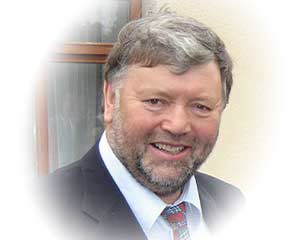 Deputy Noel Coonan TD Fine Gael’s finance spokesman Michael Noonan said it was the budget of a “puppet government” obeying their new masters the IMF and ECB, while allowing the State to draw down bailout funds.
Speaking following the publication of Budget 2011, Deputy Noel Coonan said Minister Brian Lenihan may have exempted old age pensioners from draconian cutbacks but carers, widowers, people with disabilities and the blind will all suffer from unfair cuts and will be paying for the “sins of the banks.”
Deputy Coonan stated: “Budget 2011 lacks imagination and any incentive for job creation. It does not inspire confidence and symbolises an old tired Government that should resign and vanish. How any Independent Deputy could support this Government bearing in mind what it has done to our people, beggars belief; especially on the pretence that old people are being looked after while carers, widowers, people with disabilities and the blind are made pay for the sins of the bank. Carers provide an invaluable service, saving the country millions, but these giving people are being penalized instead of rewarded and that is beyond grasp.
It’s unbelievable that any public representative could sell out our country for private benefits, while the Minister imposes a 4% reduction in most social welfare payments, resulting in a reduction of €8 to carers and those who are blind. Fine Gael is totally opposed to cutting payments to the most vulnerable.”
Speaking on agriculture the Deputy stated:
“Agriculture is the one industry which can save us and it has been ignored and was not worthy of even a mention in the Budget. Those on negative equity were also ignored. It’s those who are disadvantaged and vulnerable who will shoulder the majority of the burden yet again.”
Social groups are today digesting the details of Budget 2011. Barnardos says there is despair in many Irish households as a result of the cuts in child benefit.
The Irish National Organisation of the Unemployed says Ireland is a much colder place for those out of work, while Respond, the housing association, says cuts to social welfare and child benefit will inflict further hardship on families.
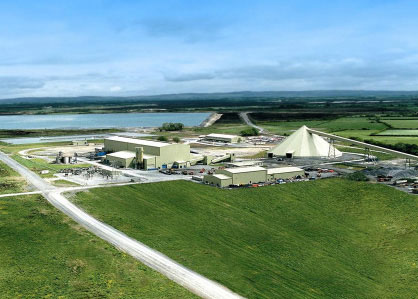 Lisheen Mine At Wednesday’s Joint Committee meeting, North Tipperary Deputy Noel Coonan was informed that the life of Lisheen Mine, Moyne, Thurles, Co Tipperary has been extended possibly to the end of 2014 and Anglo American Lisheen Mining Ltd see the site as having the potential to become a leading renewable energy location into the future.
The local Fine Gael TD who is a member of the Oireachtas Committee on Communications, Energy and Natural Resources, yesterday examined the topic of Irish mining and exploration. In attendance at the meeting was Mr John Elmes of Anglo American Ltd, owner of Lisheen Mine.
Deputy Noel Coonan stated:
“Additional mineral deposits have been uncovered at Lisheen mine and extraction will continue post 2014. We are exploring the idea that, on closure of Lisheen Mine, the site could become a forerunner in the field of renewable energy. The site, located between the villages of Moyne and Templetuothy, is ripe with opportunity having it’s own ESB sub-station and connection to the grid. It is ideally located off the M8 and is also in close proximity to the N7 so transport is not an issue. This is a viable opportunity that must be teased out. Mr Elmes and I both agreed that this industrial site already has excellent facilities in place and these should be maximised upon.
Anglo America is actively promoting the site as a centre for the production of wind and hydro energy because of its zoning as an industrial site and the facilities already there. So there’s no reason why the site could not also generate energy from sugar beet and anaerobic digestion and become a thriving industrial renewable energy site,” said Deputy Coonan.
I’m calling on the Government and all departments involved including the Department of Agriculture, Fisheries and Food and the Department of Communications, Energy and Natural Resources to do everything in its power to promote Lisheen Mine as a centre of renewable energy, especially in the area of ethanol production.
The sugar beet industry in Thurles should never have closed according to the European Court of Auditors’ report and I believe the industry could be reignited again and I will be pushing for this to happen in my role as Fine Gael’s CAP spokesperson.”
|
Support Us Help keep Thurles.info online by donating below. Thank you.
Total Donated 2026: €290.00
Thank You!
Daily Thurles Mass Livestream
|





Recent Comments