|
|
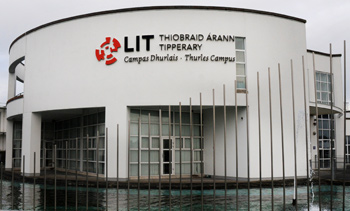
Limerick Institute of Technology (LIT) is now a Basketball Ireland Centre of Excellence.
Earlier today (Wednesday June 16, 2021), the national governing body for the sport on the island of Ireland, announced LIT and Trinity College Dublin as the latest Basketball Ireland Centres of Excellence, taking the number of centres to six nationwide.
Welcoming the announcement President of LIT Professor Vincent Cunnane said LIT was delighted to further develop its relationship with Basketball Ireland, thereby allowing for the further development of basketball in LIT and the region.
“The centre of excellence at LIT will provide a one-stop-shop for all the needs of Basketball Ireland teams and visiting teams. Here at LIT we have a renowned strength and conditioning programme as well as recognised expertise in sports data and analytics, and nutrition. These areas of expertise will be available to Basketball Ireland and the Centre of Excellence, along with our courts, meeting and presentation facilities, media facilities and changing rooms.”
Mr Jimmy Browne, [LIT Vice President Corporate Services & Capital Development] stated, “LIT is delighted to announce this important further development of our relationship with Basketball Ireland. LIT and Basketball Ireland have an ongoing relationship which culminated with the appointment of basketball development officer Niall Berry in 2020. The inclusive nature of basketball as a sport is perfectly aligned with LIT’s ethos, community reach and sporting philosophy. Today’s announcement will provide a platform to further enhance this ethos and the growth of basketball in the Mid-West region.”
Mr Niall Berry, BasketbalI Ireland Development Officer LIT added “Ireland’s international basketball teams have been doing a great job over the years competing in Europe. The Basketball Ireland Centres of Excellence, like the one here in LIT, give young basketball players a vision of a collegiate structure that will in turn encourage them to work hard to be involved in a Centre of Excellence. These young players will also see their own club members going to Centres of Excellence and travelling just down the road to LIT, to train and to play. These players will want to emulate that success and this in turn will have a massive impact on both the players and basketball in the region.”
Speaking about the LIT and Trinity College Dublin announcement Basketball Ireland CEO, Mr Bernard O’Byrne said, “This is another significant announcement to have renowned institutions like Trinity College Dublin and LIT as Basketball Ireland Centres of Excellence. They both have a strong track record in basketball and this commitment further reinforces it. With Ulster University, NUI Galway, Waterford IT and Letterkenny IT already announced, it illustrates our commitment to have a geographical spread of these facilities across the country, to reach all corners and provide top notch facilities for our basketball community, continuing to provide platforms for the growth of our sport.”
The Centres of Excellence will be used for national training camps for international sides, along with Basketball Ireland academies. There will also be the ability to host international fixtures, national senior competitions, intervarsity competitions, as well as local schools’ cups and blitzes.
The 2021 Leaving Certificate Examinations begin today after a second year of remote learning and educational upheaval owing to the Covid-19 pandemic. Unlike last year, students this year have the option of accepting an accredited grade, doing an exam or both. If they opt to do an exam and accept an accredited grade, their final result will be whichever of the two grades is higher.
Interestingly, of this year’s 61,000 or so Leaving Certificate pupils, the overwhelming majority have opted to accept a combination of accredited grades and exams. Less than 10 per cent of pupils have opted for accredited grades only, while less than 5 per cent have opted for written exams only.
Whether sitting an exam or accepting an accredited grade, the class of 2021 have faced additional and unprecedented stress and challenges. Students are urged to share their worries and seek help and support from a parent, teacher, family member or friend if they are feeling anxious or overwhelmed.
We at Thurles.info wish the Leaving Certificate Class of 2021 the very best for their exams.
For more information on the Leaving Certificate 2021, visit examinations.ie or view the Leaving Certificate Examination 2021 Timetable by clicking HERE.
Next Saturday, June 12th, is Cruinniú na nÓg, a national day of free creativity for children and young people under 18 years of age.
Ireland is the only country in the world to host such a day and since its inception in 2018, Cruinniú na nÓg has grown from strength to strength.
This year, in light of Covid-19 restrictions, the majority of events are online. All events are free and span all aspects of the creative arts, including music, drama, science, cooking and crafts.
From the comfort of their own home, children and young people can get dancing as part of the Céilí in the Kitchen initiative or create the world record for the largest online orchestra with the Royal Irish Academy (no formal training or instruments needed).
The Garageland Project will give young bands the opportunity to showcase their talents on a dedicated Garageland Youth TV channel. Tipperary’s own Nenagh Children’s Film Festival are even inviting children and young people to learn some of the latest stop-motion animation techniques.
Among the hundreds of events organised by creative groups nationwide, there is sure to be something for everyone.
For more information on Cruinniú na nÓg click HERE or search for events by age and location by clicking HERE.
October 1st, 2021 has been announced as the first day of the new Technological University of the Shannon: Midlands Midwest.
From the first day in October, Athlone Institute of Technology (AIT) and Limerick Institute of Technology (LIT) will cease to exist, and more than 15,000 students and 1,200 staff across the Midlands and Midwest will be teaching, learning and researching at the newly designated TUS: Midlands Midwest.
On this day also, four towns will become university towns for the first time, as the new TU will include campuses in Thurles and Clonmel, Co. Tipperary; Athlone, Co, Westmeath; Ennis, Co. Clare, as well as the two campuses in Limerick.
The recruitment of a President for Ireland’s first cross-regional university has also begun, with the application process now open to suitably qualified persons.
The inaugural president will be charged with leading transformational change across adjacent regions, linked by the River Shannon.
These significant steps on the road to Ireland’s third technological university were welcomed by both the Chair of AIT Governing Body Mr Liam Rattigan and the Chair of LIT Governing Body Mr Tony Brazil.
Mr Brazil said, “October 1, 2021 will not only be a significant day in the history of Irish education, but the beginning of what is potentially a new era in investment and development in the regions. TUS: Midlands Midwest will have the capacity to open up third level, active learning, to regions and a people previously underserved. It will further expand the capacity of research and training that will not only support indigenous and multi-national companies already in the Midlands and Midwest, but will encourage further investment and development outside of Dublin. Friday, October 1, 2021 is not just the first day of the month, but the first day of a brighter future for the regions.”
Meanwhile, Mr Rattigan said, “The role of the inaugural president of TUS: Midlands Midwest cannot be under estimated and their leadership essential to the development of the TU. We are seeking an inspiring and strategic leader, with a proven track record of achievement at an appropriately senior level in higher education, business and enterprise, or the public sector. They will be required to have highly developed leadership, organisational and communication skills combined with the strategic capability, vision and drive to shape the future of Ireland’s newest technological university.”
The leading professional services firm of Mazars will be managing all aspects of this recruitment project on behalf of the Technological University of the Shannon: Midlands Midwest.
Further information is available at www.mazars.ie (Search Ref. TUS0121). Deadline for applications is Monday, June 28th, 2021 at 12:00 noon GMT.
President of LIT Professor Vincent Cunnane has congratulated third year LIT Creative Broadcast and Film Production student Ms Alyssa Fleming who won the People’s Choice Award at the Smedia Awards 2021, with her film “The Daily Grind“.
“Winning a National Student Media Award – or Smedia – in any year is a great achievement, but to create an award-winning film during a time when our movements were limited due to a global pandemic is particularly significant. Alyssa and her fellow students have shown great determination, creativity and resolve to create such excellent work despite the Covid-19 restrictions,” said Professor Cunnane.
“I would like to congratulate Alyssa on her success and acknowledge the work of her fellow creative broadcast student Matt Murphy, who expertly edited the winning film The Daily Grind. Credit must also go to the LIT teaching staff, who continue to teach, encourage and inspire the next generation of broadcasters and film makers.”
Ms Nora Ní Fhlathárta, Programme Leader, Creative Broadcast & Film Production congratulated the Smedia People Choice Award winner, while also paying tribute to LIT’s Laura Mannix, the first-year student of Creative Broadcast, who was nominated for the Short Animation of the Year award
“Due to the Covid-19 pandemic many students had to restructure their original film plans so as to adhere to Government health guidelines. However, all was not lost as sometimes, having to restructure allowed students to embrace formats they might never have considered. Troubleshooting is part and parcel of film making and we are so proud of all our film students who have created a diverse and unique range of film and audio projects this year,” she said.
Alyssa Fleming’s award-winning film tells the story of a stressed coffee shop owner who pushes her eccentric staff for ideas to save the business during lockdown.
Speaking following receiving her Smedia award, Alyssa said, “I’m very grateful to everyone who voted for The Daily Grind and I am also very grateful to my actors and Matt Murphy for editing the piece. Making a film during lockdown was tough, but the final product is something that I am very proud of.”
|
Support Us Help keep Thurles.info online by donating below. Thank you.
Total Donated 2026: €300.00
Thank You!
Daily Thurles Mass Livestream
|




Recent Comments