Based on our public health advice and based on observations of how Omicron is ripping through the population in other countries; it has wisely and regrettably been decided, in the interest of public health, that the following restrictions be introduced with effect from tomorrow, Sunday December 19th until Sunday January 30th: –
All restaurants and bars, excluding takeaways or delivery services, must close at 8:00pm.
There should be no indoor events after 8:00pm.
For indoor events scheduled earlier in the day, attendance should be limited to 50% of venue capacity or 1,000 people, whichever is lower.
Attendance at all outdoor events should be limited to 50% of venue capacity or 5,000 people, whichever is lower.
Wedding receptions can take place after 8:00pm, but with a capacity limit of 100 guests.
Restricted movement advice for all close contacts will be enhanced. For those who have received a booster at least one week ago, they will have to restrict movement for five days and take three antigen tests.
For those that have not yet received a booster, they must restrict their movement for ten days. The HSE will consider the best testing regime for people in this category.
All people arriving into the country from overseas will be required to have an antigen or PCR test in line with their vaccination or recovery status.
And all passengers arriving in Ireland should now be advised to conduct antigen testing on a daily basis, for a period of five consecutive days commencing on the day of arrival.
This Christmas, please be safe, look after each other and trust in science.
Minsters McEntee and Harris launch Further Education and Training guide for domestic and sexual abuse victims.
Guidance on what further education and training options and back-to-work training is available.
Information not previously readily accessible for victims or NGOs.
Initiative is part of 16 Days of Activism international campaign.
Minister for Justice Mrs Helen McEntee TD and Minister for Further and Higher Education, Research, Innovation and Science Mr Simon Harris TD have today launched a guidance document to help victims of domestic and sexual abuse access Further Education and Training related opportunities.
“We wanted to examine how all victims of domestic, sexual and gender-based violence can access education pathways, and provide a range of opportunities in this area.
The information detailing what further education and training is available may not have been easily accessible to various groups in the sector working with victims, or indeed to the victims themselves.
Frontline services engaging with victims will now have a nationwide list of the Education & Training Boards (ETBs) Adult Guidance Information Service contact points and details on the type of Further Education and Training (FET) opportunities that are available.
This is another step in implementing ‘Supporting a Victim’s Journey’, our plan to ensure victims are treated with respect and dignity and supported throughout the criminal justice process’’
Domestic Violence Refuges and Support Services and Rape Crisis Centres have direct contact with some of the most vulnerable and traumatised victims and have a key role in matching victims with the available training and other opportunities.
Minister Harris stated,
“Access to education starts with information. It takes great courage for victims of domestic violence and sexual or gender based violence to reach out for help but when they do, our education and training system must be ready to help them.
Further education and training is available in every county in Ireland. It can offer any person, regardless of any previous level of education, a pathway to take them as far as they want to go. The range of courses expands from law to childcare, to hairdressing and ICT. There is something there for everyone.
Today’s announcement brings together key information on what is available and how to access it, and it is there for you when you need it, for whatever you need it for. Throughout life, regardless of present or past circumstances educational opportunities are available for everyone right across country. I would encourage support services and all who come into contact with survivors to use the guide to ensure the breadth of education and training options are known to survivors and their families.”
The guide, which is for use by frontline service providers for victims of domestic, sexual and gender-based violence, contains a nationwide list of Education & Training Boards Ireland Guidance Counsellors’ contact details and details on the type of Further Education and Training (FET) available as well as where further information and details can be found online.
The 16 Days of Activism against Gender-Based Violence is an annual international campaign that started on 25 November, the International Day for the Elimination of Violence against Women, and runs until 10 December, Human Rights Day.
Please find hereunder an update on campus closures for TUS, as a result of Storm Barra.
Three of the six campuses at the Technological University of the Shannon: Midlands Midwest (TUS) will remain closed tomorrow Wednesday, December 8th, 2021, following the advice of the Department of Further and Higher Education.
The LSAD, Clare Street Campus, Limerick; Moylish Campus, Limerick; and the Ennis Campus, Co. Clare were also closed today Tuesday, as a result of the Red Alert and Orange warning from Met Éireann.
Athlone, Clonmel and Thurles campuses will remain open again tomorrow Wednesday, but staff and students are asked not to travel from a redor orange area to attend these campuses. This includes those who have assessments and exams. Contingencies will be put in place for those who cannot travel.
Staff and student are advised to follow the TUS social media channels and tus.ie for any updates or changes to this information.
Information relating to TUS campus closures as a result of the Storm Barra Red and Orange warnings.
The Technological University of the Shannon: Midlands Midwest (TUS) will close three of its six campuses this evening from 10:00pm and they will remain closed tomorrow Tuesday, December 7th, 2021, on the advice of the Department of Further and Higher Education.
The LSAD, Clare Street Campus, Limerick; Moylish Campus, Limerick; and the Ennis Campus, Co. Clare will close this evening and remain closed until Wednesday December 8th, as a result of the Red Alert and Orange warning from Met Éireann.
Athlone, Clonmel and Thurles campuses will remain open, but staff and students are asked not to travel from ared or amber area, to attend these campuses. This includes those who have assessments and exams. Contingencies will be put in place for those who cannot travel.
Staff and student are advised to follow the TUS social media channels for any updates or changes to this information.
EPA calls for urgent action to address Ireland’s rising waste volumes and falling recycling rates.
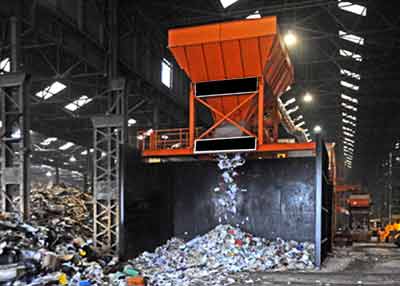
Waste Recycling Station
Waste generation in Ireland increased significantly in 2019.
Municipal waste increased by 6% to 3.1 million tonnes,
packaging waste increased by 11% to 1.1 million tonnes,
hazardous waste increased by 10% to 0.6 million tonnes and
construction waste increased by 2.6 million tonnes to 8.8 million tonnes.
Ireland’s recycling rates for municipal waste and packaging waste have declined, with more waste being sent for energy recovery. Ireland faces a widening gap to meet ambitious new EU recycling targets from 2025 onwards.
To address Ireland’s rising waste volumes and falling recycling rates, we need to transform existing business models into circular ones, that promote waste reduction, reuse and recycling. Circularity roadmaps are needed for key economic sectors, including the construction, manufacturing and food processing sectors, supported by clear policy, legislation, and national targets.
Waste generation in Ireland continues to rise while recycling rates are falling, according to the Environmental Protection Agency’s (EPA) National Waste Statistics Summary Report for 2019, which publishes the most recent official data on waste generation and management in Ireland. The report reveals some worrying trends. Waste generation in Ireland increased significantly in 2019. Municipal waste increased by 6% to 3.1 million tonnes, packaging waste increased by 11% to 1.1 million tonnes and hazardous waste increased by 10% to 0.6 million tonnes. Ms Sharon Finegan, (Director of the EPA’s Office of Environmental Sustainability), said, “A circular economy is one that is based on less waste and more reuse of materials; these trends show Ireland is going in the wrong direction. Our rising levels of waste are unsustainable and need to stop. Systemic change is needed across all economic sectors to shift the focus to designing out waste and promoting reuse and recycling.”
The past decade in Ireland has seen dramatic changes in waste management. Only 15% of municipal waste was landfilled in 2019, compared with 61% a decade earlier. There has been a significant increase in the share of municipal waste sent for incineration with energy recovery over the same period, from 4% in 2009 to 46% in 2019. Ireland’s recycling rates for municipal and packaging waste have been in gradual decline for a number years, as efforts to improve recycling have been outstripped by the growth in waste being generated and the amount being sent for energy recovery. Our recycling rate for municipal waste has fallen from 41% in 2016 to 37% in 2019, while the recycling rate for packaging waste has declined from 70% in 2013 to 62% in 2019. The trends show that Ireland is facing a widening gap to meet ambitious new EU recycling targets from 2025 onwards.
Commenting on the trends, Dr Tara Higgins, (EPA Senior Scientist) said, “Ireland’s declining recycling rates are a significant cause for concern. Recent moves to allow soft plastics such as films and wraps into our recycling bins, continued expansion of brown bin services to households, new requirements for all packaging to be reusable or recyclable by 2030 and a levy on waste recovery are among the suite of measures needed to increase recycling and close the gap to new EU recycling targets”.
Ireland also continues to have some significant waste infrastructure deficits and relies on export for a number of key waste streams, including municipal, packaging and hazardous waste. These trends point to the need for expansion of Ireland’s waste treatment and recycling capacity in order to extract the maximum value from waste materials here in Ireland and reduce the emissions associated with transporting waste over long distances.
This website uses cookies to improve your experience. We'll assume you're ok with this, but you can opt-out if you wish.AcceptRead More
Privacy & Cookies Policy
Privacy Overview
This website uses cookies to improve your experience while you navigate through the website. Out of these, the cookies that are categorized as necessary are stored on your browser as they are essential for the working of basic functionalities of the website. We also use third-party cookies that help us analyze and understand how you use this website. These cookies will be stored in your browser only with your consent. You also have the option to opt-out of these cookies. But opting out of some of these cookies may affect your browsing experience.
Necessary cookies are absolutely essential for the website to function properly. This category only includes cookies that ensures basic functionalities and security features of the website. These cookies do not store any personal information.
Any cookies that may not be particularly necessary for the website to function and is used specifically to collect user personal data via analytics, ads, other embedded contents are termed as non-necessary cookies. It is mandatory to procure user consent prior to running these cookies on your website.





Recent Comments