|
|
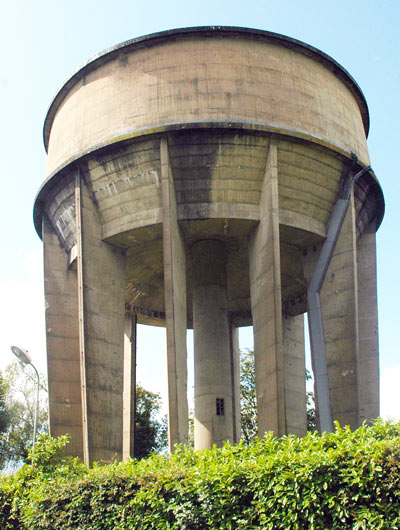
Uisce Éireann is appealing to customers across Tipperary to be mindful of their use of water. Every drop counts, especially as we move into what is expected to be a warmer, drier period.
There has been a notable increase in demand for water across Tipperary since the summer arrived. With warmer, drier weather forecast, we are appealing to everyone to conserve water to safeguard the water supply.
While recent weeks have brought cooler and wetter weather, water supplies in Glenary, Poulavanogue, Ardfinnan, Galtee, Coalbrook, Commons, Dualla and Fethard remain under significant pressure. These Water Supply Schemes serve over 45,000 customers across a large area of South Tipperary including Clonmel, Ardfinnan, Goatenbridge, Caher, New Chapel, Grange, Rossaddrehid, Bansha, Aherlow, Lattin, Emly, Limerick Junction, Coalbrook, Commons, Dualla, Ballinard, Mullinahone, Drangan, Moyglass, Killenaule, Ballinure, Gortnahoe.
Mr Pierce Faherty, (Uisce Éireann Water Operations Manager in Tipperary), said, “We are appealing to the communities served by these supplies to make every effort to conserve water to maintain the supply. Although we have seen some welcome rainfall, the long-term effects of a dry autumn, winter, and spring are still being felt. This supply is under considerable pressure, with a notable increase in demand since the beginning of June. We’re doing everything we can to protect and maintain supplies throughout the summer, but we’re also asking the public for their help by doing what they can to reduce their use. If everyone takes a few simple steps to reduce the volume of water used around the home, in the garden, at work, or on the farm, we can make our water go further and help maintain normal supplies. In response to these water supplies coming under pressure, we have increased our efforts with a series of measures to safeguard supply, including doubling down on leakage detection, pipe repair, and overall network management.”
It would take several weeks of sustained rainfall to allow affected water sources to recover to normal levels. The latest forecast indicates a continuation of warmer, drier weather, which could further increase demand and place additional strain on already stressed supplies.
Everyone in Tipperary can play their part in protecting the water supplies for their community by taking simple steps to reduce their water use.
These include:
- Leave the hose in the shed: Drop the hose during the summer months. Use a rose head watering can to water your plants instead of a hose or sprinkler. Running a hose for just one hour uses as much water as a family would typically need in an entire day.
- Bucket and sponge for your car: Using a bucket and sponge to wash your car can save hundreds of litres of water compared to using a hose or power washer.
- Turn off the tap: Brushing your teeth with the tap running wastes up to six litres of water per minute. Turning it off while brushing can reduce that to just one litre.
- Switch to a shower: Showers use about half the amount of water as baths. Invest in water saving appliances such as water efficient taps and shower heads.
- Shorter showers: With the average shower using seven litres of water per minute by turning your five-minute shower into four minutes, you could save up to seven litres of water per day!
- Fully load your appliances: Always ensure your dishwasher and washing machine are fully loaded before use. A typical washing machine uses approximately 65 litres of water, and a dishwasher uses around 20 litres per cycle. By ensuring they are fully loaded, not only will you conserve water, but you will also reduce your energy bills.
For those looking to track their progress and learn more about water conservation, Uisce Éireann has developed an easy-to-use conservation calculator, which allows people to track their personal water usage. To access the water conservation calculator or find out more about water conservation tips, VISIT HERE.
Members of the public can report any leaks in the public water network by contacting Uisce Éireann 24/7 at TEL: 1800 278 278 or via water.ie
Final Implementation Plan For Zero Tolerance Strategy On Domestic, Sexual & Gender-Based Violence Published.
- Priority areas include expanding refuge accommodation, advancing legislative reform, and cross-sectoral training initiatives for frontline professionals.
- There are 95 actions in total across the strategy’s four pillars of protection, prevention, prosecution and policy co-ordination.
- A robust monitoring and reporting framework establishes performance indicators to track progress and understand impact.
A targeted implementation plan for the final phase of Zero Tolerance, the Third National Strategy on Domestic, Sexual and Gender-Based Violence (DSGBV) has been published.
The implementation plan contains 95 actions across the strategy’s four pillars of Protection, Prevention, Prosecution and Policy Co-ordination, with a strong focus on delivery and collective action to 2026.
The DSGBV Agency Cuan worked in collaboration with officials from the Department of Justice and in close consultation with other Government Departments, state agencies and external stakeholders to develop the plan for 2025-2026.
Priority areas include continuing national leadership and cross government alignment, expanding refuge accommodation, delivering a comprehensive national emergency domestic violence accommodation plan, and advancing legislative reform. That legislative reform includes removing the guardianship rights of a person who has been convicted of killing their intimate partner; developing a mechanism to ensure any person in an intimate relationship can be informed if their partner has a history of domestic violence; and advancing provisions to ensure counselling records are only released where the Court decides that they contain material relevant to legal proceedings.
The plan also includes actions to continue to deliver impactful awareness campaigns on sexual consent and pathways to safety, and a comprehensive set of training actions to upskill front-line professionals across the health and social care sector, DSGBV services, the judiciary, courts and other justice agencies.
The development of the plan was collaborative and evidence informed, involving research and a review of implementation to date, followed by in-depth consultations with Government departments and state agencies. It takes an intersectional approach, ensuring that actions and outcomes are responsive to the diverse and overlapping identities of victims and survivors of DSGBV, supported by the development and establishment of survivor-centred structures to ensure that victim/survivor voice is heard. The work to develop foundational structures, build networks and relationships lays the groundwork for beginning the transition to a Fourth National Strategy on DSGBV.
Also published today is the second 2024 Progress Report, covering the period July to December 2024, which highlights continued progress across government and the sector in implementing the Zero Tolerance strategy.
Notable achievements during the reporting period include:
- Expanding emergency accommodation capacity including launch of a state-of-the-art refuge facility in Wexford and strengthening the pipeline for refuge and safe home expansion.
- Reform of the Social, Personal and Health Education (SPHE) Curriculum to empower students to be healthy and resilient young adults who have the skills and confidence to nurture healthy relationships.
- Expansion of services for children and young people experiencing domestic or sexual violence, with €17m in funding distributed to 60 services supporting children and young people.
- Enactment of the Family Courts Act 2024 providing for the establishment of family court divisions within the existing court structures including a Family High Court, a Family Circuit Court and a Family District Court.
- Supporting the Game Changer campaign, a three-year initiative led by Ruhama, in partnership with the GAA and the Men’s Development Network, using sports-based advocacy to raise awareness of gender-based violence.
- Convening of a National Consent Forum.
- Engagement with the Central Statistics Office (CSO) to scope the development of a Domestic Violence survey to commence in 2025.
The 2025–2026 implementation plan and the Second Progress Report (2024) are available at: https://assets.gov.ie/static/documents/Zero_Tolerance_Implementation_Plan_2025-2026.pdf.
€6.9 million for new environmental and climate research awarded by the EPA
- EPA funding of €6.9 million has been awarded for 11 new research projects to address climate and environmental challenges.
- The funded research will address key knowledge gaps and support the development of vital research capacity in Ireland.
The Environmental Protection Agency (EPA) today announced new research awards of €6.9 million for environmental and climate research in Ireland. This brings to €21.4 million the total research funding announced by the EPA to date in 2025.
The funding will support 11 new and innovative projects, which will involve 98 staff and students across 27 organisations. It will also build research capacity and skills in areas relevant to tackling important environmental challenges. Successful projects will address policy-relevant topics such as:
Understanding the impacts of noise pollution on health and the environment;
Exploring young people’s attitudes, knowledge and actions around climate change;
Mechanisms to support scaling-up of the circular economy;
Understanding how exposure to future sea level rise could impact population dynamics and
Studying remote Irish islands to enhance our understanding of the response and resilience of offshore environments to climate change.
Announcing the funding, Dr Eimear Cotter, Director of the EPA’s Office of Evidence and Assessment, said: “The increased scale of research funding being announced by the EPA in 2025 reflects the critical role that research and innovation play in addressing climate change, environmental pollution and biodiversity decline. This new EPA funding will help develop innovative solutions to support Ireland’s response to these challenges. Congratulations to the successful researchers and I look forward to hearing more about these exciting projects in the years ahead.”
The list of funded awards made to date in 2025 is available on the EPA website with full project details in the EPA’s online Research Database.
The EPA Research Programme is a Government of Ireland initiative funded by the Department of Climate, Energy and the Environment. Further details are available on the EPA website.
Irish health officials are urging the public to stay at home if they’re feeling unwell. A new Covid variant, known as NB.1.8.1, has been detected in Ireland, and according to the World Health Organisation (WHO), this strain first emerged in January and by late April was responsible for approximately 10.7% of global infections, up from just 2.5% a month earlier. The WHO note that while the variant may be more transmissible than previous strains, there is no evidence it causes more severe symptoms or illness.
This new strain has seen a rapid rise here in Ireland in recent weeks and according to data from the Health Protection Surveillance Centre (HPSC), the proportion of sequenced Covid samples linked to NB.1.8.1 jumped from 3.7% to 27.3% within the last five weeks.
Irish people who find themselves unwell with unseasonal cold symptoms or gastrointestinal issues may actually have Covid, according to the HSE.
Ireland’s public health guidelines remain the same; if you have any symptoms of Covid, stay at home until 48 hours after the symptoms are mostly or fully gone. You should also avoid contact with other people, especially people at higher risk from Covid.
Covid symptoms to look out for include:
Fever (high temperature – 38C or above) – including experiencing chills; a dry cough; tiredness;
change to your sense of smell or taste; runny or blocked nose; conjunctivitis (red eyes or pink eyes); sore throat; headache; muscle or joint pain; skin rash; vomiting; diarrhoea; chills; dizziness; breathing difficulties; loss of appetite; confusion; pain or pressure in the chest.
Major new EPA report assesses Ireland’s vulnerability to climate change impacts.
- The EPA has today published the National Climate Change Risk Assessment which provides the first comprehensive assessment of where, when and how climate risks are likely to impact Ireland over the coming decades.
- The National Climate Change Risk Assessment provides government, business, communities and other stakeholders the best available evidence and analysis to inform climate adaptation and resilience in Ireland at a national level. The National Climate Change Risk Assessment identifies 115 risks from projected changes in climate conditions, including in energy, transport, communications, water security, public health, food production and supply and ecosystems.
- The significant risks identified by the report as requiring urgent action within the next five years are:
- The risk of disruption and damage to communications and energy distribution infrastructure due to extreme wind.
- The risk of disruption and damage to buildings and transport infrastructure, due to extreme wind, coastal erosion and coastal flooding.
The Environmental Protection Agency (EPA) has today published the findings of Ireland’s first National Climate Change Risk Assessment (NCCRA). This major study was undertaken by the EPA in collaboration with government departments, state agencies, and other stakeholders to assess where, when and how climate risks are likely to impact Ireland over the coming decades.
The National Climate Change Risk Assessment provides government, business, communities and other stakeholders with the best available evidence and analysis to inform climate adaptation and resilience in Ireland at a national level. The risk assessment will support the development of Sectoral Adaptation Plans by key government departments, will guide the development of local authority adaptation plans and inform other national level adaptation responses.
The Risk Assessment identifies 115 risks from projected changes in climate conditions. Of these, 43 are deemed significant risks. The risks span all sectors of our economy, society, and environment from energy, transport and communications to water security, public health, food production and supply and ecosystems.
Speaking about the report, Ms Laura Burke, EPA Director General said: “We know that Ireland is being impacted by climate change already. This comprehensive assessment highlights the need for additional urgent action to ensure Ireland is sustainably resilient to the risks that we currently face, and will increasingly experience, in the coming decades.”
She added: “This report, the first National Climate Change Risk Assessment, clearly shows how risks cascade across sectors. Recent events, such as Storms Darragh and Éowyn, demonstrated how damage to critical infrastructure such as energy, water supply, transport and communications networks in turn give rise to impacts on human health, biodiversity and the financial system. Addressing these risks in an integrated and consistent way is key to achieving our national climate resilience objective.”
The significant risks identified by the report as requiring urgent action within the next five years are:
(A) The risk of disruption and damage to communications and energy distribution infrastructure due to extreme wind.
(B) The risk of disruption and damage to buildings and transport infrastructure due to extreme wind, coastal erosion and coastal flooding.
Additional significant risks that should be prioritised for further investigation in the next five years include risks to the built environment and human health from flooding and heat.
Commenting on the report, Dr Eimear Cotter, Director of the EPA’s Office of Evidence and Assessment, said: “Assessing climate risk is a key component of risk management and strategic planning. The National Climate Risk Assessment underscores the need for immediate action in the next five years to enhance the resilience of Ireland’s critical infrastructure to climate change. The risks with the most consequential and highest urgency ratings relate to extreme wind, coastal erosion and coastal flooding. These must be prioritised in adaptation and resilience actions to address climate risks and provide a basis for ensuring adaptation planning in Ireland is appropriately integrated across sectors.”
The Main Report and Summary for Policy Makers are now available on the EPA website and the Climate Ireland adaptation portal.
|
Support Us Help keep Thurles.info online by donating below. Thank you.
Total Donated 2026: €290.00
Thank You!
Daily Thurles Mass Livestream
|







Recent Comments