|
|
 Education While as yet there is no immediate prospect of disruption to second level education; the Association of Secondary Teachers in Ireland (ASTI) today have rejected the new public service pay agreement, by a narrow margin of 51.5% against and 48.5% in favour.
The voting turnout was 64%, and the result is understood to reflect concerns over the failure to address the issue of pay for staff recruited since 2011, latter understood to be losing up to €6,000 annually when compared to their longer-serving colleagues.
The Union’s 180 strong Central Executive Committee is now expected to meet early in November 2017, to decide their next move, which will undoubtedly include a possibility of the resumption of industrial action, latter suspended earlier this year pending the outcome of the ballot result today.
The Irish National Teacher’s Organisation and the Teacher’s Union of Ireland have similarly rejected this agreement, but continue to participate in a new process, aimed in principal to address pay inequality.
Mr John Lonergan, retired former Governor of Mountjoy Prison, will be the guest of Thurles Toastmasters on Wednesday next, October 18th, 2017, at an event to which everyone is invited to attend.
The event which will take place in the Anner Hotel, Dublin Road, Thurles, begins sharp at 8.00pm.
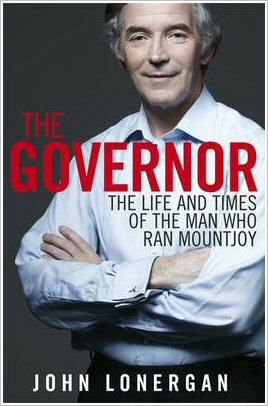 The occasion will take the format of an information evening with the emphasis being placed on the following headings: – The occasion will take the format of an information evening with the emphasis being placed on the following headings: –
Personal Development.
Leadership Skills.
Communication Skills.
This is, most certainly, one event in the Thurles Calendar, that should not be missed. Indeed Parents, Teachers, Community Youth Leaders, and Transition Year Students, will truly derive great benefit from their attendance on the night.
A native of Bansha, Co. Tipperary; Mr Lonergan first entered the prison service in 1968, before retiring in 2010, having spent 42 years, in total, within the service; 24 of which were as the most senior prison officer in Ireland.
During those prison service years, he witnessed human nature at its worst and sometimes, quite unexpectedly, at its best, leading to his developing a perceptive understanding, not just of human nature but of Irish society as a whole.
In relation to the planned information evening on Wednesday October 18th next; do keep in mind that Mr Lonergan is a born storyteller. Be assured that no statement, generated as part of his debate, will be answered in a simple pragmatic manner. Instead be confident that each snippet of information doled out, will be accompanied by a charming anecdote, thus ensuring the listener will truly enjoy the nights discussion.
Admission to the event on Wednesday next costs €10.00 for Adults and €5.00 for Students.
“Poverty is the worst form of violence.”
“Violence is the weapon of the weak, non-violence that of the strong.”
“A good person will resist an evil system with his whole soul. Disobedience of the laws of an evil state is therefore a duty”.
[Quotes made during the life of Mahatma Gandhi.]
Looking at the behaviour our planet on just today alone, it is difficult to contemplate that, yes, today Monday, October 2nd, is the International Day of Non-violence, in honour of the birthday of Mahatma Gandhi.
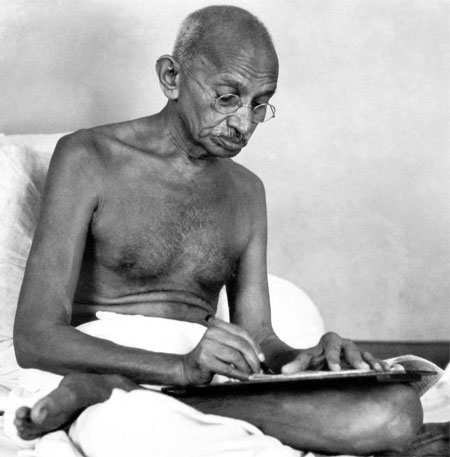 Gandhi in 1942 – (Picture Dinodia Photos/Getty Images) The once leader of the Indian independence movement against British rule, Gandhi was born Mohandas Karamchand Gandhi on October 2nd, 1869 and was assassinated on January 30th 1948, in his 79th year, by a Hindu nationalist, one Nathuram Godse, latter who had links with the extremist right-wing Hindu Mahasabha political party. Gandhi, alas, died when his assassin fired three bullets from a 9mm Beretta pistol into his chest at point-blank range.
The birthday of Mahatma Gandhi, on today Oct. 2nd 2017, is commemorated as Gandhi Jayanti, (meaning Gandhi Jubilee or festival) an official national holiday celebrated in India, usually by prayer meetings, commemorative ceremonies in different cities, in colleges, local government institutions and socio-political institutions. Painting and essay competitions are conducted as projects in schools and communities, encouraging discussion on a non-violent way of life.
On June 7, 1893, while travelling from Durban to Pretoria, Gandhi was asked to leave the first-class compartment on a train and move to the van compartment, despite having purchased a first-class ticket. When he refused, he was physically thrown from the carriage. This incident transformed Gandhi from the extremely shy, struggling barrister into a political activist, who would from that time go on to oppose all racial discrimination.
Likewise, while working in South Africa, Gandhi again faced discrimination, because of the colour of his skin. He was not allowed to sit with European passengers in a stagecoach and was told he had to sit on the floor next to the driver. He was then beaten when he refused. Indians during that time were not allowed to walk on public footpaths in South Africa, which led to him being kicked into a gutter by a police officer, for daring to walk near a house.
In yet another occasion, he was thrown off a train at Pietermaritzburg, having refusing to leave the first-class compartment. Here in protest he remained sitting in the train station, shivering all night, seriously considering whether he should return to India, or protest in support of his human rights. Thankfully he chose the latter and was allowed to board the train next day.
Known with the great respect as the “Father of the Nation” in India, Gandhi went on to play a pioneering role in India’s struggle for independence, emerging as a global icon of non-violent protest.
In the words of Dr Martin Luther King; “Gandhi was inevitable. If humanity is to progress, he is inescapable. We may ignore him at our own risk.”
Surely today these prophetic words, by Dr King, regarding Gandhi, must reverberate across the world, in light of today and other more recent happenings.
 Top Thurles Student, Ms Isobel Quirk Thurles student, 16-year-old Ms Isobel Quirk, was “completely shocked”, according to Independent.ie, when she opened the envelope containing her Junior Cert results this morning; latter which revealed she was one of just 4 students nationally who achieved 12 of the highest grades possible.
Ms Quirk, a student boarding at the Ursuline Convent (Clochar Na Nursulach) here in Thurles, believed she had done well in her Geography, History and Civic, Social & Political Education (CSPE), but after that she was unsure of the other subjects, in relation to their eventual outcomes.
She declares that the secret of her success is putting in about two or three hours of study each evening and after that, when examinations come around, simply trying her best.
“My parents were really happy. Actually, I think they were happier than I was”, Ms Quirk informed Independent.ie.
Ms Quirk has decided to skip Transition Year and focus on preparations for her Leaving Cert, however she remains unsure on what profession she will take up in the future, perhaps business or something law-related, she stated.
Principal of the high performing Ursuline Convent school, Ms Mary Butler stated that she was indeed very proud of Isobel’s achievements, and proud also of all her other hard working Junior Cert students, regardless of grades achieved.
World Water Week 2017
“A greater focus on protecting our most pristine water environments is needed,” says EPA
Back in late April 2006 the Environmental Protection Agency (EPA) received results of analysis on river sediment, taken from the Drish River and the Rossestown River, (both tributaries of the River Suir here in North Tipperary,) from Anglo American Lisheen Mining Ltd, Killoran, Moyne, just 17 minutes drive (14.1 km / 8.76 mls) via the N75 from Thurles, in Co. Tipperary.
Same analytical results related to the monitoring of metals in river sediment. The results received by the EPA showed unsatisfactorily high levels of metals, including lead and zinc, in river sediment. While the water itself was deemed unpolluted, the EPA notified local farmers in the area that farm animals e.g. cattle and sheep, should not be allowed direct access to the affected stretches of the rivers. Dredging or other river works were forbidden at these locations.
Rural dwellers were informed that Anglo American Lisheen Mining Limited, (EPA Licence Reg. No. 550) were working with the EPA’s Office of Environmental Enforcement in relation to re-mediation, to eliminate any further risks of pollution. Only inquisitive individuals from that dreaded ‘green activist fringe’ were taking notes, but were threatened that up to 1,000 highly paid jobs would be put at risk, should formal environmental protest be publicly registered.
This year 2017 we have, thanks to “environmental radicals” and others of that same ‘green fringe’, now become more acutely aware of our natural environment, and rightly raise objection; demanding caution, when ‘Big Business’ arrives outside our doors using the popular catch phrase ‘Major Job Creation Opportunities’, e.g. Fracking and proposals to allow Irish Cement to burn tyres and other industrial waste at its Mungret, Co Limerick plant, its dioxins and Carbon monoxide fumes to be blown on Ireland’s prevailing wind, which travels from the south and west, to be rained down on our clean, food producing County of Tipperary.
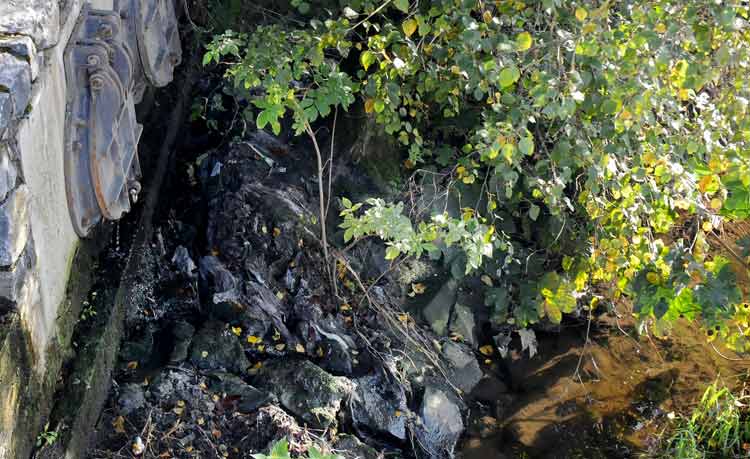
The EPA has today released its latest national assessment of water quality in Ireland. The release coincides with World Water Week, which links scientific understanding with policy-making and positive action toward water-related challenges.
The EPA assessment covers the six-year period between 2010 and 2015 and is the first full, six-year, assessment of the status of our waters under the Water Framework Directive. The assessment concludes that while there has been little overall change in water quality in the six years up to the end of 2015, there has been:-
- a failure to meet the planned national target of 13 per cent improvement in water status for the six-year period;
- a failure to prevent deterioration of water status at hundreds of water bodies around the country, which cancels out the improvements in water status at a similar number of water bodies in other parts of the country;
- welcome progress relating to a continued reduction in the level of seriously polluted waters – only 6 river water bodies were categorised as “Bad” in 2010–2015 compared to 19 in 2007–2009; and
- a continued and unwelcome decline in the number of our pristine rivers – only 21 sites achieved the highest quality rating from 2013-2015 compared to over 500 sites in the late 1980s.
Overall, 91 per cent of groundwater bodies, 57 per cent of rivers, 46 per cent of lakes, 31 per cent of estuaries and 79 per cent of coastal waters were found to be of good quality under the Water Framework Directive. The Water Framework Directive, other than in exceptional circumstances, requires good water status for all water bodies.
The assessment is available on the EPA website and the accompanying data used in the water quality assessments are available on www.catchments.ie.
More recent localised information on water quality is available on-line through https://www.epa.ie.
|
Support Us Help keep Thurles.info online by donating below. Thank you.
Total Donated 2026: €300.00
Thank You!
Daily Thurles Mass Livestream
|



Recent Comments