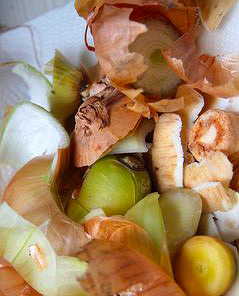
Reducing Food Waste is the Climate Action YOU can do three times a day, as well as saving you money.
Reducing food waste is one of the most effective actions you can undertake to address climate change – it’s simple, it’s free and makes a real difference. The EPA are challenging everyone to reduce food waste in order to combat climate change.
Do you stop and think when you scrape half-full plates into your waste bin; or throw away food that has been lurking at the back of the fridge?
Not only are we wasting food, but also the resources used to produce, transport and supply it. All of this waste causes unnecessary greenhouse gas emissions and scientists estimate that food waste produces up to 10% of all global carbon emissions. In terms of addressing climate change, reducing food waste is an action in which everyone can become involved.
You might be surprised to learn that reducing food waste is one of the most important day-to-day actions we can take, to tackle climate change and it won’t cost you anything. In Ireland over 200,000 tonnes of food is wasted at home, and this waste has a greater impact on the environment given the energy consumed in processing, transport, packaging and preparation. To help you to reduce your food waste the EPA have some great tips and advice, with same available to view HERE.
Ms Mary Frances Rochford(EPA Programme Manager) has stated:
“We talk about climate change and the need for action, but often it is hard to know where to start. Reducing food waste is an immediate and effective way to reduce your personal carbon footprint. If every household in Ireland takes steps to reduce their food waste, this would be a great achievement towards reducing our national footprint. We as a nation are best when we work together to tackle issues and collectively, our individual actions will make a real difference.”
More than one quarter of all food produced is wasted worldwide. Here, in Ireland, we generate more than one million tonnes of food waste every year, with same representing a carbon footprint as high as 3.6 million tonnes of carbon dioxide equivalent. The EPA has three simple steps that individuals and families can take to get started in your food waste battle:
(1) Make a shopping list, and stick to it. (2) Make the most of the food you buy; don’t forget the leftovers. (3) If and when plans change, freeze your food and use it later.
We are encouraging everyone to join us in our Stop Food Waste pledge to go a week without wasting food.
Ms Rochford added: “As part of the Climate Action Plan, Ireland has committed to halving food waste by 2030. We will do this by working with food producers; retailers and restaurants; but we also need every person in Ireland to take their own action. So make the pledge, get involved and begin to reduce the food you currently waste.”
Environmental Protection Agency, Ireland publishes Junior Cert resource pack on reducing food waste to tackle climate change.
The EPA have produced an educational resource pack to support over 20,000 Junior Certificate students to learn about sustainable living through the Home Economics curriculum.
Reducing food waste is one of the most effective actions we can take to address climate change. The resource pack is to be used by Home Economics teachers to engage students on food waste prevention. The pack supports the new Junior Cycle Curriculum and is available to all post-primary schools across the country. You can download the RESOURCE PACK HERE.
Ms Laura Burke, (EPA Director General), has statedsaid: “With over 200,000 tonnes of food waste generated in Irish homes every year, it is clear that we need to change how we manage our food from shopping – to storage – to cooking. The participation of teachers in the development of this resource ensures that it is of a high standard and relevant to the curriculum.”
The pack is a valuable resource for Home Economics Teachers and provides information and tools to teach students about food waste prevention and its important link to climate change. The pack contains an introduction for teachers; posters & handouts with attractive images and activity pages on planning & grocery shopping, food storage, cooking & preserving.
The Minister for Communications, Climate Action and the Environment, Mr Richard Bruton T.D has welcomed the resource, stating:
“Managing our resources properly is crucial to securing a better, more sustainable Ireland for future generations. We know that 70% of food waste is avoidable and that this costs Irish households approximately €700 per year and contributes significantly to Ireland’s greenhouse gas emissions. This resource is a useful tool for teachers and will help students understand the importance of reducing food waste. It includes a number of practical steps, such as planning meals, making shopping lists, using proper storage methods etc, that students can apply in their own lives. More broadly, we must do more to bring climate action into the classroom. Curriculum must reflect the importance of this issue and promote informed understanding. The Climate Action Plan commits to the development of new short course on climate action for Junior Cycle. It is crucial that our young people are informed and engage with, what is the biggest challenge of their generation.”
Minister for Education and Skills, Mr Joe McHugh TD has also welcomed the resource:
“Educating our students about Sustainable Development is key to ensuring responsible citizenship into the future. This resource promotes the active participation by young people in preventing food waste, which will positively impact on us, our children and future generations.”
Speaking at the launch of the resource at the annual conference of the Association for Home Economics Teachers, Ms Amanda McCloat(Head of the Home Economics Department at St. Angela’s College) said:
“This is a very useful resource for teachers. We are delighted to have been involved in the review process. Home Economics education empowers students with practical food literacy skills which are essential in helping to combat the problem of food waste.”
The resource was developed through the EPA-led Local Authority Prevention Network and is a collaboration between Galway City Council, Galway County Council, Roscommon County Council, Mayo County Council, VOICE Ireland and St. Angela’s College, Sligo.
Facing up to Climate Change: Where next for Climate Science? – EPA Climate Change Lecture Series
Dame Professor Julia Slingo will present the next EPA Climate Change Lecture as part of the National Dialogue on Climate Action. This will take place on Wednesday 20th November in the Round Room at the Mansion House in Dublin. The event will also be live streamed here at: https://bit.ly/2fR7y72. In this public lecture, Dame Julia will discuss what is next for climate science, as we tackle the climate challenges that lie ahead.
Dame Professor Julia Slingo commented: “The work of the climate scientist is never done as the science continues to evolve. Our knowledge and understanding of how the climate system works and how it’s going to change continues to depend on answering fundamental scientific questions. I look forward to delivering the EPA’s climate change lecture and setting out the ongoing role of climate science in addressing the greatest challenge of the 21st century.”
Ms Laura Burke, (EPA Director General) said,
“The role for climate science is greater than ever before, as we face the challenges of how to mitigate global warming, how to adapt to a changing climate, and how to make ourselves more resilient to weather and climate hazards. We are delighted to welcome Dame Julia Slingo, an esteemed climate scientist, to deliver the EPA’s climate change lecture and we look forward to hearing where next for climate science which continues to shape our knowledge and understanding of the climate system”.
Dame Slingo is a distinguished climate scientist and has worked in many of the leading international meteorological and climatological institutions, including a period as Chief Scientist in the United Kingdom Meteorological Office, from 2009 to 2016. She was chosen as Laureate of European Meteorological Society Silver Medal in 2017, its highest award, for outstanding contributions to meteorology and climate predictions.
Met Éireann will partner with the EPA in hosting this public Climate Change lecture by Dame Julia Slingo.
Mr Séamus Walsh (Head of Climatology and Observations in Met Éireann) stated:
“Met Éireann is delighted to co-host this event. It is a great privilege to have a scientist of Dame Professor Julia Slingo’s standing deliver a public lecture on the future of Climate Science, I would encourage anyone with an interest in Climatology to attend”.
This free event requires registration and tickets can be booked at https://bit.ly/34kqiTn. People can also follow the discussion on Twitter using the hashtag #ClimateLecture2019.
Further information: Contact Niamh Hatchell/ Emily Williamson, EPA Media Relations Office Tel: 053-9170770(24 hours) or media@epa.ie.
Repeated delays in the elimination of raw sewage are unacceptable and pose a risk to our environment and public health, according to the Environmental Protection Agency.
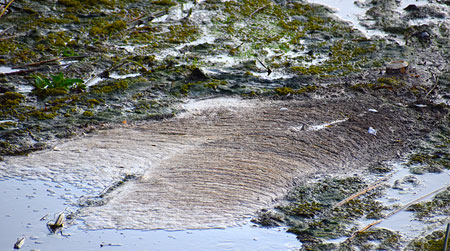
We are aware that raw sewage and other contaminates are flowing from some areas including the local authority sewage treatment plant in Thurles, directly into the River Suir, both up and downstream. This was confirmed back in late October of this year, by the Director of Services for Water, currently stationed with Tipperary County Council, Mr Marcus O’Connor, who finally admitted that double standards are permitted, when it comes to environmental issues affecting the River Suir here in Thurles, Co. Tipperary.
Sewage from the equivalent of 77,000 people in 36 towns and villages is being released into the environment every day without treatment. The pace of improvements needed to protect our environment and public health is too slow. Raw sewage discharges will continue past 2021 in 13 locations.
The EPA report on Urban Waste Water Treatment in 2018, only released today, shows there have been some improvements in waste water treatment in the past year, including the elimination of discharges of raw sewage from two areas.
However, the pace at which Irish Water is fixing the legacy of deficiencies in Ireland’s waste water treatment infrastructure is too slow, and many areas continue to release inadequately treated waste water into the environment. Raw sewage from 36 towns and villages is still released into our coastal waters and rivers today.
Commenting on the report Dr. Tom Ryan, (Director of the EPA’s Office of Environmental Enforcement) has stated: – “Inadequately treated waste water can pollute our environment and is a risk to people’s health. We are seeing repeated delays in providing treatment for many areas and it is not acceptable that 13 towns and villages will still have no waste water treatment by the end of 2021. Irish Water must speed up its delivery of key infrastructure.”
Mr Andy Fanning, (Programme Manager of the EPA’s Office of Environmental Enforcement) has commented that: – “The underlying problem in many cases is a lack of adequate treatment infrastructure. This is a legacy issue which must be solved by investment in new treatment systems. However, some towns that already have the necessary treatment in place did not perform as well as they should. We require Irish Water to continue to improve how it operates and maintains waste water treatment systems to get the best performance from them”.
“Join us in Thurles Library on Tuesday November 26th, at 6.30pm, for our Teddy Bear Sleepover!
Simply bring your Teddy along to the Thurles Library for some bedtime stories, then tuck Teddy in and kiss him goodnight! When the library lights go out later, let’s see what mischief your Teddy gets into!
Each Teddy will receive a tag with their name and when you collect your Teddy the following day in the library, don’t forget to pick up his certificate!
As with all exciting and educational events at Thurles Library, parents are kindly requested to please reserve the expected attendance of your child, in advance, by telephoning 0761-06-6131.”
Note: This event is most suitable for children up to and including first class.
This website uses cookies to improve your experience. We'll assume you're ok with this, but you can opt-out if you wish.AcceptRead More
Privacy & Cookies Policy
Privacy Overview
This website uses cookies to improve your experience while you navigate through the website. Out of these, the cookies that are categorized as necessary are stored on your browser as they are essential for the working of basic functionalities of the website. We also use third-party cookies that help us analyze and understand how you use this website. These cookies will be stored in your browser only with your consent. You also have the option to opt-out of these cookies. But opting out of some of these cookies may affect your browsing experience.
Necessary cookies are absolutely essential for the website to function properly. This category only includes cookies that ensures basic functionalities and security features of the website. These cookies do not store any personal information.
Any cookies that may not be particularly necessary for the website to function and is used specifically to collect user personal data via analytics, ads, other embedded contents are termed as non-necessary cookies. It is mandatory to procure user consent prior to running these cookies on your website.




Recent Comments