As influenza activity continues to climb across Ireland, the HSE is calling on eligible members of the public to get their flu vaccine now, before cases escalate further.
Recent data from the Health Protection Surveillance Centre (HPSC) shows that influenza activity rose in week 44 of 2025, with the highest number of cases so far among adults aged 65 years and older. Hospitalisations have also increased. Multiple strains, A(H3), A(H1)pdm09 and influenza B, have already been detected this season.
Local hospitals, including Tipperary University Hospital, and Limerick University Hospital, are under heavy pressure, with Emergency Departments experiencing large numbers of people presenting. As a result, many hospitals have introduced visitor restrictions to help manage the rise in flu cases.
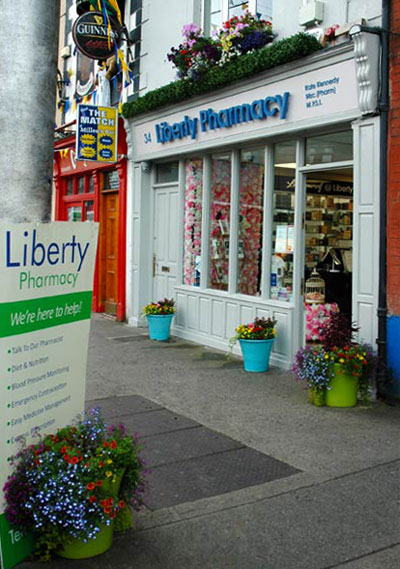
With flu cases rising sharply, the vaccine remains the safest and most effective way to protect yourself, your family, and the wider community. Speaking to Liberty Pharmacy(Prop: Kate Kennedy) this morning, (Premises situated at No. 34 Lower Liberty Square, Thurles, Co. TipperaryTel: 0504 90604), their spokesperson stated, “We continue to have appointments available and now is the time to act, while the vaccine is still readily accessible.”
Keep in mind: Vaccination is free under the national programme for people aged 60 and over, children aged 2–17, pregnant women, health-care workers, carers, household contacts of people at higher risk, residents of long-stay facilities, and those with certain health conditions or regular contact with poultry, waterfowl or pigs.
Getting vaccinated helps prevent serious illness — and helps protect those around you.
The proposal to strip Herzog Park of its name is more than a routine motion before Dublin City Council. It is a gesture that cuts directly across Ireland’s own history, its values, and its long, if now fading, relationship with our Jewish community.
An Taoiseach Mr Micheál Martin was right to call this proposal “divisive and wrong”. It is exactly that. To remove the Herzog name is to erase a story woven deeply into the fabric of the Irish State: a story of solidarity, shared struggle, and the willingness of a small minority community to stand with Ireland, before Irish independence was secure.
LateRabbi Yitzhak Halevi Herzog. (1888–1959)
Chaim Herzog’s father, Rabbi Yitzhak Halevi Herzog, took his place beside the first Dáil at a moment when such an act carried real personal risk. He did not choose silence or obscurity. Instead, he offered his leadership, his scholarship, and his friendship to a fledgling nation then struggling to define itself.
In the decades that followed, Rabbi Herzog built an unlikely, but enduring, relationship with Éamon de Valera. He learned Irish, advised during the drafting of the 1937 Irish Constitution, and ensured that the Jewish community, then facing existential threat elsewhere in Europe, was explicitly protected in our founding document. De Valera himself regarded this protection as essential.
Removing the Herzog name now shows little regard for that legacy. It risks signalling that Irish memory is selective, and that contributions made by minorities count only until the political winds shift.
The forest of 10,000 trees planted in Israel in 1965 in de Valera’s honour was intended as a lasting symbol of mutual respect. Today, that symbol stands in stark contrast to a relationship that has deteriorated to the point where the Israeli Embassy has closed its doors in Dublin. Ireland’s foreign policy in recent years has been shaped by new pressures, shifting alliances, and at times, an eagerness to move with global trends rather than stand firmly in the centre.
The debate over Herzog Park is symptomatic of something deeper: a narrowing of historical perspective. In the heat of present-day geopolitical tensions, there is a temptation to reduce Ireland’s stance to simple binaries, solidarity with one cause, with condemnation of another. But this neglects the complexities of our own past, including the violence we once justified in the name of liberation. The Good Friday Agreement may have delivered peace, but it also allowed a form of civic amnesia to settle in. We remember heroics; we forget those who suffered outside the story we prefer to tell.
It is easy to brandish the language of liberation and resistance. It is harder to honour the quieter, older stories, like that of the Herzogs, who stood with Ireland not for applause or advantage, but because it was right.
Contemporary Political Climate. Renaming Herzog Park would say far more about today’s Ireland than about its past. It would suggest a willingness to discard historical nuance, to minimise minority contributions, and to allow contemporary tensions to override long-established bonds.
The proposal should be immediately withdrawn. Not as a favour to one community, but as an affirmation of Ireland’s own basic integrity, its commitment to remembering fairly, honouring generously, and resisting the pull of easy revisionism by those foolishly elected individuals, each with little knowledge or understanding of our rich Irish history. Ireland’s political landscape has been increasingly influenced by global tensions, including heightened pro-Palestinian activism by in particular Fine Gael. Critics warn that the Irish State has risked aligning itself with more extreme elements, even as it seeks to preserve long standing international relationships, including its strategic ties with the United States.
However, there are statutory safeguards and restrictions already in place. Name changes require formal procedures, not ad-hoc renaming. While there isn’t a blanket ban on changing Irish place names, there are laws which regulate and restrict how name changes can happen.
A powerful new advert from the Data Protection Commission (DPC) in Ireland, part of the “Pause Before You Post” initiative, has been making waves online.
As shown hereunder, the film begins as an innocent family stroll through a shopping centre, with a mother, father and young daughter. What starts out as a normal outing quickly becomes unsettling, as strangers begin greeting the child by name and mentioning intimate details of her life, information that, in the scenario, was gleaned from her parents’ social-media posts.
As the tension builds, one stranger even downloads a photo of the girl, a chilling visual that underlines the core message of the campaign: every time you share your child’s life online, you risk sharing their personal data with the world.
What the campaign warns about:
According to the DPC, the ordinary act of “sharenting”; posting photos, videos or personal data about children, can unintentionally build a permanent digital footprint for them. This may include names, dates of birth, images, friends, locations, clubs or routines, all shared without a child’s consent or understanding.
The campaign highlights four principal risks: (1) Misuse of images/data, photos and videos may be downloaded, reused or manipulated, possibly even turned into harmful content, such as deepfakes or child-sexual-abuse material. (2) Unwanted contact or exposure to strangers, information such as routines, clubs or locations can make children vulnerable. (3) Long-term digital footprint & privacy loss, once shared, data can remain publicly accessible indefinitely; children may lose control over how their childhood memories are used or perceived. (4) Potential identity/fraud risks, shared personal data can facilitate identity theft or fraud, especially if combined with other publicly available information.
What parents and guardians should consider: The DPC doesn’t call for an outright ban on sharing children’s photos or memories, instead, it urges caution and mindfulness.
Key advice includes: Pause and reflect: Before posting, consider whether you’d be comfortable if a stranger knew this information about your child. Share selectively: Use private channels, close family groups or private messaging, rather than public social-media posts. Minimise identifiable info: Avoid posting names, dates of birth, school, clubs, routines — information that can be combined to build a picture of a child’s identity. Wait for consent: As children grow older, involve them in decisions about what’s shared. Their agency over their own digital footprint deserves respect.
Why the ad feels like a horror-movie and why that matters:
What makes “Pause Before You Post” especially striking is how it transforms a mundane, everyday moment into something deeply unsettling. That sense of normality turned on its head, strangers knowing things about your child you only shared with friends or family, evokes the same kind of dread that horror films aim for. That visceral reaction is the campaign’s intent; to force parents to confront the hidden risks of everyday oversharing. The shock is deliberate. It grabs attention and once you feel that discomfort, you can start to see just how easy it is to build a lasting digital “record” for a child, one over which they may have little future control.
A senior officer with the Garda National Cyber Crime Bureau has warned that children are being groomed and exploited on online gaming platforms, at what he described as an “alarming scale.”
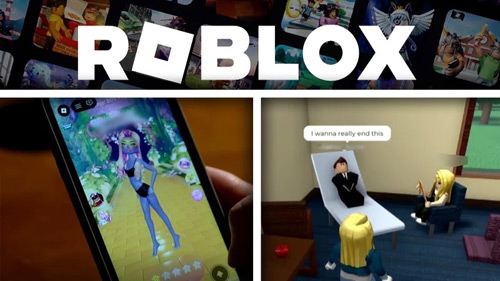
Detective Superintendent Michael Mullen told RTÉ’s Prime Time that Gardaí are now regularly encountering cases of grooming, sexual exploitation and abuse linked to platforms such as Roblox, which is particularly popular among younger children. He said he was “very concerned” about the level of exploitation occurring “on a daily basis.”
Sexual Exploitation and Abuse linked to Childrens Roblox platform, says Senior Detective.
Roblox, which has over 150 million daily users, allows children as young as five years old to set up accounts without age verification or mandatory parental approval. During a Prime Time investigation, test accounts accessed games containing simulated sexual behaviour, dating role-play, racial slurs and suicide references; all prohibited under Roblox’s rules. Gambling-style features and users soliciting the platform’s virtual currency were also identified.
Det Supt Mullen cited cases where Irish children were coerced into buying items for other users and, in some instances, pressured to self-harm. In one case, a nine-year-old seeking virtual currency was targeted by adults demanding explicit acts in return.
Roblox is facing mounting international scrutiny, including legal actions in several US states alleging failures to protect minors. Former Garda and ex-Interpol specialist Mr Mick Moran, now CEO of Hotline.ie, said similar risks exist in Ireland. “Absolutely, children here are being groomed,” he said.
Experts highlighted the ease with which adults and children can interact on the same servers, with Prime Time observing attempts by older users to move minors onto private messaging apps. Researchers, testing Roblox, also reported widespread sexualised behaviour and abusive language.
Roblox says child safety is a “top priority” and that it removed content highlighted by the programme. It will introduce age verification for chat functions in Ireland early next year, though specialists warn that determined predators can still bypass such measures.
Gardaí and online safety advocates emphasised the vital role of parents. They advised parents to set up accounts alongside their children, know the games being played, use parental controls, and reinforce rules around avoiding private chats with strangers.
A Must Watch For Parents. NOTE:Prime Time’s full investigation airs on this evening, November 27th at 9:35pm on RTÉ One and RTÉ Player.
Dangerous ‘nitazene’ opioids are on the rise in Ireland and researchers are worried. Be aware!
An Ireland coroner has issued a grave warning regarding the escalating dangers posed by nitazenes, latter a ‘new to the market’ and a highly potent group of synthetic opioids, now increasingly linked to sudden deaths across the region.
The alert follows the inquest into the death of 33-year-old Portadown man, Mr Jay Woolsey, who died in August 2024. During the hearing, the coroner stressed that nitazenes are far stronger than previously understood, in some cases hundreds or even thousands of times more potent than morphine. Since late 2023, these substances have been entering the drug market in Ireland and at speed.
Authorities warn that the potency of nitazenes varies significantly, with some similar in strength to heroin while others far exceed the power of fentanyl. This inconsistency creates a dangerously high risk of accidental overdose. Compounding the threat, nitazenes have been identified in drugs typically seen as non-opioid substances, including MDMA, ketamine and benzodiazepines, thus placing unsuspecting users at severe risk. Note:Fentanyl test strips do not detect nitazenes.
The physical effects mirror those of other opioids and can include:
Nitazene.
Euphoria or a dreamlike state.
Unresponsiveness or loss of consciousness.
Itchiness.
Severe nausea or vomiting.
Slow or difficult breathing.
Blue lips or fingertips.
Cold, clammy skin‘
Pinpoint pupils.
To date, ten additional nitazene-related deaths have been recorded across the North of Ireland, many involving polydrug use. The coroner noted that families are often unaware that loved ones are sourcing dangerous substances online or via the dark web.
Public Health Agencies and police have reiterated serious concerns about nitazenes being mixed with heroin and other drugs, often without users’ knowledge, sharply increasing the potential for fatal overdose.
Public health agencies and support services are now being urged to take immediate action, including:
Strengthening early-warning systems and enhancing monitoring of emerging synthetic opioids, ensuring rapid information-sharing across health, Gardaí, justice and community sectors.
Improving multi-agency cooperation to enable fast, coordinated responses to overdose spikes and new drug threats.
Expanding rapid-access treatment options and ensuring families affected by overdose receive timely, appropriate support.
Issuing clear and consistent public alerts when nitazenes are detected and promoting practical harm-reduction guidance for drug users and their families.
Making nitazene test strips available through harm-reduction and outreach services to help identify contamination and prevent further deaths.
Authorities are urging communities to remain vigilant and to seek immediate medical help if signs of opioid overdose are present.
This website uses cookies to improve your experience. We'll assume you're ok with this, but you can opt-out if you wish.AcceptRead More
Privacy & Cookies Policy
Privacy Overview
This website uses cookies to improve your experience while you navigate through the website. Out of these, the cookies that are categorized as necessary are stored on your browser as they are essential for the working of basic functionalities of the website. We also use third-party cookies that help us analyze and understand how you use this website. These cookies will be stored in your browser only with your consent. You also have the option to opt-out of these cookies. But opting out of some of these cookies may affect your browsing experience.
Necessary cookies are absolutely essential for the website to function properly. This category only includes cookies that ensures basic functionalities and security features of the website. These cookies do not store any personal information.
Any cookies that may not be particularly necessary for the website to function and is used specifically to collect user personal data via analytics, ads, other embedded contents are termed as non-necessary cookies. It is mandatory to procure user consent prior to running these cookies on your website.







Recent Comments