|
|
- More child sexual abuse material removed from the Internet last year than in previous 21 years combined
- Early results on removal of intimate image abuse are encouraging
The Minister for Justice, Mr Simon Harris TD, has welcomed the publication of the 2021 Annual Report of Hotline.ie, the national reporting service for potentially criminal content online, including child sexual abuse material and intimate image abuse.
Last year, Hotline.ie received the highest number of reports on record in a calendar year, some 29,794 reports compared with 10,699 the previous year. It means that there were as many reports in 2021 as in the previous three years combined.
Minister Harris said, “This marks another year of the important, worthy and difficult work done by Hotline.ie in providing a means for members of the public to confidentially, anonymously and securely report suspected illegal content online, and in particular child sexual abuse material (CSAM).
In collaboration with An Garda Síochána, and overseen by the Department of Justice, Hotline.ie has undertaken this work for 22 years with great diligence and professionalism.
Prioritising online safety is a key element in building stronger and safer communities under the Programme for Government, and addressing complex issues in this space has, and continues to be, a priority.”
The majority of the reports related to suspected child sex abuse material, with some 14,772 assessed by the analysts at Hotline.ie as relating to child sexual abuse. This represents 25% more child sexual abuse material reports received, classified and actioned by Hotline.ie than in the previous 21 years combined. Each report can involve anything from a single image to thousands of images and videos, with victims ranging in age from infants younger than three to pubescent children.
Minister Harris added, “Each image is a crime. Each image has a victim, or victims, who have suffered abuse, and who are re-victimised each time their abuse is viewed as it is shared across the globe. We must never become hardened or inured to these figures.”
Minister Harris also noted Ireland’s support of the EU’s focus on this important area and our commitment to working with our partners to agree comprehensive requirements for online companies to assess and mitigate the extent to which their platforms are being misused for the purposes of child sexual abuse.
This is both in terms of hosting material and the exploitation by abusers of online services for the purposes of grooming children
The 2021 Hotline.ie report also includes, for the first time, statistics on intimate image abuse (IIA), or the non-consensual sharing of intimate images and videos. On the back of the Harassment, Harmful Communications and Related Offences Act, which Minister McEntee enacted early in 2021, the Department of Justice partnered with Hotline.ie to make reporting intimate image abuse as easy as possible for as many victims as possible.
Once illegal content is reported to Hotline.ie, their experts assess the report and decide on next steps, including getting the content removed from the internet.
Minister Harris added, “Between September 2021 and September 2022, Hotline.ie received 773 reports of suspected IIA. Of the 525 of these that Hotline.ie could take action on – as they contained active and publicly accessible online addresses – some 94pc have been successfully removed at source.
The removal rate is very encouraging, particularly as none of the content was hosted in Ireland.
Hotline.ie liaises with An Garda Síochana where appropriate on these cases, and it is of course open to victims to contact our police service directly.”
The annual report shows that 83% of those affected by intimate image abuse were female, with some 73pc between the ages of 25 and 34. In approximately half of the cases, the imagery was found on video streaming sites.
Ms Ana Niculescu, (Chief Executive of Hotline.ie), said, “We understand that going through such an experience can cause significant distress and even have long-lasting impact on a person’s life and wellbeing.
The team at Hotline.ie is honoured to be able to play an active role to break the cycle of abuse, prevent repeat-victimisation, and support those who have been victims of intimate image abuse on their healing journey.”
Two men remain detained in Garda custody in Co. Tipperary, following a joint-agency search operation carried out on Wednesday last, in the Heywood / Ardgeeha areas of Clonmel, Co. Tipperary.
Gardaí from the Clonmel District, assisted by members of the Armed Support Unit; Dog Unit; Public Order Unit, and the Stolen Vehicle Investigation Unit, all took part in what was described as an intelligence led search operation.
Personnel from the Irish Defence Forces based in Co. Cork, Revenue Customs Service and the Irish Society for the Prevention of Cruelty to Animals (ISPCA) also assisted in the operation.
Five persons in all were initially arrested, with one male and two females having since been released without charge.
A file is being prepared for the Director of Public Prosecutions (DPP), following the seizure by the ISPCA of 15 dogs and 3 horses; while 3 caravans latter believed stolen and a quantity of drugs with an estimated street value of €2,000 were also located.
Further investigations remain ongoing.
The Minister of State at the Department of Justice, Mr James Browne, TD, will today, host the annual ceremony to mark the tenth national Missing Persons Day.
Missing Persons Day is an annual commemorative day for families and friends to remember their missing loved ones. Missing Persons Day also provides a nationwide platform to appeal to the public for information on missing persons.
To mark national “Missing Persons Day”, a commemorative ceremony is hosted each year. The ceremony features spoken contributions from families of missing persons, as well as speeches from the Garda Commissioner Mr Drew Harris, and others including state and voluntary organisations, expert practitioners and academics. This year’s ceremony is compèred by Mr Barry Cummins, (RTE’s Prime Time Security Correspondent).
2022 marks the welcome return of an in-person ceremony, following the delivery of online commemorative ceremonies in 2020 and 2021, during the COVID-19 pandemic. This year’s ceremony takes place at Croke Park. The ceremony will also be livestreamed on the Department’s website, enabling those who are unable to attend in person or are living overseas, to view proceedings.
Speaking ahead of the ceremony, Minister Browne said: “National Missing Persons Day is an important date in our national calendar. The objective of Missing Persons Day is twofold: the Missing Persons Day ceremony offers families and friends of missing people the opportunity to gather together to commemorate their loved ones; while Missing Persons Day equally provides a critical national focal point to raise awareness of Ireland’s missing persons.
I want to use today to echo the central messages we communicate each year. If you have information, no matter how minor it may appear, I would urge you to please come forward and share this information with An Garda Síochána. Any information has the potential to make a contribution to resolving a missing person case.
I also want to encourage families of missing persons who have yet to provide a DNA sample to consider doing so. Your DNA sample will be compared with samples held on Ireland’s DNA database to check if a matching sample of DNA is already stored on the database. Forensic scientists are available at today’s ceremony to take your DNA sample, or you can provide a DNA sample to Gardaí. The collection and matching of DNA samples has made a crucial contribution to several missing persons cases in this country in recent years.”
Also speaking ahead of the ceremony, Garda Commissioner Drew Harris has stated,
“An Garda Síochána has a duty to establish the facts about those who have gone missing in Ireland. The Garda Missing Persons Bureau and Gardaí nationwide work hard to locate all those who go missing. This can sometimes require our close co-operation with international policing partners including Europol and Interpol.
In recent years, there has been a greater, collective focus on ensuring families are kept informed of the progress of investigations. The tools available to us to investigate missing persons also continue to expand and improve. Advances in DNA Tracking and the establishment of a National Missing Persons DNA database place us in a far stronger position to identify those who have gone missing.
We urge anyone with information linked with the disappearance of a person, no matter how insignificant it might seem, to please come forward and speak with a member of An Garda Síochána.”
This year, families of missing people are being encouraged to provide a DNA sample, to Gardaí, at an annual ceremony marking National Missing Persons Day.
Minister Browne added: “On this significant anniversary of Ireland’s national Missing Persons Day, I am delighted to launch an information guide for families and friends of missing persons. The guide seeks to act as a signpost to information on justice sector agencies and their role in missing persons’ cases. Additional information on other State, support and voluntary organisations is also included in the guide.
Missing Persons Day is an all-Ireland commemorative day and I am particularly pleased that the PSNI will speak at this year’s ceremony for the first time. My Department greatly appreciates the long-standing support for Missing Persons Day from a range of organisations in Northern Ireland.
My special thanks goes to the families of missing people who will speaking at this years ceremony. I also want to thank all who have supported Missing Persons Day since its inception. Thanks to your support Missing Persons Day can continue to evolve over the coming decade.”
This year’s ceremony commences at 11:15am and is livestreamed at National Missing Person’s Day Ceremony 2022 – YouTube and via social channels (Twitter, Facebook and YouTube). The ceremony will also be available to be watched on the Department’s website, at any point after the conclusion of the event.
Tipperary Roads Policing Unit while conducting a speed checkpoint, along the M8 (Motorway) over the past number of days, detected a vehicle speeding.
The driver subsequently failed the new roadside “DrugWipe 6 S test, which indicted the presence of cannabis.
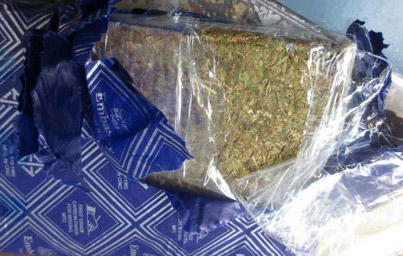
A passenger in the vehicle also was found to be in possession of cannabis.
The cannabis was confiscated and the driver was arrested on suspicion of Drug Driving.
Further investigations are ongoing.
The Tipperary Roads Policing Unit, carrying out patrols this evening, intercepted a vehicle for having a number of defects.
The driver later was arrested on suspicion of Drug Driving, after failing a drug test for Cocaine, using the new Garda DrugWipe apparatus.
Gardaí are deploying a new drug testing device for drivers as and from today, to coincide with the start of their Christmas and New Year Road Safety campaign.
This new apparatus will test for a wider range of drugs and will be used by every roads policing unit in our Republic, thus forming a central part of the garda campaign over the next six weeks.
The new test, as stated in the video shown above, can deliver, for the first time, results in around eight minutes and can test for cannabis, cocaine, benzodiazepines and opiates, as well as amphetamines and methamphetamines.
Meanwhile, yesterday, Tipperary Roads Policing Unit stopped a vehicle after it turned away from a checkpoint here in Thurles, Co. Tipperary.
It was found that the vehicle’s driver had never held a licence or insurance.
The vehicle was immediately seized, with a court appearance expected to follow.
|
Support Us Help keep Thurles.info online by donating below. Thank you.
Total Donated 2026: €300.00
Thank You!
Daily Thurles Mass Livestream
|






Recent Comments