Nenagh Gaol Has Not Been Closed to Visitors for 100 Years – New Project Concerns a Separate Cell Block
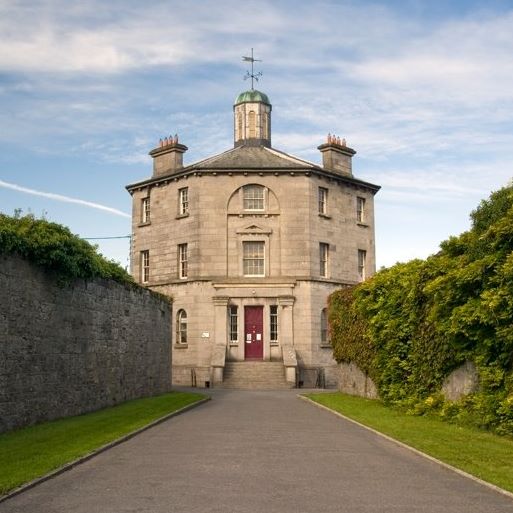
Nenagh Gaol, Co. Tipperary.
A recent press report [Irish Independent shown here] announcing a new exhibition at Nenagh Gaol could give readers the mistaken impression that the entire historic site has been closed to the public for more than a century. That is not the case.
Nenagh Heritage Centre, situated within the former gaol complex, has welcomed thousands of visitors since 1984. It occupies the former Governor’s House and Gatehouse, where visitors can already explore the site’s history and see the condemned cells associated with the 17 men executed there between 1842 and 1858.
The new proposed development relates specifically to a separate three-storey cell block that has not previously formed part of the public visitor experience. Tipperary County Council’s planning documents describe this building as a former cell block currently used as a council storage area. The project will conserve and adapt this previously inaccessible block, connect it with the existing Heritage Centre and introduce a new visitor exhibition, featuring interpretation and audio-visual displays.
Therefore, while it may be correct to say that this particular cell block is being opened to visitors for the first time in more than 100 years, it is inaccurate to suggest that Nenagh Gaol or its Heritage Centre has been closed throughout that period.
There is also a difference in the figures being reported. The official eTenders notice gives the estimated contract value as €110,000 excluding VAT, rather than just under €130,000.
Tourists in the area are encouraged to visit this historic venue, which historically housed those sentenced to death by public hanging. See link shown HERE
Today marks the anniversary of the murder of Detective Garda Frank Hand, who was fatally shot by members of the Provisional IRA; latter the paramilitary organisation historically and politically associated with Sinn Féin, while protecting a delivery of pension and social-welfare money in County Meath.
On the morning of August 10th 1984, Detective Garda Hand and his colleague, Detective Garda Michael Dowd, were travelling in an unmarked Garda car as the armed escort for a Post Office mail van. When the vehicles stopped outside Drumree Post Office, they were confronted by an armed Provisional IRA unit attempting to rob the delivery. Gunfire was exchanged between the raiders and the Gardaí. Both detectives were wounded, but Detective Garda Hand’s injuries sadly proved fatal.
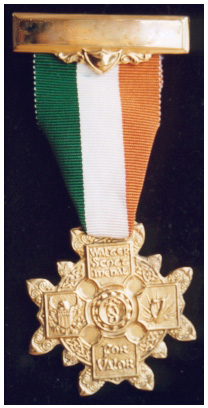
Scott Gold Medal
The stolen money was subsequently recovered. Mr Tony Eccles, Mr Patrick McPhillips and Mr Brian McShane were convicted of Detective Garda Hand’s capital murder. They all received death sentences, which were commuted to 40 years imprisonment. The three men were later released early under the provisions associated with the Belfast Agreement.
Detective Mr Frank Hand was born on August 29th 1957, the fourth of seven children from Ardmullen, Curraghboy, County Roscommon, (near Athlone). He joined An Garda Síochána on July 20th 1977. After completing his training, at the Garda Training Centre in Templemore, County Tipperary, (Today called the Garda College), he was assigned to Donnybrook Garda Station in Dublin. On April 16th 1982, he was appointed to the Central Detective Unit at Harcourt Square.
During his short but distinguished career, he also played an important part in the arrest of murderer Mr Malcolm MacArthur in 1982. Detective Hand played a key role in the August 1982 arrest of murderer Mr MacArthur at the Attorney General’s apartment in Dalkey. Detective Hand had remained stationed at the rear of the property, while other officers moved towards the front; Assistant Garda Commissioner Mr Tony Hickey later recalled that this decision had prevented MacArthur from escaping.
Detective Hand was killed just19 days before his 27th birthday. He had married Ms Breda Horgan; also a member of An Garda Síochána, only five weeks earlier. His newly married wife was then pregnant at the time of his death, and their daughter, Fiona, was born after her father was murdered.
Detective Hand gave his life while protecting his colleagues and the public. Behind the uniform was a young husband, an expectant father and a dedicated Garda whose future was taken from him in an act of criminal violence.
Today, we remember Detective Garda Frank Hand, his widow Mrs Breda Hand, his daughter Fiona, his wider family and all those affected by the attack at Drumree.
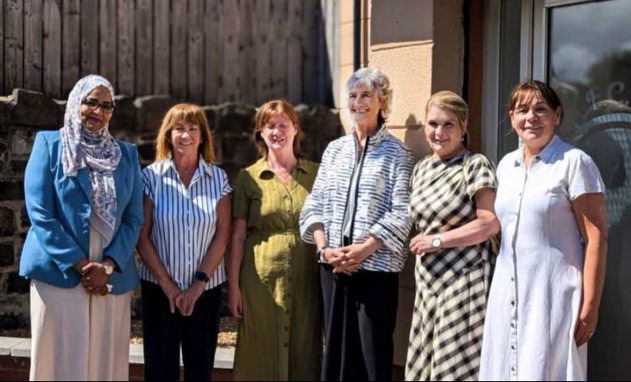
A photograph taken during President Catherine Connolly’s visit to Belfast has reopened one of the most painful cases of the Troubles.
The image shows the Irish President smiling in a group outside the Falls Women’s Centre, with Ms Mary McArdle standing immediately beside her and to her right.
Ms Mary McArdle(Irish republican and former Provisional Irish Republican Army (IRA) member), is the only person convicted of the 1984 murder of Belfast teacher Ms Mary Travers.
President Connolly visited the Falls Women’s Centre on Wednesday, August 5th 2026, during a series of official engagements connected with Fleadh Cheoil na hÉireann. The visit is recorded in the President’s official diary. The photograph shows Ms McArdle standing right, beside the President. It has not been established whether President Connolly knew McArdle would be present, recognised her or deliberately chose to stand beside her. It was a group photograph rather than a private meeting between the two women.
Nevertheless, the image has caused considerable distress to Mary Travers’s family. Mary’s sister, Ms Ann Travers, said she was deeply upset to see the President standing and smiling beside the woman convicted of involvement in her sister’s murder. She has now reportedly called for an apology and asked President Connolly to press Ms McArdle to provide information about the other people involved in that attack.
The reason for that distress goes back to Sunday, 8 April 1984. Ms Mary Travers was walking home from Mass at St Brigid’s Church in south Belfast with her parents, when an IRA unit attacked the family. The intended target was her father, Resident Magistrate Mr Tom Travers. Mr Travers was shot six times but survived. Mary was shot in the back and killed. A gun was also placed close to the face of her mother, Joan, but it jammed when the attacker attempted to fire.
Ms Mary Travers was a young primary-school teacher. Contemporary accounts differ over whether she was aged 22 or 23, but her family describes her as 23 years old. Mary Ann McArdle, then 19 years old, was arrested shortly after the attack. She was found carrying the two handguns used in the shooting, concealed on her person, along with disguise material. Although Ms McArdle was not identified as one of the two male gunmen, the court convicted her of murder for her participation in the IRA operation. She received a life sentence for Ms Mary Travers’s murder and a concurrent 18-year sentence for the attempted murder of Mr Tom Travers. Another defendant, Mr Joseph Patrick Haughey, was accused of being one of the gunmen. He was acquitted after doubts arose over identification and the lack of sufficient forensic evidence. No one else was convicted.
Ms McArdle served approximately only 14 years before being released in 1998 under the early-release provisions associated with the Good Friday Agreement. The case returned to public attention in 2011 when Sinn Féin appointed Ms McArdle as a special adviser to Stormont Culture Minister Carál Ní Chuilín.
Ms McArdle subsequently described Mary Travers’s killing as a “tragic mistake” and expressed regret that it had happened. The Travers family rejected that response as inadequate. Ms McArdle was also reported to have declined to assist the Historical Enquiries Team in identifying the other members of the IRA unit. The controversy surrounding her political appointment ultimately contributed to Stormont legislation restricting people with serious criminal convictions from serving as ministerial special advisers.
President Connolly cannot reasonably be accused of knowingly endorsing Ms McArdle merely because the two appeared beside one another in a group photograph. There is presently no public evidence that the President knew in advance who would be standing beside her. But the President’s office must still answer an important question; what checks, if any, were carried out before an official photograph placed the Irish head of state beside the only person convicted of Ms Mary Travers’s murder?
For the Travers family, this is not an abstract political dispute or an argument about historical symbolism. Mary was their daughter and sister. She was shot in the back while walking home from Mass, and more than 42 years later most of those responsible have never been brought to justice.
Whatever the explanation for the photograph, the hurt it caused was entirely foreseeable, and deserves a direct and compassionate response.
The Irish Government reportedly spent €4.1 million in less than one year on security at a modular housing development for Ukrainian families in Clonmel, County Tipperary.
The figure relates to the development on Heywood Road, Clonmel, where 82 modular homes were constructed under the State’s Rapid Build Housing Programme. Designed for four residents per unit, the complex can accommodate approximately 328 people who fled the war in Ukraine.
€4.1 million security bill to protect 82 Tipperary homes.
At first glance, a €4.1 million security bill for 82 homes is extraordinary. However, it is important to understand why extensive security was introduced. In May 2024, while the site was being developed, security workers were assaulted and several vehicles were set on fire. One worker required hospital treatment. Gardaí launched an investigation and appealed for witnesses and video footage.
The security concerns did not disappear when construction finished. After Ukrainian families began moving into the homes in July 2025, residents reported broken windows and fences, stones being thrown, bicycles and scooters being stolen, and children being threatened or deliberately provoked.
Justice Minister Jim O’Callaghan subsequently said he feared some of the violence was being orchestrated for broader political purposes. Residents told journalists that they simply wanted to feel safe.
Nevertheless, the scale of the expenditure demands a detailed explanation. Spread over 11 months, €4.1 million would equal approximately €373,000 per month, €12,250 per day or €50,000 for each modular home. These are illustrative calculations because the exact payment period has not yet been publicly confirmed.
Several important questions therefore remain unanswered. How many guards were employed? Was security provided around the clock? Which company received the contract? Was it awarded through a competitive tender? Did the €4.1 million cover only security personnel, or did it also include fencing, CCTV, lighting, vehicles, VAT and other protective measures? It should also be made clear that the money was not paid to the Ukrainian residents. It was Government expenditure on protecting a State-supported construction project, its workers and the families eventually accommodated there.
The attacks provide a genuine explanation for enhanced security, but they do not remove the requirement for financial accountability. The Government should now publish the full contract, the dates covered, the procurement process and an itemised breakdown of the €4.1 million.
Protecting vulnerable families is necessary. Explaining how €4.1 million of public money was spent is equally necessary.
Gardaí have renewed their appeal for caution on Irish roads after 121 motorists were arrested on suspicion of driving under the influence of alcohol or drugs during the August Bank Holiday weekend to date.
The nationwide roads policing campaign began on Thursday morning and is due to remain in place until Tuesday morning. Checkpoints, speed enforcement and patrols are continuing as large numbers of people travel home following the long weekend.
Tipperary RPU arrested 4 motorists on suspicion of intoxicated driving over the last day. This afternoon Tipperary RPU with the assistance of TII carried out a mandatory intoxicated checkpoint on the M8 Motorway outside Thurles which led to 3 motorists being arrested on suspicion of Intoxicated driving. Last eve on the outskirts of Tipperary Town, Tipp RPU intercepted a motorist driving while disqualified, the motorist failed a roadside breath test for alcohol, was arrested and their car seized with court to follow.
More than 2,700 speeding offences have already been detected. Among the most serious incidents was a motorist recorded travelling at 172km/h in a 120km/h zone. Another driver was caught doing 115km/h on a 50km/h road in Clontarf, Dublin, while a vehicle on the R463 at Rosmadda West, Parteen, Co Clare, was detected at 101km/h where the limit was 60km/h.
Garda Superintendent Mr Liam Geraghty said bank holiday periods present particular dangers because of the increased volume of traffic. He confirmed that officers were carrying out an extensive enforcement campaign and urged every road user to take responsibility for safety.
The warning follows two fatal collisions on Sunday. A motorcyclist in his 40s died following a crash at Leighlinbridge in Co Carlow, while a man in his 20s lost his life in a separate collision at Pettigo in Co Donegal. Their deaths brought the number of people killed on Irish roads so far this year to 110.
In addition to the drink, drug and speeding detections, approximately 310 motorists were found either holding a mobile phone while driving or travelling without a seatbelt.
The scale of the wider problem is reflected in figures for the first six months of the year. More than 119,000 fixed-charge notices were issued for speeding, over 14,500 for mobile-phone use and more than 3,000 for seatbelt offences. Gardaí also seized upwards of 18,000 vehicles in cases involving no insurance, licence or valid NCT/CVRT, as well as unaccompanied learner drivers.
Motorists travelling through Tipperary are being reminded to exercise particular care on heavily used routes such as the M8, N24, N52 and the county’s extensive regional-road network. Drivers should reduce speed, allow extra time, avoid distractions and never drive after consuming alcohol or drugs.
Gardaí say these basic precautions could prevent another family from receiving devastating news. The message for the remainder of the holiday operation is simple: slow down, buckle up and give the road your full attention.
This website uses cookies to improve your experience. We'll assume you're ok with this, but you can opt-out if you wish.AcceptRead More
Privacy & Cookies Policy
Privacy Overview
This website uses cookies to improve your experience while you navigate through the website. Out of these, the cookies that are categorized as necessary are stored on your browser as they are essential for the working of basic functionalities of the website. We also use third-party cookies that help us analyze and understand how you use this website. These cookies will be stored in your browser only with your consent. You also have the option to opt-out of these cookies. But opting out of some of these cookies may affect your browsing experience.
Necessary cookies are absolutely essential for the website to function properly. This category only includes cookies that ensures basic functionalities and security features of the website. These cookies do not store any personal information.
Any cookies that may not be particularly necessary for the website to function and is used specifically to collect user personal data via analytics, ads, other embedded contents are termed as non-necessary cookies. It is mandatory to procure user consent prior to running these cookies on your website.




Recent Comments