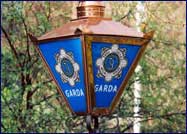
National Cyber Security Centre (NCSC) and the Garda National Cyber Crime Bureau (GNCCB) launch joint public awareness campaign for European Cyber Security Month.
These bodies work closely to identify methods used by cyber-criminals; and to advise businesses and the public how to avoid falling victim to cyber-crime.
An increase in ransomware attacks against businesses is evident, where payments are demanded.
Phishing attacks continue to target the most vulnerable in our communities – to steal personal data and money.
Minister of State at the Department of the Environment, Climate and Communications, MrOssian Smyth TD; Minister for Justice, MrsHelen McEntee TD and Assistant Garda Commissioner, Mr Paul Cleary have, this week, launched a joint public awareness campaign for October’s European Cyber Security Month. This year’s campaign focuses on the twin themes of phishing and ransomware, urging vigilance and outlining their potential impacts on the everyday lives of Irish citizens and businesses. The campaign is being jointly promoted by the National Cyber Security Centre (NCSC), and the Garda National Cyber Crime Bureau (GNCCB).
Over the course of Cyber Security Month, which runs throughout October, the NCSC will raise awareness on phishing and ransomware across online and traditional channels. This will take place alongside work by the GNCCB; both bodies are engaging with target audiences — for example the elderly and SME businesses — to highlight the risks involved and the steps that can be taken against both phishing and ransomware attacks.
Phishing emails, used by attackers to lure people into disclosing personal details or clicking on malicious links, are used by cyber-criminals to gain unauthorised access to a computer or network. Hackers continue to design smarter and more sophisticated phishing emails, in the hope of gaining people’s trust and pressuring them into acting without thinking.
Throughout October2022 a key focus will be on informing the public, in particular the elderly, on how to avoid becoming a victim of email phishing, how to spot the tell-tale signs of these types of emails and what to do if a person has fallen victim to an e-mail phishing attack.
Commenting on the launch, Minister McEntee said: “I know I am not alone in being bothered by fake calls and text messages, and I share people’s frustrations at having to fend off these criminals and their often sophisticated scams. The simple truth is that the same technological advancements that have made our lives easier in so many ways also open us up to new forms of criminality. And, by its nature, those seeking to take advantage of today’s global connectivity often sit outside the easy reach of domestic law enforcement. That is why we need to do everything we can to help people and businesses protect themselves.
The ability of international criminal gangs to launch ransomware attempts against Irish entities from anywhere in the world reinforces the importance of having well-designed and resilient cybersecurity procedures and systems in place.
European Cyber Security Month is a valuable opportunity for us all to work together to raise awareness of the dangers of cybercrime and try and protect those most at risk. And the continued expansion of the Garda National Cyber Crime Bureau and the National Cyber Security Centre under this Government demonstrates our commitment to doing so”.
Assistant Commissioner Cleary, Organised & Serious Crime, commented: “We have seen an increase in ransomware attacks against businesses, where payments are demanded to regain access to critical data information systems. The impact of these types of crime can be significant where companies are no longer able to function and recovery costs are potentially severe.
At the same time, phishing attacks can target the most vulnerable in our communities — to steal their personal data and their money. The Garda National Cyber Crime Bureau and the National Cyber Security Centre work closely to identify the methods being used by cyber-criminals, so that we can advise companies and the public how to avoid being victims of cyber-crime and enable them to recover from a cyber-attack when it does occur.
Our collaboration for European Cyber Security Month is an important part of our cyber-security strategy and demonstrates the commitment of both agencies, and of Government, to make the online environment safer for businesses and the public”.
Tactics of criminal ransomware groups. The second area of focus is ransomware. Focus will be on the stages of a ransomware attack chain, the impacts they have, and the important actions that can be taken in ‘breaking the chain’ and stopping an attack from occurring. Previously issued guidance will also be promoted, including a ‘Cyber Vitals’ checklist and ‘12 Steps to Cyber Security’ for businesses — to help to build and improve their cyber resilience (to defend against ransomware attacks).
The NCSC and GNCCB have seen a noticeable change in the tactics of criminal ransomware groups, whereby rather than largely focussing on Governments, critical infrastructure, and big business, they are increasingly targeting smaller businesses. Both agencies advise that ransom payments should not be made to criminal groups, highlighting that there is no guarantee that paying a ransom will lead to your data being successfully decrypted or prevent the data from being leaked online.
Speaking at the launch, Minister Smyth said: “As the National Cyber Security Centre and Garda National Cyber Crime Bureau have highlighted recently, there is an increasing and worrying trend globally of SMEs being targeted by ransomware groups, with Irish businesses being amongst those impacted. Organisations are facing a very real threat from cyber-criminals looking to disrupt these organisations from functioning properly – in return for a ransom.
We are also aware of the different forms of phishing out there. These can have a very damaging impact on citizens and businesses. European Cyber Security Month is a terrific way to raise awareness of these issues – amongst small and medium sized businesses and amongst all Irish citizens. This will ensure they have the necessary defences to protect themselves against these cyber-related threats”.
The NCSC and GNCCB will also take part in a webinar on ransomware hosted by IBEC and the Small Firms Association during the second half of October. The webinar will involve panel discussions on key cyber-security challenges and what key steps businesses can take to defend against these types of online crimes. In addition, the Bureau will take part in a series of roadshows around the country organised by ISME to discuss cyber risks and awareness from the small and medium enterprise business sector. Full details of locations and dates are available on the www.isme.ie website. Similar support is being provided by Age Action and Age Friendly Ireland, who will use their networks to get the European Cyber Security Month 2022 cyber safety message out – to senior citizens and the wider community.
The NCSC will conduct several briefings for Operators of Essential Services (OES) and Government Departments to raise awareness of Cyber Security threats during October. The NCSC will also host the first session of the Cyber Irelands National Conference on Enhancing Resilience in an Uncertain World on 5th October.
The Minister for Justice Mrs Helen McEntee, TD has called on those with information on the ‘Disappeared’ to provide it to the Independent Commission for the Location of Victims’ Remains.
Past ICLVR search.
The ICLVR is responsible for facilitating the location of the remains of victims of paramilitary violence (known as ‘the Disappeared’) who were murdered and secretly buried. The role of the ICLVR is purely humanitarian. Its only aim is to recover the remains of the disappeared in order to allow the families to give their loved ones a proper burial.
Minister McEntee said: “My thoughts are with the family of Columba McVeigh at this difficult time. We all hope that this latest search at Bragan Bog in County Monaghan will be successful.
I recently met with the Commission and their dedication to their task is clear. The families of the Disappeared have had to endure a particular cruelty, facing not only the tragedy and injustice of losing a loved one to murder, but not knowing for decades where that loved one was buried.
At this time we think also of the other families who still await the return of their loved ones’ remains. The Commission’s investigations are complicated and difficult, and information from the public is crucial to its work.
Someone out there may know something that might help. I would call on anyone with information that could help recover the remains of those still missing, to pass that information to the Commission without delay, safe in the knowledge that it will be treated in the strictest confidence”.
Multi-agency approach to be taken to rehabilitating and diverting offenders with addiction or mental health challenges away from crime.
New facility for the HSE National Forensic Mental Health Service at Portrane to open in mid-November.
The Minister for Justice, Helen McEntee TD and the Minister for Health, Stephen Donnelly TD have on Friday last, published the report and recommendations of the High Level Taskforce established to consider the mental health and addiction challenges of people who come into contact with the criminal justice sector.
Ministers McEntee and Donnelly thanked the independent Chair of the Task Force, Kathleen Lynch, and the Minister of State for Mental Health and Older People, Mary Butler TD and the Minister of State for Public Health, Wellbeing and the National Drugs Strategy, Frank Feighan TD for their work on the Taskforce and the final Report.
The Taskforce was established in 2021 to meet the Government’s commitment to ensure the critical mental health needs of people in prison are met, addiction treatments are provided and appropriate primary care supports are available on release, in order to ensure improved outcomes for the individuals concerned and for society as a whole.
It is now widely recognised that the needs of many people who interact with the criminal justice system are complex, and are often influenced by mental health and addiction challenges. Providing proper care to these and ensuring rehabilitation, both in terms of health needs but also in order to prevent future reoffending and contact with the criminal justice system, means these issues cannot be addressed in isolation or by the criminal justice system alone.
The Taskforce had three subgroups focused on three key elements to holistically meet these needs going forward;
One subgroup, on Diversion, chaired by a member of An Garda Síochána, focused on diverting individuals with mental illness who have committed minor offences from progressing into the criminal justice system, in the best interests of both the public and the individual concerned.
A second subgroup, on Irish Prison Service/Central Mental Hospital Capacity, which was chaired by an Irish Prison Service Director, examined the existing and future needs of individuals within the custodial criminal justice system. The objective of this group was to ensure that there is adequate provision of services to meet the mental health and dual diagnosis needs of those in prison.
A third subgroup examined community issues and through-care upon release from custody, and was chaired by the Director of the Probation Service. The objective of this group was to ensure that there are sufficient safeguards in place and adequate provision of services to prevent individuals from relapsing into damaging behaviours undermining the rehabilitative efforts made by the individual and the State.
Overall, the Taskforce has put forward 61 recommendations which emphasise the shared responsibility of a number of Government Departments and agencies to deliver on meeting the needs of those with mental health and addiction challenges who come into contact with the criminal justice system.
Key actions include:
Progressive and empathetic approach by Gardaí to dealing with offenders with mental health and addiction challenges, informed by mental health and addiction awareness training for Gardaí
Efficient and effective means of implementing a prosecution avoidance policy when Garda members come in contact with adults with mental illness and addiction, through the adult caution scheme
The establishment of a pilot specialist dual diagnosis service to support prisoners with a mental health condition and substance misuse in a prison, to inform roll-out across the entire prison estate
Access to tiered mental health supports that are recovery oriented for every person with mental health difficulties coming into contact with the forensic system
Reducing attrition by maintaining engagement and motivation at the point of release, including through the use of community agreed discharge plans for prisoners (identifying multi-agency supports required).
Speaking on the publication of the report today, Minister Mrs Helen McEntee said: “We know that many of those who end up engaging with our criminal justice system have higher rates of mental health and addiction challenges than the rest of the population. This is not a coincidence. If we are to address the root causes of offending behaviours, we have to start here.
If we are to reduce the numbers who end up in a cycle of offending behaviour and if we are to create stronger and safer communities and reduce crime, we have to work together and deliver properly resourced, appropriately located systems of care. This is not something that one Department or agency can do alone. A collaborative approach has underpinned the work of the Task Force who have agreed a coherent range of ambitious, but realistic, time-lined actions to build and sustain progress.
In combination with the community safety work underway by my Department, which similarly recognises that delivering on stronger and safer communities requires the buy-in and participation of all relevant stakeholders and not just An Garda Síochána, I feel we are making tangible progress towards a more holistic and joined up way of thinking and working to improve quality of life and build stronger safer communities.
I would like to especially thank Kathleen Lynch for her dedicated work on the Taskforce and in producing this report, as well as the committed staff from a number of Departments and agencies”.
The report is the culmination of over a year’s work by the Task Force, chaired by Kathleen Lynch, former Minister of State, and was comprised of staff from both the Department of Justice and the Department of Health, representatives from the HSE, the Central Mental Hospital, the Irish Prison Service, the Probation Service, An Garda Síochána, the Department of Children, Equality, Disability, Integration and Youth, the Judiciary and the Department of Housing.
The Plan, which accompanies the final report, recognises that the criminal justice sector does not operate in a vacuum, and requires collective will, planning and a strong focus on implementation to deliver a properly resourced, appropriately located, model of care, including Central Mental Hospital step down facilities, for some of the most vulnerable in our society.
Speaking on the publication of the report, Minister Mr Stephen Donnelly said:“I am particularly pleased that our Programme for Government commitment to produce this important HLTF report has materialised. It is thanks to the commitment of every member that such a timely and thorough report has been developed. This is a realistic and grounded report, which presents achievable recommendations in the short, medium, and long term. It has the potential to realise lasting positive changes in the lives of some of the most vulnerable in our society. The Government is committed to building on the work of the Taskforce, particularly around improving co-operation on all fronts in the future, as envisaged under Sláintecare.’’
Minister Ms Mary Butler, Minister of State at the Department of Health said: “It is recognised internationally that vulnerable people with mental health and addiction challenges are over-represented in our criminal justice systems. We have a responsibility to ensure that as many as possible within this population, are diverted away from the criminal justice system and provided with appropriate health and social care supports.
As we all know, there is no quick fix solution to the challenges highlighted by the Taskforce and no one service can address the change needed on its own. However, the report provides a clear path forward on how we can achieve this and work together to improve supports in the key area of forensic mental health care involving all relevant front-line agencies.
The Taskforce’s recommendations relating to the health sector will be progressed in line with Sláintecare, Sharing the Vision and other relevant health policies. I would like to thank all involved in the development of the report. It is evident that a huge amount of work and dedication went in to producing a platform for real progress over the next five years”.
In the context of the report’s publication proceedings, Ministers Donnelly and Butler are delighted to announce that the new facility for the HSE National Forensic Mental Health Service at Portrane, to replace the existing Central Mental Hospital (CMH) at Dundrum, will open in mid-November. The opening of this facility, which has been long called for by many mental health advocates including the HSE and is a key recommendation of the HLTF report to alleviate existing service pressures for the forensic mental health and judicial sectors.
Minister Mr Frank Feighan, Minister of State at the Department of Health said: “It is important that we divert people possessing drugs for personal use or experiencing mental health issues from the criminal justice system. As part of a health-led approach, we need to treat people with compassion, not to punish them. I believe that the health diversion programme we are implementing for people who are found in possession of drugs for personal use is a template that we can use for people who experience mental health issues. Referring these individuals to the health system for a SAOR screening and brief intervention will benefit the individual. It will also lead to a more effective use of resources in the criminal justice system”.
Minister Helen McEntee hosted two-day conference as part of Ireland’s Presidency of the Council of Europe.
Dublin Declaration adopted by 38 countries of 46.
Minister McEntee calls for collective support for Zero Tolerance of domestic, sexual and gender-based violence.
Ministers of the Council of Europe responsible for addressing domestic, sexual and gender-based violence gathered in Dublin over the last two days at a conference entitled “No safe haven: Integrated prevention measures to end domestic, sexual and gender-based violence”.
The conference was hosted by Minister for Justice Helen McEntee TD, as part of Ireland’s Presidency of the Committee of Ministers, which began in May for the seventh time in the history of the Council of Europe. It brought together Ministers and representatives from nations across the Council of Europe to discuss changing social norms to tackle violence against women, changing the behaviour of men who have been violent and training professionals to work with victims or perpetrators.
Key note addresses were delivered by Minister for Justice, Helen McEntee TD, Council of Europe Secretary General Marija Pejčinović Burić, the President of the Parliamentary Assembly of the Council of Europe, Tiny Kox, the Director of the EU Agency for Fundamental Rights, Michael O’Flaherty and Iris Luarasi, President of the Council of Europe’s Group of Experts on Action against Violence Against Women and Domestic Violence (GREVIO).
The Dublin Declaration on domestic, sexual and gender-based violence was adopted at the end of the conference, with 38 countries of the 46 in attendance supporting the Declaration.
Speaking at the conference, Minister McEntee said: “I was delighted to welcome my colleagues to Dublin for this two day conference, during which I believe we solidified our collective commitment to tackling domestic, sexual and gender-based violence across the continent.
Violence against women is a human rights violation that is widespread across all Council of Europe member states – that is a horrible reality and one that we have to address. One in three women in Europe experience some form of physical or sexual violence during their lifetime. One in 20 has been raped. Two in five women have experienced some form of psychological violence by either a current or a previous partner.
There should be zero tolerance in any society for this kind of behaviour. I want to see this change in Ireland and I want to see this change across Europe.
It is a key priority for me as Minister for Justice. I launched our third national strategy, Zero Tolerance, in June. It will work towards achieving a society in Ireland that has absolutely no tolerance for DSGBV or the attitudes that underpin it. It is built around the four pillars of the Istanbul Convention – prevention, protection, prosecution and policy co-ordination – and is therefore clearly aligned with the ambitions of the Council of Europe and the issues we will discuss over the next two days.
I am delighted that we have adopted the Dublin Declaration which sets out a high level of ambition for future collaborative work in this area.
I know this is something Iceland will continue to prioritise when they assume the Presidency in November and I look forward to supporting them as they build on our achievements over the next two days”.
Mr Mark Beresford, with an address at No. 41 Gortataggart, Brittas Road, Thurles, Co. Tipperary, was charged by Garda Mr Daniel Murray with assault, allegedly having caused bodily harm to 52-year-old taxi driver, Mr Willy Lufuluabo, at Curraheen Road, Co. Cork on May 1st, last year.
A Co. Cork Court heard that a very serious assault had left the taxi driver with a fractured cheek bone.
We understand the taxi driver had picked up the accused, in the company of another, at Co. Cork’s Kent Station, Lower Glanmire Road, before driving, as directed, to Mitchelstown. Along the way, one of his passengers asked to stop off at Maxol in Tivoli, before then proceeding on their journey. Close to Mitchelstown the driver was asked to return to Curraheen Road, Bishopstown, some 59km distance from Mitchelstown, where upon the driver was asked to stop, and the alleged assault was carried out by one of the drivers passengers. The driver was punched several times in the face, with the assailant stating that this was not where they had asked him to go and that he now wanted to be brought back to Thurles, Co. Tipperary, a distance of some 123km from Bishopstown.
Having read the medical report on the taxi driver’s injuries, Mr Justice Colm Roberts refused to accept jurisdiction; stating the case was too serious and was a matter for trial by ‘Judge and Jury’.
Judge Mr Colm Roberts adjourned the case to Monday, November 7th, next.
This website uses cookies to improve your experience. We'll assume you're ok with this, but you can opt-out if you wish.AcceptRead More
Privacy & Cookies Policy
Privacy Overview
This website uses cookies to improve your experience while you navigate through the website. Out of these, the cookies that are categorized as necessary are stored on your browser as they are essential for the working of basic functionalities of the website. We also use third-party cookies that help us analyze and understand how you use this website. These cookies will be stored in your browser only with your consent. You also have the option to opt-out of these cookies. But opting out of some of these cookies may affect your browsing experience.
Necessary cookies are absolutely essential for the website to function properly. This category only includes cookies that ensures basic functionalities and security features of the website. These cookies do not store any personal information.
Any cookies that may not be particularly necessary for the website to function and is used specifically to collect user personal data via analytics, ads, other embedded contents are termed as non-necessary cookies. It is mandatory to procure user consent prior to running these cookies on your website.
Recent Comments