Gardaí have appealed for witnesses following a serious assault on the R494 at Birdhill, Co Tipperary, on Saturday evening. The incident happened shortly before 5.30pm on March 21st 2026.
A woman in her 20s was seriously injured in the incident and was airlifted to hospital, where she remains in a critical condition.
The scene has been preserved for a technical examination, while the road remains closed with local diversions in place.
Investigating Gardaí are asking anyone who may have witnessed the incident to come forward. They are also appealing to motorists who travelled on the R494 between Birdhill and the M7 motorway between 5:00pm and 6:00pm on Saturday afternoon, and who may have camera footage, including dash-cam recordings, to make that material available to investigators.
Anyone with information is asked to contact Nenagh Garda Station, Tel: (067) 50450, the Garda Confidential Line, Tel: 1800 666 111, or indeed any Garda station.
Over 5,000 Speeding Offences Detected as Gardaí warn of ongoing road safety risks.
An Garda Síochána has described road safety compliance during the recent St Patrick’s bank holiday enforcement period as deeply disappointing, with more than 200 motorists arrested on suspicion of driving under the influence of alcohol or drugs over the past seven days.
In Tipperary, within the past 7 days at least several arrests linked to drink- and drug-driving enforcement were reported during the St Patrick’s bank holiday period, including a drink-driving arrest in Cahir, a serious drink-driving incident in Cashel, and a suspected drug-driving arrest in South Tipperary.
Speaking on RTÉ Radio’s Morning Ireland, Superintendent Mr Liam Geraghty of the Garda Press Office said the provisional figures showed a troubling level of dangerous behaviour on Irish roads, despite widespread public discussion about road deaths, road safety, and increased Garda enforcement over the holiday period.
Superintendent Geraghty said the level of offending was especially concerning given the visibility of the Garda road safety campaign and the additional checkpoints put in place during the St Patrick’s operation.
Gardaí also expect that more than 5,000 drivers will have been detected speeding during the same seven-day period. According to Superintendent Geraghty, this represents a significant rise on the 2025 average of approximately 500 speeding detections per day, with the bank holiday weekend seeing daily detections exceed 700.
He highlighted one particularly serious example in which a vehicle was detected travelling at 112 km/h in a 50 km/h zone on the R183 in Monaghan, describing it as motorway speed on a small urban road in a built-up area.
Superintendent Geraghty said it was a major concern that, despite advance notice of increased checkpoints and enforcement activity, such high numbers of road users continued to take the risk of speeding or driving under the influence, placing themselves, their passengers, and other road users in danger.
He further noted that six people had died on Irish roads since the Garda road safety operation was launched the previous Wednesday at the Road Safety Conference in Killarney.
Referring to public attitudes, Superintendent Geraghty said there appeared to be a disconnect between what people say about road safety and how some behave in practice. He pointed to RSA survey findings indicating that 12 per cent of Irish motorists admit to driving under the influence of alcohol, while more than 25 per cent believe driving a short distance after drinking is acceptable.
Superintendent Geraghty also defended current Garda road policing resources, stating that 647 personnel are now assigned full-time to roads policing duties. He said this is the largest specialist area within An Garda Síochána and is supported by uniformed and plainclothes members across the organisation.
He added, however, that enforcement alone cannot eliminate dangerous driving, noting that even if every Garda member were deployed on the roads, there would still be many stretches without visible Garda presence. He said personal responsibility remains essential and urged all drivers to act safely for their own sake and for the safety of all road users.
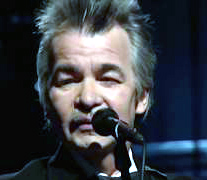
Lyrics and Vocals: American country folk singer/songwriter and guitarist, the late John Prine(1946 – 2020).
The late John Prine.
“Sam Stone” is ultimately about the hidden cost of war; not glory, not victory. A soldier comes home alive, but not whole, and his pain turns into addiction, family suffering, and finally death. The author, the late John Prine, uses Sam’s story to show how veterans can be praised for their service, yet still be left alone to deal with trauma and dependence, once they return home, making the song both a personal tragedy and a quiet anti-war statement. The line about Jesus Christ, expresses Sam’s feeling that sacrifice, patriotism, religion, and public ideals have failed to save him.
Sam Stone.
Sam Stone.
Sam Stone came home, To his wife and family, After serving in the conflict overseas. And the time that he served, Had shattered all his nerves, And left a little shrapnel in his knees. But the morphine eased the pain, And the grass grew round his brain, And gave him all the confidence he lacked. With a purple heart and a monkey on his back, There’s a hole in Daddy’s arm where all the money goes, Jesus Christ died for nothin’ I suppose. Little pitchers have big ears, Don’t stop to count the years, Sweet songs never last too long on broken radios, (mmhmm). Sam Stone’s welcome home, Didn’t last too long. He went to work when he’d spent his last dime, And Sammy took to stealing, When he got that empty feeling, For a hundred dollar habit without overtime. And the gold rolled through his veins, Like a thousand railroad trains, And eased his mind in the hours that he chose, While the kids ran around wearin’ other peoples’ clothes. There’s a hole in daddy’s arm where all the money goes, Jesus Christ died for nothin’ I suppose. Little pitchers have big ears, Don’t stop to count the years, Sweet songs never last too long on broken radios, (mmhmm). Sam Stone was alone, When he popped his last balloon, Climbing walls while sitting in a chair. Well, he played his last request, While the room smelled just like death. With an overdose hovering in the air. But life had lost its fun, There was nothing to be done, But trade his house that he bought on the GI bill, For a flag-draped casket on a local hero’s hill. There’s a hole in Daddy’s arm where all the money goes, Jesus Christ died for nothin’ I suppose. Little pitchers have big ears, Don’t stop to count the years, Sweet songs never last too long on broken radios, (mmhmm).
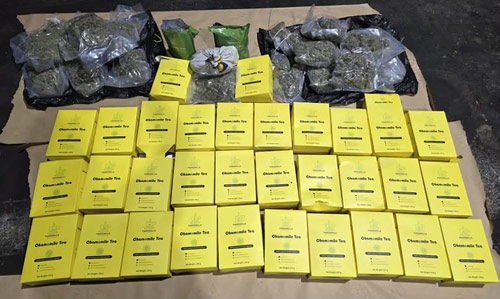
A man in his 30s has been arrested after drugs, with an estimated value of €280,000, were seized in Co. Tipperary.
€280,000, estimated value of drugs seized in Co. Tipperary on Thursday last.
The discovery was made in the Birdhill area of Tipperary on Thursday last, after gardaí attached to Nenagh Garda Station responded to an incident involving a van on the M7. During a search of the vehicle, officers recovered suspected cannabis worth approximately €280,000, along with €20,000 in cash. A small quantity of suspected cocaine was also seized.
The arrested man was taken to a Garda station in Tipperary for questioning, while investigations into the incident remain ongoing.
The seizure underlines the ongoing impact of illegal drugs on communities across Ireland. Drug trafficking is closely linked to organised crime and can bring intimidation, violence, addiction and deep social harm. Beyond those directly involved, the drugs trade places a heavy burden on families, neighbourhoods and local services, damaging the sense of safety and wellbeing in society.
Gardaí have continued to stress the importance of disrupting the supply of illegal drugs and protecting communities from the serious dangers associated with the trade.
Mr Gerard O’Brien, the former Circuit Court judge, convicted of attempted rape and sexual abuse involving six young men, has appealed his conviction before the Court of Appeal, with his legal team alleging that the trial judge’s directions to the jury were confusing, unbalanced and unfair to the defence.
Mr O’Brien, aged 61 years, of Old School House, Slievenamon Road, Thurles, Co Tipperary, was convicted in December 2023 at the Central Criminal Court of one count of attempted anal rape and eight counts of sexual assault. The offences related to six complainants and occurred between March 1991 and November 1997, when O’Brien was working as a secondary school teacher at CBC Monkstown in Dublin. Four of the complainants were students or former students of Mr O’Brien at that time. They were aged between 17 years and 24 years old. The complainants have previously indicated that they wished for Mr O’Brien to be named while maintaining their own anonymity.
Mr O’Brien had pleaded not guilty to all charges. He later resigned from the Circuit Court, having been appointed to the bench back in 2015, and had been on leave since the allegations emerged. In June 2024, he was sentenced to four years’ imprisonment by Mr Justice Alexander Owens, who said Mr O’Brien was “unsuitable to hold office”.
Opening the appeal today, senior counsel for Mr O’Brien, Mr Hugh Hartnett, said there were a number of significant issues with the trial judge’s charge to the jury. He said the overall complaint was that the directions were confusing and weighted against the defence, and that the alleged errors were sufficient, individually and cumulatively, to render the trial unfair.
Counsel submitted that the charge was unbalanced and, at times, had the effect of diminishing matters relied upon by the defence. He referred to comments made by the trial judge warning jurors not to enter a “parallel universe of make-belief” and to observations that jurors were not obliged to accept evidence they considered “incredible” or “outlandish”. Mr Hartnett argued that, although not directed exclusively at Mr O’Brien, the emphasis of those remarks bore particularly on the appellant’s evidence.
The defence also challenged the judge’s direction on lies told by an accused, arguing that the warning given to the jury was confusing. It was further submitted that jurors may have felt pressure to reach a verdict after being told they could deliberate on Christmas Eve if necessary. Additional grounds included the refusal of an application for separate trials and the judge’s direction that jurors could take account of Mr O’Brien’s legal knowledge, when assessing statements and interviews with gardaí.
For the State, Ms Anne-Marie Lawlor said the suggestion that the trial judge had conveyed personal views on guilt or innocence was “misconceived”. She submitted that the jury had been properly instructed and that there was no merit in the claim that Mr O’Brien’s evidence had been unfairly discredited. She also rejected the criticism of the warning on lies, saying there was no requirement for any set formula of words.
Ms Lawlor said the trial judge had properly addressed the challenges arising from historic allegations and had correctly dealt with the application for separate trials. She urged the Court of Appeal to uphold the conviction.
Mr Justice John Edwards said the three-judge court would reserve judgment.
This website uses cookies to improve your experience. We'll assume you're ok with this, but you can opt-out if you wish.AcceptRead More
Privacy & Cookies Policy
Privacy Overview
This website uses cookies to improve your experience while you navigate through the website. Out of these, the cookies that are categorized as necessary are stored on your browser as they are essential for the working of basic functionalities of the website. We also use third-party cookies that help us analyze and understand how you use this website. These cookies will be stored in your browser only with your consent. You also have the option to opt-out of these cookies. But opting out of some of these cookies may affect your browsing experience.
Necessary cookies are absolutely essential for the website to function properly. This category only includes cookies that ensures basic functionalities and security features of the website. These cookies do not store any personal information.
Any cookies that may not be particularly necessary for the website to function and is used specifically to collect user personal data via analytics, ads, other embedded contents are termed as non-necessary cookies. It is mandatory to procure user consent prior to running these cookies on your website.







Recent Comments