It has been confirmed and indeed welcomed, this morning, that just over 11,100 people have applied to join An Garda Síochána in 2025.
There was significant interest in the most recent competition, with 4,334 applications made in addition to the 6,784 applications received in the February 2025 competition.
These competitions are conducted by publicjobs on behalf of An Garda Síochána.
The Supreme Court has refused convicted fraudster Agne Khan permission to appeal a Criminal Assets Bureau (CAB) ruling that saw property and cash seized as the proceeds of crime.
Ms Khan and her husband Khurram were at the centre of a €3.5 million international cybercrime fraud which used Irish companies to launder money. Her firm, Nida Investments Ltd, was targeted by CAB, which seized a garage forecourt in Ballywilliam, Co Tipperary, and €16,000 held in a bank account.
In a written judgment last week, the Supreme Court rejected the appeal, noting it had been lodged six months late and that Nida Investments had already appealed unsuccessfully to the Court of Appeal.
The court said there were no issues of general public importance or exceptional circumstances to justify a further hearing.
Ms Khan had previously been told she could not legally represent the company herself, after two solicitors came off record, one citing an irreparable breakdown in “trust and confidence.” She did not appear in court for either the High Court or appeal hearings.
Judge Mr Alex Owens previously found there was “no doubt” that the €66,000 Tipperary property was bought with criminal proceeds and appointed a receiver to take control of it. He described Nida Investments and another Khan firm, Autology Ltd, as “steeped in fraud.”
A separate motor business run by the couple from the same premises closed in 2018 following a Revenue investigation, leaving an unpaid tax bill of €623,000.
The Supreme Court’s decision brings Ms Khan’s legal challenge to a close.
A man is due to appear in court this morning charged with the murder of an 89-year-old woman in Nenagh, Co Tipperary.
Mr Hasan Ali Gori, who is currently serving a prison sentence, will appear before Nenagh District Court charged in connection with the death of Mrs Josephine Ray.
Mrs Ray was found deceased in the bedroom of her home at St Joseph’s Park, Nenagh, last April 2024. Mr Gori, who had been in a relationship with Mrs Ray’s daughter Mary, was living with the family at the time of the pensioner’s death.
Following the discovery, Mr Gori was questioned by Gardaí and later released without charge pending further investigation. A file was subsequently prepared for the Director of Public Prosecutions, leading to today’s charge.
The accused, who has no fixed address, was sentenced to six months’ imprisonment last September for assaulting two members of An Garda Síochána. While in custody, he was involved in a series of violent incidents and was hospitalised in intensive care, following an assault, but has since recovered and returned to Portlaoise Prison.
In a statement, Gardaí confirm that a male in his 50s has been charged in relation to the investigation surrounding Mrs Ray’s death on the afternoon of Sunday, August 4th 2024. The accused is due to appear before Nenagh District Court this morning, Friday, October 17th 2025, at 10:30am.
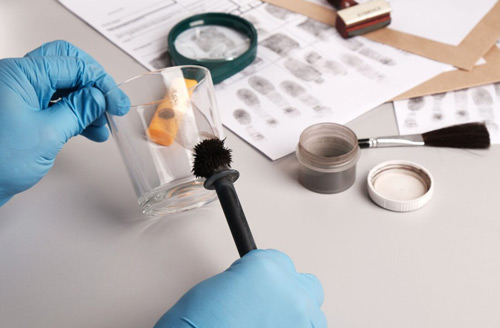
Forensic Science Ireland (FSI) today celebrates fifty years since it was established.
FSI marked the occasion today with a celebratory event at the Irish Museum of Modern Art, Kilmainham. FSI was first established in 1975 as the Forensic Science Laboratory under Dr Jim Donovan. Since then it has expanded to over 200 staff, providing a broad range of analytical tests, scientific advice and expert opinion from crime scene to court, that are vital to the criminal justice system.
Forensic Science Ireland.
Dr Ciarán Seoighe took over as Director General in October this year having joined from Taighde Éireann – Research Ireland.
Speaking today, Dr Seoighe said: “We are proud to celebrate 50 years of science supporting justice. Having recently moved into a custom built, state-of-the-art facility, FSI is well positioned to continue leading in the rapidly developing world of forensic science. Moreover, at the heart of a nation’s forensic science capability is people, and we are fortunate to have highly skilled, professional and dedicated people in FSI. It is the outstanding achievements of the staff in FSI today, and those who have gone before, that we mark on this occasion.”
In 2024 FSI moved to a new state of the art facility in Backweston, under then Director General Mr Chris Enright. This summer FSI hosted Europe’s largest forensic science event, the European Academy of Forensic Science (EAFS). Held every three years, the EAFS brings together over 1,200 forensic science practitioners, stakeholders and partners from across the European forensic science community to showcase developments in the area.
Today’s event in Kilmainham featured contributions on the impact of Forensic Science on the Criminal Justice system and the development of FSI over the last 50 years. A commemorative booklet, which looks back on the major milestones in FSI’s history over its first half century, was also launched at the event.
Both men are also accused of stealing green diesel, petrol, kerosene, and other items worth over €180 from the Top Oil Service Station on Cashel Road, Cahir, on the same date.
Mr Caplice faces two further charges; that of causing criminal damage to a car at Cois na hAbhainn, Ballyporeen, and using a false registration plate at the Cahir service station.
When charged, both men denied all of the alleged. Garda Inspector Mr Alan Kissane requested both men be remanded in custody to appear before Clonmel District Court on Tuesday via video link. However, defence solicitor Mr David Burke sought that they attend in person, as family may assist with a bail application.
MrJustice John O’Leary remanded both the accused in custody overnight at Clonmel Garda Station to appear in person before Clonmel District Court on tomorrow, Tuesday October 14th 2005.
This website uses cookies to improve your experience. We'll assume you're ok with this, but you can opt-out if you wish.AcceptRead More
Privacy & Cookies Policy
Privacy Overview
This website uses cookies to improve your experience while you navigate through the website. Out of these, the cookies that are categorized as necessary are stored on your browser as they are essential for the working of basic functionalities of the website. We also use third-party cookies that help us analyze and understand how you use this website. These cookies will be stored in your browser only with your consent. You also have the option to opt-out of these cookies. But opting out of some of these cookies may affect your browsing experience.
Necessary cookies are absolutely essential for the website to function properly. This category only includes cookies that ensures basic functionalities and security features of the website. These cookies do not store any personal information.
Any cookies that may not be particularly necessary for the website to function and is used specifically to collect user personal data via analytics, ads, other embedded contents are termed as non-necessary cookies. It is mandatory to procure user consent prior to running these cookies on your website.








Recent Comments